Neckbeard. Incel. Failed tertiary education twice. Scared of women. Former choirboy with the singing voice of a goose. Too unskilled for employment. True story.
Blessed be the Peacemaker, for he is a child of God.
Charlie Kirk did everything he could to foster peace through discourse.
I am not religious. I do not pray. I do not need to. His is the kingdom of Heaven.
I just wish he had more time on Earth. He is still needed.
We’ve been getting all sorts of reactions from people overseas, but it seems most of them are simply angry that “historical sites have been defaced.”
Actually, that’s not quite it.
From a Japanese perspective, these acts are equivalent to “spraying large graffiti on a house of God and running away.”
It is an extremely rude act, a desecration of one’s superiors, and an act that shows no fear of God’s wrath.
That is why Japanese people are angry and do not want to have anything to do with people like this.
God’s wrath manifests in various forms.
It can take the form of natural disasters, or it can result in accidents or illness befalling oneself; in the worst cases, it can even strike one’s own family.
In the worst-case scenario, that wrath can extend to every member of one’s clan for generations to come. It is believed in Japan that this can lead to the bloodline being cut off (the extinction of the family line), and there are many anecdotes from the past that suggest such things have indeed happened.
Of course, those who were present and did not stop the offender are also considered equally guilty.
You should know that while the gods of your own country may forgive, the gods of Japan may not.
And as these kinds of issues become more common, people overseas will likely come to realize that the notion—often attributed to Japanese people as “non-religious”—that they lack “faith” or “moral values” due to the absence of a specific religion is mistaken.
Japanese people are deeply devout. Even today, it is common practice to perform rituals for good luck, and on various occasions, they pray to the gods, make offerings, and express gratitude for being in the presence of the divine.
It is not a matter of religion, nor is it something that binds them like strict precepts; it is simply “naturally rooted in the Japanese heart.”
We Japanese believe in the gods, but we do not adhere to any specific religion—that is all.
Because the gods are so close to us, we revere them, honor them, share food and drink with them, and feel gratitude.
The phrase “okagesama” (thanks to you) comes from this.
Japanese people do not particularly seek to exclude foreigners.
It’s just that Japan has its own rules.
And those rules are clearly different from those of other countries.
The nature of God, God’s way of thinking—everything is different.
If people properly respect these things and align themselves with the way Japan should be, Japanese people will not strongly exclude them.
We can coexist as neighbors.
However, for those who do not do so, once they cross a certain line, we tend to lean toward exclusion all at once.
That is what is happening now.
We ask that all foreign visitors to Japan abide by Japanese rules.
Otherwise, we will have no choice but to expel you, as we do not wish to be caught up in the “wrath of the gods = Tatari.”
Furthermore, Tatari—the wrath of the gods—and Noroi—curses—are similar yet distinct.
Tatari comes from the gods.
Curses come from humans or demons.
The gods of Japan inflict “TATARI (divine retribution).”
Please do not involve the Japanese people in this divine retribution.
And I ask that Japanese politicians also restrict the entry of problematic foreigners, including short-term workers and business owners.
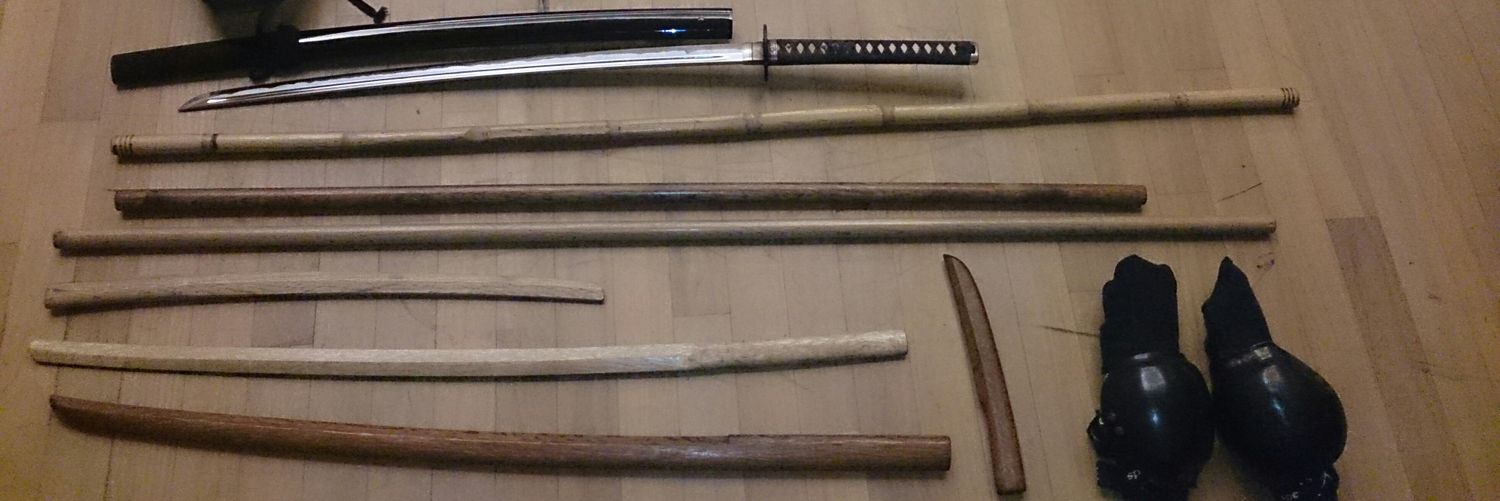
@SandyofCthulhu Some sharpnesses can make styles specifically designed for a weapon risky too.
I did HEMA in the 2010s, and even normally returning to Posta di Donna and Vom Tag during mat-cutting, using the longsword of someone whose hobby is sharpening swords into scalpels, bit my shoulder.