You told us connection matters, and at #Dros27, great conversations are just steps away (10 minutes max from the venue). Grab a meal at @RdgTerminalMkt, stroll to Philadelphia City Hall, or connect over coffee at local favorites.
Philly locals—where should attendees go next?
🍄 🧬 A computational study published in #G3journal analyzes secretion signals across the fungal kingdom, identifying distinct populations of secreted proteins in diverse fungal species.
🔗 https://t.co/FvK1hdpw6t
Mark your calendars! Join GSA on November 12, 1–2:30 p.m. EST, for "Teaching with Purpose: Implementing the New Genetics Learning Outcomes" to explore updates to the Genetics Learning Framework and how to apply new learning outcomes to your curriculum. 🔗: https://t.co/TH39uAwrol
What is an R01 grant? Explore what it takes to get a National Institutes of Health research grant in our latest blog series. Read the blogs now: https://t.co/iMVQ16e1R6
🪱 New in #G3journal: A large-scale behavior characterization of sensitivity to the aversive odorant 1-octanol in wild strains is the first-ever study at scale that investigates how natural genetic variation shapes #Celegans olfactory behavior.
🔗 https://t.co/5OOLqDjQlA
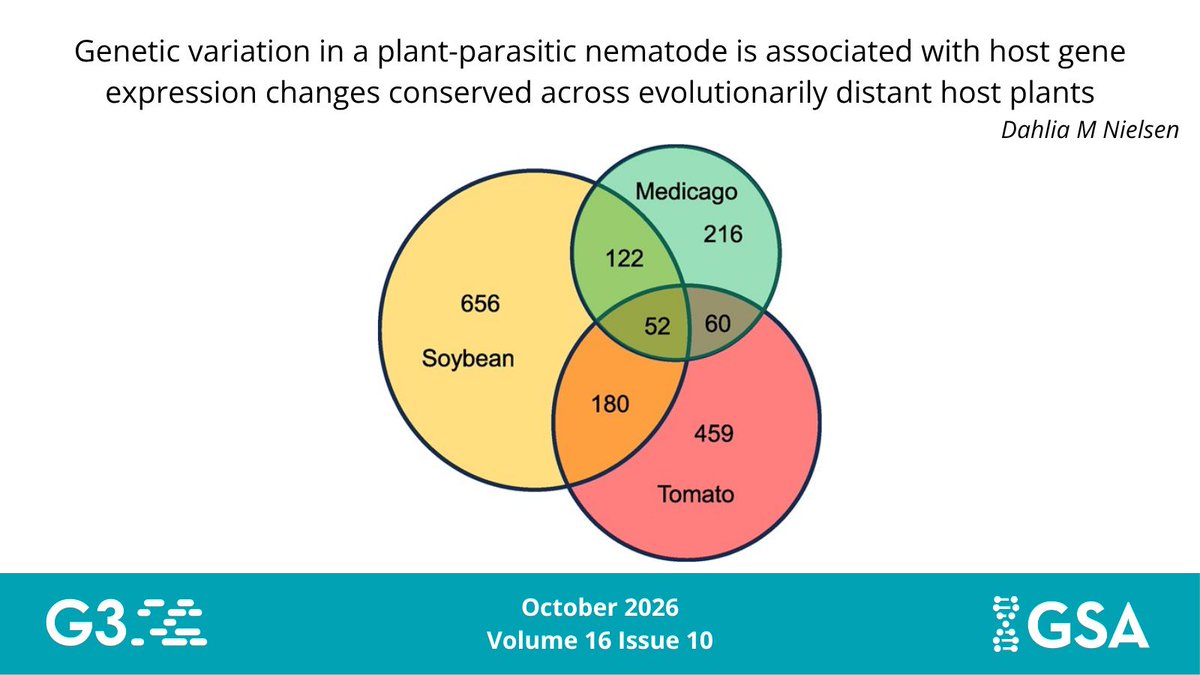
@MLstiburek 🪱 Identifying connections between genetic and phenotypic variation is important to studying host-parasite interactions. A #transcriptome analysis shows how host plant genes respond differently based on the genetic background of an infecting #nematode.
🔗 https://t.co/tOjmXGBPw4
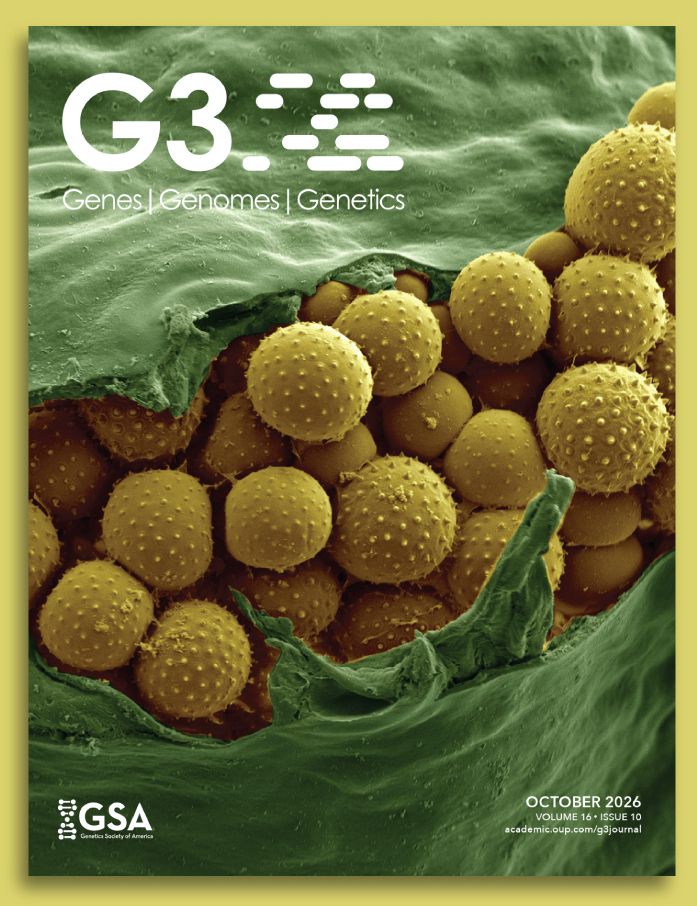
🌟 Read the exciting stories highlighting new methods and resources for #genomics and new mechanisms in host-pathogen interactions: Now published in the October issue of #G3journal
🧵
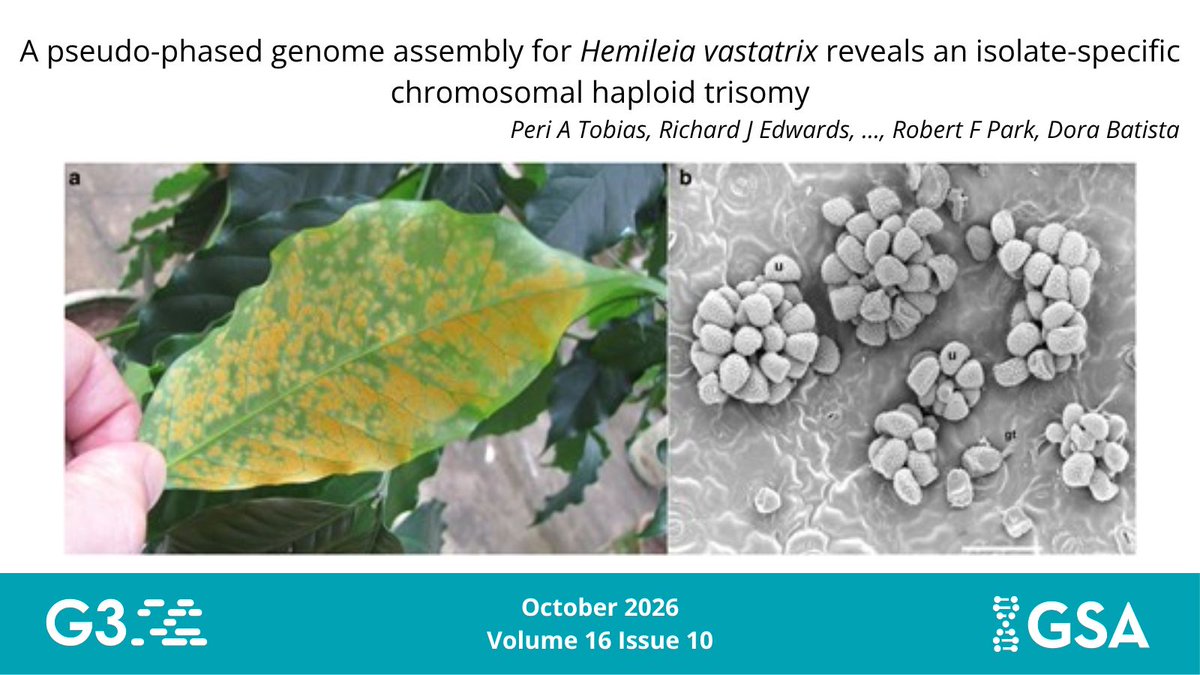
@MLstiburek ☕️ The fungal pathogen Hemileia vastatrix causes Coffee leaf rust that has affected Arabica coffee production for centuries. A new genome of H. vastatrix identifies a haploid trisomy that may be responsible for the pathogen's changed virulence profile.
🔗 https://t.co/4hbSyHoIOf
New in #G3journal: A mutant analysis in #Ecoli reveals that helicase function during severe transcription-replication conflicts is not intrinsically protective or deleterious but is contingent upon the recombination landscape shaped by SOS induction.
🔗 https://t.co/l3ppGmQDDi
🦞 🧬 A resampling-based evaluation of the 79-SNP marker panel captures broad differentiation between European lobsters, Homarus gammarus and H. americanus.
Learn more in #G3journal about this important tool built for #lobster genetics 🔗 https://t.co/A693Unv7Iq
@marie_saitou
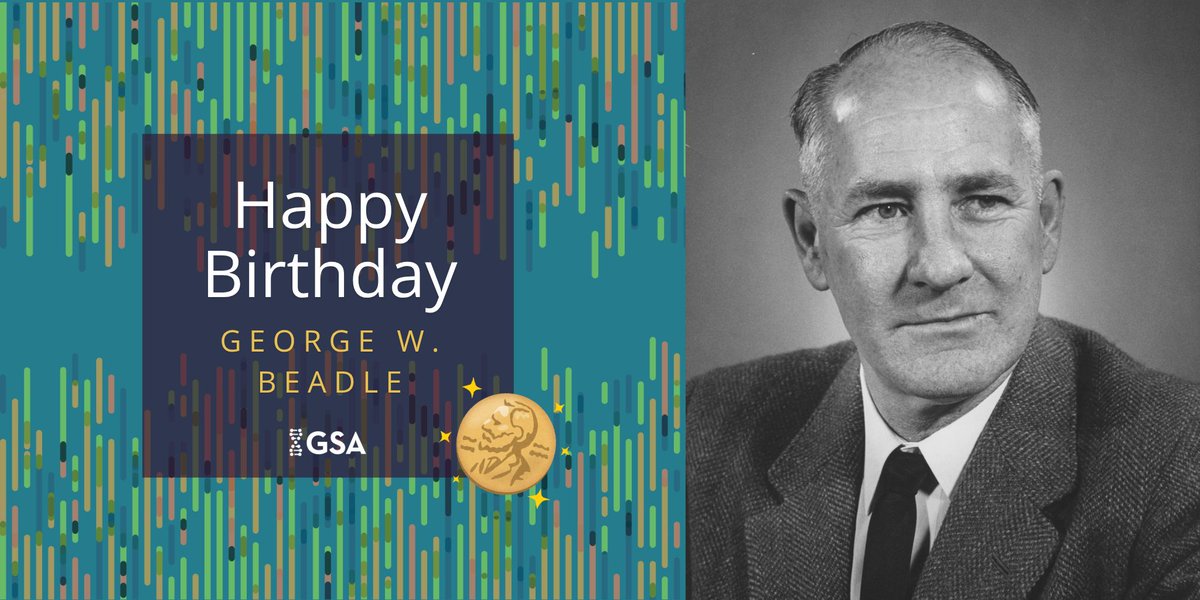
Happy birthday to George W. Beadle! A Nobel laureate and former GSA president, Beadle helped lay the foundation for molecular biology. GSA honors his legacy through the George W. Beadle Award: https://t.co/dJSmWqoMX1
🪱 Latest in #G3journal: A mutant analysis of #Celegans phosphatidylcholine (PC) synthesizing enzyme pcyt-1 and variants corresponding to disease-causing human mutations reveals how graded reductions in PC synthesis affect organismal physiology.
🔗 https://t.co/9nWTfB6cTx
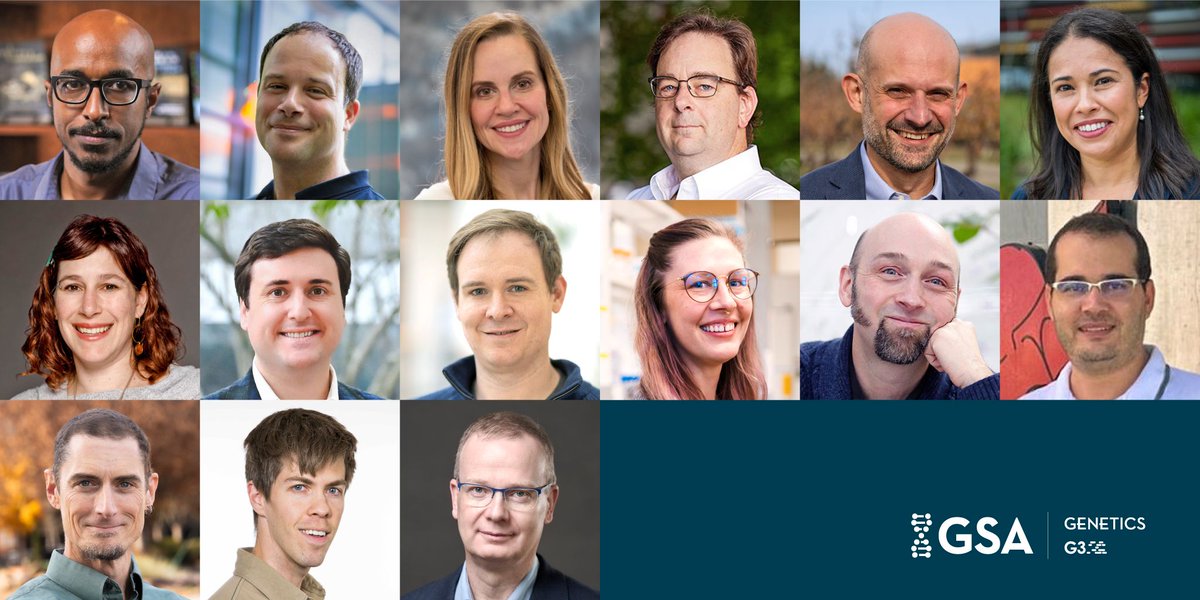
Please join us in welcoming 14 new editors to #G3Journal and @jrossibarra.bsky.social to #GENETICS as a Primers editor! We’re thrilled to have these brilliant minds and talented researchers join our editorial teams. 🔗https://t.co/ZUbyTWuiRo
Meet them below! ⬇️
1/2🧵
Submitting an abstract to #Dros27 is easier than you think! 🪰
Start with the science you have. Don’t aim for perfection—you can get feedback on your work. Gather co-author details, payment, an email address for all transactions, and browse topics.
🔗: https://t.co/tM9Et44Q7p
🚨 Last call! Nominations for the Hugo Bellen and Catherine Tasnier Drosophila Neurogenetics Lecture close tomorrow, October 22. Don’t forget to submit your nomination!
🔗: https://t.co/Xnxw39jrkP
Get a cash prize and travel costs covered to present at #Dros27. 🪰
🌟 Cool new story: #AGING is lost in mis-translation!
🪰 A #Drosophila study shows how mistranslated "bad" proteins can increase #lifespan in mated females.
Discover more in the October issue of #G3journal about the positive effect of mistranslation: 🔗 https://t.co/Hc0U9HMb2Z
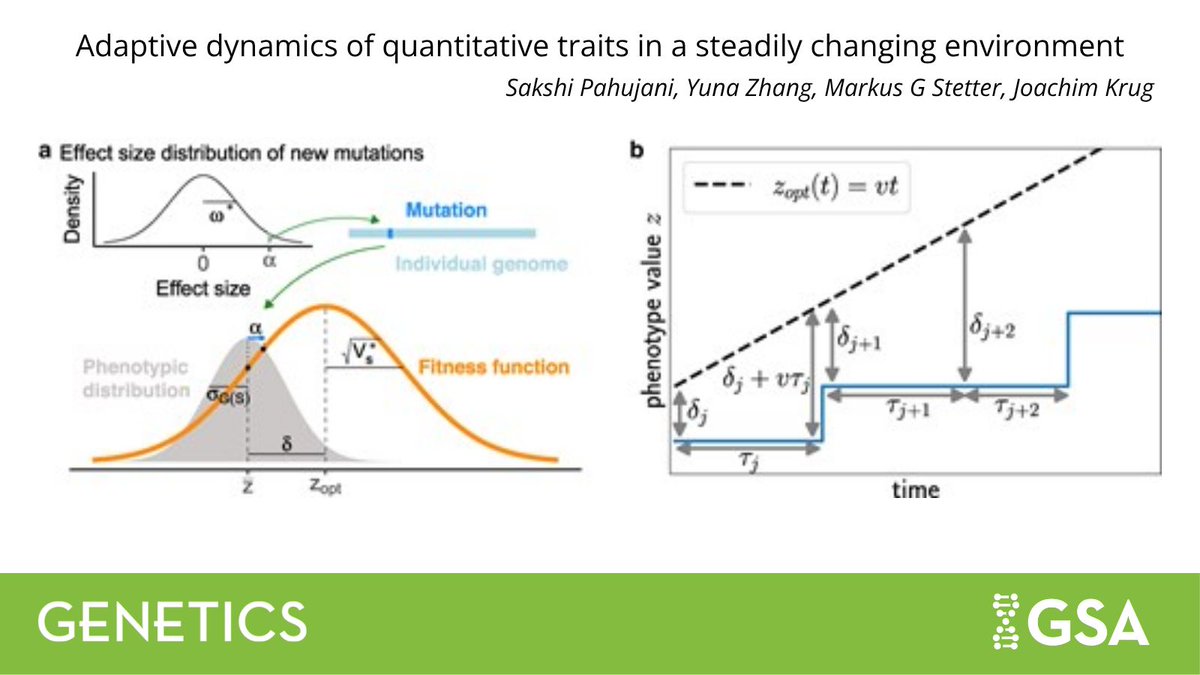
New research in #GENETICS combines theory and forward-in-time simulations to understand polygenic adaptation and quantitative trait evolution.
🔗 https://t.co/8ygGLU15Ix