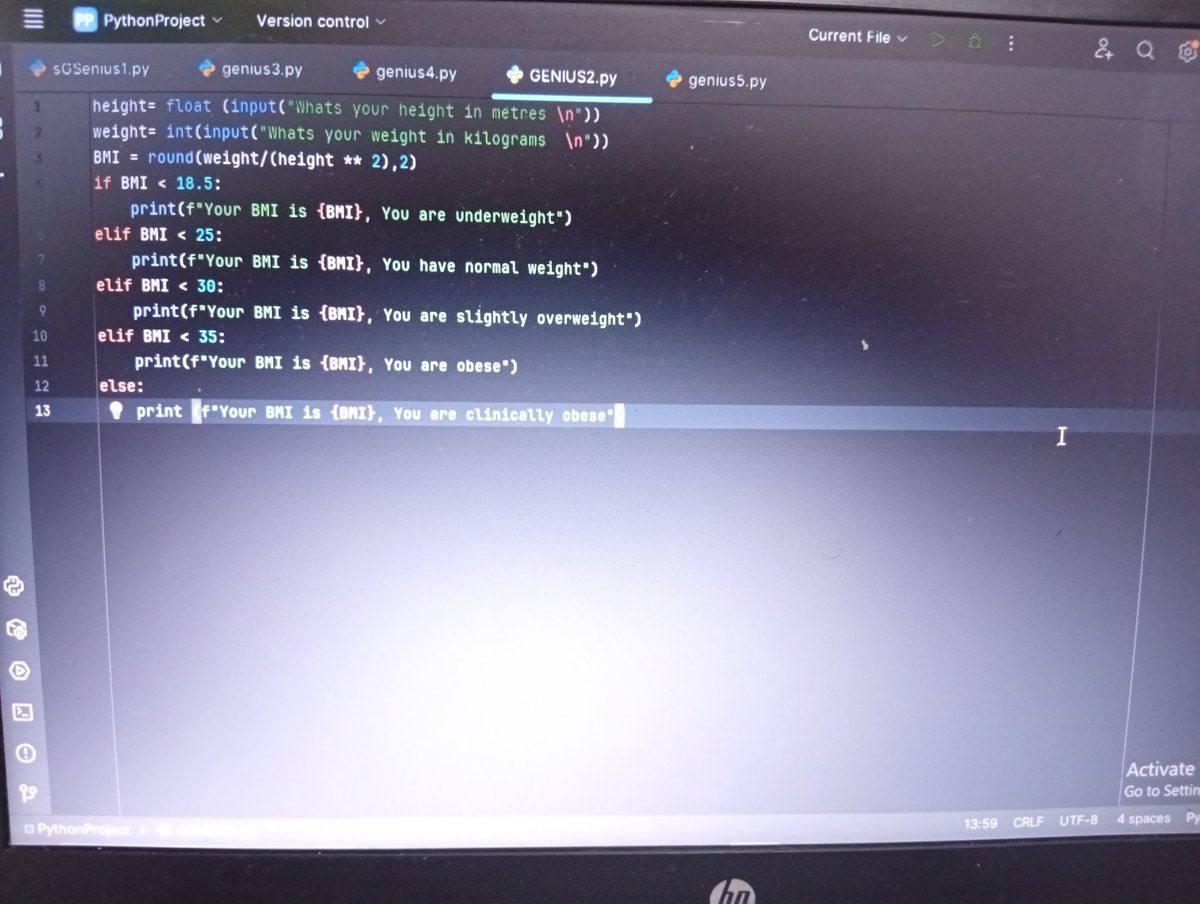
The beautiful thing about this tech journey is what it's doing to my mind.
I have always loved maths and physics right from secondary school days because of the logic and adrenaline rush from decoding complex stuff by following patterns.
Studying medicine and surgery kind of switched off that path and opened up something also interesting and new.
In the past few months engaging in backend development has put that switch on and it feels so good honestly. Every time I learn something new and execute it properly, I feel the exact same way solving maths equations made me feel.
Thankfully, A.I has been a good guy too. I'm excited for what's ahead.
@juiceboy_of_abj Got to day 4 of 100 days of python with Angela yu.
Getting a hang of the language and at the same time learning that A.I is taking over.
VALIDATOR ECONOMICS AND HOW REWARDS SHAPE NETWORK BEHAVIOUR.
In the movie, The Dark Knight, there is a scene where Joker burns a heap of cash, which leaves the entire mobsters confused.
Why will you destroy a pile of money?
The truth is his reason was valid. He had to leave an impression on the people that MONEY was not his issue, CONTROL was.
Control is very important in every sector, sports, entertainment, business and finance.
That's the idea of validators and validator economics, to ensure good control.
Validator economics works in a similar way.
A blockchain is not held together by code alone. It is held together by value. That value usually comes from the native token. ETH on @ethereum. SOL on @solana. ATOM on @cosmos. These tokens are not just used for payments. They are used to secure the network itself.
Validators are the ones holding a large portion of these tokens.
When validators stake tokens, those tokens are locked. They cannot be sold or moved freely. This reduces the amount of tokens circulating in the market. When a significant percentage of supply is staked, sometimes 50 percent or more, it creates scarcity. Scarcity supports price stability. This is one way validators indirectly affect token price.
But it goes deeper than supply.
Validators decide which transactions are included. They decide which blocks are finalized. If validators act honestly, the chain remains reliable. Users trust it. Developers build on it. Capital flows in. Demand for the token increases because people need it to use the network.
If validators behave poorly, go offline often, or act maliciously, the chain becomes unreliable. Transactions fail. Applications break. Users leave. When usage drops, demand for the token drops with it. Price follows sentiment.
This is why validator behavior and token value are closely linked.
On Ethereum, validators staking ETH signal long term belief in the network. They are saying this chain will still matter tomorrow. That signal alone attracts users and investors. On @solana, high validator participation helps maintain fast finality and uptime. That performance becomes part of the chain’s identity and affects how the token is valued.
Validators also shape governance outcomes. Many networks give validators voting power over upgrades. If validators support changes that improve usability, the network grows. Growth increases usage. Usage increases demand for the token.
So validators are not just operators in the background. They are economic anchors. They lock value. They secure trust. They influence growth. All of that feeds back into how the market prices the token.
Once that role is clear, the incentive system starts to make sense.
The integrity of tokens must be protected to ensure its longevity and stable valuation. Validators are one of the several mechanisms put in place to ensure this happens.
VALIDATOR ECONOMICS AND HOW REWARDS SHAPE NETWORK BEHAVIOUR.
In the movie, The Dark Knight, there is a scene where Joker burns a heap of cash, which leaves the entire mobsters confused.
Why will you destroy a pile of money?
The truth is his reason was valid. He had to leave an impression on the people that MONEY was not his issue, CONTROL was.
Control is very important in every sector, sports, entertainment, business and finance.
That's the idea of validators and validator economics, to ensure good control.
Validator economics works in a similar way.
A blockchain is not held together by code alone. It is held together by value. That value usually comes from the native token. ETH on @ethereum. SOL on @solana. ATOM on @cosmos. These tokens are not just used for payments. They are used to secure the network itself.
Validators are the ones holding a large portion of these tokens.
When validators stake tokens, those tokens are locked. They cannot be sold or moved freely. This reduces the amount of tokens circulating in the market. When a significant percentage of supply is staked, sometimes 50 percent or more, it creates scarcity. Scarcity supports price stability. This is one way validators indirectly affect token price.
But it goes deeper than supply.
Validators decide which transactions are included. They decide which blocks are finalized. If validators act honestly, the chain remains reliable. Users trust it. Developers build on it. Capital flows in. Demand for the token increases because people need it to use the network.
If validators behave poorly, go offline often, or act maliciously, the chain becomes unreliable. Transactions fail. Applications break. Users leave. When usage drops, demand for the token drops with it. Price follows sentiment.
This is why validator behavior and token value are closely linked.
On Ethereum, validators staking ETH signal long term belief in the network. They are saying this chain will still matter tomorrow. That signal alone attracts users and investors. On @solana, high validator participation helps maintain fast finality and uptime. That performance becomes part of the chain’s identity and affects how the token is valued.
Validators also shape governance outcomes. Many networks give validators voting power over upgrades. If validators support changes that improve usability, the network grows. Growth increases usage. Usage increases demand for the token.
So validators are not just operators in the background. They are economic anchors. They lock value. They secure trust. They influence growth. All of that feeds back into how the market prices the token.
Once that role is clear, the incentive system starts to make sense.
The integrity of tokens must be protected to ensure its longevity and stable valuation. Validators are one of the several mechanisms put in place to ensure this happens.
VALIDATOR ECONOMICS AND HOW REWARDS SHAPE NETWORK BEHAVIOUR.
In the movie, The Dark Knight, there is a scene where Joker burns a heap of cash, which leaves the entire mobsters confused.
Why will you destroy a pile of money?
The truth is his reason was valid. He had to leave an impression on the people that MONEY was not his issue, CONTROL was.
Control is very important in every sector, sports, entertainment, business and finance.
That's the idea of validators and validator economics, to ensure good control.
Validator economics works in a similar way.
A blockchain is not held together by code alone. It is held together by value. That value usually comes from the native token. ETH on @ethereum. SOL on @solana. ATOM on @cosmos. These tokens are not just used for payments. They are used to secure the network itself.
Validators are the ones holding a large portion of these tokens.
When validators stake tokens, those tokens are locked. They cannot be sold or moved freely. This reduces the amount of tokens circulating in the market. When a significant percentage of supply is staked, sometimes 50 percent or more, it creates scarcity. Scarcity supports price stability. This is one way validators indirectly affect token price.
But it goes deeper than supply.
Validators decide which transactions are included. They decide which blocks are finalized. If validators act honestly, the chain remains reliable. Users trust it. Developers build on it. Capital flows in. Demand for the token increases because people need it to use the network.
If validators behave poorly, go offline often, or act maliciously, the chain becomes unreliable. Transactions fail. Applications break. Users leave. When usage drops, demand for the token drops with it. Price follows sentiment.
This is why validator behavior and token value are closely linked.
On Ethereum, validators staking ETH signal long term belief in the network. They are saying this chain will still matter tomorrow. That signal alone attracts users and investors. On @solana, high validator participation helps maintain fast finality and uptime. That performance becomes part of the chain’s identity and affects how the token is valued.
Validators also shape governance outcomes. Many networks give validators voting power over upgrades. If validators support changes that improve usability, the network grows. Growth increases usage. Usage increases demand for the token.
So validators are not just operators in the background. They are economic anchors. They lock value. They secure trust. They influence growth. All of that feeds back into how the market prices the token.
Once that role is clear, the incentive system starts to make sense.
The integrity of tokens must be protected to ensure its longevity and stable valuation. Validators are one of the several mechanisms put in place to ensure this happens.