Map of Natufian-related ancestry. I used G25 to get these numbers.
Incase you don't know, Natufian-related is ancestry from hunter gatherers in the Levant and Arabia from circa 13,000 BP.
Palestinians have 33% and Ashkenazi Israelis have 12% Natufian.
Aurignacian's origins are closely tied with that of mtDNA U. This haplo birthed in a Eurasian population in around 45,000 BP and it seems this population is the direct ancestor of Aurignacian.
The new data from the mtDNA study is pointing towards mtDNA U originating in around the Balkans and Anatolia 45,000 years ago and spreading rapidly from there in 40,000 BP. Take this all with a grain of salt.
@Lplollplolll Aurignacian was the beginning of European/west Eurasian distinctness. Seems they were still mostly just proto-Eurasians. But we don't know. Eurasian variation may have started to develop earlier than we think.
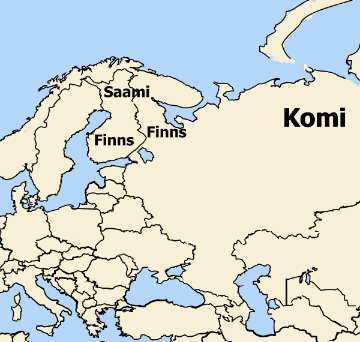
Andrei DNA short about Komi in NW Russia. Compared to Finns they have more east Siberian and Russian Mesolithic (EHG). They're 37% EHG according to G25 and 30% according to Andrei's qpADM models.
https://t.co/UMjFCJjmVv
@nrken19 At least one light skin variant, the one in the IFR4 gene, has gone down in frequency after the Mesolithic. This makes things a bit more complicated.
NEW VIDEO NOW LIVE!
They created beautiful cave paintings, the oldest human figurines, and the world's oldest musical instruments.
This is the story of the Aurignacians.
I hope you enjoy this video.
Shares very welcome, it makes a huge difference for me.
Thank you! 🙏
Epigravettian is a "culture" dating to approximately 20,000–13,000 BP. Its people were the primary ancestors of the "WHG race," which inhabited most of Europe during the Mesolithic period (approximately 13,000–8,000 BP). We still have a great deal to learn about them and their contributions to later populations.
@nrken19 That doesn't sound like multicultural "genetic connectivity." It just sounds like migrations of IEs from mainland Europe which we already knew about.
Here is where Komi live. The Slavic-speaking Russians in the gap between Finns and Komi are genetically mostly derived from Uralic groups similar to Komi. Some