I make history and prehistory documentaries. And I write historical fantasy and science fiction novels. Over 390k subscribers on YouTube. Check out my videos:
NEW VIDEO NOW LIVE!
Are cattle the most important domesticated animals in human history?
This is the story of the first cattle, and how their milk, muscle and wealth transformed our societies.
I hope you love the video, shares much appreciated. Cheers!
Ava
Bell Beaker Culture
Early Bronze Age
Achavanich, Caithness, Scotland
c. 4,250 ybp
Age: 18–25 years
Ava was a young woman who inhabited northern Scotland during the Early Bronze Age. Her remains were discovered in 1987 during quarrying operations at Achavanich in Caithness, where she had been buried in a tightly crouched position within a stone cist constructed in a rock-cut pit.
Standing approximately 171 cm tall, Ava possessed a particularly broad, short cranial vault, with a cranial index of 88.88, alongside wide orbital cavities, a broad nasal aperture and a broad palate.
Ancient DNA analysis suggests she had black hair, brown eyes and intermediate skin pigmentation, potentially comparable to that found among modern southern European populations.
Her genome could be modelled entirely using continental Bell Beaker ancestry, with no detectable contribution from Britain's earlier Neolithic inhabitants. Although her ancestors probably arrived from continental Europe several generations earlier, isotopic evidence suggests Ava herself grew up around Caithness.
Her diet appears to have been rich in animal protein, with little evidence of marine food consumption. She also lacked the genetic adaptation for digesting lactose in adulthood. Her teeth indicate episodes of childhood physiological stress, while abnormalities in her vertebrae suggest physical strain during her lifetime.
Her grave contained a decorated ceramic Beaker, two flint flakes, a small flint scraper and a cattle shoulder blade. Pollen analysis also identified meadowsweet and marsh St John's wort, raising the possibility that flowers or medicinal plants accompanied her burial.
The surrounding prehistoric landscape appears to have included woodland containing pine, birch, hazel and alder, interspersed with open heathland.
Although the circumstances of her death remain unknown, Ava represents one of the most extensively investigated Bell Beaker-associated individuals from northern Scotland, providing a remarkable insight into the ancestry, appearance, diet and funerary practices of Early Bronze Age communities.
#AncientEuropeans #BellBeakerCulture #BronzeAge #Scotland #ScottishHistory #Achavanich #Caithness #AncientDNA #Archaeology #FacialReconstruction
Artistic interpretation
MESOLITHIC CHILDHOOD — NORTHERN EUROPE, C. 9,000 YEARS AGO
Around 7000 BC, Mesolithic children in northern Europe grew up in a landscape transformed by the end of the last Ice Age. Rising temperatures encouraged the spread of birch, pine, hazel, oak and elm forests, while rivers, lakes and wetlands supported red deer, roe deer, wild boar, elk, aurochs, fish and waterfowl. Communities lived by hunting, fishing and gathering seasonal foods, including hazelnuts, berries, roots and shellfish. Children learned through observation, imitation and play, gradually developing skills in tracking animals, collecting food, making tools and navigating their surroundings. They would have spent much of their childhood outdoors, exploring woodlands, swimming, climbing and playing with other children. Families occupied seasonal camps, sometimes returning to established locations over generations. Although injuries, infections, food shortages and childhood mortality presented serious dangers, their lives would also have included affection, friendship, humour and curiosity. Sea levels continued to rise during this period, gradually flooding Doggerland, the low-lying territory that had connected Britain to continental Europe. These children belonged to communities whose knowledge of the natural world was essential to survival, growing up in an environment undergoing profound ecological and geographical change.
#Mesolithic #MesolithicEurope #HunterGatherers #PrehistoricEurope #AncientEuropeans #WesternHunterGatherers #PrehistoricChildhood #Doggerland #StoneAge #Archaeology
The Borum Eshøj Triple Burial
Early Bronze Age, Jutland, Denmark
c. 3,350 ybp
Borum Eshøj is an Early Bronze Age burial mound near Aarhus, Denmark, dating to around 1350 BCE. The mound contained three well-preserved oak-coffin burials: an older man, a young man, and an older woman.
The older man, aged approximately 50–60, was buried wearing a woollen cap, cloak, kilt, belt, and foot coverings. The young man, aged around 20–22, wore a woollen cloak and kilt with a leather belt. His grave contained a bronze dagger placed inside a wooden sword scabbard.
The older woman, also aged approximately 50–60, was buried wearing woollen garments, including a blouse, skirt, hairnet, cap, and belts. Her grave goods included a decorated bronze belt plate, bracelets, rings, brooches, a dagger, pottery, a wooden box, and a horn comb.
Conditions within the burial mound preserved clothing, hair, leather, and other organic materials, providing evidence of Bronze Age dress, craftsmanship, and burial customs.
The three individuals may have belonged to the same family, although their exact relationship remains unknown. Additional burials were also discovered within the mound, indicating its continued use.
#BorumEshoj #BronzeAge #Archaeology #Denmark #AncientEuropeans #BronzeAgeEurope #EliteBurial #GraveGoods #OakCoffin #PrehistoricArchaeology #AncientHistory
🚨 NEW VIDEO - OUT TODAY - 6:15PM 🚨
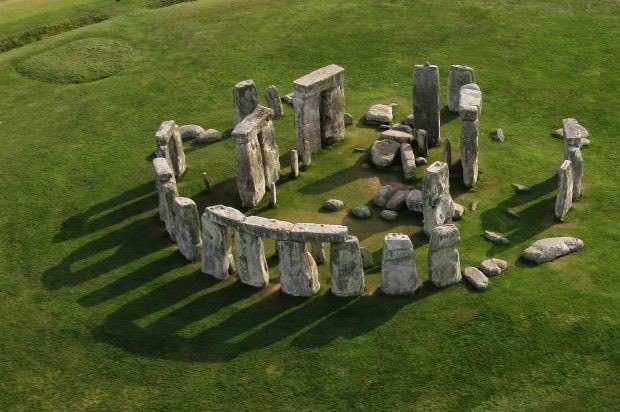
What is Hiding UNDER Stonehenge? - a play by play of items found under Stonehenge itself, from 1620, to 2018...
Excited for you to watch this one.
The elf lords of the countless islands usually live in isolation with their armed retinues, traveling from island to island within their domains to collect taxes and tributes, while their attendants light a fire atop their towers to guide them home.
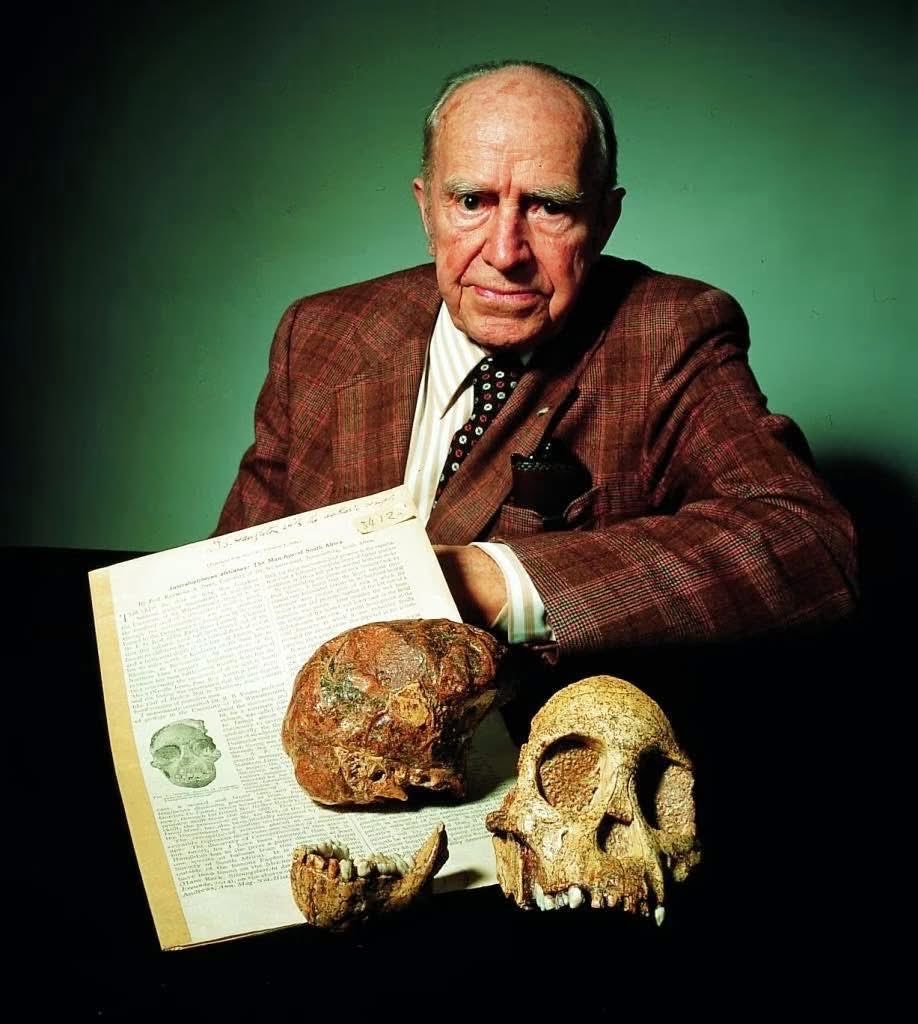
November 22, 1988 - died this day Australian anatomist and anthropologist Raymond Dart, best known for the description and naming of the type fossil of Australopithecus africanus in 1925
@theiaincameron Always enjoy going down a rabbit hole after one of your posts Iain, but this one about the last auk being beaten to death because someone thought it was a witch was… somewhat dispiriting
In August 1727, three men and eight boys from St Kilda were dropped on a sea stack to catch seabirds.
Nobody came back for them for nine months. Not because they'd been forgotten. Far from it. But because there was nobody left at home who *could*.
1/n
Not today, with communications and transport and worldwide shipping and online services. But even back then it depends on your market. Considering the capital outlay and ongoing liabilities for the van and equipment, it would be more efficient for Stan to do chimney sweeping or window cleaning for surrounding villages as well, focusing on one business full time. But that depends on whether there's a market for his services in the region vs just his village. He's being rationally efficient in terms of his village economy by filling all the gaps.
In 1760s England it was all too easy to mistake a duke for a farmer.
Fun story from a Swedish visitor in 1760 at the Newmarket races:
Having gone with the crowd to see the winning horse belonging to the Duke of Devonshire, “a man dressed in blue, with a tufty yellow wig on his head, stood particularly in my way. He had the look of a good honest farm steward. I took him by the arm and said that he ought to let other people get at the horse, since he had looked at it long enough. He at once made room and talked with me about the horse.
We went out together, when the whole crowd greeted him and said: ‘I wish you joy Milord Duke.’ It was the Duke of Devonshire ...
Dukes, marquises, earls, lords, knights, esquires, farm stewards and farmers are here so alike both in clothes and behaviour that no one can tell them apart who does not know them beforehand.”
On Mars, a thin layer of soil over a habitat makes the radiation worse. Cosmic rays hit the regolith and throw off secondary neutrons, and the dose peaks about 30 centimeters down. Published modeling puts long term living under astronaut dose limits at 1 to 2 meters of rock. So you go underground.
The machine that digs those tunnels has to run itself, because the nearest engineer is up to 22 light minutes away. The Boring Company is already on that path. In May 2025 it mined continuously with nobody in the tunnel, and by August 2026 its machines were laying tunnel lining on their own, the company says. Steve Davis and @boringcompany are building the skills a Mars machine needs, here on Earth.
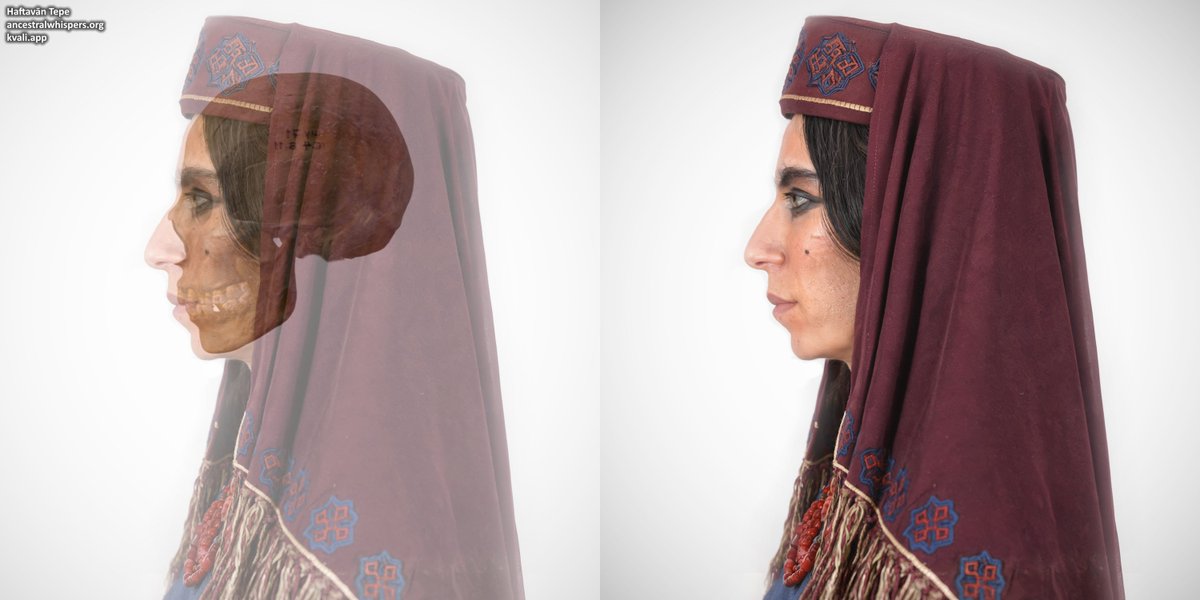
Facial reconstruction of a 2,750-year-old woman from Haftavān Tepe, Iran
Haftavān Tepe is one of the three largest settlement mounds in the Urmia Basin, Azarbaijan. Covering approximately 50 acres, it lies near the village of Haftavān, about two miles from Salmās. The multi-period settlement comprises eight main archaeological phases, numbered VIII to I from oldest to youngest, spanning roughly 3,000 years.
The woman lived during a period when the region was contested between the kingdoms of Urartu and Mannaea, both of which existed within a broader cultural sphere shaped by earlier Hurrian influences.
Haftavān VIII (c. 2600 BC). The earliest excavated phase revealed two successive layers of circular buildings, with pottery dating to the end of the Early Trans-Caucasian II/Kura-Araxes culture period, comparable to Yanik Tepe near Tabriz.
Haftavān VII (c. 2300 BC). Occupation was concentrated around the summit citadel, where massive mud-brick structures were uncovered. The relatively peaceful character of this phase is reflected in the limited archaeological material recovered.
Haftavān VI C–B (c. 2200-1450 BC). Following a period of abandonment, the settlement was sparsely reoccupied, mainly around the citadel. Painted Orange Ware provides parallels with Hasanlu VII.
Haftavān VIB (c. 1900-1450 BC). This phase comprised two prosperous sub-periods, Early and Late VIB, both ending in major destruction by fire. The settlement reached its greatest extent during Early VIB, when extensive buildings, including massive terraced structures, occupied much of the mound. Their timber-reinforced mud-brick walls and pottery, including black-on-red vessels, with strong Transcaucasian connection.
Late VIB is particularly notable for its painted Urmia Ware, depicting felines, equids, birds, human figures, and animal-drawn vehicles. Transcaucasian cultural connections appear to have weakened following the destruction of the earlier settlement.
Haftavān V (c. 1450-1100 BC). Corresponding to the Iron I period, this phase retained considerable continuity with Late VIB material culture, although a small proportion of distinctly Iron Age dark grey burnished pottery also appeared.
Haftavān IV (c. 1100-800 BC). Corresponding to the Iron II period, this appears to have been a relatively unimportant phase compared with contemporary Ḥasanlu. Excavations revealed poorly preserved but spacious buildings, alongside inhumation burials containing bronze and iron ornaments and numerous beads, mostly carnelian.
Haftavān III (c. 825-715 BC). This phase is associated with the incorporation of the Urmia Basin into the Kingdom of Urartu in the late 9th century BC. Excavations on the citadel uncovered a large building arranged around a central courtyard, with five column bases along its southeastern side. Its pottery included distinctive Urartian wares, particularly red-polished palace ware, found in the destruction debris of an upper storey.
The building was probably not a fortress but rather the residence of an Urartian governor. It was likely destroyed around 714 BC, during Sargon II's eighth campaign, either by the Assyrians or the Cimmerians. The pottery suggests an earlier Urartian occupation, dating approximately to 825–715 BC. Urartian settlement also extended beyond the citadel, after which the site was abandoned, possibly until the late 6th century BC.
Haftavān II (mid-1st millennium BC). Achaemenid period, characterized by defensive towers and perimeter walls.
Haftavān I (C-A, up to the mid-1st millennium AD). Sasanian period, featuring a perimeter wall, a cemetery, and numismatic finds, including coins of Shapur I
Reconstruction commissioned by @shoresh03