AI capability has outrun organizational architecture in the public middle market.
Boards reward pilot volume over deployment velocity.
The result is a persistent structural mispricing.
I published a 120-page paper on it today. Pilot Purgatory.
https://t.co/0XLRvK1iIr
When people ask why America has to win the AI race, this is the answer. @DavidSacks gave it on @theallinpod.
Imagine China had won the internet instead of us.
Imagine Baidu, Alibaba, and Tencent running the world’s internet instead of Google, Microsoft, and Meta.
Even people who dislike Big Tech would admit that outcome is worse for America.
Our economy would be smaller and less advanced.
All of that wealth and technological leadership would have gone to China instead.
There is a military angle too. These algorithms run weapons systems and drones. A China that controlled the core platforms would leave America permanently behind.
The bottom line is simple.
America does not stay the number one country in the world, economically or militarily, if it loses the AI race.
That’s why winning AI is non-negotiable.
@PFFeeley@BillAckman Bill is 100% right here, and I fully agree with Patrick’s take on Ackman’s philosophy.
Elon did this with SpaceX when he took it public. Everyday people who stuck with the company realized the value they helped create once the shares became available to the broader market.
.@BillAckman and I agree on this. Real equity for the people working alongside you builds team mentality, not a payroll. Every employee at Pershing Square holds a multimillion-dollar stake, and the firm hasn’t had a single undesired departure in a decade.
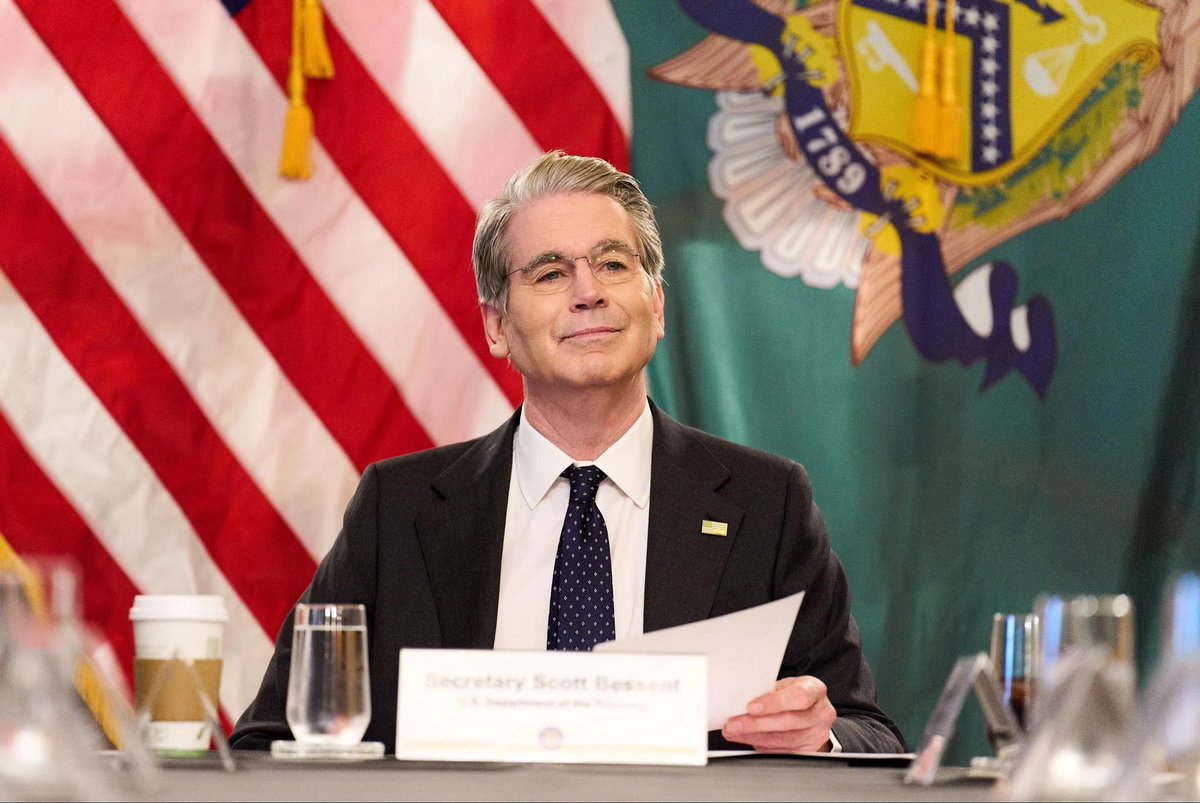
Many forget that @SecScottBessent delivered on some of @DOGE’s biggest early wins.
Treasury confirmed on July 21 that it stopped nearly $99 million in payments to dead people.
Treasury Secretary Scott Bessent said the department believed it could stop up to $350 million in such payments by the end of the year.
The screening covered more than 885 million payments totaling nearly $2.77 trillion.
It caught more than 4,900 flagged disbursements, which were returned to the originating federal agencies for review before any funds were disbursed.
The $99 million stopped was more than triple what Treasury found going to deceased recipients in the period just before the new process began.
This was the exact fraud DOGE flagged when @elonmusk pulled Social Security records showing millions of people listed at implausible ages.
The effort fulfilled President Trump’s Executive Order 14249 (“Protecting America’s Bank Account Against Fraud, Waste, and Abuse”) and was made permanent by the Ending Improper Payments to Deceased People Act signed in February 2026.
It relied on @USTreasury’s permanent access to the Social Security Administration’s Full Death Master File through the Do Not Pay system.
At midnight on February 6th, earlier this year, the doorbell to our apartment rang. The doorbell was followed by a pounding on the door. I answered the door and a security person in our building handed me his phone. It was my oldest daughter Eloise. She had found my 26-year-old daughter unconscious on the floor of her apartment and had called 911. The EMT team was already there, but they did not know what was wrong with Lucy or to which hospital they would take her.
I threw on some clothes and jumped in an Uber heading east toward Brooklyn. (Lucy lived alone in Williamsburg.) On the way, I learned that they were taking her to Elmhurst, a City trauma hospital in Queens. I arrived about five minutes after the ambulance to join Eloise, Lucy’s mom, and a friend, and waited to learn what was wrong.
After about 15 minutes, I asked a nurse where she was. I looked over his shoulder to his computer. Next to her name, it said “non-responsive.” I walked into the emergency room and wandered around looking for her until I found her unconscious on a gurney surrounded by several doctors and nurses.
By about 2:30am with the results from a CAT scan, Lucy’s doctors had determined that she had a massive brain hemorrhage and would need an emergency hemicraniectomy to release the pressure on her brain and remove the blood from the hemorrhage. I called our wonderful friend and family doctor Eddie Fisher and explained what was going on. He woke up Josh Bederson, Chairman of Neurosurgery at Mount Sinai, to find out more about Zach Hickman, the neurosurgeon on call that night. Dr. Bederson said Hickman was an excellent surgeon, which was comforting as we had no choice.
The surgery to save Lucy’s life began around 3:15am and finished around 5:30am. It was successful.
The following day, I joined Lucy in an ambulance while she was being transferred to Mount Sinai on Madison Avenue. Later that day, we determined from Lucy’s Oura ring that her hemorrhage had occurred around 9am, which meant that more than 19 hours had passed from the time of the hemorrhage to the completion of the surgery to release the pressure on her brain (I only wish @ouraring had an alert for this kind of a medical event. Imagine it could call a family member if the wearer doesn’t cancel the alert).
I later learned that the standard of care is not to do surgery to save a patient with a large brain bleed if more than five hours have passed since the hemorrhage. Even when the surgery is done, I was told that the likely outcome for the patient is a few months in a nursing home and death from pneumonia.
When I met Lucy’s doctors, I did my best to inspire them: “Let’s see what can be accomplished if we give her the best care possible and we invest unlimited resources to restore her to life.” And I promised that whatever we learned we would make available to everyone.
Dr. Chris Kellner, her neurosurgeon, and Dr. David Putrino, Director of Rehabilitation Innovation for the Mount Sinai Health System have led Lucy’s care team since that day. Words cannot describe the remarkable and compassionate care that she has received beginning with the EMT team and then from nurses, doctors, therapists, and the army of people who have worked to save her and return her to life. To this day, we have a daily Zoom where we discuss her progress and make adjustments to her care. While her care and oversight have been incredible, the learnings for the Mount Sinai team have also been elucidating and will assist in the care of many others.
Lucy began in a bad place. She was in a coma for several weeks and then awoke not being able to breathe on her own, unable to walk, see or speak.
Over the last six months, she has recovered her cognition – she understands everything including her circumstance – is able to walk a hundred or more steps at a time with assistance, is making progress with sounds, vowels and consonants and the beginnings of speech, but she remains unable to see.
Each day, she makes a little progress, and daily progress compounds. Every day I tell her that she just needs to make a little progress and it won’t be long before she is back.
We remain optimistic that Lucy will return to normal function. It will likely take years, but I believe it is only a matter of time, hard work, and technological progress, along with some, and perhaps a lot, of divine intervention.
Many people have been praying for Lucy and we are incredibly grateful for the prayers and remarkable support she has received. Lucy’s friends have been with her every day since the beginning, and their presence and friendship have saved her life and helped to rebuild and maintain her spirit. And on a very positive note, Lucy’s challenge has brought together our entire modern family who have all been incredibly devoted to her care and recovery.
Lucy's vision and other faculties may require some form of brain computer interface, work that is underway at Neuralink, Precision Neuroscience, Science, Synchron, Nudge, and other companies in the space.
If you are going to have a devastating brain injury, now is the best time in history for that to happen. We are living in a world when you can be confident that the blind will soon see again. We are going to do everything we can to help make that happen, including by assisting existing companies in the space.
With respect to our promise to make Lucy’s care available to others, we have made good progress. In May, a real estate colleague made me aware of a 93% vacant, brand new, 400,000 square foot Class A+ purpose-built biotech facility on West End Avenue between 65th and 66th Streets that missed the market and was available for sale. The Pershing Square Foundation acquired the building 60 days later.
We also put under contract an adjoining 130,000 square foot building at 320 West 66th Street that is currently being used by Saturday Night Live for studio space. The building has 35-foot ceilings with massive column-free spaces that can be converted into superb rehabilitation facilities. We will close on the SNL building in December.
We are also acquiring an adjoining vacant lot with additional air rights. With just the existing zoning rights, we can add a 150,000 square feet for a total of 680,000 square feet, a lab footprint larger than Rockefeller University, and that’s without including the potential for an upzoning that would allow for substantially more buildable area on the site’s 3.4 acres with spectacular views of the Hudson.
Our goal is to build the world’s greatest brain research, rehabilitation, recovery, human optimization, and longevity institute. We have named it The Ackman Oxman Institute or the AOI for lack of a better name, but also to reinforce the point that Neri and I and our family are all-in on the mission.
The AOI will be patient-centric. It will not be an academic research institute that produces lots of papers, a Nobel Prize winner or two, but little if any results for patients. We will be laser-focused on cures, treatments, devices, rehabilitation and exercise equipment, and targeted and basic research with a goal of massively accelerating the time from idea to innovation to production to helping a patient.
While the AOI will be a non-profit, it will have highly commercial instincts. The AOI will have its own venture funding and will work to develop innovations to create companies that we will seed, assist, and spinout to ensure technologies, treatments, techniques, and drugs get to patients as promptly as possible.
On one 3.4 acre campus in what is still the greatest city in the world, we will do neurosurgery, neuroscience, rehabilitation, nutrition, BCI and device development, human trials, hyperbaric oxygen treatments, and life extension programs, and we will mandate and incentivize collaboration among the teams with no silos, politics, bureaucracy, or any other constraint that is inconsistent with the mission.
Mount Sinai will be an important partner and deservedly so, but it won’t be our only hospital or medical school partner as we don’t believe any institution has a monopoly on the best ideas or the best talent. We don’t believe in exclusive relationships because that is not in the best interest of patients.
Five years ago, we considered launching a brain institute inspired by Neri’s mom who sadly died from Alzheimer’s. We couldn’t make the math work as the real estate was too expensive and we believed it would be too difficult to recruit the best talent from universities to our effort.
Since then, the real estate became available at a 70% discount, universities became a much less attractive place to work due to politics outweighing meritocracy, protests that disrupt learning, the curse of antisemitism, and a decline in funding. Fortunately, during the same time, I made sufficient personal economic progress to make the AOI possible.
The advance of AI in the last few years will also enable us to greatly accelerate our mission. AI still has a lot to learn about human intelligence and the brain, and the AOI should be at the forefront of the interplay between the brain and AI.
Today, I am making a public filing disclosing a gift from Neri and me of ~$400 million or 10,000,000 shares of Pershing Square Inc. (PS) to the AOI. It is very early days for Pershing Square so these shares are intended to anchor the long-term work of the AOI as the shares compound over time while generating what we expect will be a growing stream of quarterly dividends to fund the Institute.
We will also be announcing an additional gift of similar and potentially greater size which won’t be in the form of Pershing Square stock to provide the AOI with the short- and intermediate-term runway necessary to enable it to achieve its goal of becoming a self-sustaining institute, which reinvests all of its revenues, royalties, and the economic rewards of company formation to advance the fields of brain health and human longevity.
Neri and I have chosen to anchor the funding of the AOI to maintain vision alignment and limit the need for the organization to focus on fundraising. We expect the AOI to be the best-resourced brain, rehab, recovery, and longevity institute in the world.
We are grateful to have been able to form a board which includes Dean Kamen (our generation’s Thomas Edison), George Yancopoulus (CEO of Regeneron), James Rothman (Nobel Laureate), Bernardo Sabatini (neuroscientist), Chris Kellner (neurosurgeon), Olivia Flatto (CEO Pershing Square Foundation), Neri Oxman, and myself.
We have recently identified a CEO who we expect to announce by October along with other key hires, and are beginning searches for a Chief Scientific Officer, a Chief AI/Technology Officer, a Chief Operating Officer, a Chief Financial Officer, and other key leadership roles.
If you find what we are building compelling and want to be part of the leadership team that creates and builds the AOI from a standing start, please send an email to: [email protected] with a short note as to why you believe you can help. Please include your best three ideas for the AOI along with a summary of your background and your most important accomplishments.
We promise strict confidentiality to those expressing interest in working with us.
We have learned from Lucy that the brain can recover from even catastrophic injury. There is so much more work to be done as the mind is a terrible thing to waste.
For details from my Pershing Square SEC filing see:
https://t.co/gZKafCw6Ia
Conventional tech wisdom says you must multi-home your AI stack to survive. @elonmusk is proving why that’s a trap.
@Tesla engineers are already writing FSD and CyberCAB with @grok .
Why zero counterparty risk? Because the lab and the customer are structurally aligned.
The counterparty cannot defect. There is no repricing. There is no strategic pivot against your own shareholders. Complete vertical integration of the AI stack is the ultimate moat.
Conventional tech wisdom says you must multi-home your AI stack to survive. @elonmusk is proving why that’s a trap.
@Tesla engineers are already writing FSD and CyberCAB with @grok .
Why zero counterparty risk? Because the lab and the customer are structurally aligned.
The counterparty cannot defect. There is no repricing. There is no strategic pivot against your own shareholders. Complete vertical integration of the AI stack is the ultimate moat.
.@BillAckman did something almost no public company CEO would ever do. $PSUS $PS
He finished his earnings call, then hoped on an X Space and let anyone ask him anything.
He took every question and then told a room full of anonymous accounts that they make him a better investor.
.@benthompson on @InvestLikeBest with @patrick_oshag makes the case that Google increasingly looks like Berkshire Hathaway.
Search is the perfect machine. Zero marginal cost, infinite scale, permanent margin.
Now that cash funds AI, which incinerates it.
Berkshire ran the same play. See's Candy cash into BNSF. Worse margins, far bigger dollars. One year of BNSF free cash beat See's entire lifetime.
Percentages stop mattering. Absolute dollars do.
Really interesting parallel from Ben, comparing Google to Berkshire Hathaway.
He says Google's search business is See's Candies. Its AI bet is Berkshire's move into the railroad:
"They have See's Candies. Tremendously high margin business.
The problem with a lot of high margin businesses is the percentage profit you can make is very high, but the absolute profit is small.
So the brilliance of the BNSF Railway thing was they took the See's Candy profits and said, here's another industry whose margins are worse, but the absolute dollar amounts are so large that those worse margins result in absolute profits that are much larger.
BNSF in one year threw off more free cash than See's Candies had thrown off in its entire lifetime.
The reason why I find that story so interesting is it seems to capture where Google itself might be going.
This unbelievable high margin business of search, one of the most perfect, beautiful business models of all time.
And meanwhile there's this AI opportunity which requires astronomical spend. It's a cash incinerating machine.
But if AI is intelligence and its TAM is basically all white collar work and eventually more, the margins are lower but the absolute profits available are much larger.
Will we look back and say Google was See's Candies? It feels like that's happening.
In that world, you use all your free cash flow. They've done that. You tap the debt markets to the tune of hundreds of billions of dollars. They've done that.
You issue equity. What does an equity issue do? It dilutes your interest in your shareholders. So you have a smaller percentage of the pie.
Well, you have a smaller percentage of an astronomically larger pie. At the end of the day, no one's going to be complaining.
Berkshire is actually not just an investor in Google, but a model for Google and where they're going."