About 12 seconds into this video, something unusual happens. The Earth begins to rise. Never seen by humans before, the rise of the Earth over the limb of the Moon occurred about 55.5 years ago and surprised and amazed the crew of Apollo 8. The crew immediately scrambled to take still images of the stunning vista caused by Apollo 8's orbit around the Moon. The featured video is a modern reconstruction of the event as it would have looked were it recorded with a modern movie camera. The colorful orb of our Earth stood out as a familiar icon rising above a distant and unfamiliar moonscape, the whole scene the conceptual reverse of a more familiar moonrise as seen from Earth. To many, the scene also spoke about the unity of humanity: that big blue marble -- that's us -- we all live there. The two-minute video is not time-lapse -- this is the real speed of the Earth rising through the windows of Apollo 8. Seven months and three missions later, Apollo 11 astronauts would not only circle Earth's moon, but land on it.
Lead Animator: Ernie Wright; (USRA); Music: C Major Prelude by Johann Sebastian Bach
2/2 "... As the techno-
economic assessment identified no showstoppers, we argue for more research on
ecosystem impacts, governance, monitoring, reporting, and verification, and
technology development and assessment to determine whether ..."
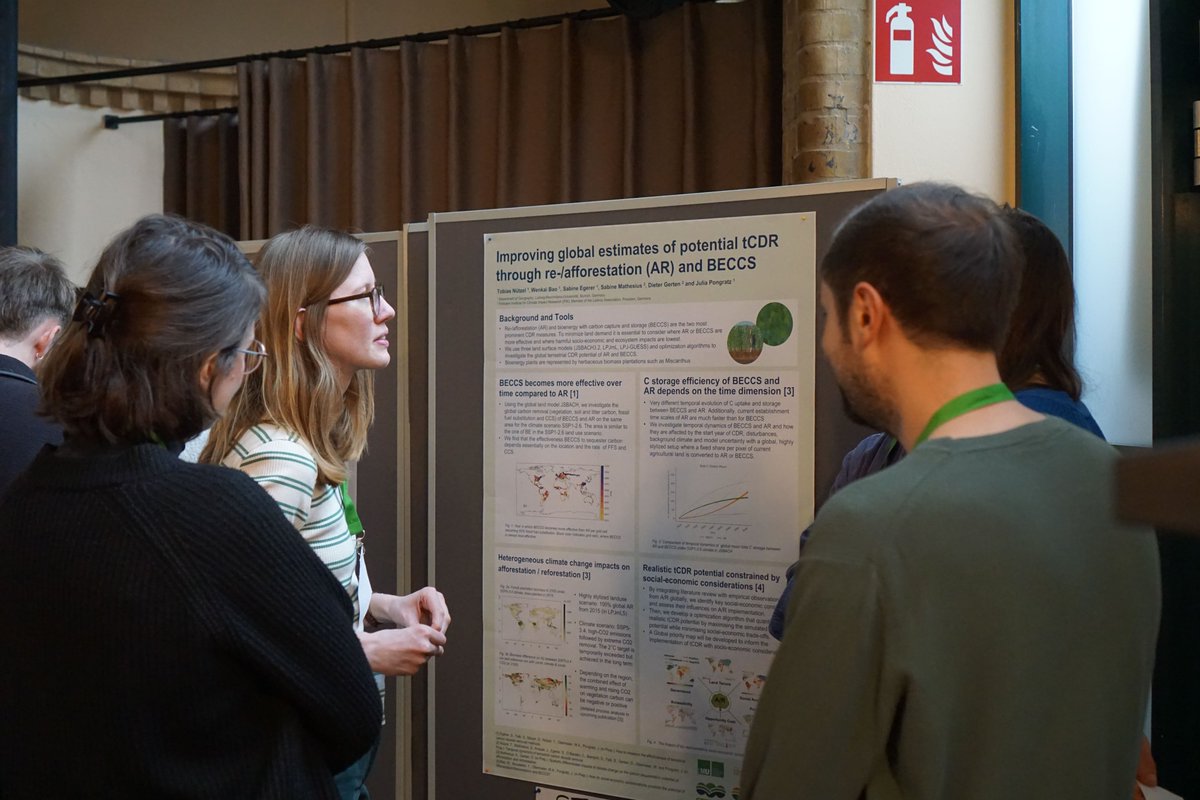
Last day of our joint General Assembly in Hanover: All CDRterra consortia presented the latest interim results of their #research on land-based #CDR. Some examples you can find here: 👉🏾https://t.co/4KQgEFO5CZ
Many thanks to all of u!💚
#CarbonDioxideRemoval#CarbonRemoval
Exciting keynotes about #CDR from exciting people were the focus of the 1. day of our general assembly with @CDRmare in Hanover. Today, our climate scientists will be answering questions from the public at our #CCS Infoevent at 7.30 pm:
https://t.co/srBufrw5BG
@BMBF_Bund@DLR_PT
A kick-off session with lots of expert input and many topics to discuss afterward. Thanks a lot to everyone who joined us last night in Hanover to start the joint general assembly of CDRmare and @CDRterra#CDR
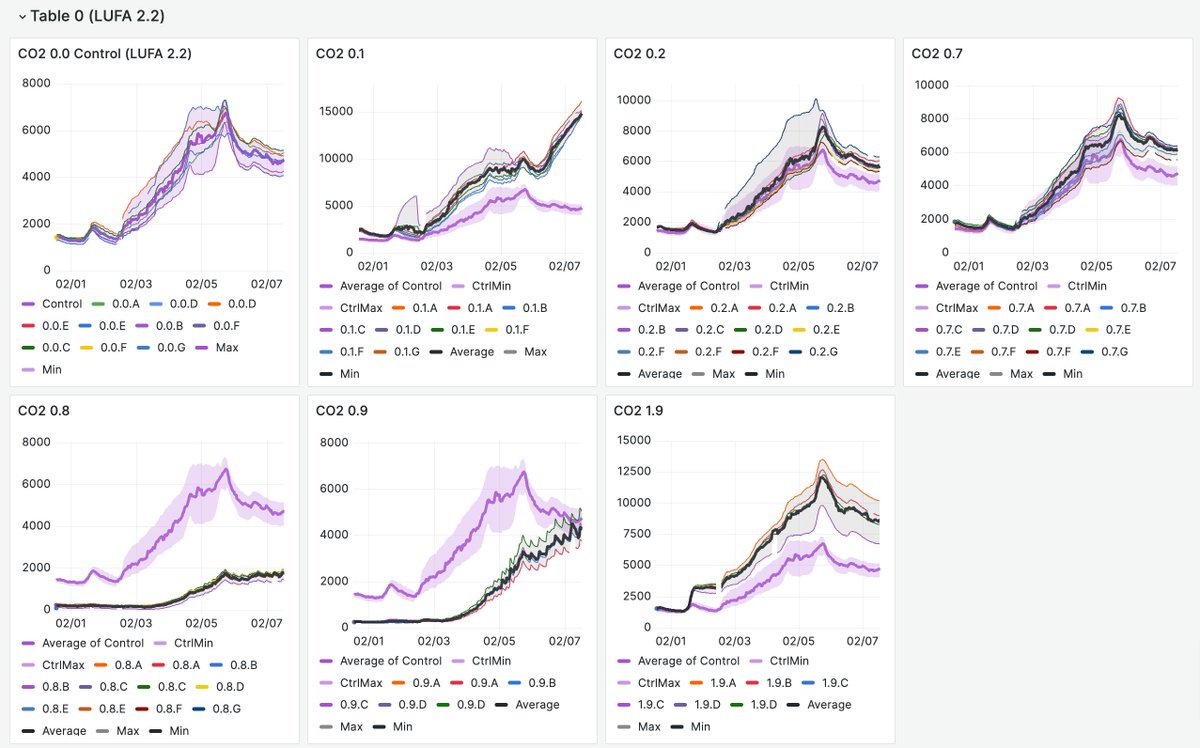
A sample screenshot of our soil pCO2 sensor data from the recently added new experiments in the #projectcarbdown greenhouse.
The purple lines/areas show the CO2 concentrations of the untreated control (=top left graph), the gray line/areas show the readings for the pots with rock dust amendments during the first 7 days since inception of the experiment. Irrigation was started on day 3.
There is already a significant difference in CO2 in the amended pots compared to the control even during the first days of the experiment, which will continue to run for 1-3 years.
Some pots (bottom left 2, with very reactive amendments) have seen CO2 concentrations below 100 ppm right after setup and for several days.
The sensors take a measurement every minute which equals 10.080 data points per week per replica. These graphs cover 7 variants with up to 7 replicas, so what you see here is based on over 400.000 data points in one week.
Last week we have extended our greenhouse experiment with 78 new lysimeters to now close to 400 experiments in total. This brings our setup now to a total of 14 different rock dusts and 15 different soils.
Visit our blog to see the full documentary
https://t.co/4jQsH3tJXK
Curious about our setup to enhance mineral weathering through the activity of soil organisms?🪱🍄🦠🪨Besides reading about it, now you can also... watch it!!! 📺 Have a look to find out more! 😁
#EIC_BAM#JoVE#enhancedweathering#soilbiota
https://t.co/F1RlAcbitC
Three years ago today we announced the start of #projectcarbdown where we try to measure the carbondioxide removal from the atmosphere by enhanced weathering on agriculturally used lands. We want to see "tons of CO2 captured&stored per hectare per year"!
A new preprint manuscript on the stability of alkalinity after ocean alkalinity enhancement (OAE) is online from Niels Suitner et al. Thanks @GiulyFau and all the others: https://t.co/L4ABFPh1UK
Soil electrical conductivity as a proxy for enhanced weathering in soils
https://t.co/JmNF61K1EI
New publication by Lukas Rieder with help from the Carbon Drawdown Initiative @carbon_drawdown and @MathildeHagens
I finally published my first paper. If you are planning some EW field experiments and want to know which soil parameters are important to measure for EW application, the discussion and conclusion section will give you some insights.
https://t.co/aqg39CfMrF
A new preprint manuscript on the stability of alkalinity after ocean alkalinity enhancement (OAE) is online from Niels Suitner et al. Thanks @GiulyFau and all the others: https://t.co/L4ABFPh1UK
September temperatures are now out from our Berkeley Earth dataset. Looking at all the Septembers back to 1850 helps highlight just how anomalous this month has been: https://t.co/lzh5i5m1Gm