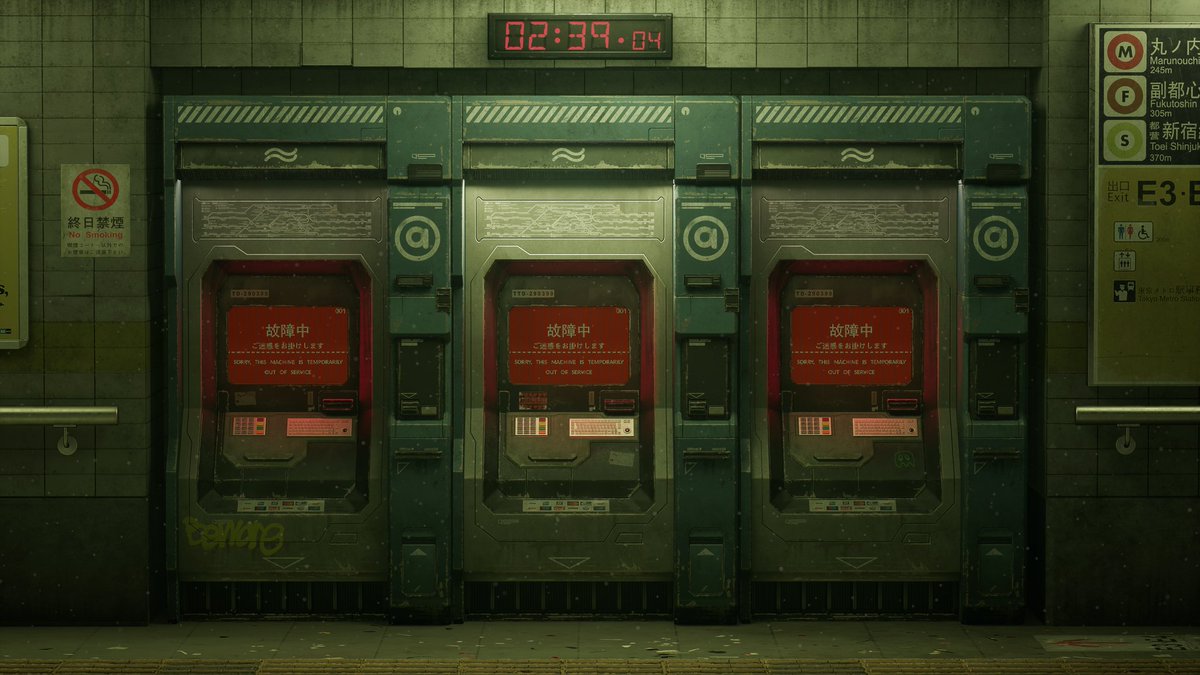
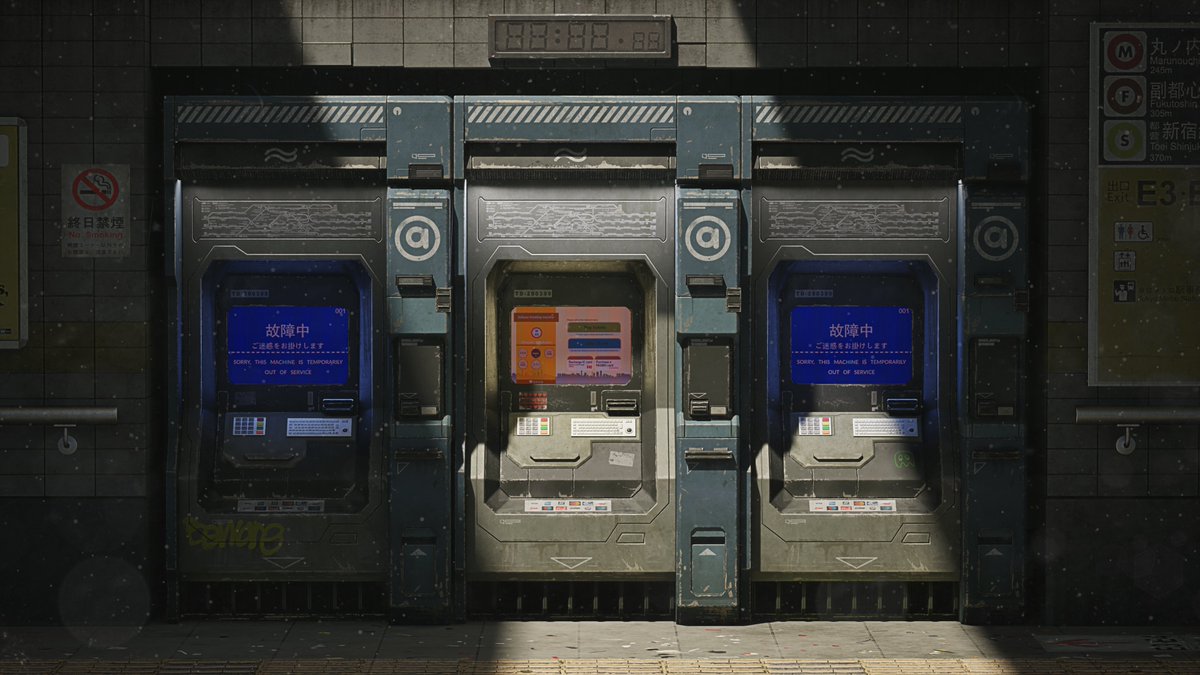
If you are an aspiring 3D environment/prop artist, it's very important that you understand the scarcity of texture memory. Production artists go to great lengths to squeeze the most from the least possible amount of textures.
If you are building a portfolio, include pieces that showcase:
- trim sheets,
- vertex paint masks,
- utilization of multiple UV sets,
- tiling textures and how you hide their repetition.
These works won't get you hundreds of likes, but they'll show that you have the right sensibilities. You don't have to be a tech artist and build an entire pipeline. Just showing that you are aware of those concepts is a strong signal to your future lead.
You do need pretty renders and hero props to get likes, establish your name and attract recruiters.
But don't ignore the biggest pain point of every single graphics-heavy production.
My favorite resources on the topic:
- The Ultimate Trim: Texturing Techniques of Sunset Overdrive — Morten Olsen (Insomniac Games)
Elegant and lightweight pipeline, almost an art form in itself.
- Behind the Art of Battlefield and Battlefront — Joel Zakrisson (DICE)
My personal favorite. Love the double UVs and the detail normals. Revisited this article many times over the years.
- Cyberpunk 2077: A World Full of Substance — Krzysztof Krzyścin (CDPR)
The gargantuan scale of CP2077, vast sightlines, high detail density — CDPR created a miracle.
- Driving Innovation: A New Vehicle Pipeline for 'The Last of Us: Part II' — Matthew Johns (Naughty Dog)
Helps drive home the actual sizes of used textures.
- Building the World of 'The Ascent' — Tor Frick (Neon Giant)
Teaches you what does and doesn't matter in production. Shows you how much data you can squeeze from an asset (color masks, mesh maps).
- Seaside Town UE4 — Vytautas Katarzis
All-time classic. Hyper-optimized doesn't mean ugly.
- Old Freight Car — Aleksandr Silantev
Very thorough breakdown that takes you deep behind the scenes.
- Modular Wood-Shack Kit: Insurgency Sandstorm — Vuk Banovic
Beautiful little example of how far you can take a single texture set.
Here's a texturing technique I use in all my projects.
It’s a universal base layer. I stack several noise textures to create subtle variations in the Color and Roughness channels. I create large and medium shapes using Clouds and Galvanic grunges.
This base layer is the foundation for every material in the project. I use Passthrough blending + Levels and HSL to set the starting point for each material.
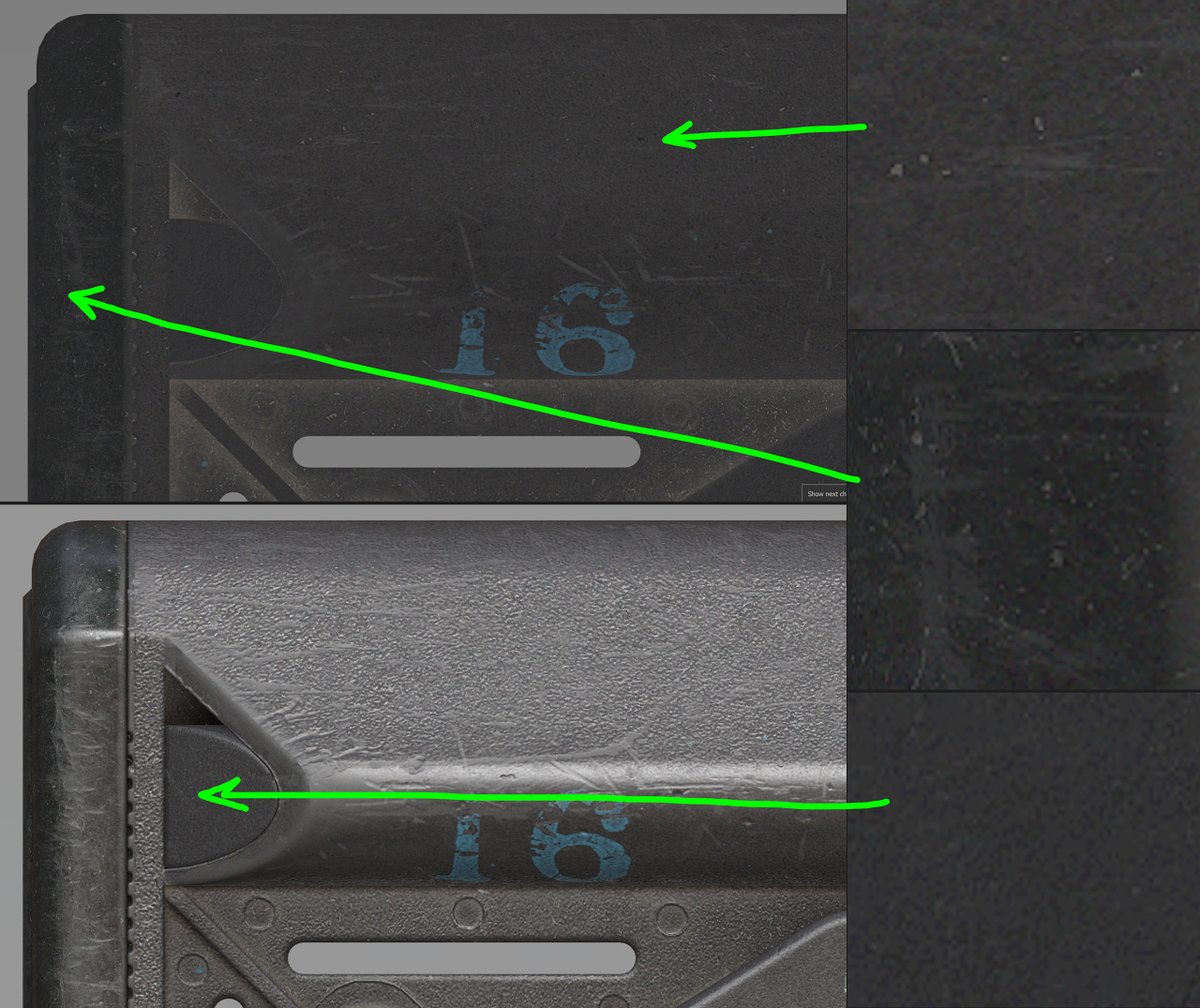
On top of that, I add a reusable set of micro-noise fills. First, they mitigate color banding caused by HSL adjustments. Second, they add a “fractal” quality to the texture, tricking your brain into feeling that there’s more than meets the eye. Without them, the texture feels too “digital” and sterile.
Don't overdo it though. It should be barely perceptible. 2-10 value steps. We don't want the texture to be noisy.
Hyperrealism in 3D doesn't actually mean a one-to-one match with reality.
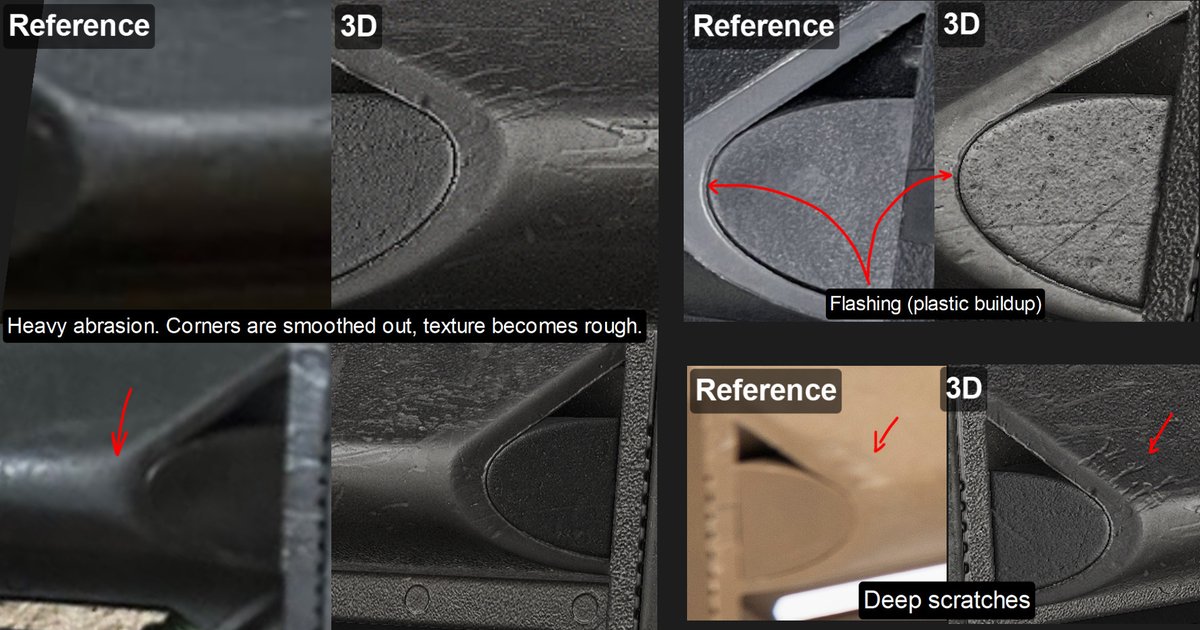
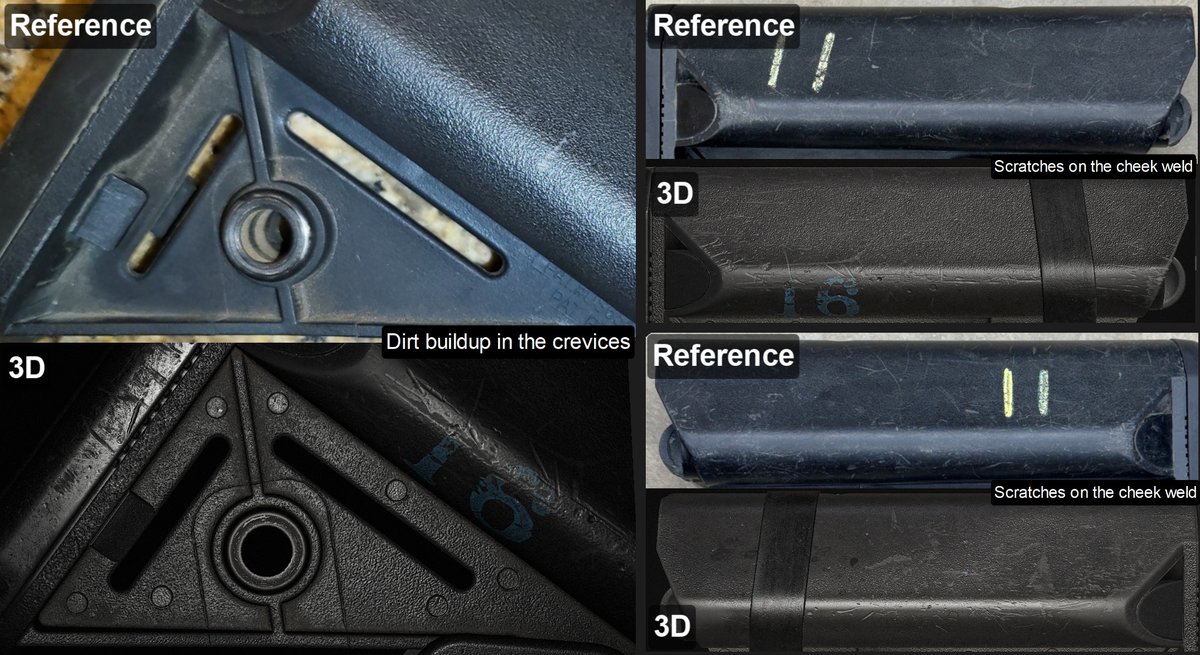
To be visually appealing, realistic textures have to be intentionally exaggerated.
First, you gather as much quality reference material as you can. "Quality" means real-world use with clearly visible wear. Military surplus stores and footage from warzones are S-tier sources. Socials, forums and guntubers who don't baby their gear also provide solid material.
Next comes the most artistic stage of the entire weapon art pipeline. You recreate as much of that reference as you can, while preserving contrast, detail balance, physicality of materials and contextuality of wear and tear. Every scratch should tell a story.
In game production, the less of a focal point guns are, the more streamlined these steps become.
Instead of a bespoke approach, we rely on presets and universal materials. High fidelity gives way for consistency with art direction, quick readability and production speed.
https://t.co/hbhfQLsU3n I have done article about Design for 3d environment artists. I am feeling this topic pretty rarely mentioned, but have incredible impact on what we do. I have some ideas for Part 2 if this will be interesting.
Only worked with him for a year but I had a great time. Super hardworking and skilled. I learned a lot from him. And also a super fun person to chat and hangout with.
Looking for connections. Im on a skilled immigrant visa and only have until May 31 staying in europe. If anyone knows someone that needs a 3D prop artist / hardsurface artist in their team with 5 years exp. please let me know. I work hard 😭 1/2
Check out my big bevel tutorial for @marmosetco Toolbag 5. I cover how to set up bevels, baking and UV tips, how the bevel workflow compares to sub-d, and how to get the most of bevels to save hours or even days on complex hard surface assets.
https://t.co/txSv6zT0Nh
Hello everyone, after some hard work, I'm proudly a nnounce that I'm hosting a website, it's a place you can view all of my reference photos and most important is it's free! You can zoom-in and see all the crazy detail.
https://t.co/Ezb7Oicg9R
Happy to finally share some of my work on Assassin's Creed: Shadows! Couldn't find the time to post all of them, but I really had a great time with these!
Feel free to check out the rest on my Artstation 👍
https://t.co/FD2SzcZp8u
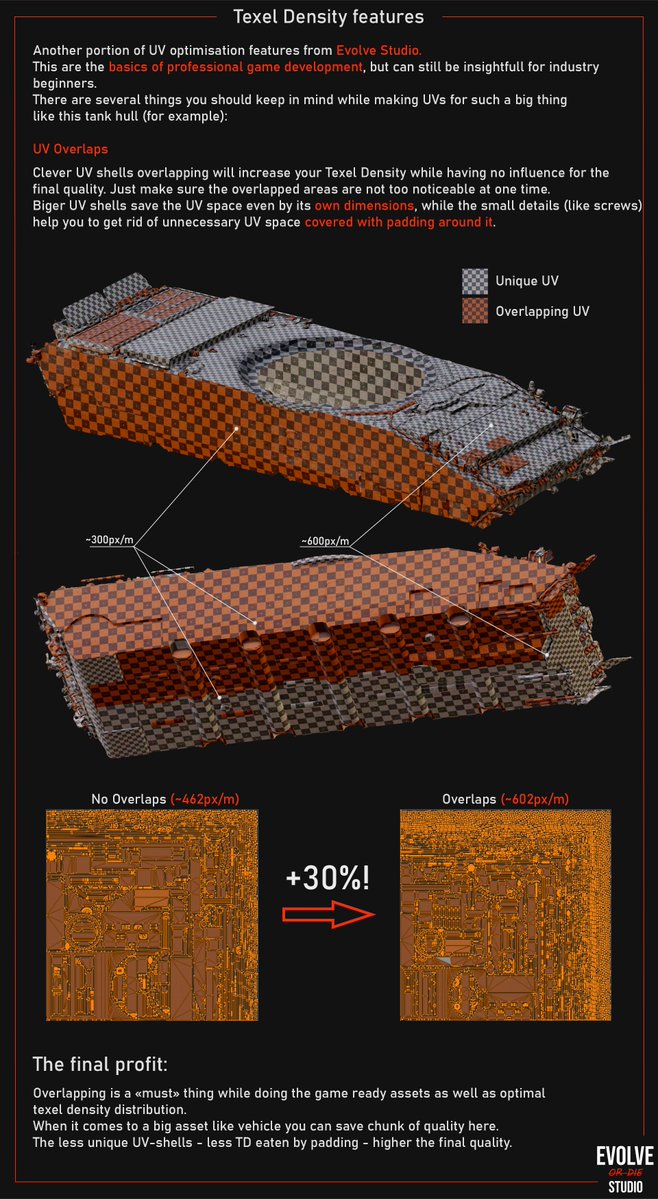
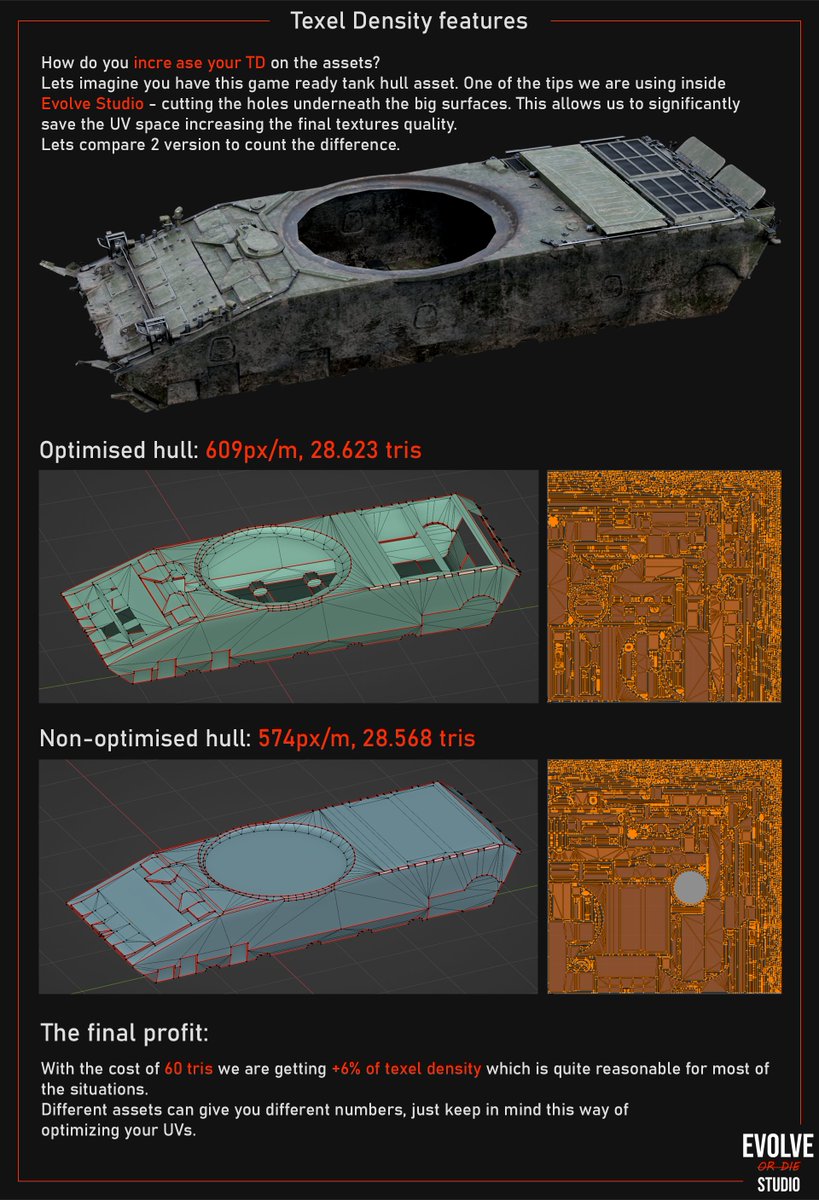
Evolve Studio shared materials about Texel Density.
Even though the examples are shown on vehicles, these practices are useful for everyone.
I’ve also uploaded them on Pinterest:
https://t.co/KYpbz65IKB
Struggling to find quality resources to help you with Texturing? We asked our team to share their favorites.
Check out our Studio Picks! https://t.co/JIK2aOlgbz