Check out the new HOT article in #ESWRT: 'Treatment of wastewater from the thermal desorption of oil-contaminated soil: performance and sorption mechanism of pyrolytic modified sawdust' by Feng Xiao et al. (corres.: Jun Yin) ➡ https://t.co/A7evtJvtNV
Insights into Free and Conjugated Forms of #Neonicotinoid Insecticides in Human Serum and Their Association with Oxidative Stress
By Tao Zhang et al @SunYatsen_Uni
🔓 Open access in Environment & Health 👉 https://t.co/2c0tUH55Cs
Leo out 'kick sampling' the streams in the catchment this week. This helps us to measure the biological health of the streams, and will complement our water chemistry monitoring.
New HOT article in #ESPI: 'Biogeochemical and hydrologic synergy control mercury fate in an arid land river-reservoir system' by Brett A. Poulin et al. ➡ https://t.co/CObNAd04UZ
New Research: Editorial: Analytical methodologies for the analysis and monitoring of nano/microplastics pollution https://t.co/OgdBN142Lf #EnvironmentalChemistry
Unlocking High-Efficiency Methane Oxidation with Bimetallic PdCe Catalysts under Zeolite Confinement
By Xin Tuc, Wei Fan, Junliang Wua et al @LivUni@UMassAmherst
🔓 Open access in AS Environmental Au 👉 https://t.co/Ng6tQY7iPk
@Mercy_Stala @marc_schaus The results will be slightly different due to the properties of the nanomaterials being different from the bulk because of the surface area-to-volume ratio. For industrial application probably graphene oxide nanomaterials will be a better option. #geochemchat
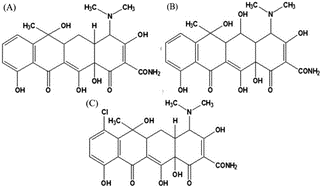
The presence of antibiotics in aquatic environments is of concern.
New work in #ESAdvances from Wen, Lit et al reports magnetic nanoparticle as a dual nanozyme for label-free colorimetric detection of antibiotics.
Read the #OpenAccess work now: https://t.co/sngyJzavJN
Mineralogy and geochemistry of hot spring deposits at Námafjall, Iceland: Analog for sulfate soils at Gusev crater, Mars
George L. Carson, Lindsay J. McHenry, Brian M. Hynek, et al.
Mineralogical Society of America
American Mineralogist (2023)
https://t.co/TQPHmeyWUJ
@MinSocAm
ICYMI - Australian researchers have developed an adsorbent that uses nanomaterials they can mix into water to attract/remove microplastics up to 1,000x smaller than those detectable in current wastewater plants
https://t.co/2M7mAjHmuc
Cascading microplastic removal and macro-polymeric debris chemical upcycling can effectively combat plastic pollution. Read the research in ES&T: https://t.co/UdjZbtBUAc @Fengqi_You"
Subaqueous landslides associated with historical road improvements in steep glaciated terrain, Loch Lomond, western Scotland
Read #OpenAccess on the Lyell Collection https://t.co/kPVCsKtvm6
#Geoscience#Engineering