🇮🇳 Your BANK, your email, practically ANY website could have been impersonated, with your browser none the wiser.
All thanks to one company's INSANE security blunder.
Indian company eMudhra, trusted to certify that websites are genuine, used EIGHT cryptographic keys so ridiculously weak they could be cracked almost instantly.
How weak? A normal key relies on a secret number roughly 116 digits long.
eMudhra's secret numbers? Just 4, 56 and 237. These are NOT pieces of the keys. They were the ACTUAL numbers! 🤯
Anyone with those keys could have forged trusted certificates for virtually any website, potentially fooling your browser if they intercepted your connection.
Major browsers have already blocked the keys, and there's no confirmed malicious use so far.
But cleaning up older devices and software could be a nightmare. An expert warns it could be bigger than Heartbleed, the infamous 2014 security disaster that took years to fix, because millions of old devices and systems still need updating.
And here we are, being told our passwords need another capital letter and a special character.
Source: Ars Technica / Writer: Julie
no entendía este post hasta que lo entendí
es tremendo
una empresa de india era la encargada de crear certificados para que tu navegador pueda decir "este certificado es de google .com" y aparezca que el sitio es seguro
la empresa usa claves privadas y públicas para crear estos certificados
bueno una de las claves privadas el el número 4
no lo puedo creer
#NovedadesIA 🤖
ISO/IEC 27090:2026 Cybersecurity — Artificial intelligence (AI) — Addressing security threats and compromises to AI systems
ISO/IEC 27090 provides guidance on understanding, detecting and mitigating security threats specific to artificial intelligence (AI) systems throughout their life cycle. It explains how vulnerabilities can be exploited, what the consequences can be and which measures can help address them.
For organizations developing or using AI, the standard helps identify what needs protecting, from training data to AI models. It addresses threats such as data poisoning and model theft, while recognizing that established cybersecurity practices remain essential.
MFA obligatorio y muerte a las contraseñas. Eso es Seguridad por Diseño.
¿No te gusta? Discutile a CISA.
Excelente documento con 7 principios básicos del software moderno.
https://t.co/oquS1XdEpn
Estudiá Licenciatura en Ciberdefensa en 2027, gratuita y a distancia 👩💻
¿Se acuerdan de esto? Volvieron las inscripciones: solo del 26 al 28 de octubre... Inscribite a las carreras del @Fadena_arg
🚨 Une nouvelle technique de phishing permet de créer des URL quasiment impossibles à distinguer des vrais.
"аhttps://t.co/0DOYo01Luf" ← Faux
"https://t.co/RXhQ5mtVvA" ← Vrai
Vous ne voyez aucune différence ? Pourtant, dans la première adresse, le « a » initial est en réalité un caractère cyrillique qui ressemble parfaitement à notre alphabet.
Une simple lettre suffit à imiter un site connu pour vous tromper et voler vos identifiants ou vos cryptos.
On nous répète de toujours vérifier les URL avant de cliquer, mais cela ́e suffit plus avec ce genre de technique.
Le meilleur réflexe reste de ne jamais ouvrir un lien suspect et de passer directement par l'application officielle.
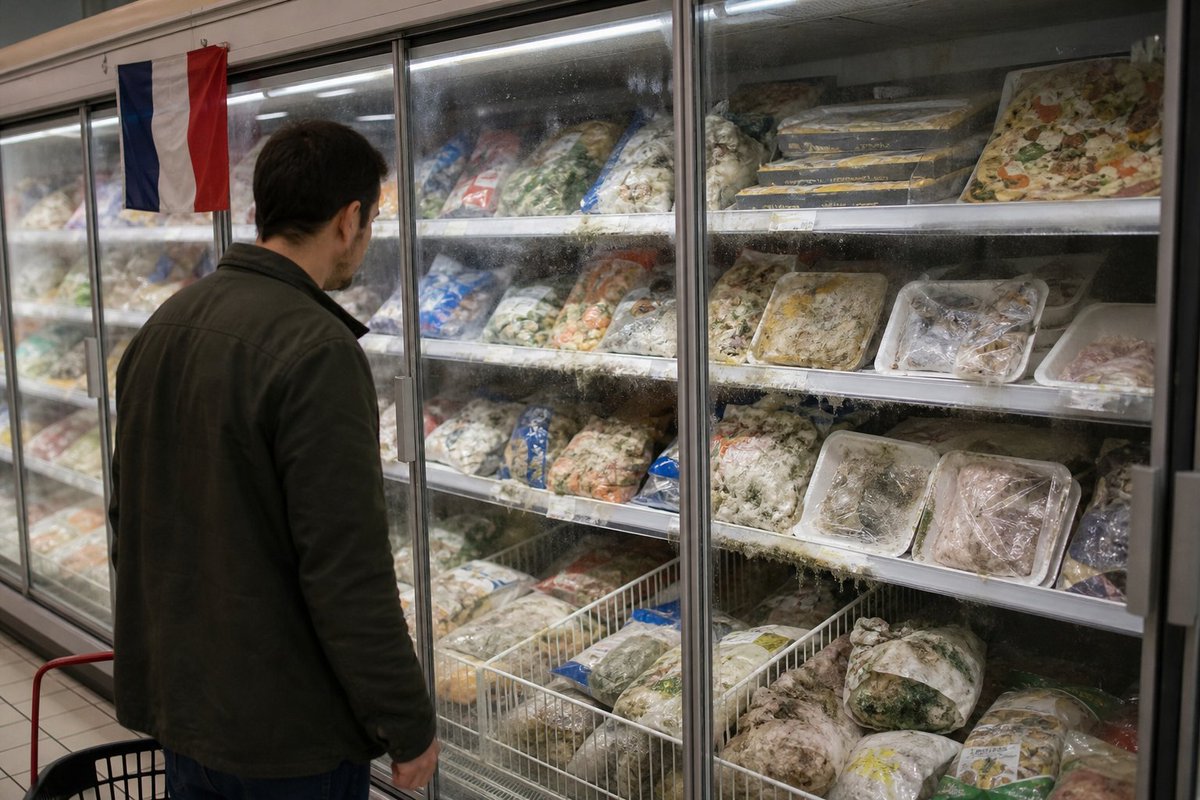
INSÓLITO CIBERATAQUE A SUPERMERCADOS EN FRANCIA: HACKEARON LA TEMPERATURA DE LAS HELADERAS PARA ARRUINAR LA MERCADERÍA
Un ciberataque contra los sistemas de regulación frigorífica dejó fuera de servicio equipos de refrigeración de varios supermercados en Francia, elevó la temperatura de productos frescos y congelados y obligó a descartar mercadería en numerosos locales. La intrusión ocurrió entre la noche del domingo y la madrugada del lunes y alcanzó a cadenas de distribución en distintas zonas del país.
El ataque se dirigió a sistemas fabricados por la empresa danesa Danfoss, que permiten vigilar a distancia congeladores y vitrinas refrigeradas, activar alertas ante fallas o subas anómalas de temperatura y programar ciclos automáticos de descongelamiento. Los atacantes aprovecharon una vulnerabilidad detectada durante el verano que seguía sin corregirse en versiones antiguas del software.
Infobae 🔗https://t.co/86ZyzHA31d
¿Qué problemas trae la era del vibecoding y el publicar apps hechas con IA sin una mínima supervisión profesional?
Que filtren la base de datos de todas las clientas embarazadas y los ginecólogos de tu consultorio que las atienden.
Literalmente la web dice: hecha con IA.
Anuncian IA Luciferus sin censura en foros clandestinos
Un grupo está promocionando Luciferus , un nuevo servicio de inteligencia artificial "sin censura"
https://t.co/84Yd5A9LHu
⚠️ TARGETED PREVENTIVE ALERT 🇦🇷: ESCALATION IN OPERATION "LONG HANDS" – ALLEGED MASSIVE BANKING DATA EXFILTRATION AND GEOPOLITICAL ULTIMATUM AGAINST ARGENTINA
[STATUS: UNCONFIRMED; VISIBLE EVIDENCE EXISTS, BUT FULL CONFIRMATION IS PENDING / SOURCE: CYBER-INTELLIGENCE CHANNELS / DATE: SEPTEMBER 16, 2026]
Centralized cyber-intelligence monitoring has detected a severe escalation in communications from the hacktivist group "God's Gladiators" regarding Operation "Long Hands." The threat actor has published samples of exfiltrated data belonging to the Municipality of Firmat (Santa Fe, Argentina) and issued a direct 10-day ultimatum to the national government, demanding the severance of diplomatic relations with Israel under the threat of leaking the entirety of the compromised information.
It is strictly noted that this has not been fully confirmed through official channels; while visible evidence exists—such as database screenshots and explicit statements—the actual scope of the exfiltration and the complete authenticity of the records remain unconfirmed.
Threat Actor: God's Gladiators
Primary Victim: Municipality of Firmat (Infrastructure, Treasury, and Citizen Data).
Countries Involved (Geopolitics): Argentina 🇦🇷 / Israel 🇮🇱 / Palestine 🇵🇸.
Allegedly Exfiltrated Data:
Passwords and identity credentials in plain text (unencrypted).
Municipal Treasury bank account numbers (affecting Banco Santa Fe, Bisel, Credicoop, Nación, Río, among others).
Historical citizen records dating back to 2012.
Payment orders, internal invoices, and corporate emails.
Judicial documents and payroll data (employee salaries). Extortionist Ultimatum: The group has given municipal and security authorities 10 days to notify provincial and national officials. If Argentina does not sever ties with Israel, they will release all the data.
🛡️ TECHNICAL PREVENTIVE CONTAINMENT RECOMMENDATIONS (SOC / CSIRT / FRAUD)
Emergency Banking Block and Monitoring: Banco Santa Fe, Credicoop, Banco Nación, Banco Río (Santander), and any other entity linked to the Firmat Treasury must be notified urgently. Early warning systems for any fund movements must be implemented, requiring in-person or telephone validation by senior management to authorize payments.
Zero-Trust Credential Rotation: Due to the alleged exposure of plaintext passwords, the municipality must immediately invalidate all Active Directory credentials, corporate email accounts, and access rights to judicial or financial databases. Any password reset must mandate the configuration of Multi-Factor Authentication (MFA).
Escalation to National Security: Given the international extortion component and the threat to the State's foreign policy, this incident must be immediately escalated from the municipal level to the National CERT (CERT .ar) and the Ministry of Security's intelligence units for crisis management and cyber containment.
🖥️ CENTRALIZED THREAT MONITORING SYSTEM
Intelligence System: https://t.co/wk9bZJ3laQ
Monitoring Console: https://t.co/5LuqwzZ2HE
#Cybersecurity #ThreatIntel #CyberTerrorism #GodsGladiators #LongHandsOperation #Argentina #Firmat #DataBreach #FinancialFraud #Geopolitics #InfoSec #CyberAlert #VECERT #SOC #CSIRT #Unconfirmed #AllegedIncident #VisibleEvidence #SecurityAlert
🇦🇷 ARGENTINA’S NATIONAL SOCIAL SECURITY DATA — 38 MILLION RECORDS ALLEGEDLY LEAKED
A threat actor is advertising what they claim is a database associated with Argentina’s Sistema Integrado Previsional Argentino (SIPA), the country’s national social-security and pension system.
The seller claims:
* Approximately 38 million records
* Government-held personal information
* Pensioner-related data
* A sample containing approximately 400,000 records
⚠️ Analyst Note:
The scale is significant. If authentic, 38 million records would represent an exceptionally large exposure involving data connected to a national government social-security system.
A 400,000-record sample is reportedly being offered as proof, but the provenance, freshness, completeness and authenticity of the dataset have not been independently verified.
The listing should therefore be described as an alleged SIPA dataset leak rather than a confirmed new compromise of Argentine government infrastructure.
#DDW #Argentina #DataBreach #DarkWeb #ThreatIntelligence