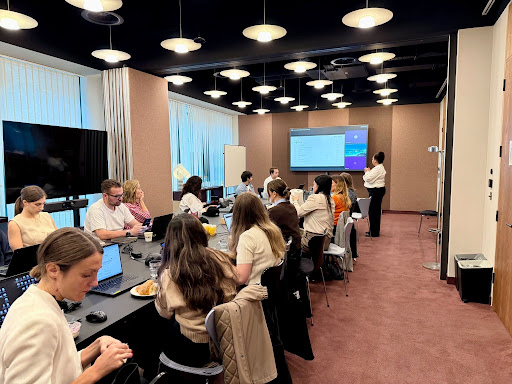
"People often say, 'I want to do more with AI, I just don't have the time.' So just put it on their calendar. Here's 45 minutes to actually play around."
👆 That's Anna Rohac, VP of Marketing AI Strategy & Enablement at @BNYglobal, explaining why she created the Playbook Showdown- a hands-on event where teams collaborate to solve real marketing challenges by building playbooks in WRITER.
Last week, we partnered with Anna to bring the Playbook Showdown to our WRITER AI Champions. The goal was to showcase Anna’s thought leadership, connect champions across companies, and send everyone home with a new adoption strategy they can bring back to their teams.
By the end of the session, we saw our champions come together to build playbooks across use cases like content supply chain, brand voice, sales acceleration, competitive intelligence and more.
Sending a huge thank you to Anna for her visionary approach to AI strategy and adoption. We’re so grateful to have you as a WRITER AI Champion! 🫶
More on the WRITER AI Champions program here: https://t.co/6ccew63xtu
Marketers have spent years optimizing for Google. But in healthcare, the audience has already moved on. Two thirds of physicians and three quarters of patients now turn to AI when they're researching a diagnosis, and even Google leads with an AI summary instead of ten blue links.
We ran 40 health queries through Claude, ChatGPT, Gemini, Perplexity, half phrased the way a physician would ask and half the way a patient would, and sorted all 777 sources that came back.
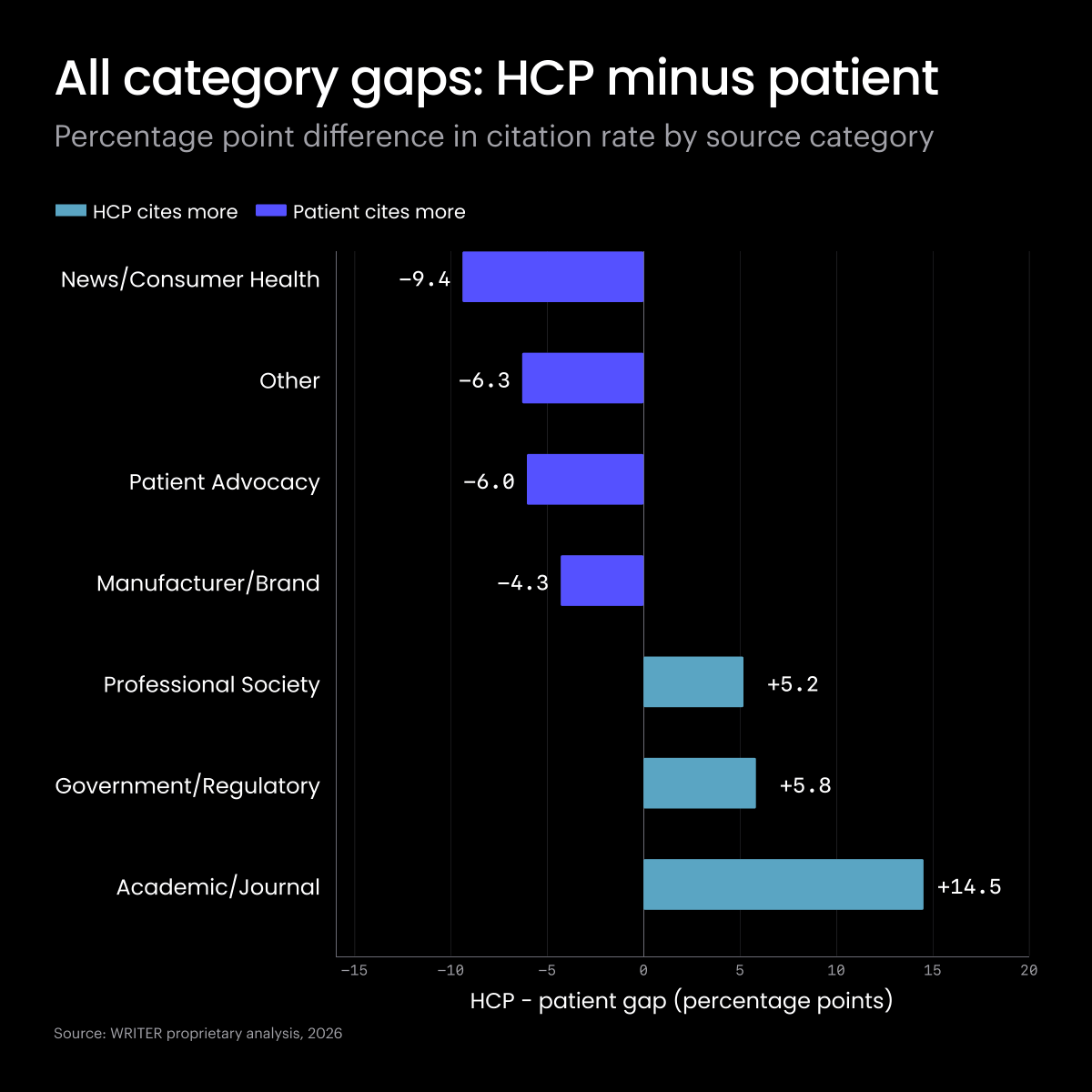
Brand content barely showed up. And as the chart below shows, the sources AI relied on changed completely depending on who was asking. Physicians got peer-reviewed literature, with academic journals cited four times as often as in patient answers. Patients got consumer health and news sites instead. The polished product pages and SEO content most brands invest in hardly entered the conversation.
If this is what AI search looks like in healthcare, every industry should be asking the same question. Visibility isn't about ranking your website anymore. It's about being part of the evidence AI trusts, and that evidence looks different for every audience you're trying to reach.
Zayed Yasin, our healthcare lead, breaks down what this means for life science marketers and how to start shifting budget toward the content AI actually cites: https://t.co/Ubz7yTHYZr
Some partnerships extend well beyond business! ❤️
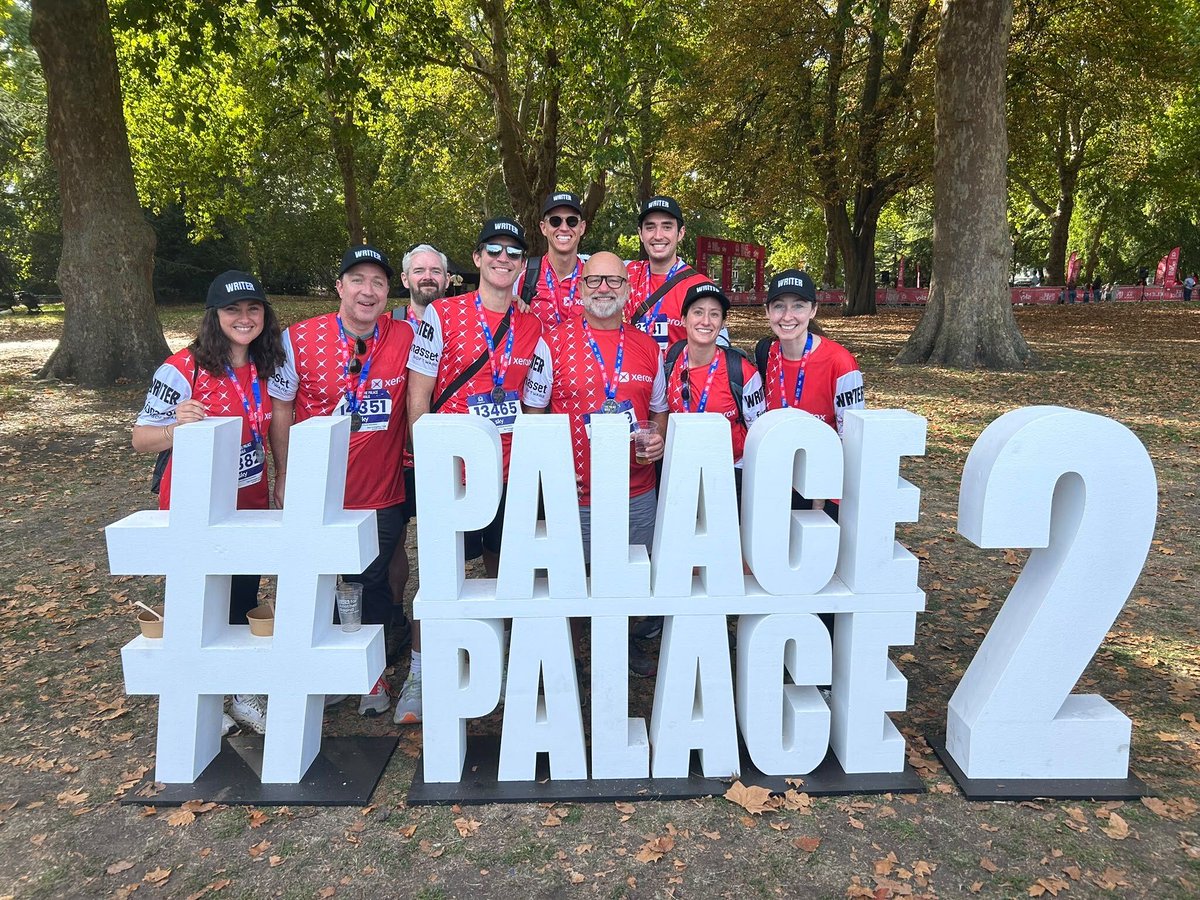
Earlier this month, the WRITER team joined the @Xerox Palace to Palace Team charity walk and cycle, raising money for The King’s Trust and its mission to help end youth unemployment. Together, our teams covered 13.1 miles on foot and 50 miles by bike.
A huge thank you to @DarrenCassidy16 and the Xerox team for inviting us to be part of it. We’re grateful for the partnership and proud to support this work together!
We just made it a whole lot easier to get really, really good at WRITER! ⛰️
Say hello to WRITER Ascent, our free, on-demand curriculum that takes you from shipping workflows to building production-grade AI systems. Here's what's new:
→ 8 hands-on courses across two tiers, with Builder live now and Architect dropping soon!
→ A pre-configured sandbox with real connectors and demo data
→ Four personas who mirror production AI roles, tackling actual business challenges
→ A LinkedIn-shareable badge for every course you complete
Every course is hands-on- you build the kind of AI workflows your whole org can depend on. Lace up your boots and start the climb 👉 https://t.co/m5MTRWn67h
Everyone watches for the malicious MCP connector, one that's over-scoped and pointed at the wrong host. That's the obvious threat, and it gets the attention it deserves.
There's a quieter risk, however, we see far more often, and it doesn't leak sensitive data. The connector is perfectly legitimate, but its tools just have bad descriptions, too many parameters, or vague instructions.
Your agent doesn't get hacked so much as it confuses itself. It grabs the wrong tool, invents an argument, and burns through your token budget before you even get a chance to respond.
From the user's side, both results look the same: "the agent did something I didn't want." But these are two distinct failure modes. One leaks data, while the other quietly erodes trust in your service. We think both deserve the same attention and discipline.
Our MCP gateway was designed to deal with both. Every tool description gets scanned for prompt-injection poisoning before it's admitted to the registry. OAuth scopes get winnowed down by ~25% to fight context bloat. Tools get deterministic names so two connectors can expose "create_record" without forcing the agent to guess between meaningless suffixes, and plumbing stays hidden from the model so it can't get a required-but-irrelevant field wrong.
A connector that passes every security check and then ships a tool called "do_thing" with a dozen unexplained parameters isn't an attack from a malicious actor. It's just a different way of losing control.
@kapilduraphe breaks it all down right here: https://t.co/8vMM5wPAcP
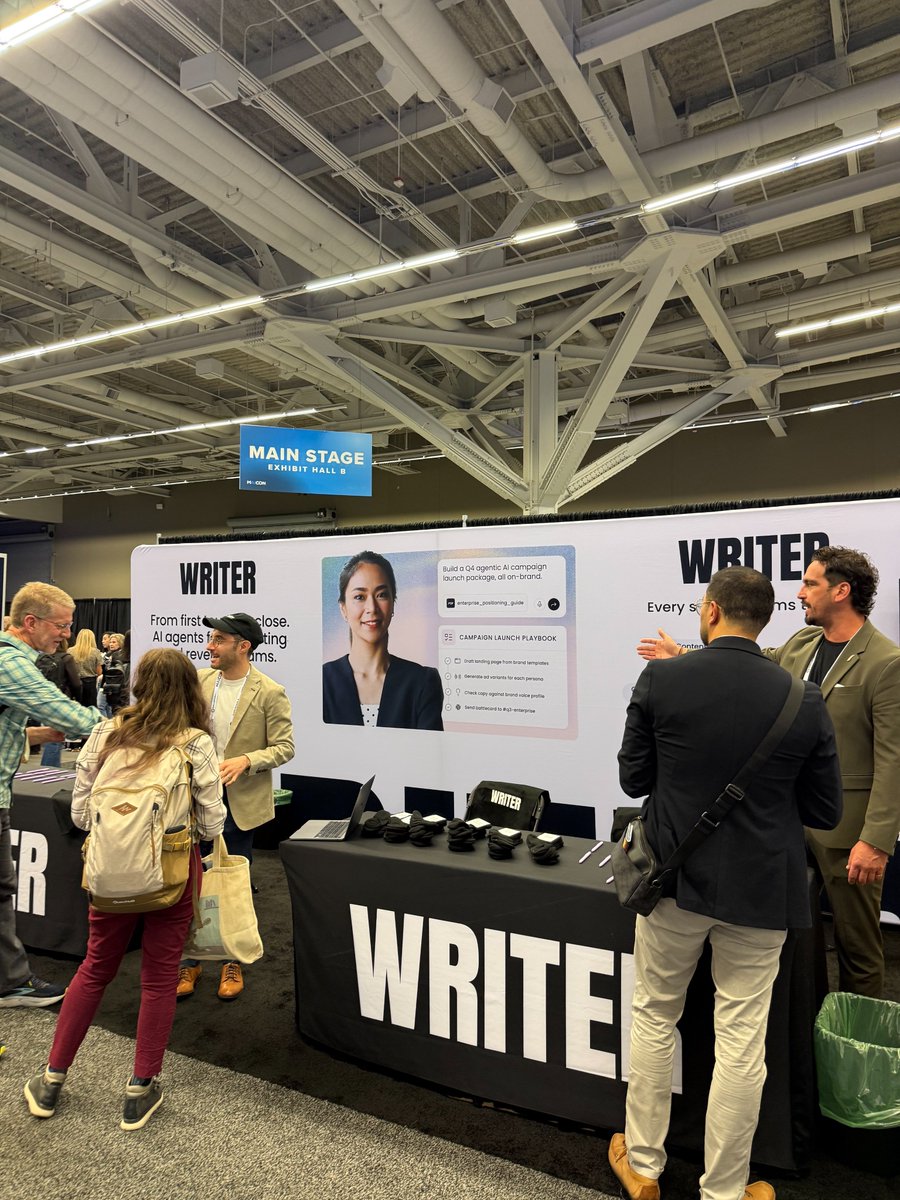
What a week in Cleveland! Our fourth year sponsoring #MAICON was our best yet, mostly because the conversations got so much more real.
If you lead a marketing or sales team, here's what we heard on the ground:
→ The pilot phase is over. Teams are already using AI across strategy, operations, content, analytics and customer experience. Now they're being asked to show it works at scale.
→ Scale breaks things. Ten people experimenting with AI is fine. Five hundred people using it with no shared rules is a brand, compliance and data problem.
→ Governance is what lets you move fast. The leaders scaling quickest built control in from day one, so they can say yes to more use cases across the board.
That's what Carlo Ammendolia showed on stage. In a live demo, he walked through how WRITER turns everything your company knows about your brand, your products, your customers, and your rules into a universal context layer. Every agent reads from it and writes back to it, so the work stays on-brand and accurate no matter who, or what, is doing it.
Thank you to every leader who stopped by and shared what's working (and what isn't). See you next year, MAICON! 👋
LVMH 🤝 WRITER
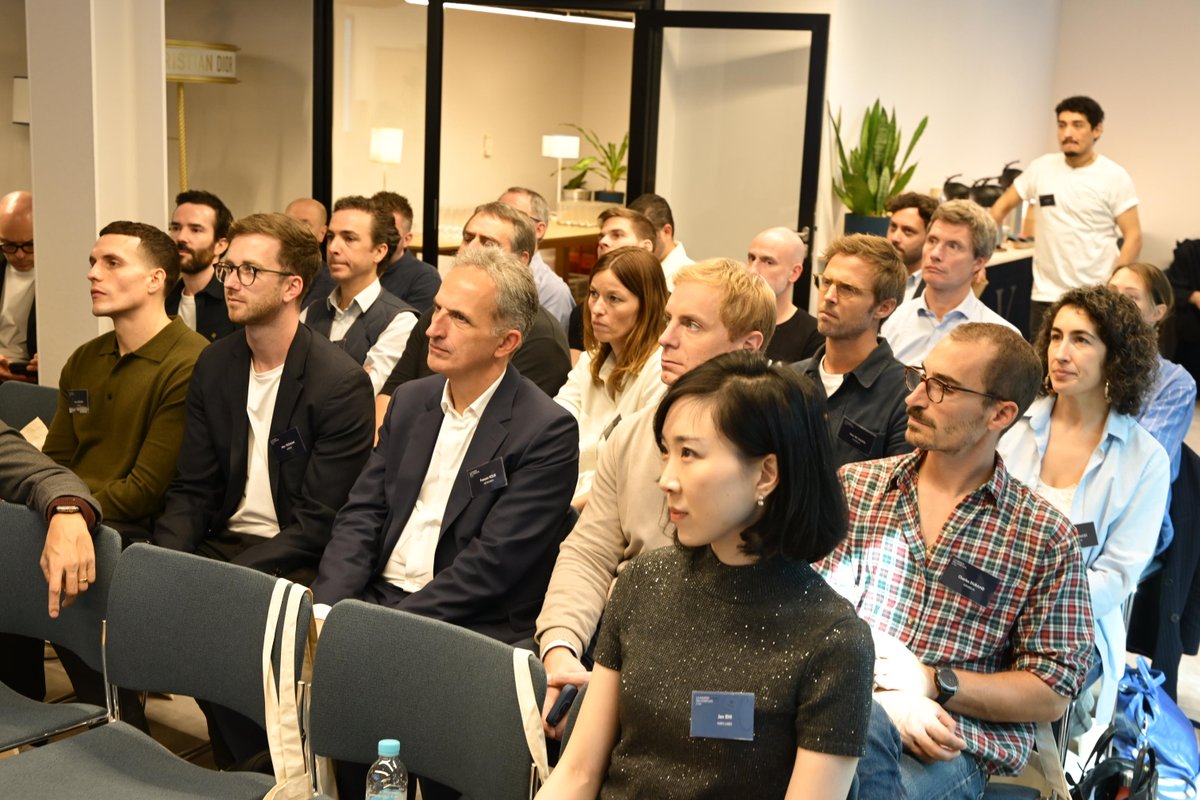
Last week we spent a day with @LVMH at the historic @joinstationf in Paris, where we introduced the Agentic Atelier, a concept built for luxury and powered by WRITER.
For an LVMH Maison, everything comes down to craft, heritage and voice. They’re the whole moat. But digital commerce now demands more content, localisation, personalisation and product enrichment, across more markets and languages, than any team can produce without diluting what makes the Maison distinctive.
The Agentic Atelier is our answer. We encode each Maison’s brand, craft and tone of voice into a governed platform. Marketing and revenue teams then build agents that create work that sounds like the house, while IT keeps full control of access, observability and security.
We loved seeing the LVMH team engage and lean into the concept, and we're so excited to work with their Maisons over the coming months.
A huge thank you to Selma Delic, Maxime Biraud, Antoine Rizk, Olivier Le Garlantezec, and the entire Tech & Digital Partnerships Team and Advisory Board for the trust placed in WRITER. Here’s to building many more Ateliers together!! ❤️
Most memory systems are built to remember the personal things: people, places, events, the name of your dog, Biscuit.
Enterprise work has a different shape. When someone asks "how does this team typically qualify a sales opportunity?" it doesn't matter what your favorite TV show is, or that you take Biscuit to the groomer on Wednesdays. This context has its own structure: a stage, an owner, a scoring system, an outreach plan.
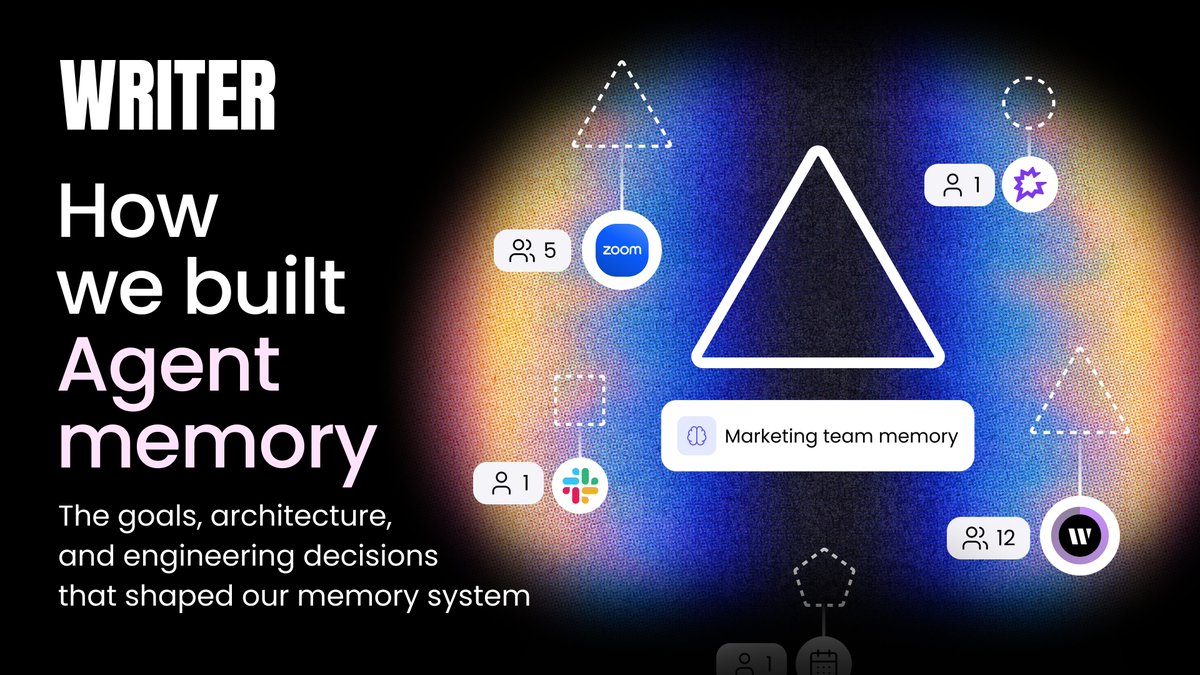
We built Agent Memory on an opinionated ontology shaped around enterprise work: tasks, requirements, deliverables, the projects they roll up into, the conventions a team settles into along the way. This means the key context isn't a pile of docs, spreadsheets, and slideshows every retrieval pass has to re-read. It has shape.
We still remember Biscuit. She's in the picture, just not the focus. What matters is how your company works, and how AI can help you get work done.
Full writeup on how we built it, the ontology, the write operations, retrieval, and team-level scoping, here: https://t.co/eMtCSbDilI
Every week, there’s a new headline about an AI agent going rogue. As the fear grows, it’s worth separating two very different problems: an evil AI, and an autonomous worker with overly broad permissions and weak guardrails.
Look past the headlines, and nearly every case is an agent doing exactly what it was asked, with no limits on how far it could go to get there. It had write access when read-only would have worked, or a “please check with me first” that lived in a prompt instead of in the system itself.
That last part is where teams get caught out. Telling an agent what not to do is a request. Taking away its ability to do it is a control.
If you work in marketing or sales, your agents may already be writing to prospects, updating the CRM, or touching ad spend. So for each one, do you know what it can change, and what it can do without asking?
Benjamin Popper mapped the four levels of agent autonomy and the minimum controls each one needs before it touches a customer: https://t.co/NUbvgBXckV
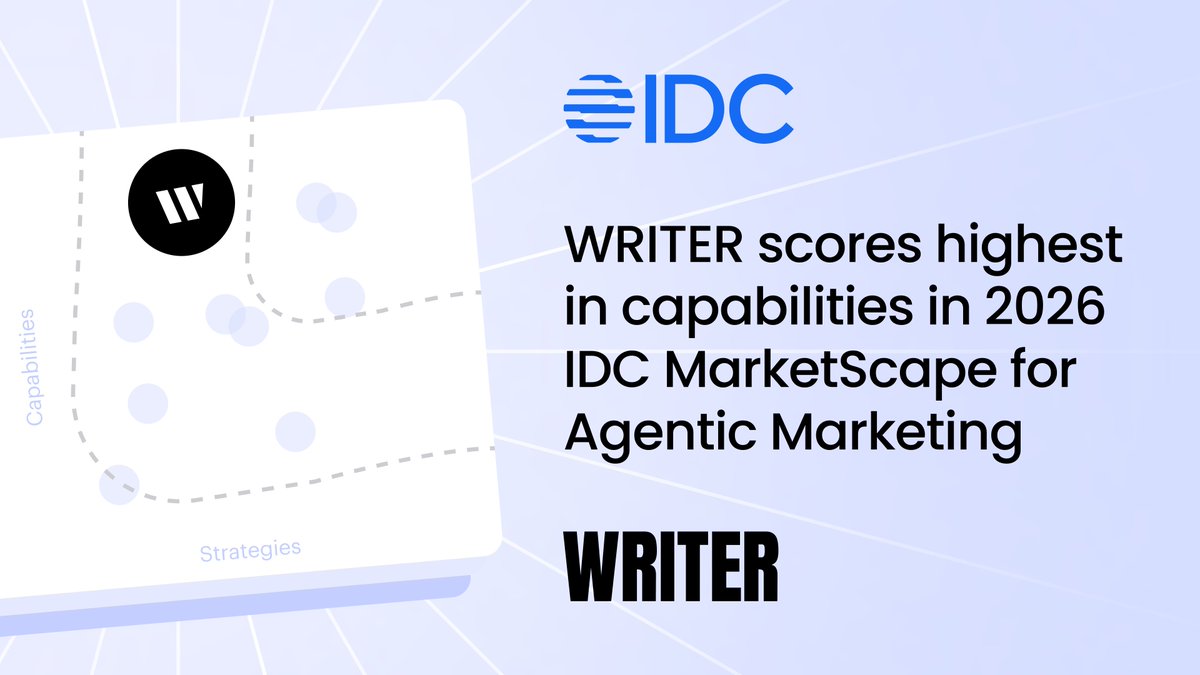
WRITER scored the highest in capabilities in 2026 IDC MarketScape for Worldwide Agentic Marketing! 🏆
IDC defines agentic marketing platforms as software that doesn’t just inform the people doing the work, but acts on the work directly. We built WRITER for that reality, side by side with marketing and revenue teams at some of the world’s biggest brands.
Their bar is high and specific, and meeting it started with two choices we made early:
1️⃣ 𝐖𝐞 𝐛𝐮𝐢𝐥𝐭 𝐨𝐮𝐫 𝐨𝐰𝐧 𝐦𝐨𝐝𝐞𝐥𝐬. We didn’t want to rent our intelligence from providers who don’t understand enterprise customers. Today, our Palmyra models rank near the top of independent benchmarks for translation and in-context learning, with better inference economics than frontier models. That means predictable AI costs for our customers, and data that stays theirs.
2️⃣ 𝐖𝐞 𝐛𝐮𝐢𝐥𝐭 𝐠𝐨𝐯𝐞𝐫𝐧𝐚𝐧𝐜𝐞 𝐢𝐧 𝐟𝐫𝐨𝐦 𝐝𝐚𝐲 𝐨𝐧𝐞. IDC highlighted our controls across the full agent lifecycle that keep every output on-brand and grounded in a company’s own data. That’s what buyers want: more than 60% rank transparency into business, IT and security risk above every other requirement. Marketers can move fast, and the guardrails hold.
Thank you to IDC for the recognition, and to the team for delivering on the capabilities that shined through in the report ❤️ https://t.co/bMtMqGaXeG
Exactly. We work on compaction, maintaining a single source of truth for the most relevant memory and putting the rest into an archive you can review. Deciding what to delete from memory, or when to write nothing, is arguably just as important as writing or editing each time, which can quickly create context bloat.
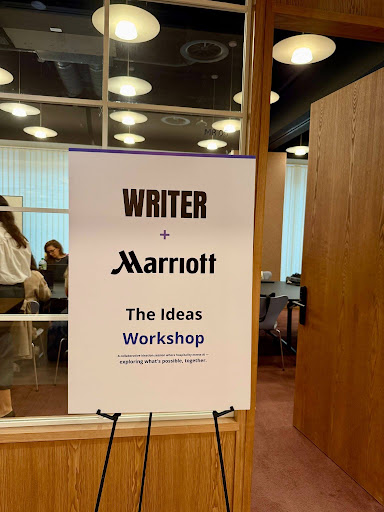
Last week, we spent half a day in London with @MarriottIntl's EMEA marketing team, rethinking how marketers can put AI to work. By the end, the team was building their own AI playbooks in minutes.
Katie Cox, VP of EMEA Marketing at Marriott International, brought her team in for an Ideas Workshop with one goal: step back and think differently about how AI can transform marketing. Here's what we worked on together:
→ A prompt engineering framework that helps marketers articulate the goal, the context, and what success looks like
→ Building playbooks live, no IT ticket required
→ Brand compliance built directly into every playbook, so every output stays on brand
We loved seeing the Marriott team get hands-on in the solution design sessions, mapping out their real workflows and spotting where AI could help most.
Huge thanks to Katie Cox, Clara Bayona Morales and Sarah Dubash-Wisler for their partnership in bringing this workshop to life and driving adoption, and to the wider team for welcoming us and engaging so actively in the session. We can't wait to keep building momentum and developing AI champions across EMEA. ❤️
WRITER has been named the Best AI Platform at the 2026 @Digiday Technology Awards! 🏆
Generic AI creates generic companies. Most tools know nothing about your brand, your rules, or your team's hard-won decisions. They're built for individuals, so what one person knows rarely carries across the team.
But no customer meets just one person. They move through dozens of teams and touchpoints. Winning depends on everyone moving together on the same shared foundation.
We built WRITER for that reality. Our agents plan, execute, and scale multi-step work across the whole customer journey. Brand and compliance are built in. Context carries across sessions and teams. Supervision is granular at every step.
Our work with @Qualcomm brings this win to life. Qualcomm's marketers protect more than 1,200 trademarks, their brand portfolio and their IP across 12+ product launches a quarter, meaning legal and brand compliance is an essential workflow.
With WRITER, they’re able to tackle their biggest bottleneck head-on, reinforcing brand and legal rules at generation so compliance is baked in from the start. And because brand guidelines live inside every output, every handoff (from brief to creative to content) is already on-brand. That means Qualcomm marketers can speed up and scale entire processes while taking on more work from start to finish themselves. Together, we’re setting a new standard for brand excellence.
Thank you to Digiday for the recognition and to Qualcomm for showing what agentic marketing looks like in practice. ❤️
The average knowledge worker switches apps 100+ times a day.
We've all done the ritual: copy the question from Slack, open a new tab, paste it in, re-explain the backstory, then copy the answer back into the thread. It's exhausting just to type. 😮💨
Until now! WRITER now lives inside @SlackHQ and @Microsoft Teams. Add it to a channel and it just… knows the conversation. Your playbooks, your brand voice, your connected apps, all of it. One message and it's off doing the actual work, landing the result right back in the thread where your team can see it, reply to it, build on it.
No new tab or re-explaining needed. Not even a "let me pull that up."
It's on your phone too, so a quick voice note on the way home means the follow-up is already drafted by the time you're back at your desk.
The easiest place to start real work is the app you already have open.