For my first five years in corporate America I had no promotion.
Then in my next five, I had three.
Same me. Same company. Different results.
What changed? 👇
Please someone help me with 1,300 to go to work tomorrow
Please
9017255076
Opay
Olalere Abidemi Rukayat
This is my last tweet tonight.
Good night
I pray someone helps me 🙏🏼
If you wait too long, the coffee gets cold, the door closes, you get old, the girls move on, & dreams fade. You must act w/ a sense of urgency today
I dated a girl with a male best friend once.
At first I tried to be mature about it.
“You’re just insecure bro” type mature.
She’d say things like, “he’s basically my brother” while this man was calling her at 1am to “vent” 😭
I ignored every red flag because I liked her.
Then one night we’re all out together and I go to the
this is one of the reasons i always feel long distance relationships creates the best lovers fr.. the moment you can take intimacy off the table & they still fill that void in you, offer you value, without being blinded by lust or inordinate affections, now that’s your person.
No course will get you a cybersecurity job. Labs will. Here are the 10 you need to practice right now.
1. TryHackMe SOC Level 1 Path: the single best starting point for anyone who wants to work in a SOC. Covers log analysis, SIEM tools, threat detection, and incident response in a fully guided, beginner-friendly format. https://t.co/jqYUL166VU
2. HackTheBox Starting Point: step-by-step guided machines that take you from zero to your first real exploitation. Once you finish Starting Point, move to the easy machines and build from there. https://t.co/xpC1bDl0TO
3. PortSwigger Web Security Academy: the best free resource for learning web application security. Every OWASP Top 10 vulnerability covered with real labs you actually hack, not just read about. Free. https://t.co/25VIlgwBL0
4. Blue Team Labs Online: defensive security labs focused on forensics, threat hunting, SIEM analysis, and incident response. Built specifically for people who want to work on the blue team side. https://t.co/FAhx2Tz78f
5. OWASP WebGoat: a deliberately insecure web application you run locally and attack. One of the best ways to understand how web vulnerabilities actually work from the inside. https://t.co/QaYoLz19dJ
6. VulnHub: free downloadable vulnerable virtual machines you spin up in VirtualBox and practice on locally. No internet required, no subscription, just download and hack. https://t.co/P4YkpsowR2
7. PicoCTF: a free beginner CTF platform built by Carnegie Mellon University. Covers web exploitation, forensics, cryptography, reverse engineering, and binary exploitation through hundreds of challenges. https://t.co/s1wJUOeiWJ
8. OverTheWire Bandit: a wargame that teaches Linux fundamentals, SSH, file permissions, and basic exploitation through progressive challenges. If your Linux skills are weak, start here before anything else. https://t.co/YhlcsO0wNm
9. Immersive Labs: used by enterprise security teams globally for hands-on skills development. Has a free tier with labs covering SOC, malware analysis, cloud security, and threat intelligence. https://t.co/4LAjDmwebr
10.Cyberdefenders: blue team focused labs built around real-world attack scenarios with PCAP files, malware samples, and memory forensics. The closest thing to working a real incident without being on the clock. https://t.co/9PMRoFRF8D
The gap between people who get hired and people who keep applying is not certificates. It is lab hours. Put in the reps.
Save this and share it with someone trying to break into cybersecurity.
Repost for others to see.
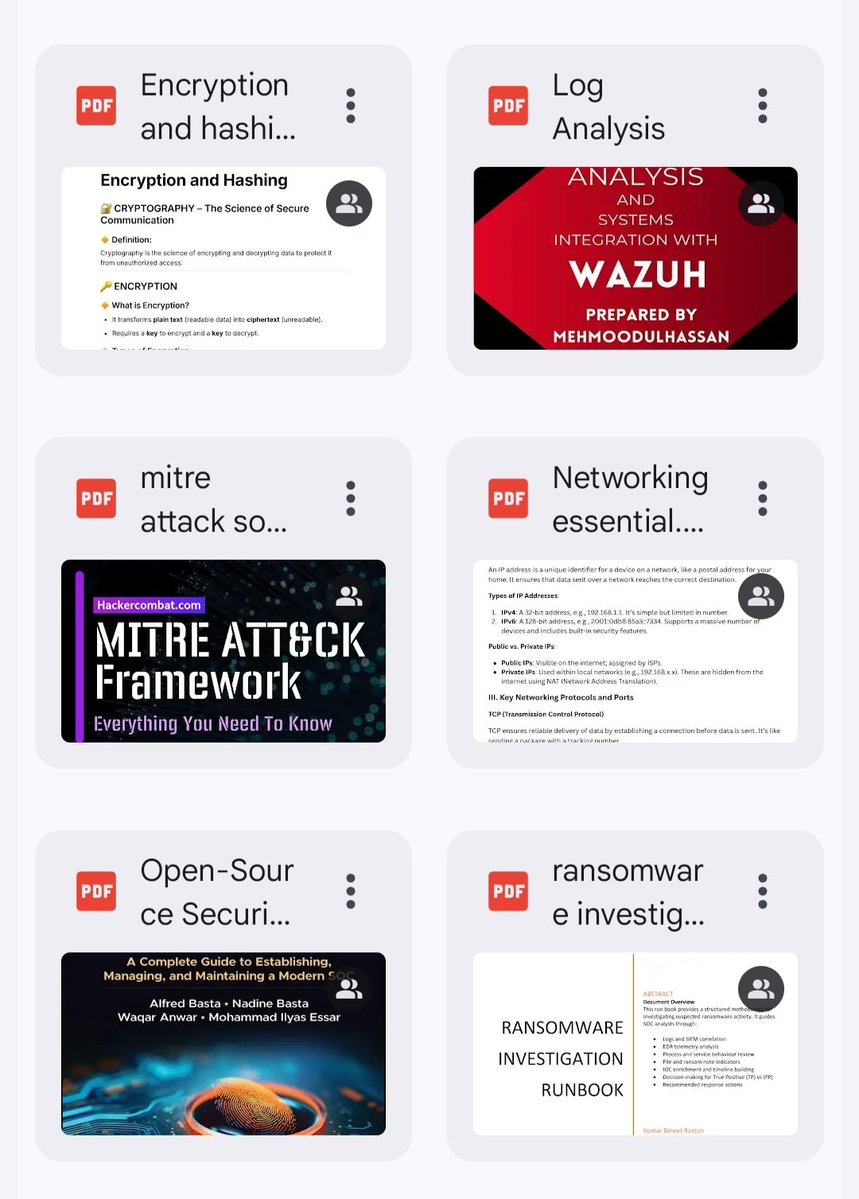
Beginner’s Guide to Becoming a SOC Analyst
1. Learn Networking Basics
Understand IPs, DNS, HTTP/HTTPS, ports, VPNs, and firewalls.
2. Understand Operating Systems
Get comfortable with both Windows & Linux commands/logs.
3. Learn Cybersecurity Fundamentals
Study threats like phishing, malware, brute force, ransomware, and social engineering.
4. Practice With SIEM Tools
Start with Splunk, Wazuh, or Microsoft Sentinel to analyze logs and alerts.
5. Build Hands-on Skills
Use TryHackMe, Blue Team Labs, or home labs to investigate real scenarios.
6. Learn Incident Response
Know how to detect, investigate, contain, and report security incidents.
7. Improve Communication
SOC Analysts write reports, escalate alerts, and explain risks clearly.
8. Stay Consistent
Cybersecurity rewards people who practice daily, not people who only watch tutorials.
Every expert SOC Analyst started as a beginner. Keep learning & keep defending.
Most people break into cybersecurity the hard way.
They collect certifications with no direction.
Here’s the only path you need as a beginner 👇
If your goal is SOC Analyst:
Certifications:
CompTIA A+, Network+, Security+
Skillset:
Log analysis, Linux, basic scripting
Tools:
Splunk, Wireshark, Microsoft Sentinel
In that order. No shortcuts.
Anything else is a distraction.