The approval of the Pharmaceutical Manufacturing Policy by Cabinet represents a significant breakthrough.
A Presidential National Legacy Initiative under the New Economy to build strong, competitive and sustainable pharmaceutical manufacturing industry in Ghana.
#GhanaPharmaceuticalHub
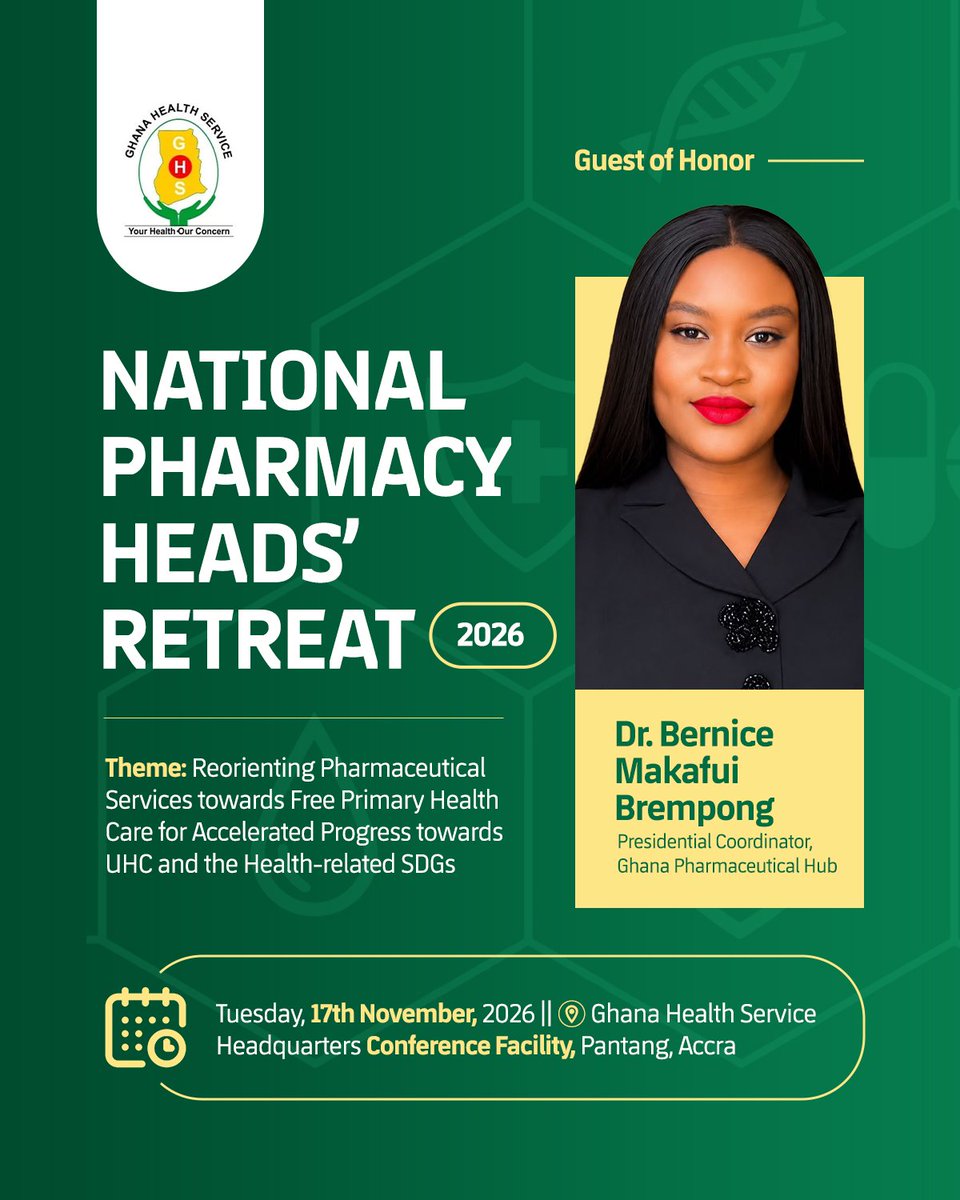
As Guest of Honour at the National Pharmacy Heads’ Retreat 2026,
Our Presidential Coordinator, Dr. Bernice Makafui Brempong, will speak on the theme; "Reorienting Pharmaceutical Services towards Free Primary Health Care for Accelerated Progress towards UHC and the Health-related SDGs"
#TheNewEconomy #GhanaPharmHub🇬🇭
As part of our Small Scale Manufacturers Facility Tour, We visited Phersons Pharmacy Ltd.
This is in line with our strategic approach to strengthen small scale manufacturers to meet Good Manufacturing Practices (GMP) compliance within the pharmaceutical special economic zone/ the hub.
We are on course to resolve the struggle over time to meet demand.
#MadeInGhana #TheNewEconomy
The claims that the @GhanaPharmHub was copied from the NPP 2024 manifesto are lies!
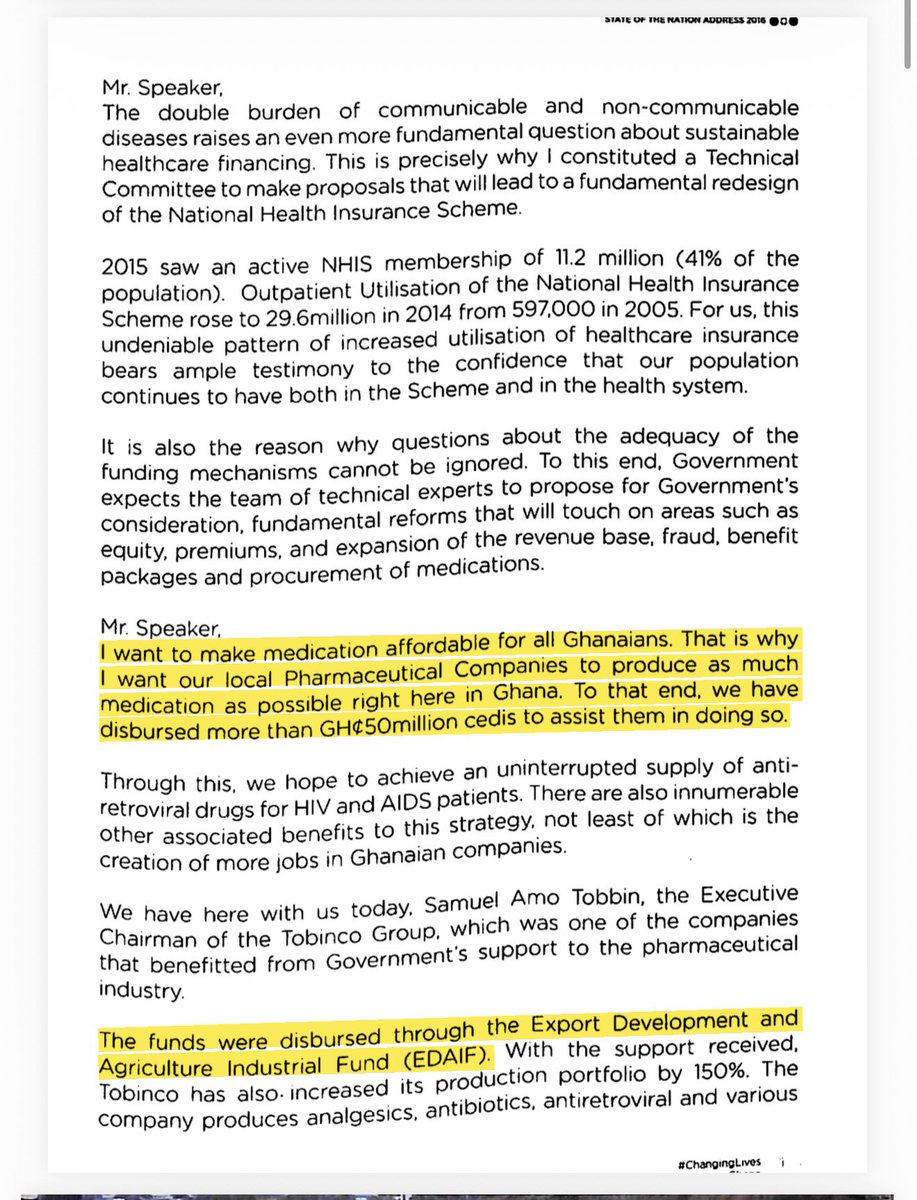
The Ghana Pharmaceutical Hub is a historic commitment to manufacturing more of the medicines Ghanaians need. It builds on work President John Dramani Mahama began in his first term.
By October 2014, Ernest Chemists had received US$10 million in support through EDAIF. Six local pharmaceutical companies were publicly named as beneficiaries by January 2016, including Ernest Chemists and Entrance Pharmaceuticals, part of the Tobinco Group.
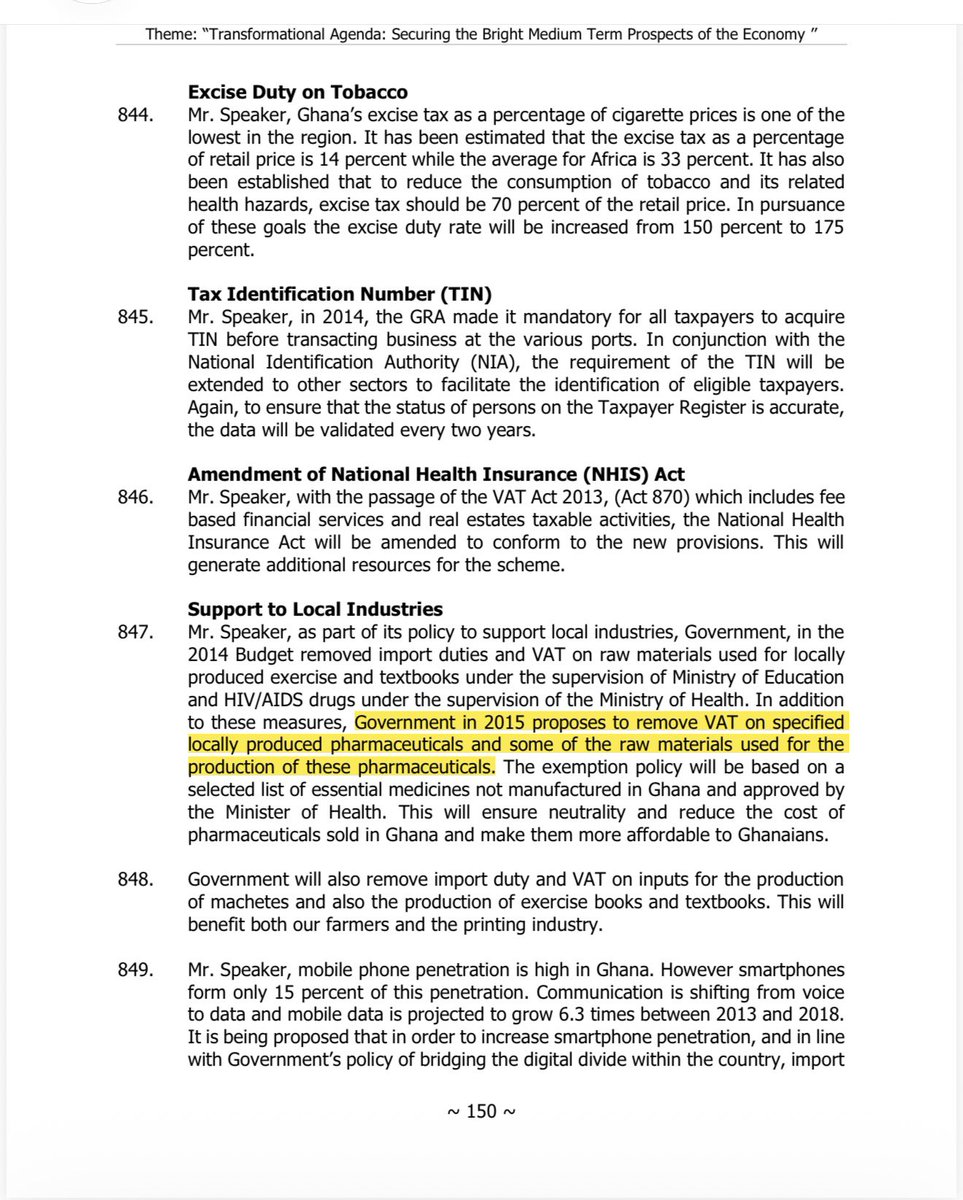
The 2015 Budget proposed VAT relief for selected locally produced medicines and some of the inputs used to make them. Parliament followed through that year with the Value Added Tax (Amendment) Act, 2015 (Act 890), which provided exemptions for pharmaceuticals and selected manufacturing inputs. In his State of the Nation Address on 25 February 2016, President Mahama told Parliament that his government had already disbursed more than GH¢50 million through EDAIF to support local pharmaceutical manufacturers. He cited Tobinco as a beneficiary producing medicines for Ghana and for export to Niger, The Gambia, Sierra Leone and Liberia.
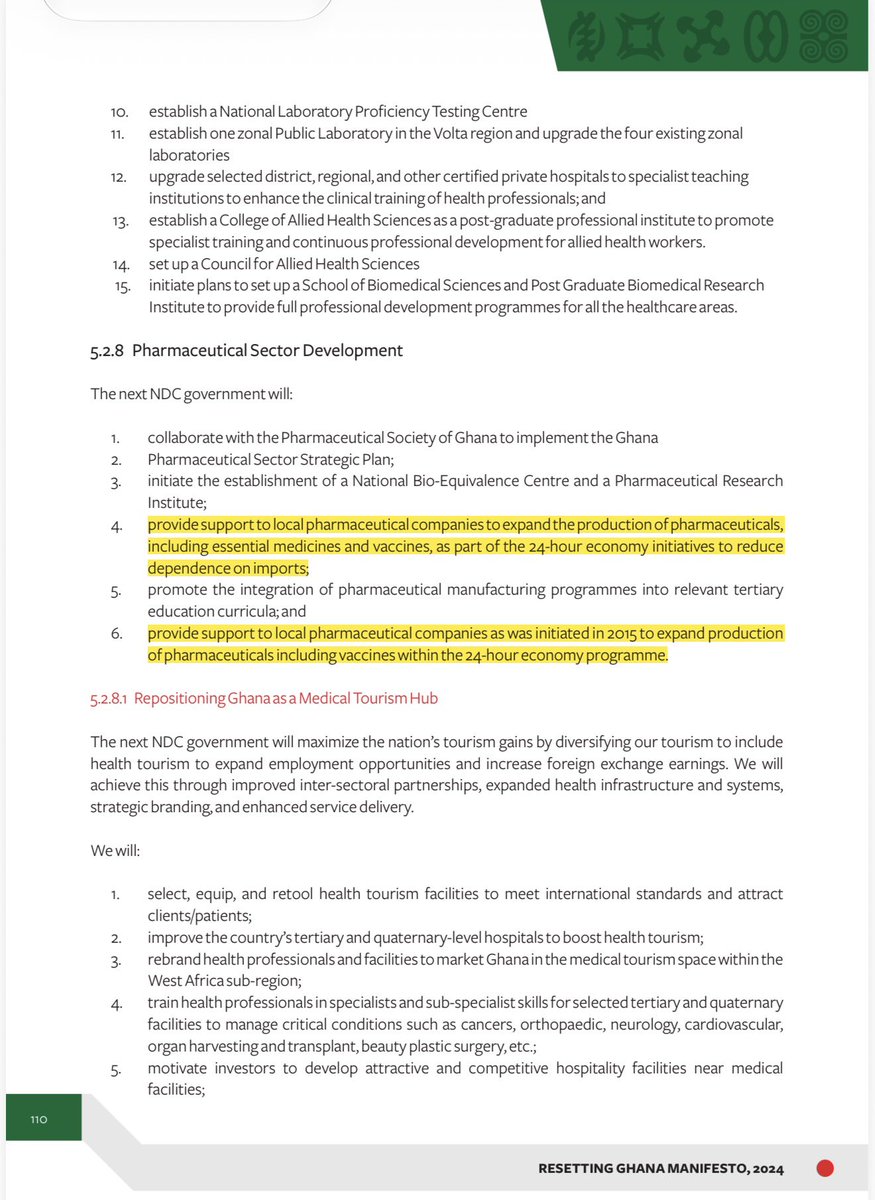
The NDC’s 2024 manifesto expressly referred back to the support initiated in 2015 and pledged to help Ghanaian companies expand production of essential medicines and vaccines under the 24-Hour Economy. The abridged manifesto also called for Ghana to become a pharmaceutical hub in Africa.
President Mahama has championed health sovereignty through the Accra Reset. In September 2026, he launched A Sovereign Future for Health on the sidelines of the United Nations General Assembly in New York. The report called for countries to build local manufacturing capacity and use public purchasing to secure a reliable supply of medicines. On 21 August 2026, Ghana signed an MoU with Africa CDC to participate in the African Pooled Procurement Mechanism, giving qualified Ghanaian manufacturers a route to compete for orders from participating African countries.
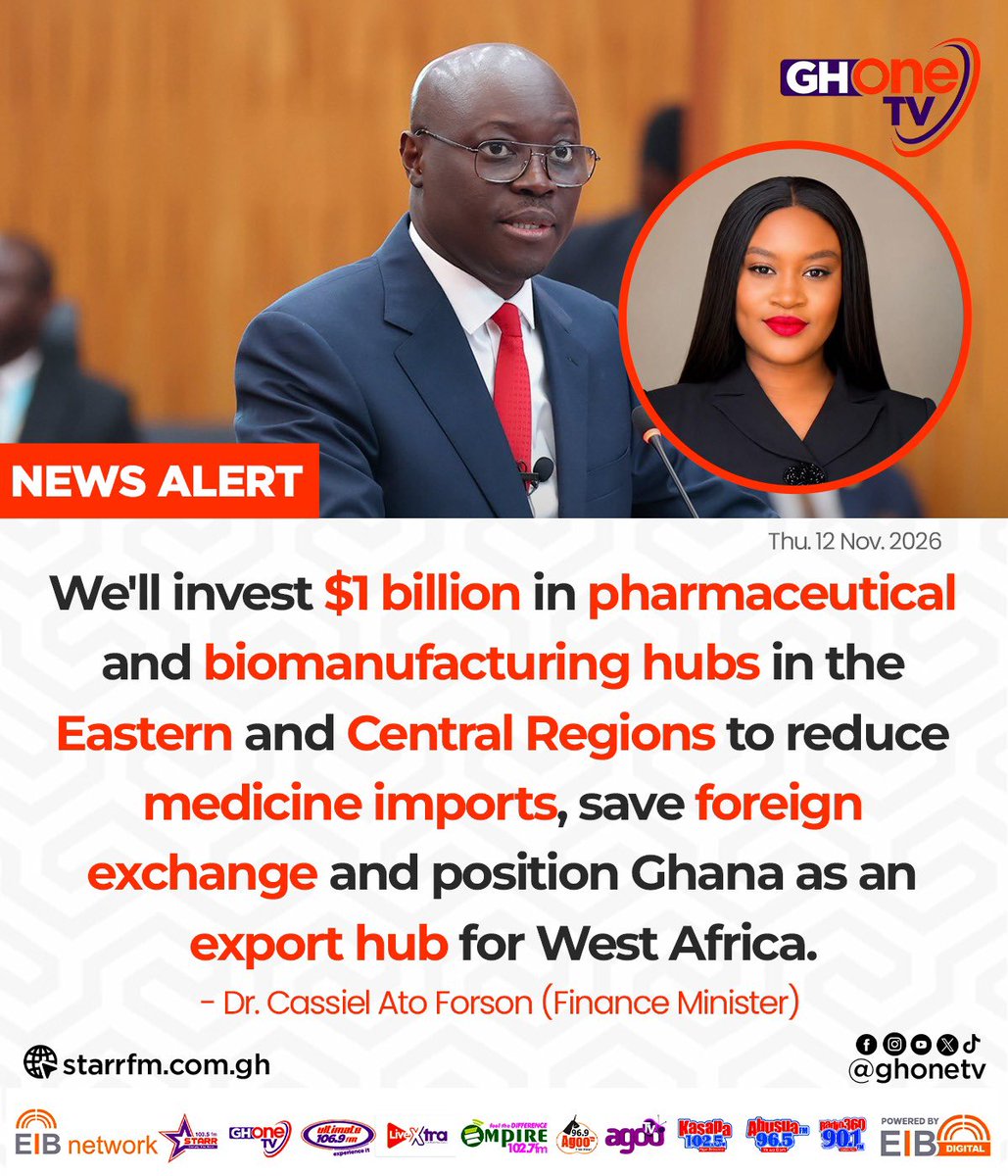
President Mahama commissioned the Hub’s feasibility study in November 2025. The 2027 Budget announced a US$1 billion Pharmaceutical and Biomanufacturing Compact under the New Economy Programme, with hubs planned for the Eastern and Central Regions and construction scheduled to begin in 2027. The first phase provides for five contract manufacturing facilities and ten modular factory shells. The Budget also proposes that public institutions buy Ghana-made medicines where local manufacturers can meet the required quantities and quality standards. This gives manufacturers both a place to produce at scale and a clearer route to buyers in Ghana and across Africa.
It is fair to ask how earlier budget commitments have been implemented. Free Primary Healthcare was included in the 2026 Budget and launched on 15 April 2026. The Pharmaceutical Hub should be judged by equally concrete milestones: when the factories are built, how much they produce and whether patients have a more reliable supply of quality medicines made in Ghana.
That is the work President Mahama’s New Economy Programme has set out to deliver.
Thank you.
#NewEconomy
🇬🇭 Eight Pillars. One Vision. A Stronger Economy.
Stay with us for all updates about Pillar 7 of The New Economy Programme.
#TheNewEconomy#GhanaPharmHub
Government has taken the bold step towards reducing import dependence, strengthening local production and boosting Ghana’s export potential for Made in Ghana medicines.
💊Pillar 7 of The New Economy Programme:
🇬🇭 Building Ghana’s Pharmaceutical Export Powerhouse.
A bold step towards reducing import dependence, strengthening local medicine production and boosting Ghana’s export potential.
#Budget2027#TheNewEconomy
💊Pillar 7 of The New Economy Programme:
As presented to Parliament by Minister for Finance, @Cassielforson,
Our Target by 2030.
Transforming Healthcare, Creating Jobs, and Building a Stronger Economy.
#Budget2027#TheNewEconomy
💊Pillar 7 of The New Economy Programme.
2027 - 2030 Development Targets:
📍 Phase 1 – Kwanyarko, Eastern Region, 5 operational contract manufacturing facilities and 10 modular factory shells.
📍 Phase 2 – Central Region, focused on medicine ingredients and packaging.
Two Strategic Zones. One Pharmaceutical Future for the whole Nation.🇬🇭
#Budget2027 #TheNewEconomy
As a pharmacy student, I am refreshed with the proposals of the #NewEconomy , look forward optimistically to the implementation of these policies-many of whose role outs have began.
@GhanaPharmHub on my mind!
💊Pillar 7 :
Presentation of our vision and core mandate by the Minister for Finance, Dr. Ato Forson on Pharmaceutical Manufacturing and Industrial Development under the New Economy Programme.
#Budget2027#TheNewEconomy
New and upgraded pharmaceutical production lines will come on stream in 2028.
Existing factories will receive support to meet International Manufacturing Standards.
We intend to strengthen Local Pharmaceutical Manufacturing Capacity.
As presented by the Minister for Finance, Dr. Ato Forson.
#Budget2027 #TheNewEconomy
💊Pillar 7 of The New Economy Programme:
With approximately 70% of medicines used in Ghana imported and an estimated pharmaceutical market value of US$600 million annually, the opportunity for local manufacturing is significant.
#Budget2027#TheNewEconomy
💊Pillar 7 of The New Economy Programme:
As presented by the Hon. Minister for Finance, Dr. Ato Forson, we are set to spearhead the manufacturing and supply of quality medicines for Ghana, West Africa and the wider continent.
#Budget2027#TheNewEconomy
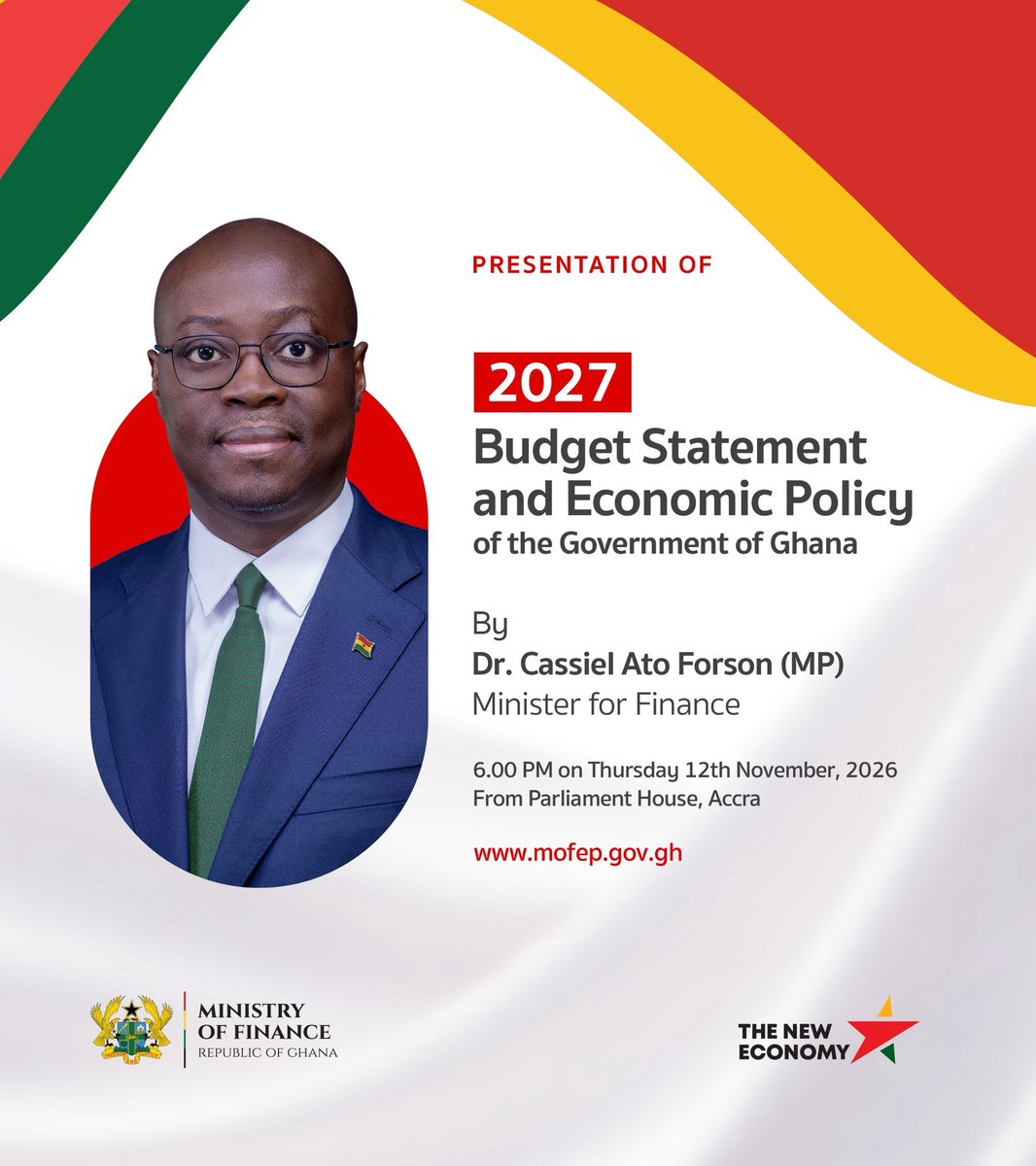
The Minister for Finance, Dr. Cassiel Ato Forson, will present the 2027 Budget Statement and Economic Policy at 6:00PM Today from The Parliament House.
A defining moment for Ghana’s Economic Direction, National Development and Financial Future.
Stay tuned and informed.📌
#Budget2027
#TheNewEconomy #GhanaPharmaceuticalHub
📑Highlights from the Launch of GHANA PHARMACEUTICAL MANUFACTURING POLICY.
The vision is a thriving Ghanaian pharmaceutical Industry, and harnessing its potential to drive investment, create jobs, strengthen healthcare delivery and position Ghana as a competitive supplier of quality medicines across Africa and beyond.
📑Highlights from the Launch of GHANA PHARMACEUTICAL MANUFACTURING POLICY.
The approval of the policy marks the beginning of our journey. We call on financial institutions, procurement agencies, industry players and stakeholders to support local manufacturers in building a competitive Ghanaian pharmaceutical industry through investment, production and job creation.
📑Highlights from the Launch of GHANA PHARMACEUTICAL MANUFACTURING POLICY
The Ghana Pharmaceutical Hub reflects President John Dramani Mahama’s vision of positioning Ghana as a leading Pharmaceutical Manufacturing Hub in Africa.