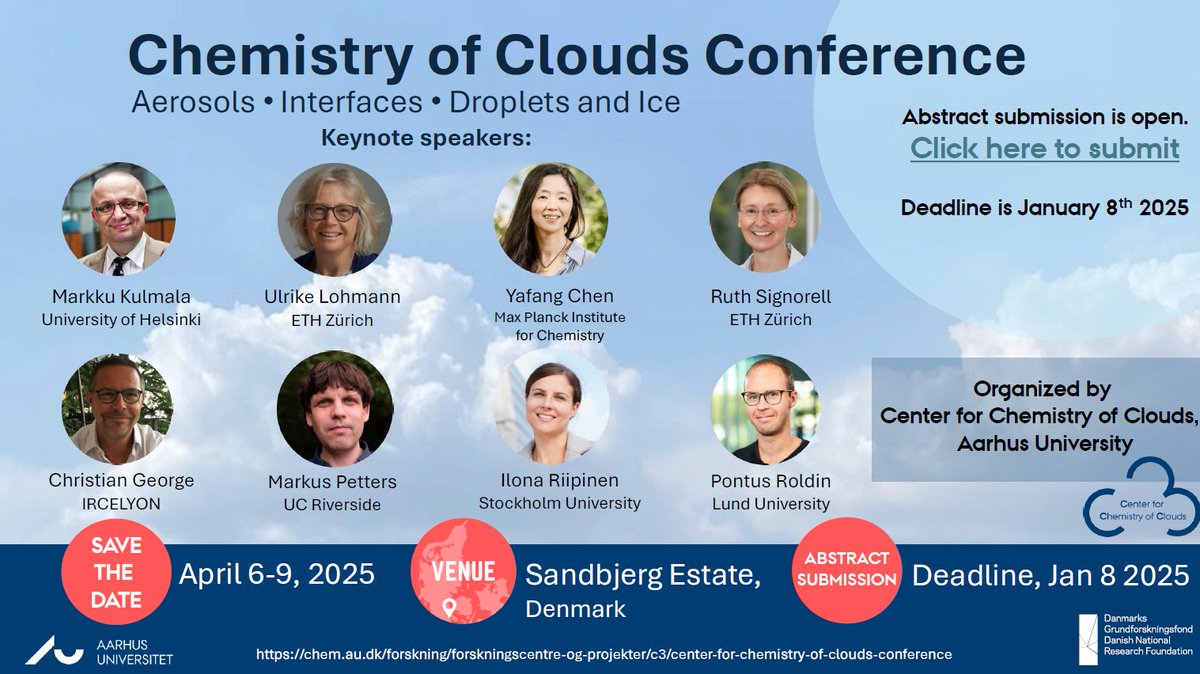
Wishing you all a happy new year & a successful 2025! In April, @ChemOfClouds will be hosting a 3-day specialized Chemistry of Clouds Conference. Abstract deadline is January 8th. Come join us in #Denmark and discuss & present your latest #atmoschem research. @Chemistry_AU
I don't look at this timeline much these days, but noticed increased activity with people shouting stuff. I tracked the cause down to reactions to an article promoting my new Solar System series on the BBC website - nice that it has got attention - Monday, 9pm, BBC2 if you are asking ;-) It's fun I hope, and I do some experiments with eggs in the first episode.
However, just to be clear:
1) I don't think it is 'probable' that we are the only advanced civilisation in the Milky Way. I have no way of assigning a probability to it. I can make an argument that complex life may be rare, and I think it's a good working hypothesis to assume this in the absence of other evidence, because it might make us value ourselves and our planet more. I certainly think there's a chance we may find simple life on Mars, Europa, Enceladus, Ganymede or even in possible sub-surface water on Pluto or elsewhere. I'm excited for the missions we have planned to explore these worlds. There are of course trillions of planets and moons in the Milky Way, and I'd be very surprised if they were all lifeless. But Civilisations - my guess is a handful at best. Beyond the Milky Way, in the trillions of galaxies in the observable Universe, surely there are other civilisations more advanced than us.
2) I do think that it is important for us to learn how to live and work in space - and the first steps beyond Earth orbit will be the Moon and Mars. HOWEVER (and I ALWAYS say this in interviews on this subject) there is a caveat! There is nowhere else we could go that would replace Earth, and therefore our number 1 priority must be to protect this planet. If we mess this one up, there is nowhere else we could live in large numbers - at least (in my view) for many centuries to come. It is a major error to assume that we can just up sticks and start again. In my lifetime, to paraphrase Carl Sagan, I can only hope we take our first steps into the Cosmic Ocean - the waters seem inviting.
3) I'd love to see Earth from orbit. But - as someone who was born close to Yorkshire - when asked if I'd like to go I always answer the same way. "Yes, if someone else is paying ...."
We are looking for one postdoc scientist to join our team! Research will include aerosol instrumentation and field study. Position details at: https://t.co/FN7GZmY159 @AtmChemAeroJobs#AtmosSci
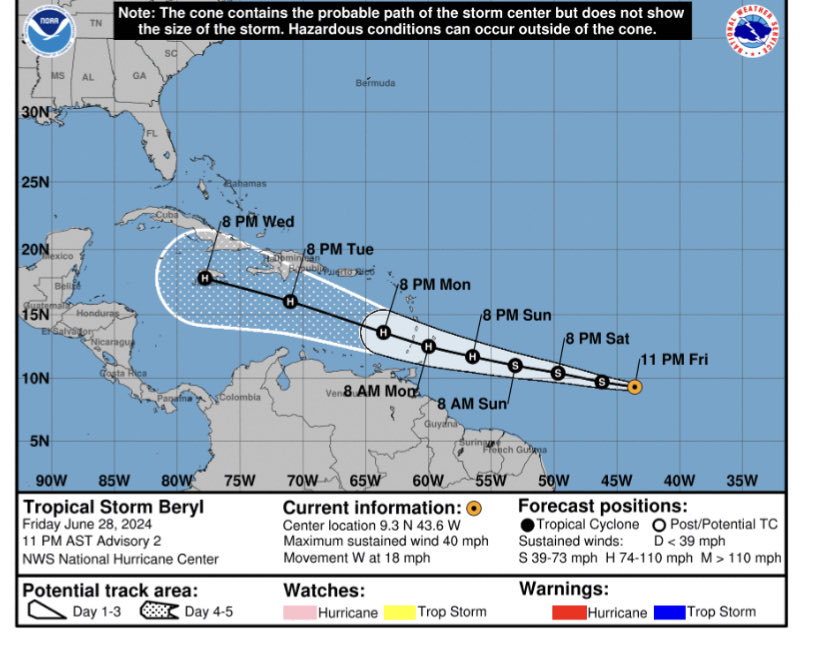
On behalf of all my friends at NHC, NOAA, and the whole weather enterprise, I would like to point out the accuracy of this 5 day forecast. @MiamiRosenstiel @NHC_Atlantic @HRD_AOML_NOAA
Alex Rodriguez asked a question. Reggie Jackson answered it.
(Shouts to the producer and rest of the desk for staying out of Reggie’s way and just letting him talk. I doubt they expected this answer. But it’s a great few minutes of television.)
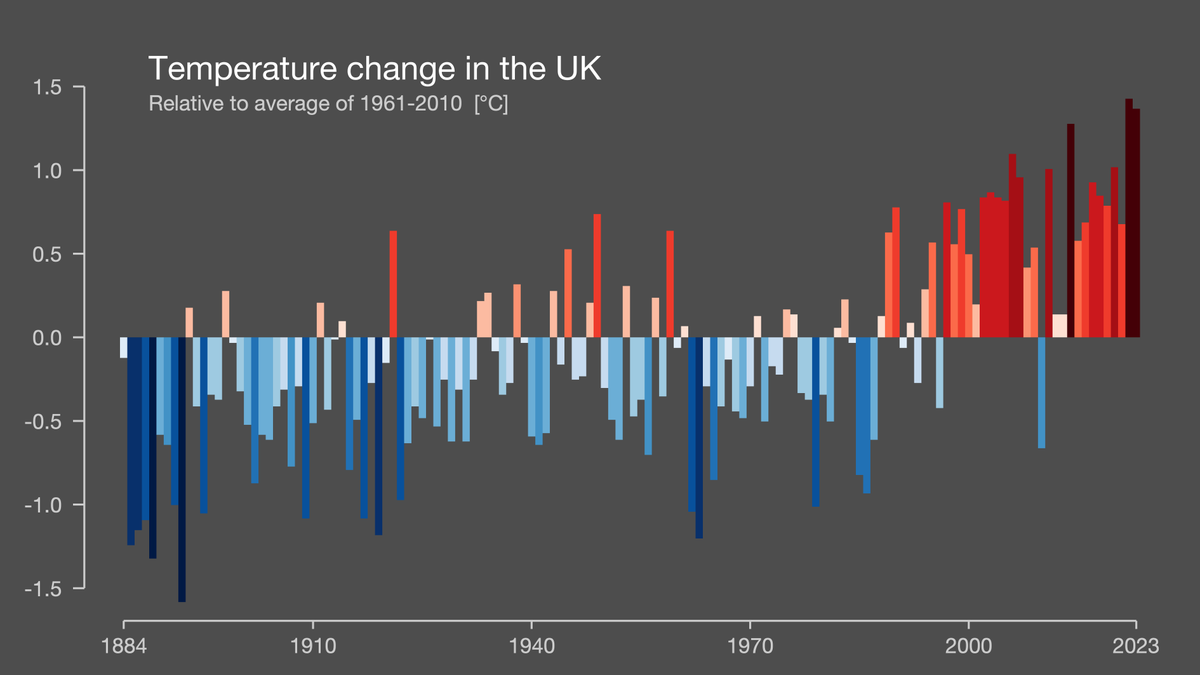
“It is very clear that a failure to tackle climate change with sufficient urgency and scale is making the UK and the rest of the world more dangerous and insecure” - letter to UK political parties from UK climate scientists (including me) #GE2024 https://t.co/cvR7uLpmAa
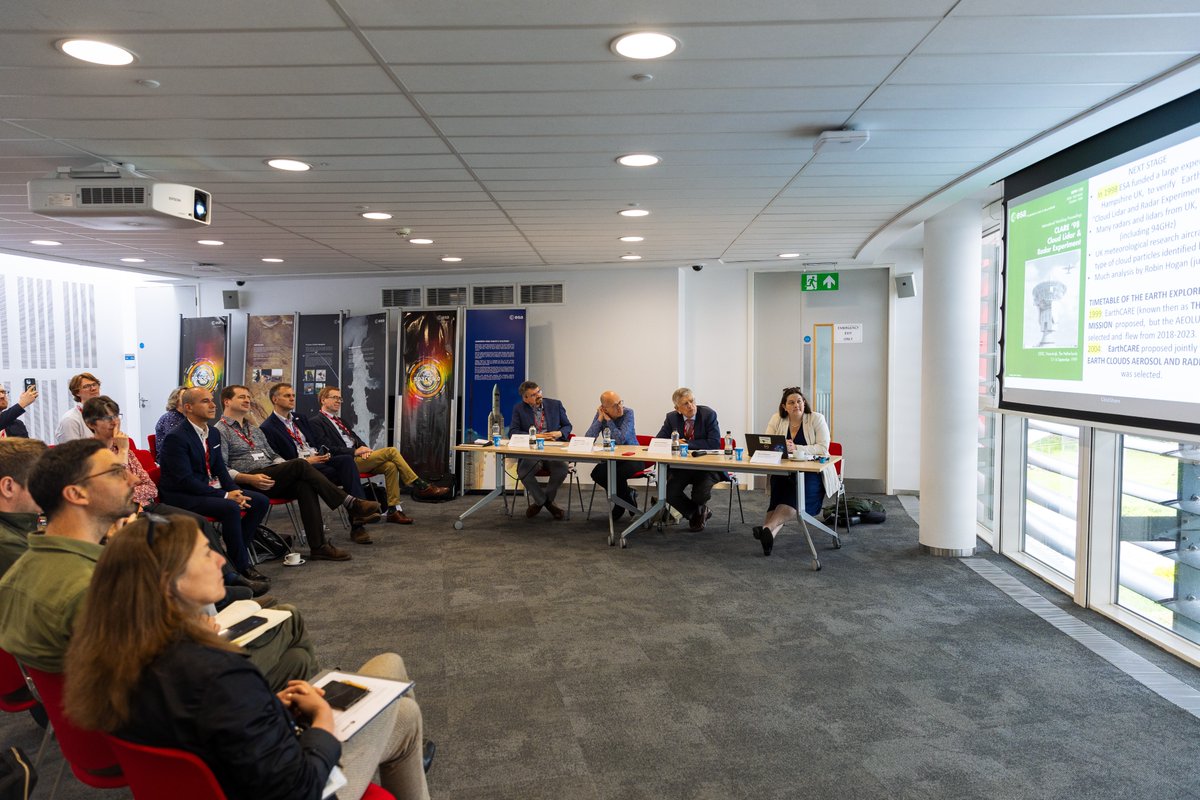
Stimulating pre-launch media briefing yesterday at @esa ECSAT, presenting and answering questions about the #EarthCARE mission (with Anthony Illingworth, @mason_shannon, Helen Brindley, @spacegovuk and UK industry partners @RAL_Space_STFC, @SurreySat, GMV-UK and Airbus-UK)
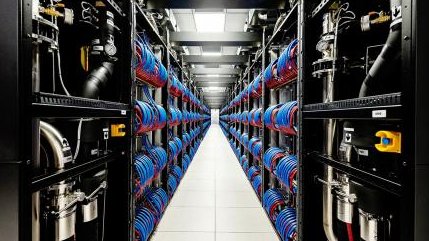
Aurora has officially broken the exascale barrier! Housed in the Argonne Leadership Computing Facility, a @doescience user facility, it's available to scientists who are conducting research that sparks innovation - https://t.co/dvUbp2iQby
Aurora achieves exascale! The Aurora supercomputer at Argonne, built in partnership with @intel and @HPE, has officially surpassed the exascale threshold, measuring over a quintillion calculations per second on the new Top500 list - https://t.co/b4jJ0n2qYV
Today's @guardian: 77% of IPCC climate experts surveyed believe global temperatures will reach at least 2.5C above pre-industrial levels, a devastating degree of heating. "What the f*** do we have to do to get through to people how bad this really is?" https://t.co/YSPRgoeIZJ
Interested in radar cell tracking, isolated deep convection over the Amazon rain forest, or how updrafts and mass flux evolve over the deep convection lifecycle?
Well, you're in luck because this new publication just dropped:
https://t.co/jS1XrqubmW
Have you used MetPy? We'd love for you to take our 2024 User Survey. It should only take 5-10 minutes and is really important: results are used in our reports to NSF and guide our overall roadmap. Feel free to share with others who might miss it. https://t.co/zvZngfuY1n
I'm hiring two postdocs for ORCESTRA/PICCOLO (https://t.co/eH7wtc14Ro)! One is on convective organization, the other is with both me and @MorganEONeill on moist thermodynamics. More info at https://t.co/quN83QFwu9 Apply by March 1. #convection#climate