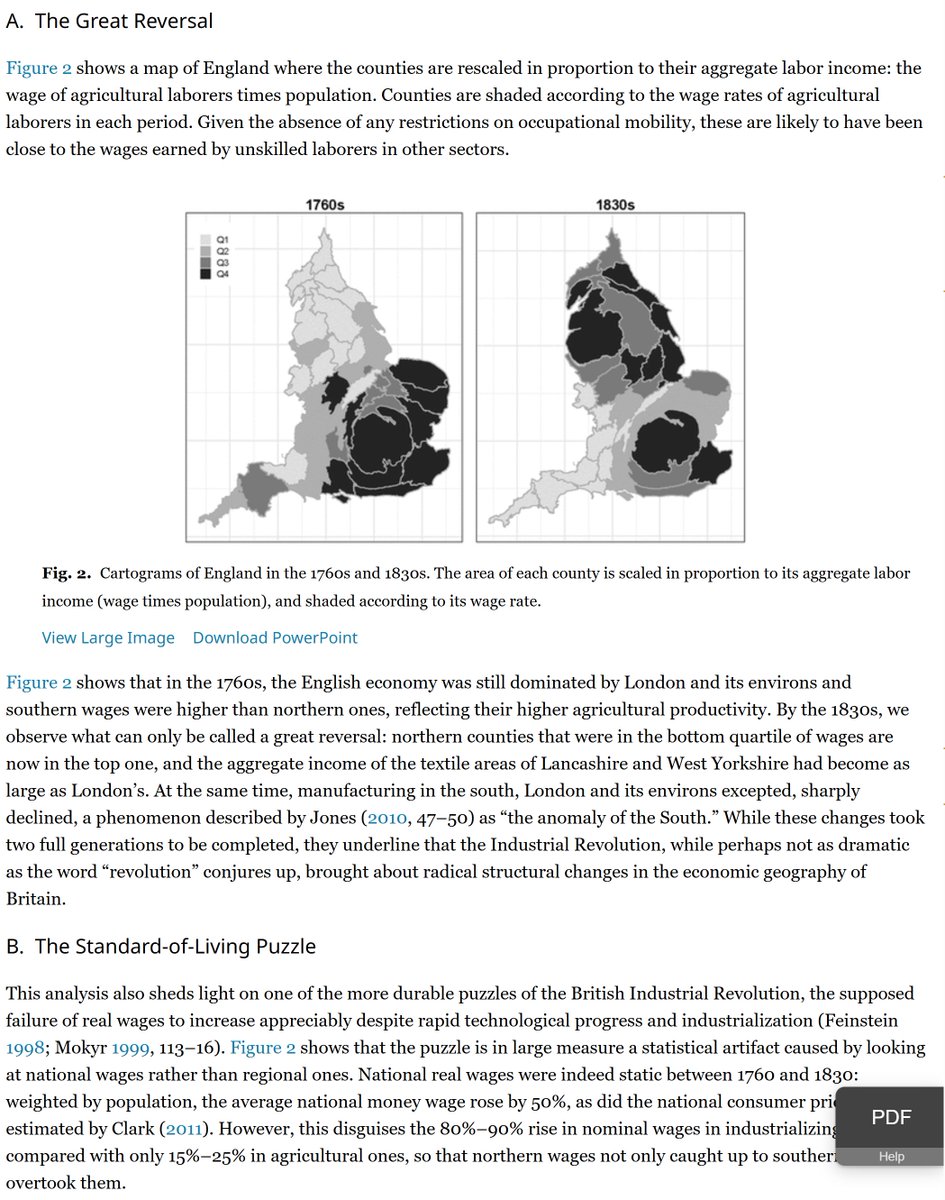
@alz_zyd_ Kelly, Mokyr, and O Grada (2023) argue Engel's Pause is mostly a statistical artifact--wages *rose* in the industrializing north, but *fell* in the agricultural south for a net zero national effect. New interpretations of old facts! See: https://t.co/zh9JTplFhZ
I'm hiring a pre-doc to work with me on empirical IO/applied micro projects starting in Fall '25!
Details below and instructions here: https://t.co/grvqibXQPW
International students (who need J1) are welcome & non-econ bgs are fine given interest + curiosity. Please apply :)
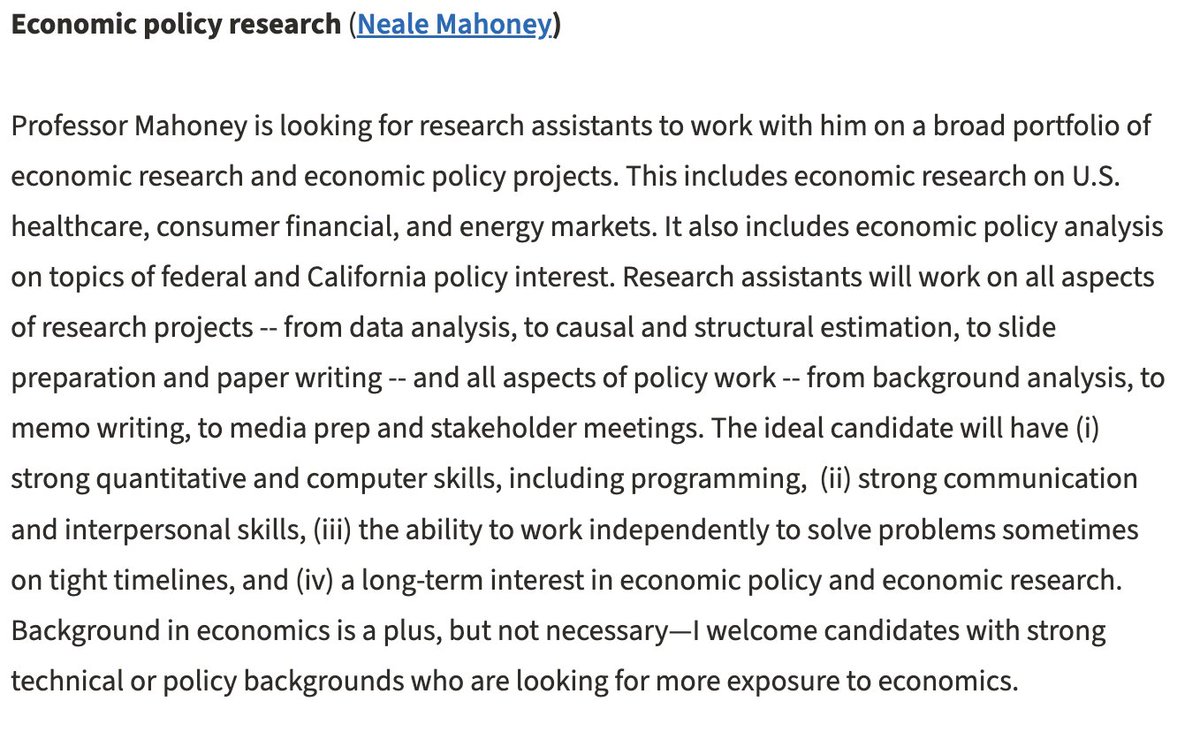
I'm hiring pre-docs to work with me and my outstanding team on economic policy research projects.
Application info here: https://t.co/cmzHZvzjga
Deadline is Mon Oct 21, 2024
@econ_ra
Blink and you’ll miss it, but I contributed to this article’s analysis of trends in university course content. It’s great to see the data I collected used to generate new knowledge.
Stay tuned for more work related to ideology and college courses w/ @GideonMoore and @SamuelThau
@NinaBuchmann6 @Dell I had the exact same issue with Dell struggling to repair my XPS last year. I ended up switching to the HP Spectre which I've been very happy with. If you want to take a look come by my cube in the department! Link: https://t.co/Sj6k4SE5Uo
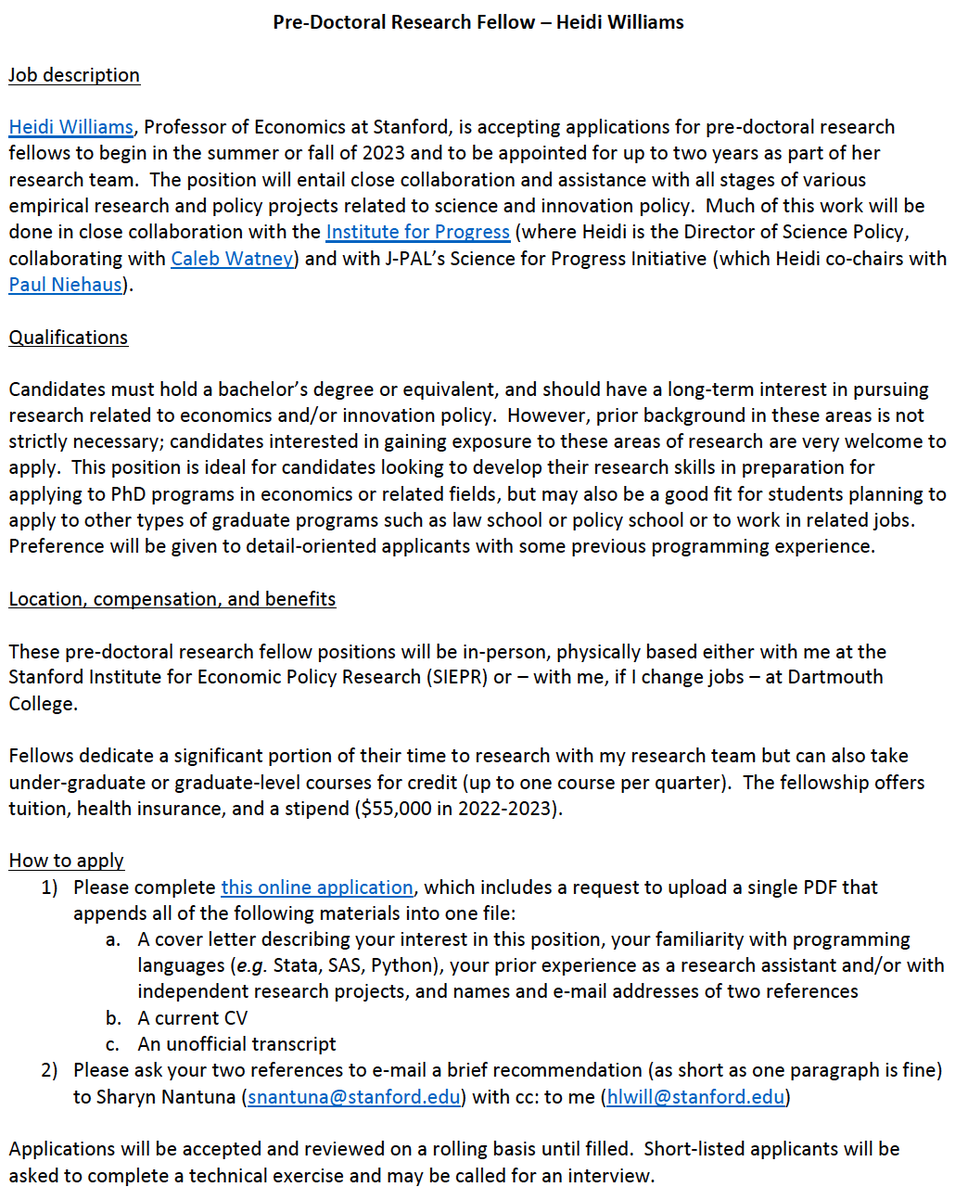
Would you like to do research that informs how governments as well as private philanthropies can best support science and innovation? Think about coming to work with me and my amazing collaborators like @calebwatney and @PaulFNiehaus.
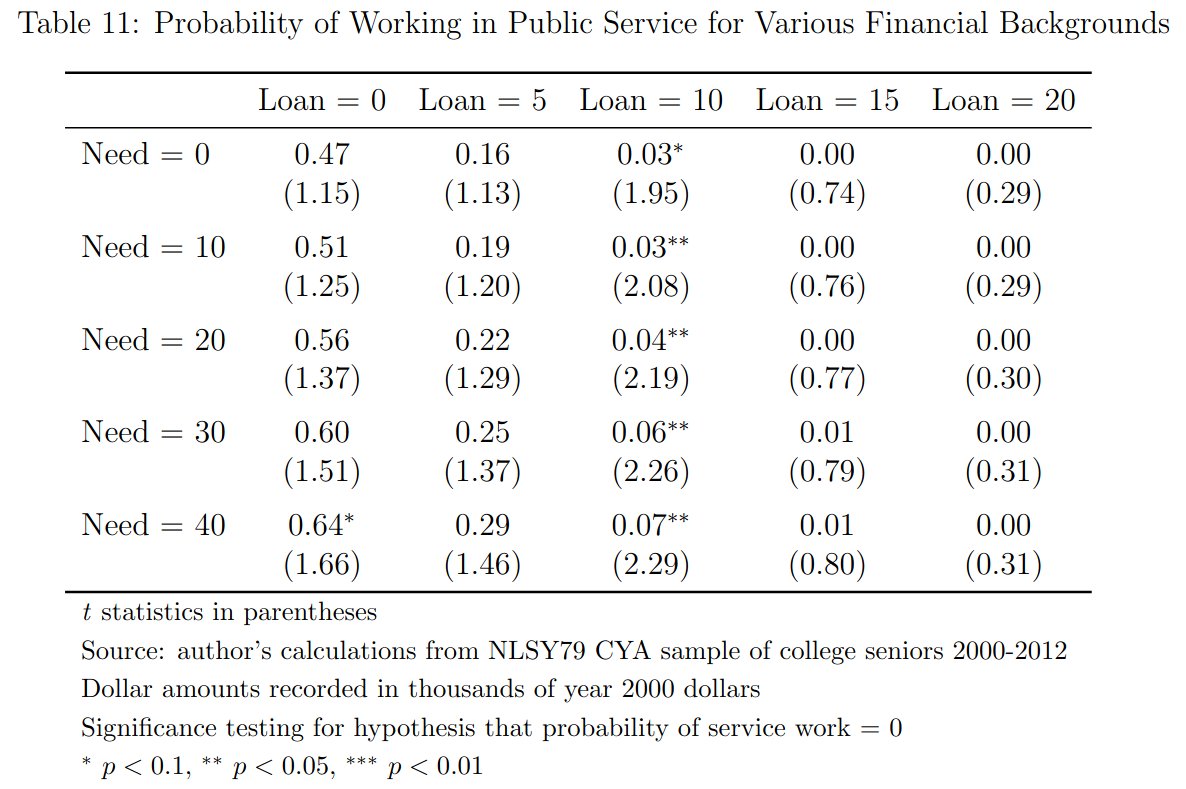
Note this is a version of the result seen in (the wonderful!) Rothstein and Rouse (2011): https://t.co/9qS1MjMZo7. However, rather than focus on students at a wealthy private university, I really try to examine on students in a much lower income stratum at a national scale.
This seems like as good a time as any to re-up my undergrad thesis results: a short 🧵. For low-income borrowers, even debt increases of <$5k cut the probability students enter public service. The effect is driven primarily by graduates substituting away from becoming teachers.
Find the full PDF here: https://t.co/v6Yd4U5t0R. Keep in mind (a) it's not peer-reviewed, and (b) I wrote it when I was 20, so cut me some slack. I'm still hoping to make something of it someday, so suggestions welcome!
A goal of public education is to improve economic
and social mobility. But schools often assign kids to classes based on academic ability, mimicking the stratification that education is intended to combat. Our new research studies this tracking in the US. https://t.co/nd5lr1aB25
About a year ago I got tired of checking Al Roth's Market Designer blog manually and wrote a bot to get it on my Twitter feed. Today it got the nod from the man himself--if you're interested in this kind of thing, consider following!
I was invited to give an MLK speech today and a small number of members of the group hosting me wrote and then leaked emails opposing my giving this speech, as it dishonored Dr. King for me to do so. They called me a "discredited activist" "unworthy of such association with King"
I spent the last two weeks down a retail-theft rabbit hole, trying to figure out if the shoplifting surge is real and why news coverage of it is so bizarre (and, honestly, so bad). https://t.co/H17Qj6SE0u
I've found Nick Cox's "Suggestions on Stata programming style," but I'm not sure that's what I'm looking for--it seems to mix stylistic preferences (e.g. brace placement) with substantive preferences (e.g. programs should try and accept varlists).
@AeaData (or others!) Is there any sort of Stata style guide analogous to Python's PEP 8? Even better would be some sort of Pylint-style automated linter that would enforce good style.
This is a weirdly common take despite the fact that what makes the Ivy League bad is clearly the exact opposite: it is an excellent educational value that is open to an incredibly small number of people