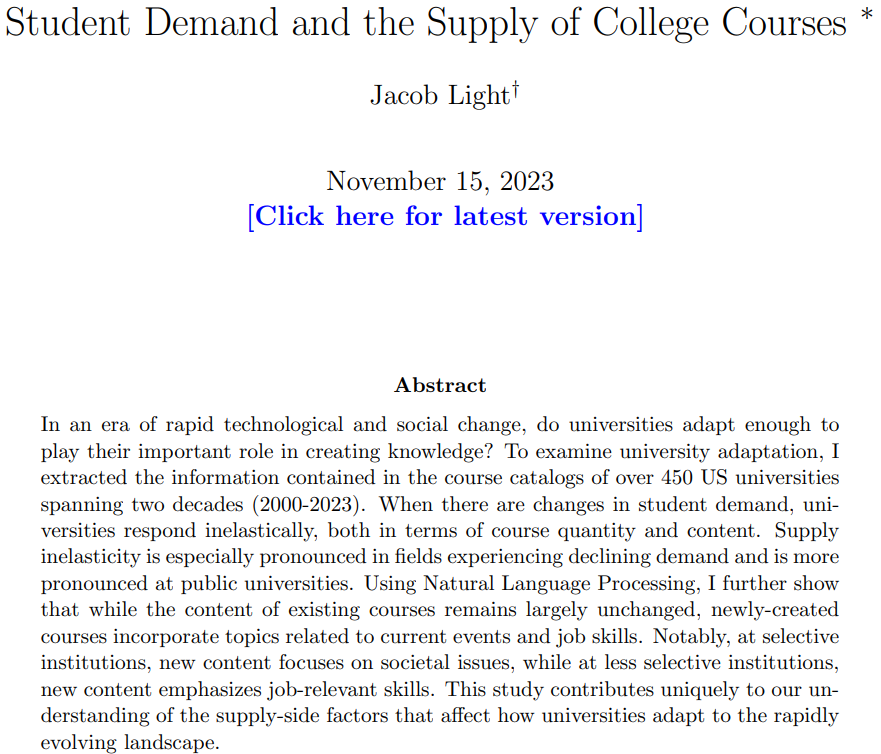
1 - My #JMP studies how universities respond to changing student demand for courses and skills. I use novel data to peek inside the black box of #highered supply.
TLDR: Universities respond inelastically, both in course quantity and content #EconTwitter
https://t.co/fIuz3vOh9N
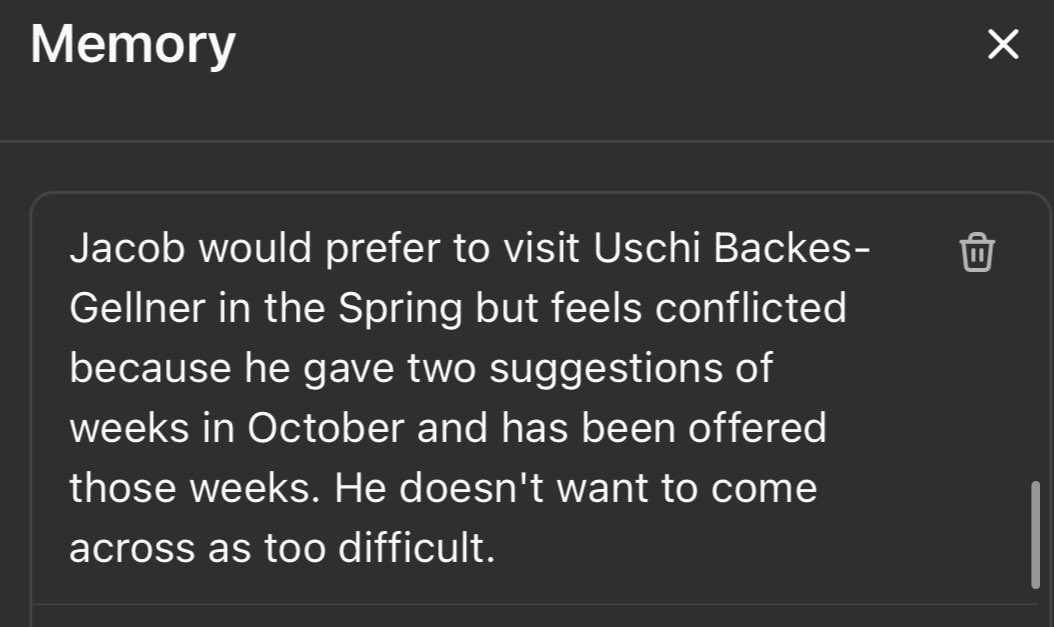
I’m amused by some of ChatGPT’s memories about me from previous conversations. Imagine working with ChatGPT on an unrelated task and getting the response: “By the way, how was the dinner event where your advisor explicitly allowed you to bring a plus-one?”
We are very excited to release a new working paper (joint work with Ran Abramitzky, Jenna Kowalski, and Joe Price). I am especially excited as this paper has been in the making for a long time (4+ years 😬).
https://t.co/WB2hTQhJQg
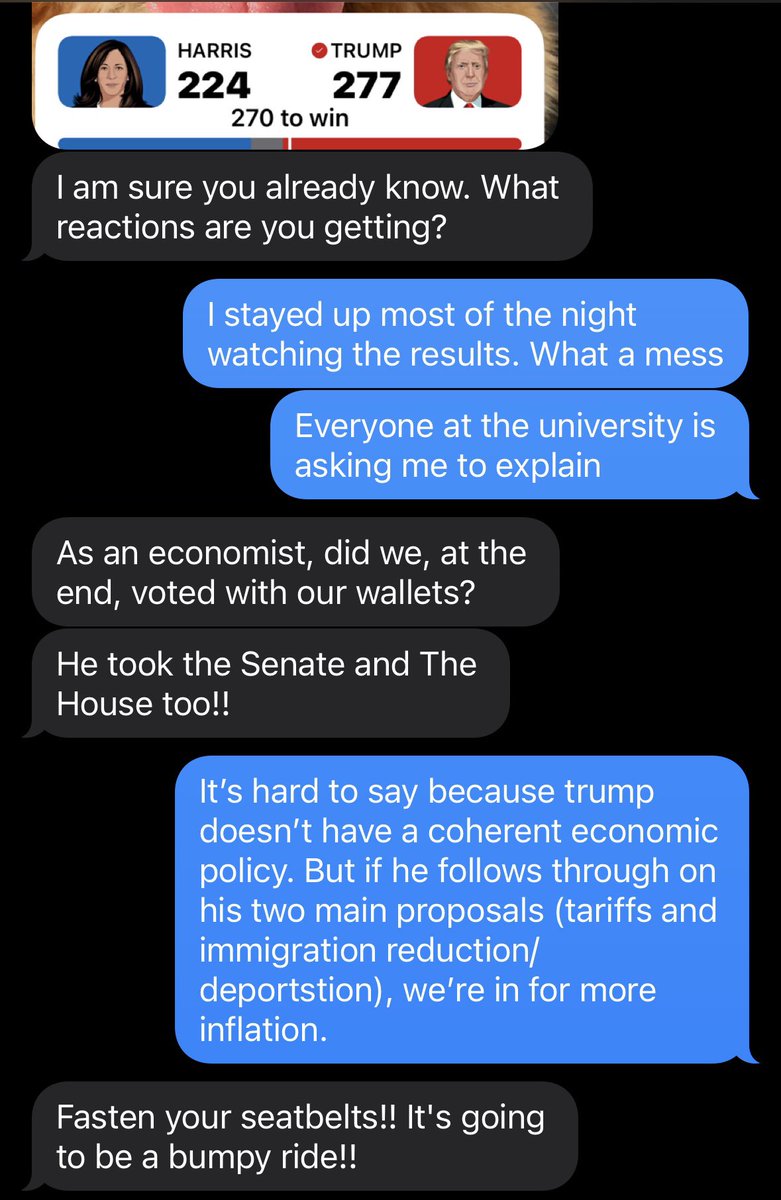
I’ve obviously been despairing for most of the day, but my landlord’s message breaking the election result (in case the news hadn’t reached Switzerland) is making me laugh
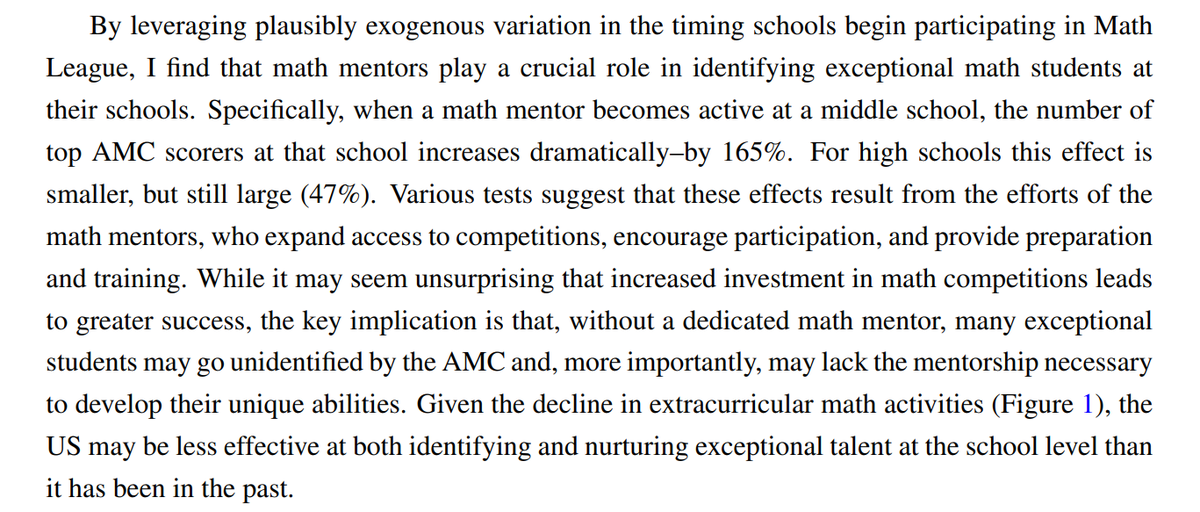
One feature I love about this paper is Ian’s ability to distinguish ability among high achievers whose ability would be censored using conventional measures (e.g. SAT). His JMP provides new insight into the role of mentors in the production of talent. Take note, #econjobmarket
Here's a fun paper by a Stanford econ JMC on grade school math teachers. Looking at AMC data matched to Linkedin, paper finds that even just decent, above-average middle/high school math teachers dramatically increase students' AMC scores: top AMC scorers increase by 165%!
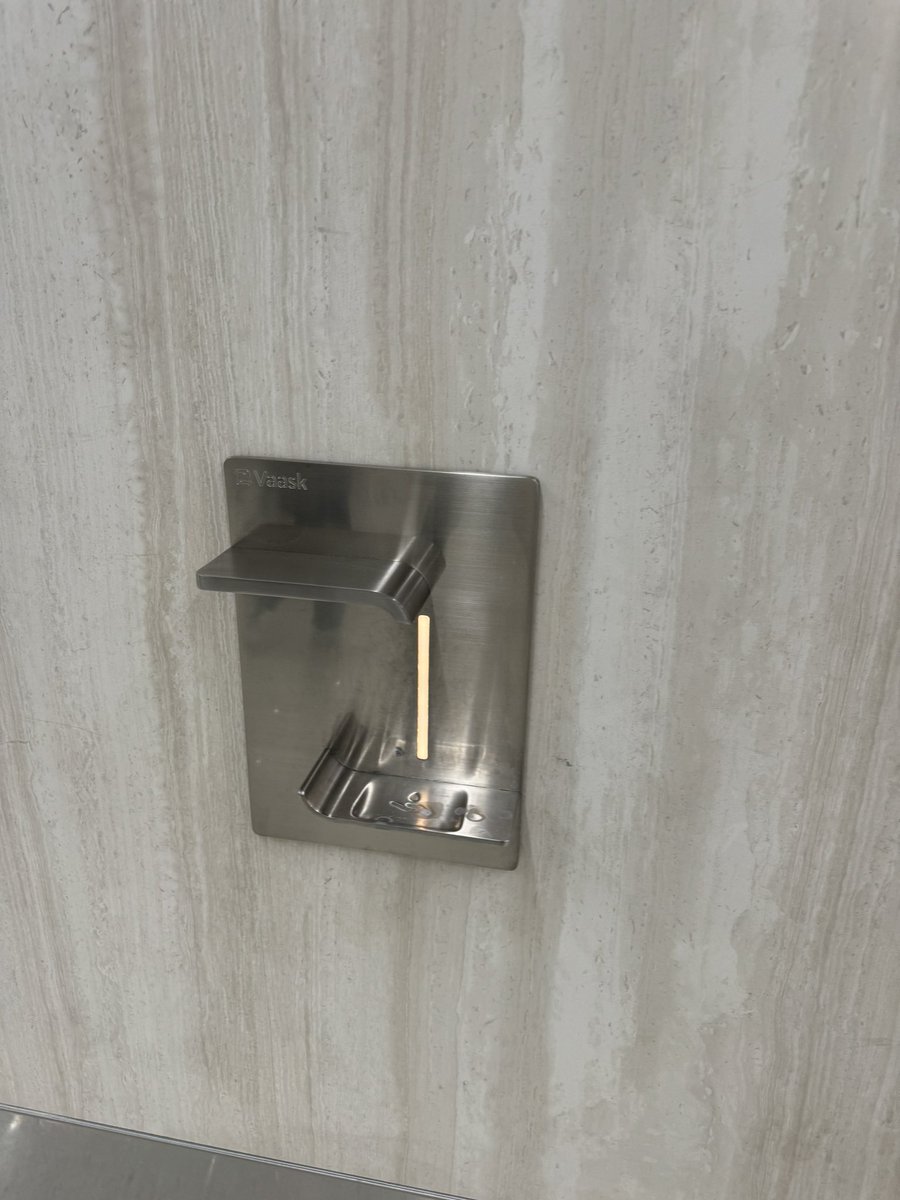
I learned a tough lesson the hard way at Nashville’s airport: the undersized water bottle refill station next to the bathroom was, in fact, a hand sanitizer dispenser.
In her undergrad Econ of Ed class, Caroline Hoxby proposed a similar tool she called the “Ohio State Machine,” which would benchmark non-standardized courses to those at a large school like OSU. With this project, I’m relieved that this is actually a "Michigan Machine."
Standardizing courses across universities has been a massive headache in my research. Beyond my personal inconvenience, this tool will be practically helpful for universities that want to translate transfer courses. Very exciting work!
🎉 Congrats to @kevin_stange & @edpolicyford on securing nearly $900K from @IESResearch! Their project will standardize college course data, creating an open-source mapping tool to study student experiences nationwide. 🌐📚 #EducationResearch#BigData https://t.co/jOVUClGRDm
General wisdom is that college gives students skills for good careers but what are those skills?
In a new study led by @ArjSabet in @ScientificData, we offer skills data based on millions of college course syllabi from US educational institutions.
https://t.co/JQauX1P4o3
Blink and you’ll miss it, but I contributed to this article’s analysis of trends in university course content. It’s great to see the data I collected used to generate new knowledge.
Stay tuned for more work related to ideology and college courses w/ @GideonMoore and @SamuelThau
Republicans love to blame everything they consider wrong with America on an epidemic of wokeness, by which they tend to mean anything that smacks of political correctness.
In fact, woke views and practices have declined markedly since the early 2020s https://t.co/R15BcyrrJy👇