I’m honored to deliver the keynote lecture, “The Future of Cardiology,” at the Bayer Innovators Evening during ESC Congress 2026 in Munich this evening.
I look forward to discussing the innovations, technologies, and ideas that are shaping the future of cardiovascular care — and to exchanging perspectives with colleagues from around the world.
#BaimInstitute #ClinicalResearch #Cardiology
Excited to present preliminary findings from the phase 2b FORTIFY trial at #ESC2026.
Despite well-controlled CV risk factors, low hsCRP & excellent secondary prevention after a prior type 1 MI (median 2.6 years prior to enrollment), coronary inflammation remains strikingly prevalent: 63% had ≥1 artery with elevated FAI (>50th %tile) and 24% had 2 arteries >50th percentile in the screened population.
I’m speaking at the https://t.co/Vk0z1n0kKP patient conference where I will be talking about bringing trials TO THE PATIENT VIRTUALLY rather than expecting patients to come to the trial at a bricks and mortar site.
We randomized 34,000 patients over the internet to see if an Apple Watch can detect atrial fibrillation as an example! #afib #atrialfibrillation
Retatrutide, a first-in-class GIP, GLP-1, and glucagon triple hormone receptor agonist, was studied in adults with obesity & at least one weight-related comorbidity and without diabetes.
Pts on 12 mg retatrutide lost an average of 70.3 lbs (28.3%) over 80 weeks with 45.3% of participants achieving ≥30% weight loss.
Individuals with a baseline BMI ≥35 who participated in a study extension continued to lose weight, and achieved up to an average of 85.0 lbs (30.3%) weight loss at 104 weeks.
https://t.co/YGDlZJLbhH
Managing bleeds on anticoagulant therapy: a practical guide for clinicians.
https://t.co/ydY3RJ7yI6
Contributions from Baim President and CEO, @CMichaelGibson and Baim faculty, Dr. Dominick Angiolillo, and Prof. Gilles Montalescot.
#BaimInstitute#ClinicalResearch
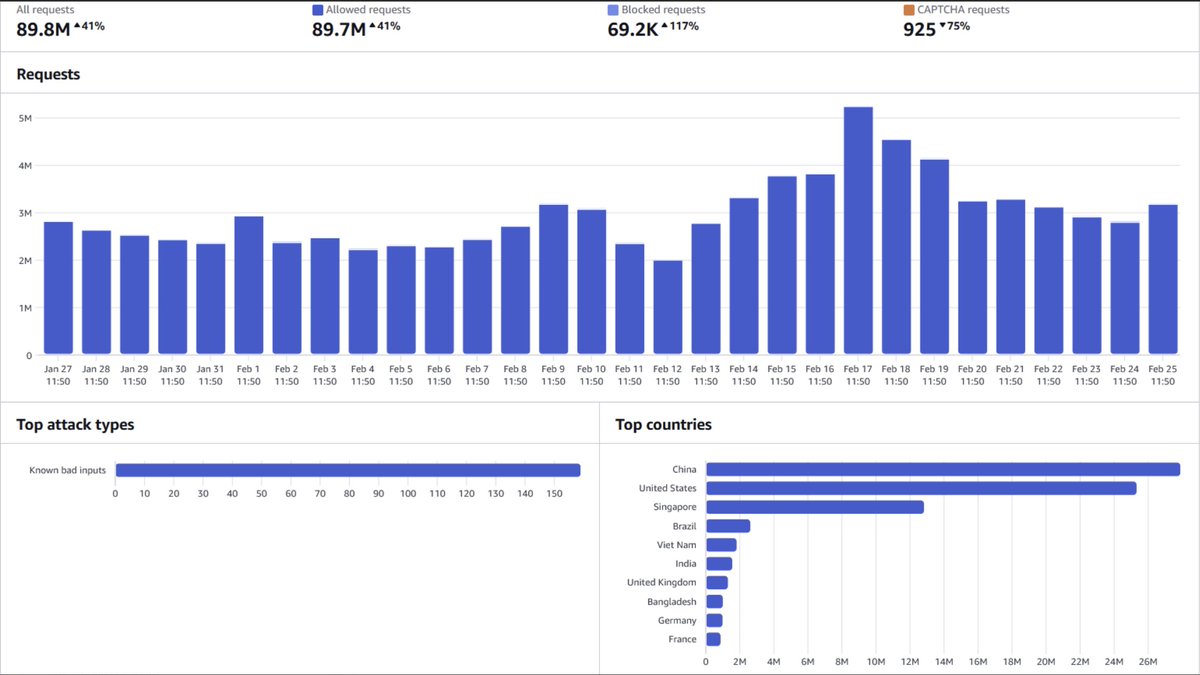
https://t.co/EcfKpUF2Iq now handles about a billion page requests per year !
20 years
>110,000 chapters created by thousands of MDs
Millions of edits
Free
Collaborative authoring
International faculty
Updated continuously based on content from leading journals
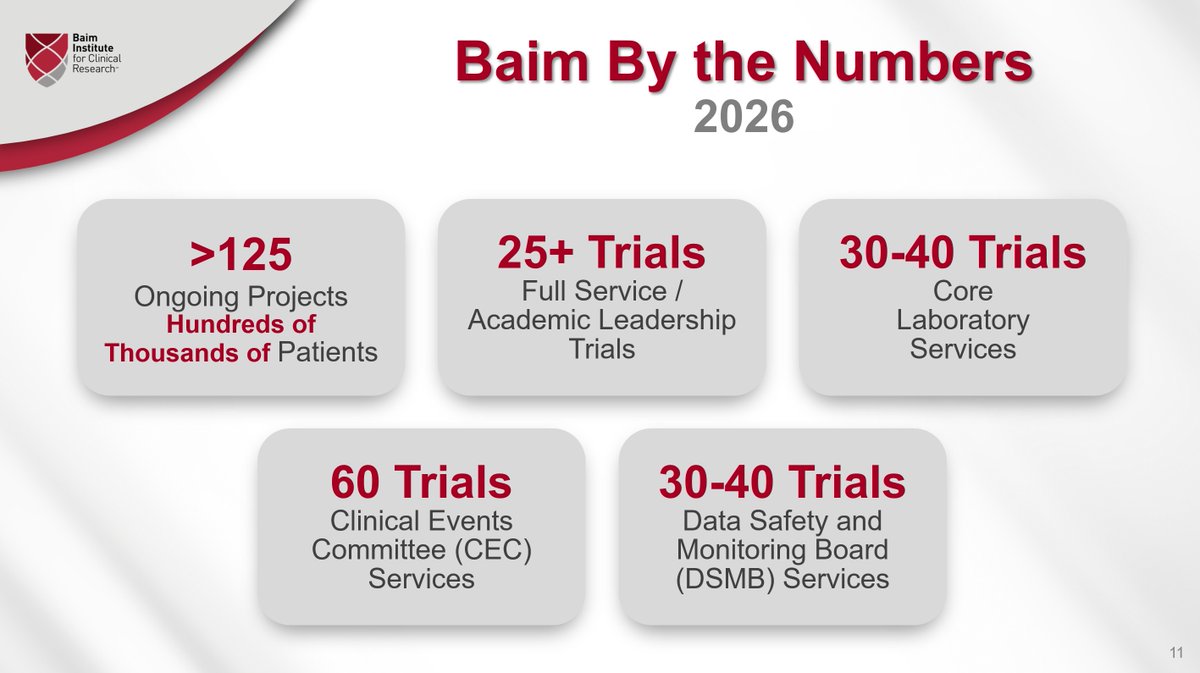
With 60 CEC programs, 30-40 IDMCs, 30-40 core lab programs, numerous full service trials, and hundreds of thousands of patients in upcoming trials, @BaimInstitute is growing exponentially !!!
We need world class project managers !
Send your CV to [email protected]
https://t.co/UPYJ1T94Ax
When humans conversationally present medical scenarios to #AI chatbots, the accuracy of diagnoses is < 35%
https://t.co/MeM4U9Hk8Y
Original article in Nature Medicine https://t.co/2SrmZMEIJU
I heard from an administrative colleague about a meeting that made his jaw drop.
He was summoned to an “emergency summit” to discuss his health system’s decline in heart failure admissions.
The cardiology department had been focused on reducing heart failure admissions and readmissions
The focus of the “summit” would make anyone with a consicence blush:
How do we increase our heart failure admissions?
The most benign view is that the system wanted to get a larger share of a shrinking pie of admissions in the community.
But the subtext of the meeting was unmistakeable: when patients win, hospitals lose.
In many ways, outpatient management of heart failure was “too effective.”
High margin heart failure admissions and ICU stays were shrinking in number.
And, yet, rather than declaring victory and the stunning success of the cardiology team, the hospital was in a panic.
Revenue was declining—and the hospital’s finances were suddenly in disarray.
They needed more admissions—and fast.
Said another way, they needed more sick people to need their services.
Traditional administrators would say the dynamic is an outgrowth of our broken fee-for-service health systems.
That incentives from value-based care do not make up for loss of volume.
But there’s something more nefarious in this short vignette: it’s the unquestioned institutional focus on finance over health.
“No margin, no mission,” some might glibly say.
But has the mission been fundamentally corrupted?
Is our mission:
Keeping our beds full?
Our margins high?
Our doors open?
Our teams employed at all costs?
Or is our mission to promote the health and well-being of the community?
We have clearly lost our way in important respects.
For if it was the latter, the emergency heart failure admissions meeting would not be an institutional crisis, but a celebration.
Celebration of community health.
Celebration that patients were able to spend more time at home than in the hospital.
Celebration that patients were healthier and so needed services less, not more.
But, yet, health service organizations too often measure themselves by traditional business metrics:
Volume.
Revenue.
Profit.
Which of course are the wrong metrics for (mostly not-for-profit) health systems and hospitals who are chartered to serve the public good.
It is the (hard) work of hospital administration to work proactively with payers to ensure that they are financially rewarded for doing the right thing.
Not to blame the system and perverse incentives.
https://t.co/Fe6q7wI5Zq
Surgical and Procedural Bleed Risk Stratification for Anticoagulated Patients Undergoing Planned Surgery.
https://t.co/ezSSLkNCj6
Contributions from Baim faculty, Dr. Jean Connors.
#BaimInstitite#ClinicalResearch
Join us for an important online session by CVHRI on “Collaboration Without Compromise: Ethics in Research Teams”, led by our star fellow Dr. Saad ur Rahman, MD (Cardiology Fellow, Lahey Hospital & Medical Center; Vice Chair Research & Innovation, CVHRI) ♥️🔥🫀
Dr. Mike Sharma and I discuss the results of the phase III OCEANIC-STROKE Trial: In secondary stroke prevention the Factor Xi inhibitor Asundexian reduced the risk of recurrent ischemic stroke at 1 year by 26%. The absolute reduction was such that only 53 people would we need to be treated to prevent another stroke at 1 year.
There was no increase in mild or severe bleeding or intracranial bleeding
63% of people were on DAPT at study start, and they had the same benefit as people on antiplatelet monotherapy
Similar benefit in medium to large vessel ischemic stroke, lacunar stroke and stroke of unidentified origin
All benefit with no increase in bleeding risk
View slides here: https://t.co/mk0BVUGhEY