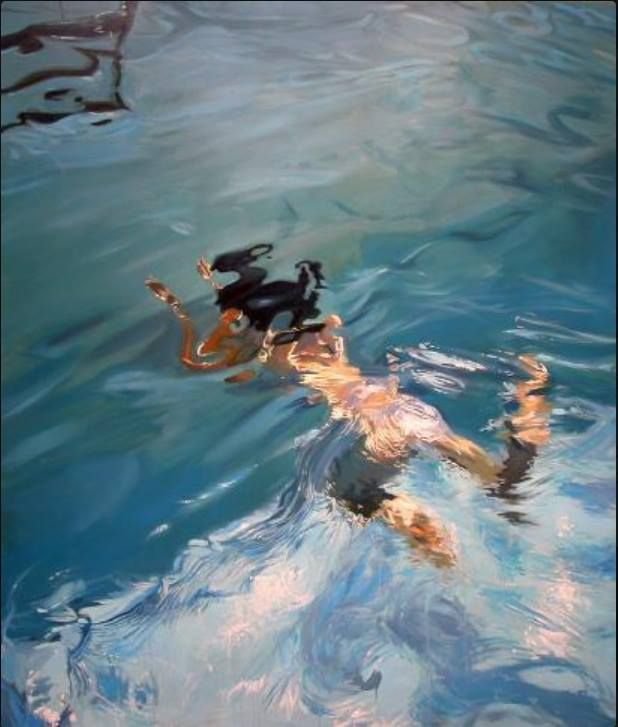
“The Lotus Sutra in Pictures” painted by Yoshitaka Amano. Commissioned by the Nichiren Shu sect to mark the 800th anniversary of Nichiren Shonin’s birth.
You have to see this place to believe it 💙
This is Voroneț Monastery in Romania, called the Sistine Chapel of the East.
Built in 1488 in just 3 months, and painted with a blue so unique that nobody has ever been able to copy it.
It’s called Voroneț Blue.
The whole outside wall is the Last Judgment.
Heaven on one side, hell on the other.
500 years ago, this was how people learned the Bible, because most couldn’t read.
And it’s still alive today, with nuns living here.
Sample panels from "The Stevensons." 4 new pages (pp.1373-1376) available
at https://t.co/tovBCbFqfB
or https://t.co/pAqiJ0OsmI
#adultcomics#porncomics
Civil servants in the Department for Work and Pensions took more than twice as many sick days as the private sector last year, despite being the department responsible for the Government's "Get Britain Working" initiative. https://t.co/b4fs7JuYMN
The Gate of All Nations (the Gate of Xerxes) stands in the ruins of Persepolis in modern-day Iran...
Photographed by Antoin Sevruguin dated around 1902-1905.
The construction of the Staircase of the Nations and the Gate of the Nations was ordered by the Achaemenid king Xerxes I (486-465 BC), successor of Persepolis' founder Darius I.
. . .
The Gate of all Nations consisted of a grand hall that was a square of approximately 25m in length, with four columns and its entrance on the Western Wall. Xerxes’s name was written in three languages (Old Persian text are Babylonian and Elamite) and carved on the entrances, informing everyone that he ordered it to be built. It translates as; ‘A great god is Ahuramazda, who created this earth, who created heaven, who created man, who created happiness for man, who made Xerxes king, one king of many kings, commander of many commanders’.
The structure consisted of one large chamber, the roof of which was supported by four stone pillars with bell-shaped bases. This room had a stone bench running parallel to the inner wall, interrupted by the doorway. The outer wall, made of wide mud blocks, had numerous gaps. Each of the three east, west, and south walls had a very large stone entrance. Two huge bulls secured the western entrance. Two Assyrian lamas stood at the eastern doorway, albeit gigantic. On top of each of the four colossi are trilingual inscriptions attesting to construction and completion of the gate by Xerxes. The southern doorway opens onto the Apadana and is the widest of the three doorways. Rotating devices in the inner corners of all the doors indicate that they had two doors covered with metal sheets, probably wooden and decorated.
Lamassu or bull-men originated in Babylonia and Assyria, but the Persians adopted them. These mythological creatures have the head of a bearded man. Lamassu is a winged animal with the head of a human. Assyrians used to place these figures at the entrance of the cities and palaces. In the past, visitors didn’t have much respect for these monuments and they left their marks on the walls of the Gate of All Nations. Many Iranians believe that these creatures were defaced by the Arabs when they conquer Persia in 7th Century CE.
. . .
Persepolis (City of the Persians) was the capital of Achaemenid dynasty king Darius the Great, ruler of Persian Empire between 522–486 BC. Persepolis was built in a region of irregular terrain, on the top of a large (455x300m) man-made terrace. The city was the most important of Achaemenid Persian Empire cities, and its ruins are among the best known and most visited archaeological sites in the world.
Archaeologists have found some remnants of vast stores left behind by Alexander, including fragments of artifacts much older than Achaemenid period. Objects left behind included clay labels, cylinder seals, stamp seals and signet rings. One of the seals dates to Jemdet Nasr period of Mesopotamia, some 2700 years before Treasury was built. Coins, glass, stone and metal vessels, metal weapons and tools of different periods were also found. Sculpture left behind by Alexander included Greek and Egyptian objects, and votive objects with inscriptions dated from Mesopotamian reigns of Sargon II, Esarhaddon, Ashurbanipal and Nebuchadnezzar II.
Historical sources on the city begin with cuneiform inscriptions on clay tablets found within the city itself. In foundation of fortification wall at northeastern corner of the Persepolis terrace, a collection of cuneiform tablets were found where they had been used as fill. Called "fortification tablets", they record disbursement from royal storehouses of food and other supplies. Dated between 509-494 BC, almost all of them are written in Elamite cuneiform although some have Aramaic glosses. A small subset that refers to "dispensed in behalf of king" is known as J Texts.
#archaeohistories
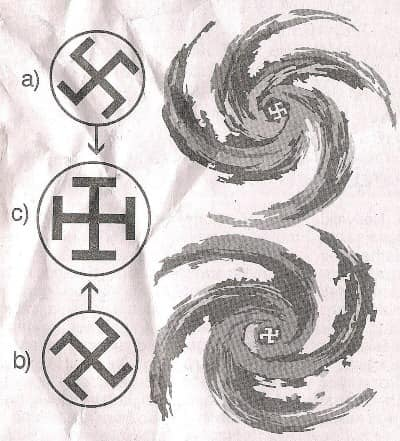
The base of a Bronze Age ceramic vessel from the Andronovo culture, featuring a textured swastika motif. It was excavated at the Koshkarbai burial site near Kenetkol in the Akmola region of northern Kazakhstan 🇰🇿
Excavated in 2014 during rescue archaeological work in the Zerenda district of Akmola Oblast; associated with the Bronze Age Andronovo culture, with archaeological reports placing this find in the Late Bronze Age. The flat base bears an intricate, textured swastika pattern; archaeologists noted that three vessels found at the site each displayed a different variation of the motif.
(The Hermitage - St. Petersburg)
. . .
The territory of Kazakhstan has come to be mastered by man nearly a million years ago. As early as the age of Lower Paleolithic the ancient man settled down on these Karatau lands fit for normal life, rich with game and wild fruit. It is there that they have found ancient settlements of Stone Age. By and by, in the centuries of Middle and Upper Paleolithic the man came to master Central and Eastern Kazakhstan and Mangyshlak area.
Excavations of the Neolithic settlement Botay in the North Kazakhstan, constitutes the area of horse-mastering (breeding) and that of formation of nomad civilizations. Archeologists revealed dwellings, numerous hand-made articles of stone and ivory which present the ancient history and archeology of Kazakhstan in the Stone epoch in an altogether new way.
As early as the Bronze Age, some four millennia ago, the territory of Kazakhstan was inhabited by tribes of the so called Andron and Begazy-Dandybay culture. They were engaged in farming and cattle-breeding, they were fine warriors who handled combat chariots marvelously. To this day we can see images of chariots drawn on rocks where ancient people would arrange their tribal temples and sanctuaries with the firmament as their natural cover. On the surfaces of black cliffs burnt with the sun people would chisel out scenes of dances, images of sun-headed deities, mighty camels and bulls as impersonations of ancient gods.
Burial mounds of noble warriors scattered all throughout Kazakh steppes are known for magnificent size of mounds and burial vaults proper. Particularly famous are such necropolis in the steppes of Sary-Arka and Tagiskent in the Transaral area. People of that epoch were not only fine warriors, shepherds and farmers but also skilled metallurgists. They would take bronze and manufacture axes, knives, daggers and various decorations thereof.
It were they who initiated development of copper which is being practiced to this day - they are Zhezkazgan and Sayak copper quarries of today. Ancient people lived in large settlements and ancient towns surrounded with walls and fosses. These towns were inhabited with warriors and craftsmen, priests and farmers. These tribes lived on the territory of Kazakhstan for about a thousand years from 17th Century BC to 8th-9th Centuries AD.
Later on they were ousted by Saks. Such was the name given to this tribe by ancient Persians. The Chinese called them "se" whereas Greeks chose to call them Scythians. They were essentially nomads, semi-nomads and farmers. Yet, first and foremost, they were excellent horsemen. In fact Saks were the first ever horsemen in the world to master arrow-shooting at full tilt.
#archaeohistories