The EU could extend the Digital Markets Act to standalone AI services while those markets are still developing.
In @GrurInt, @GiuColangelo explains how rules written for today’s gatekeepers could restrict what AI firms build next.
💡Beyond regulatory fine-tuning.
The emergence of AI offers an opportunity to reconsider the DMA’s overall architecture.After all,the decision to rely on detailed,inherently backward-looking obligations appeared problematic from the outset
Today’s AI challengers could become tomorrow’s gatekeepers. In our second panel, moderated by @AuerDirk, speakers examined how Article 102 TFEU and the DMA should apply as firms’ market positions shift: https://t.co/eJaxFMPbsz
Intervening too early in AI markets can weaken competition. Waiting too long can allow dominant positions to harden.
At our Nov. 2 Brussels conference with ULiège, two panels weighed those risks for merger control, Article 102 and the DMA. Watch both panels ⬇️
Digital platforms face regulatory measures and antitrust probes over self-preferencing. Yet the term covers practices already addressed by competition law, and evidence does not show they necessarily harm consumers.
In World Competition, @GiuColangelo & @geoffmanne explain. ⬇️
⚠️New working paper⚠️
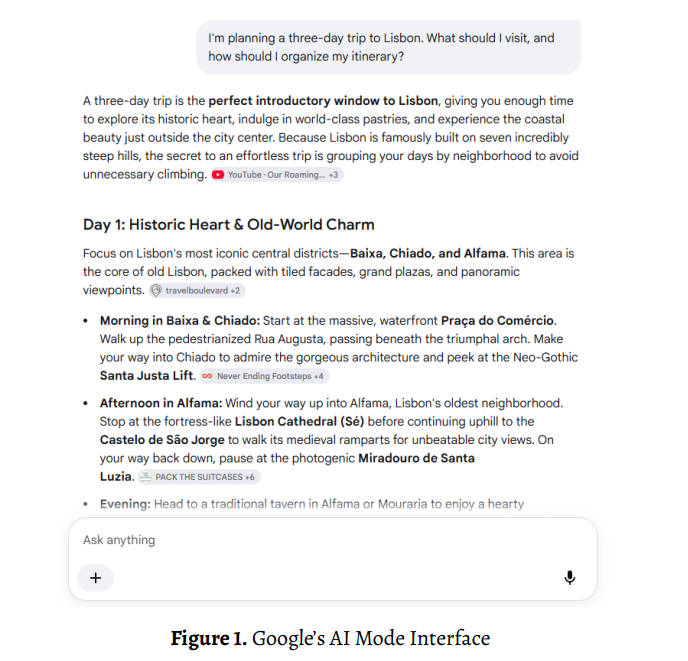
We study Google's integration of AI Mode, a conversational chatbot, within Google Search.
Although Gemini already existed as a standalone AI, you now have a chatbot directly on a website you were already visiting.
How did it affect AI competition?
Are coaches too quick to bench players in foul trouble?
College basketball tips off this week, and with it comes a familiar ritual: a player picks up a second foul in the first half, and the coach sends him to the bench. Same with a third foul early in the second half, or a fourth at any point.
But in many of these games, the benched player never even fouls out. Coaches guarantee their best players lose minutes to avoid the risk that they might lose minutes.
It’s coaching orthodoxy, but it costs teams points and wins.
In a post out today on my personal blog, I explore protective benching, its costs, and how to fix it.
A practice restricted under digital-market rules could benefit consumers once AI changes how firms compete.
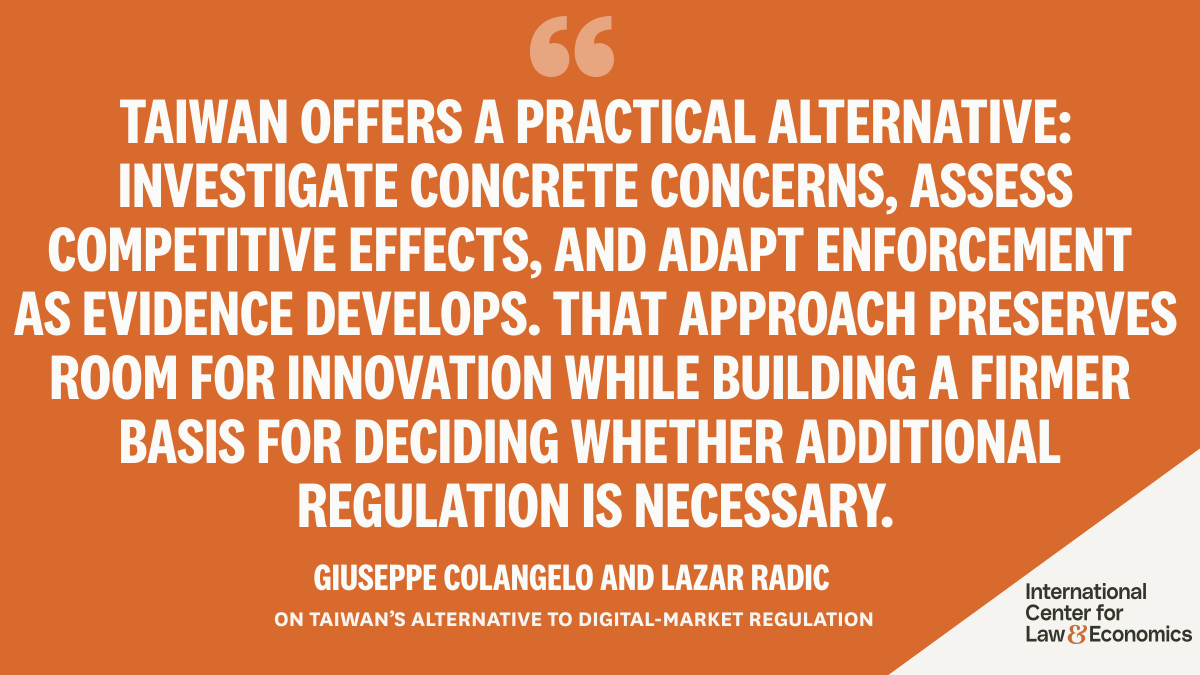
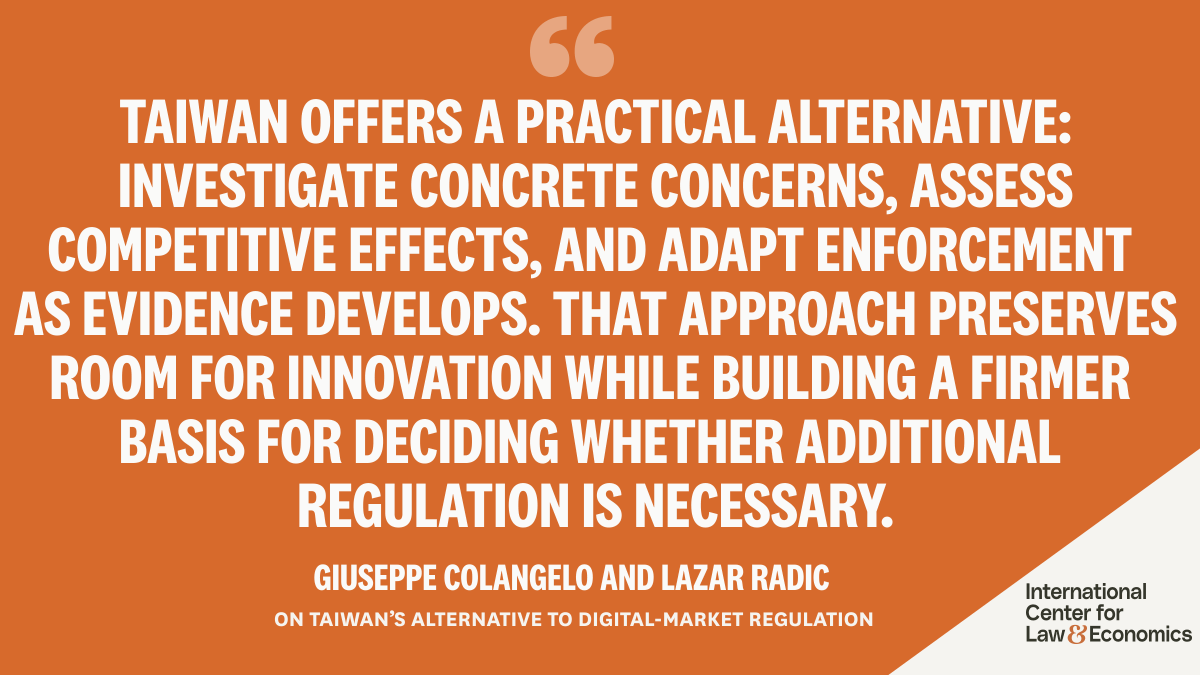
ICYMI, @GiuColangelo & @laz_radic explain how Taiwan weighs those changing harms and benefits under existing competition law. 🔗⬇️
Germany gives enforcers special powers over designated firms. Japan targets Google and Apple. Taiwan weighs harms and benefits case by case.
@GiuColangelo & @laz_radic explain why rules written for gatekeepers could restrict practices that AI competition makes beneficial. 🔗⬇️
EU competition law faces a timing problem in AI markets. Act too late, and dominant positions may harden. Act too early, and enforcement may suppress the competition it seeks to protect.
Join ICLE and ULiège in Brussels on Nov. 2 to debate how the rules should respond. ⬇️