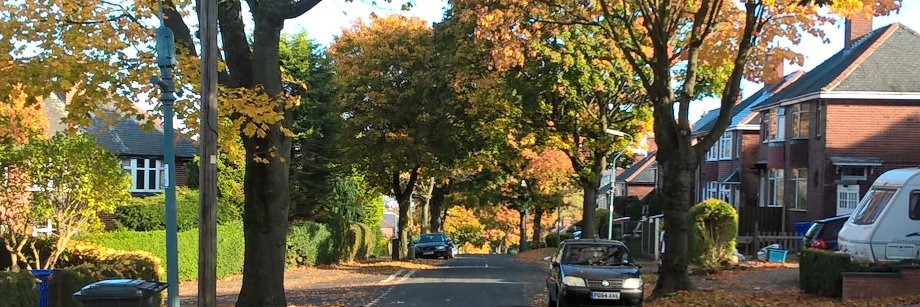
Sheffield Street Tree campaign. Interested in supporting similar campaigners & helping to fight climate change. Other interests: nature, theatre & history
The final part of our application was to get rid of the rampant invasive species on the river around Ilford. Some of these (like giant hogweed) would be directly harmful to people who are swimming, but most of them degrade the river ecology, reduce access along its banks, & stop natural filtration processes, which reduce water quality.
All official bodies (from the council to the EA) have done nothing to stop invasive species & are allowing them to spread out of control. Using our detailed local knowledge, the River Roding Trust has put together a plan to eliminate all of them. But it’s a gargantuan task & we need a small amount of funding to buy equipment & organise more volunteer days. Many of these invasive species are on public land & the amount we would need to eliminate them is a tiny fraction of what an official body would pay.
Water voles are being reintroduced to the River Wey in Farnham after a 20-year absence from the area.
About 300 of the animals have been released into the river in the town centre as part of a wider project to help the species recover, after it became Britain's fastest declining mammal because of habitat loss and predation, the National Trust said.
The release in Surrey on Monday was led by the National Trust and Environment Agency, alongside local groups and volunteers.
The species, immortalised as "Ratty" in The Wind in the Willows, has been locally extinct for two decades said David Elliott, National Trust lead ranger for South Downs West.
For anyone who needs reminding that Scotland really is a fantastic, magical place, here are some singing seals I saw - and recorded 🎤!!! - on the island of Mingulay today 🦭🏴🎶
🐟 Without healthy fish, UK seas can’t survive. Ocean advocate and vet, Cal Major, is backing @oceanauk, join her and demand the PM ends overfishing now 💙
https://t.co/PpY0h4jthE
RISSO'S DOLPHIN CALVES!
A wonderful start to the day for our @shetlandwild 'Ultimate Shetland' group with lovely views of a nursery pod of Risso's Dolphins off the coast of the south Mainland, Shetland. Some of the calves were tiny. Aerial footage showing a few of them this morning. Magical!
Despite its association with ill-intentioned witches and mischievous fairies, it was once believed that an Elder tree planted beside your home would keep evil at bay 🌳🧚🏻
In Scotland, the Elder was considered second only to the Rowan when it came to warding off malevolent spirits, curses and ill fortune 💀✨
Yet while folklore cast it as both a perpetrator and guardian against supernatural threats, the Elder has always quietly protected something far more tangible and important.
Its creamy white flowers, radiant at the minute, provide nectar and pollen for a host of insects, while its dark autumn berries are a valuable food source for birds preparing for winter 🐝🦋
Feared and reversed in equal measure and woven into centuries of folklore...all the while supporting the wildlife around it 🪄
What sort of government has off-the-record meetings with bosses of water companies that they know are breaking the law on an industrial scale.
First, the regulators and now the government, embroiled in the dirty business.
What did you talk about with the Thames Water Chairman who diverted over £1billion of customers' money out of investment to reduce pollution to the benefit of him and the owners instead, Environment Secretary @EmmaforWycombe ?
https://t.co/CIYWBaWGCy
Do you know that 90% of all large predatory fish (like tuna, swordfish, sharks, and cod) are gone from the world's oceans.
If humans continue overfishing at the current rate, the planet will run out of seafood by 2048 with catastrophic consequences
https://t.co/X7onfUQGl8
Natural England wants to remove 90% of Dartmoor’s ponies.
Our Exmoor ponies are next. These animals have been here for thousands of years.
A government quango, destroying the countryside and its heritage.
Saved for nature
Dorset Wildlife Trust has completed the purchase of 110 acres at Upton Heath, near Poole, after a successful fundraising campaign.
https://t.co/P4nKOR4zd2
The first part of our proposal was to remove the junk and rubbish in the River Roding around Ilford, which as you can see in these pictures is disgraceful. It is currently impossible to walk in the river barefoot, let alone swim, without risking serious injury. Over decades a huge amount of large debris, metal & junk has built up in the river. Our volunteers have tried their best to remove it, but the high river walls meant it was not safe to drag heavy objects up ladders.
The funding we requested was designed to allow us to hire proper skips & floating barges to make this section of the Roding free of large debris for the first time in living memory. The Mayor himself does not seem to have any plan to remove this rubbish. Worse, despite rejecting our funding application, he gave £3 million pounds (nearly 100 times more money) to the London Borough of Redbridge, to “increase access” to the Roding by building a single bridge across the river. I guess at least people will have a good view of the rubbish & sewage filling the river from this bridge?
The River Roding should be one of the best rivers for swimming & paddling in London. It has a gravel bed & shallow areas for paddling, interspersed with deeper areas for swimming, and no boats or dangerous currents in summer. It is also next to major population centres (Ilford & Barking) where there is a real lack of wild space & river swimming spots.
The Roding is not without its problems, as an urban river that has been neglected by the authorities for decades. However, after a decade spent cleaning up & caring for the river, I knew that the problems the river faces are completely solveable with effort, imagination & hard work. I put together a detailed costed plan to deal with the three main issues on the river for £40,000. Having spent days of my time for free to draft the application, the Mayor has rejected it twice without explanation. The most irritating part is that he has not rejected our proposal in favour of one that is better or cheaper; it seems he’s simply planning to leave the Roding as a rubbish & sewage filled mess for decades to come.
Why is Sadiq Khan @MayorofLondon breaking his promise to make London’s rivers swimmable?
One of the most eye-catching promises the Mayor made to get elected, was to make London’s rivers swimmable. But halfway through his term he has made no progress towards this goal, & seems to be quietly dropping this goal on the basis that it isn’t achievable.
However, as a guardian of London’s third biggest river, who knows the river better than most, I know it is a completely achievable goal with effort & imagination. Further, the volunteer charity I run put forward a detailed plan to make the Roding swimmable, which was rejected by the Mayor’s Grow Back Greener fund without explanation. Here’s a thread, on how the Mayor can live up to his promises 🧵
Supertrawlers Are Taking Antarctic Krill That Whales Depend On
Due to the growth of factory fish farms, supertrawlers as long as football fields now work the same space as krill-eating whales
It is completely unsustainable to empty the seas of krill so vital for our beleaguered wildlife
#WakeUpWorld
@CIWF_Global
https://t.co/toUT03UbPZ
The second part of our proposal was to get Thames Water to fix their illegal sewage outfalls on river. This part of the Roding is currently lifeless & toxic due to some of the worst illegal outfalls in London putting around a billion litres of raw sewage straight into the river every year.
Following a groundbreaking project by the River Roding Trust & Thames21 in the last year, where I went out & personally found & scientifically tested all these outfalls, the River Roding is now the only river in London where we know the location & harm of all the illegal sewage outlets. We now need a pretty small amount of funding to turn that knowledge into action & already have experience in what needs doing. Five years ago I discovered another illegal sewage outlet on the Roding & after four years of campaigning managed to get Thames Water to spend a million pounds to fix it. The River Roding Trust therefore has achieved more l than any government agency has on the Roding on this problem, so it’s weird that the Mayor won’t fund us to finish the job & enable the Roding to become the first sewage free river in London.
Wtf! This is heartbreaking and pure eco vandalism. We need to name and shame @Hill_Group_UK@MoleValleyDC and @SurreyPolice for this. 👇
A building that was a noted nesting site for swifts, among the UK’s most at-risk birds, has been demolished during the nesting season, highlighting significant weaknesses in the protection of wildlife from development, campaigners say.
Contractors for the housebuilder Hill Group carried out the demolition of Regent House near Dorking station in Surrey over the last few weeks, during the nesting season which runs from 1 March to 31 August.
Footage captured last week shows swifts attempting to return to nests in the building, which was known to be home to one of the largest populations of the birds in the Mole Valley area in Surrey. They approach and then repeatedly turn away because their nests are no longer there.
The building was a known habitat for nesting swifts. Volunteers for Swift Protection Association Reigate have recorded very intense low-level flying involving as many as 40 birds using about 20 sites in the eaves of the building in early spring and summer for several years.
Demolition and construction work are heavily restricted during the nesting season under the Wildlife and Countryside Act. It is an offence to intentionally or recklessly damage or destroy the nest of any wild bird while it is in use or being built, or to disturb dependent young.
Annie Griffin of Banstead Swifts, a volunteer group that monitors and tries to stabilise swift populations, said residents raised the alarm with Surrey police wildlife officers in early May, shortly after the swifts returned from migration and were observed nesting in the building. Mole Valley district council (MVDC) was also told about the birds’ presence.
Despite this, demolition proceeded during peak nesting season,” said Griffin. “Conservationists are now describing the incident as a significant wildlife crime, raising broader concerns about the enforcement of environmental protections during development across England.”
Regent House was demolished as part of a development of 126 flats by Clarion housing association. An impact assessment carried out for the developers by the Arbtech environmental consultancy said demolition and construction should take place outside the nesting season.
If a different timeframe could not be avoided, it said, an ecological expert would have to undertake a thorough inspection before the start of any work and all active nests would have to be retained until the young had fledged.
The Guardian asked Hill Group and Clarion if such an ecological inspection had taken place in the last few weeks, but they declined to answer. They also refused to say the timeframe for the demolition could not be avoided.
https://t.co/OcZuZguX6r