Last night’s queue right before kick-off at Shopify New York 👇
Our biggest turnout yet, not entirely surprised given the topic at hand and the speaker lineup.
AI is front and centre in every conversation right now, not just in DTC, but across every industry.
In DTC alone, I’m seeing it used for everything from creative ideation and ad copy, to building complex Excel formats and onsite merchandising etc!
Huge thanks to our speakers last night — @obviceo , @johnhickey1970 , Chris Maliwat — and the brilliant @Velstar_ duo, Joe Lyon & Greg Hughes, who flew in from the UK and will be around NY all week.
We’re closing in on 800 members in the DTC Builders New York group. If you're in NYC, get involved — some big events coming up 👊
https://t.co/xIA0lnJJuP
@TaylorHoliday Enough context feeding in will trump experience.
Experience will still be very important early doors to set the right rules and for verification etc
JUST IN: Zuck reveals shopping has become the biggest use case for Meta's Muse AI, with over 25% of users shopping through the agent & average purchase exceeding $200.
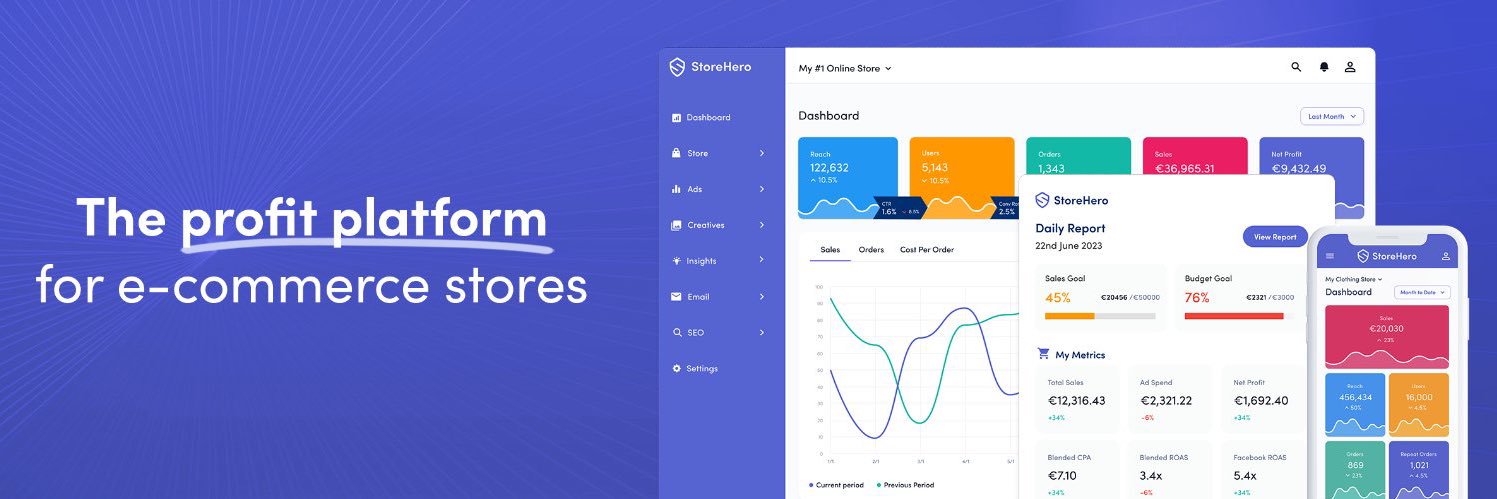
Loved how easy @StoreHeroApp 🤝 @claudeai integration is.
Are you using something like this?
If you (or your agency) are still using Google Sheets and/or spending time (and tokens) on building internal tools for this purpose - I am really curious about the upside.
NOT a Paid Promotion.
Haven't made a dime shilling StoreHero.
Met @GleesonThomas in @_lscommunity years back, we kept chatting on DTC finance, always enjoyed seeing the platform evolving & spreading the word to reach the right brands who'd benefit from this.
Founders who have worked with me will tell you I have a way of reviewing the numbers, pointing out the loopholes in the business that need fixing, and the opportunities worth prioritizing.
If you think you are at a stage that needs a second pair of eyes on your numbers, send me a DM.
"GET YOUR ASS INTO THE SimGym!"
- Unc Tobi
Easily the most interesting feature that @Shopify announced today in their Winter '26 Edition was the "SimGym". It allows you to unleash thousands of AI personas on your store to test changes before a real human ever sees them.
Driving the cost of learning to zero.
Here are the 10 simulations to run on Day 1 to improve your contribution margin:
1. The Elasticity Stress Test: Take your top 5 bestsellers. Simulate a 5%, 10%, and 15% price increase. Find the exact breaking point where the drop in conversion rate outweighs the gain in margin dollars.
2. The Free Shipping "Thresholdbreaker": If your free shipping threshold is $75, simulate moving it to $100, $125, and $150. Find the maximum AOV lift the AI will tolerate before cart abandonment spikes.
3. The Offer Structure Deathmatch: Stop arguing about whether "Buy 2 Get 1 Free" is better than "25% Off." Run the sim. Which offer generates more net profit dollars (not just revenue) after accounting for the cost of goods?
4. The "Discount Detox": Simulate turning off your 10% welcome pop-up completely. Does the increase in full-margin sales outweigh the drop in list growth and conversion?
5. The Aggressive Cross-Sell: How much friction can you add to the cart? Test aggressive, multi-step upsell flows in checkout. Find the line between "AOV boost" and "rage quit."
6. The Returns Policy Squeeze: Simulate a stricter return policy (e.g., adding a small restocking fee or shorter windows). If front-end conversion only drops 0.5% but you save 4 points of margin on returns, that’s a massive win.
7. Merchandising for Margin (Not Volume): Re-sort your collection pages to prioritize your highest % margin products first, rather than your bestsellers. Does demand shift profitably, or do users bounce?
8. The "Subscription Default": Simulate making "Subscribe & Save" the pre-selected default option on PDPs instead of "One-time purchase." Measure the impact on immediate conversion vs. projected LTV.
9. The High-Ticket Lander Validation: Before you drive paid traffic to a new bundle page designed to spike AOV, run it through the simulator against your standard PDP. Validate the economics before you validate the ad spend.
10. SKU Rationalization Sim: Take your lowest margin SKU. Simulate deleting it entirely. Does that demand shift to a higher margin alternative, or does it leave the store?
eCom is moving from a creative industry to an engineering discipline. Stop guessing. Start simulating.
This is a huge step in progressive truth.
Every week I hear: “We're trying a new attribution tool.”
And every time I think, “That won’t fix your signal.”
StoreHero’s guide to tracking puts numbers to the problem:
Browser-based tracking is now missing 30-40 % of conversion events.
Ad blockers, ITP, cookie limits, browser lockdowns. The browser is the weakest link in your data pipeline.
Attribution tools do not fix that.
They analyse the data. They do not repair it.
If your tracking is:
❌ Leaky
❌ Incomplete
❌ Blocked
…then every ROAS model you build on top is already wrong.
The sequence has to be:
1. Fix the signal
Move tracking server-side so every Shopify checkout, subscription, and upsell is captured, even when the browser drops out.
This is exactly where Littledata focuses: a reliable server-side Shopify data layer that ad platforms can trust.
2. Then layer attribution on top
Tools like StoreHero become far more useful once the inputs are accurate. That is when you get real answers to:
✔ Are these campaigns actually profitable?
✔ What is our true ROAS once costs are included?
✔ How much can we afford to spend to acquire a new customer?
❌ Bad signal → Bad attribution → Wasted spend
✅ Clean signal + Profit clarity → Sustainable scale
Thank you to Thomas Gleeson for including Littledata in the guide. Worth a read: https://t.co/mF8JsO40XM