Excited to partner. As #IMNISIgnite internship host, we are looking forward to helping exceptional PhD students, graduates & early-career researchers gain real-world skills & experience through this
@ATSE_au@_IMNIS program.
https://t.co/yuBdW14Ro7
@DrSonuBhaskar
Honoured to receive the Springer Nature Editor of Distinction Award 2026 – Author Service Award for my editorial work with BMC Medical Research Methodology.
Grateful to @SpringerNature and @BioMedCentral for this recognition, and to the authors, reviewers, and editorial community who continue to uphold rigour, fairness, and trust in science & medicine.
#SpringerNature #BMC #PeerReview #ResearchIntegrity #AcademicPublishing
After months of back and forth, I finally had a wonderful conversation yesterday with a journo from a national broadcaster about a podcast series on brain health, ageing, and everything in between. Raising awareness for the broader community has always been part of the mission and, in many ways, a form of service. Over the past decade, we (@GlobalNeuroLab) have made a conscious commitment to public talks and outreach, including through Neurology Talkies and Australian National Science Week. We’ll hopefully record next week, with the episodes out in a few weeks. Watch this space!
Meanwhile, sharing a previous conversation with ABC News Radio.
Link: https://t.co/0DgzuTD9wk
Audio Credits: ABC News Radio (National Breakfast)
Pleased to share our landmark Global Burden of Disease 2023 study, now published in @NatureMedicine: “Global, regional and national burden of ischemic heart disease attributable to suboptimal diet, 1990–2023.”
As part of the IHME/GBD Collaborators and a co-author on this work, chuffed to contribute to a study that quantifies one of the most important and preventable drivers of cardiovascular mortality worldwide.
Using GBD 2023 estimates across 204 countries, we found that in 2023, suboptimal diet was responsible for:
• 4.06 million ischemic heart disease deaths
• 96.84 million disability-adjusted life years
• A burden especially pronounced in low- and middle-SDI countries
Encouragingly, the global age-standardized death rate of diet-attributable IHD declined by 43.92% from 1990 to 2023. Yet the absolute burden remains immense.
The leading dietary contributors to IHD deaths included:
• Low intake of nuts and seeds
• Low intake of whole grains
• Low intake of fruits
• High sodium intake
The implication is clear: heart disease prevention cannot be limited to clinical care alone. It must include food systems, affordability, nutrition literacy, culturally appropriate dietary guidance, and population-level policy interventions.
This study reinforces a simple but powerful message: better diets are not only a matter of individual choice; they are a matter of public health infrastructure, equity, and prevention.
Grateful to the GBD 2023 IHD & Dietary Risk Factors Collaborators, IHME, and all colleagues contributing to this important global effort.
@GlobalNeuroLab
#NatureMedicine #GBD2023 #IHME #CardiovascularDisease #IschemicHeartDisease #Diet #GlobalHealth #PublicHealth #Prevention #Nutrition #HealthEquity
Note: Link to the full study in the next tweet.
Honoured to share my SBS Hindi radio interview on receiving the Asian Australian Leadership Award. In this conversation, I reflect on my journey and how my Indian roots continue to nourish my drive to serve humanity through medicine, research, leadership, and community. Grateful to SBS Hindi for the conversation.
#AsianAustralianLeadershipAwards #SBSHindi #IndianDiaspora #Leadership #ServiceToHumanity
"We do not need to erase one part of identity to celebrate another. That hyphen in Asian-Australian is not a barrier, it is a BRIDGE"
- @DrSonuBhaskar, Overall Winner of the 2025 Asian-Australian Leadership Award recipient - acceptance speech at the State Library of Victoria 🇦🇺🧠
1/
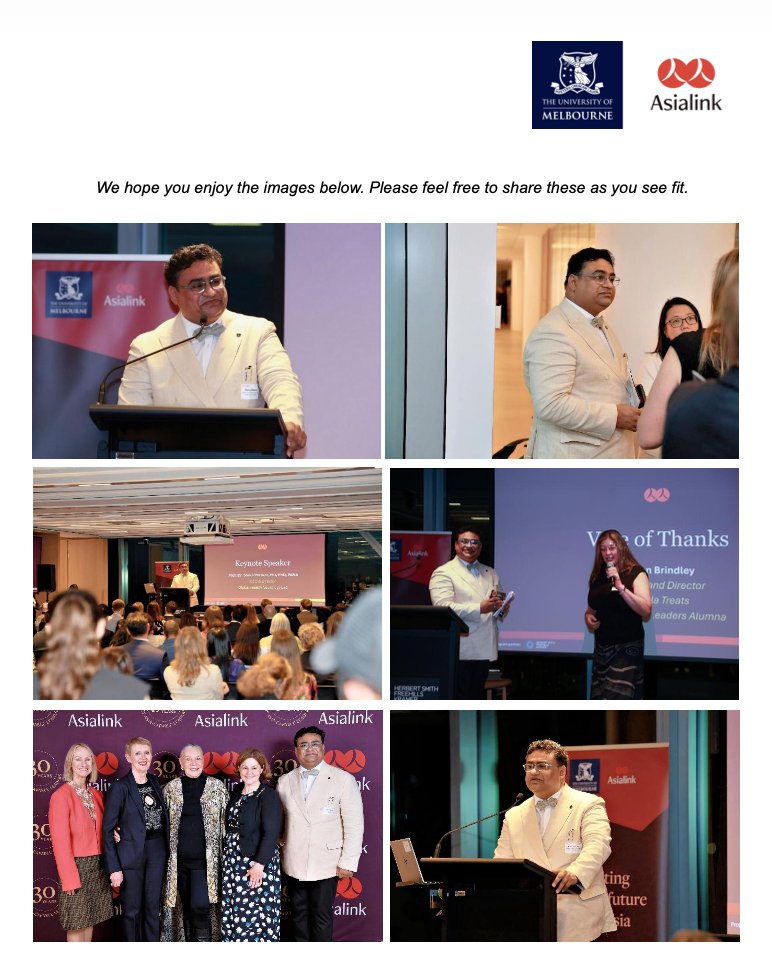
On the 19th night, beneath the historic dome of the State Library of Victoria (Melbourne), I was deeply honoured to be named the Overall Winner of the 2025 Asian Australian Leadership Award for my contributions to stroke research, neurovascular medicine, and health equity.
It is an honour that sits far beyond the individual; it belongs to every community that shaped my journey.
Thank you, AsiaLink @Asialink_au (University of Melbourne @UniMelb), Johnson Partners, and the esteemed jury for creating a platform that so beautifully recognises our shared role in Australia’s unfolding story.
#AsianAustralian #Leadership #Neurology #GlobalHealth #Neuroscience #Medicine #Impact #Melbourne #Awards
AALA Announcement:
https://t.co/c55Ioynkoo
Humbled to receive this thoughtful letter from Asialink CEO Ms. Rachel Thompson following the keynote at Melbourne.
Grateful that the message, on humility, relationships, and purpose, resonated so deeply with the cohort and stayed with them through the week.
We remain committed to advancing equitable, high-quality healthcare across our region.
Thank you, Asialink - honoured to contribute and to continue this important journey together.
5/5
I extend my sincere thanks to Prof. Alma Nurtazina, Vice-Rector, for her leadership and for organising this meaningful exchange.
Her commitment to advancing clinical and scientific capacity is evident and commendable.
This visit was not a standalone event; it is the beginning of a sustained collaboration.
The goal is clear: to build locally relevant, globally informed neurological systems of care.
Because where you live should not determine whether you survive, or recover from a stroke or other cerebrovascular disorder/s.
More coverage on the University webpage:
https://t.co/G1lTyW6194
2/5
It was a privilege to visit Semey Medical University (Kazakhstan) as a Visiting Professor.
In early December, I delivered an intensive course on neurocardiovascular therapy, bringing together neurologists, cardiologists, internists, and trainees, both in-person and online.
1/5
Our mission has always been clear: to advance equitable neurological care globally - not as an aspiration, but as a responsibility.
One step in this direction is capacity building.
In that spirit, we, at @GlobalNeuroLab, are expanding our footprint into West Asia and Central Asia, where the burden of cerebrovascular disease continues to grow, yet access to advanced care remains uneven.
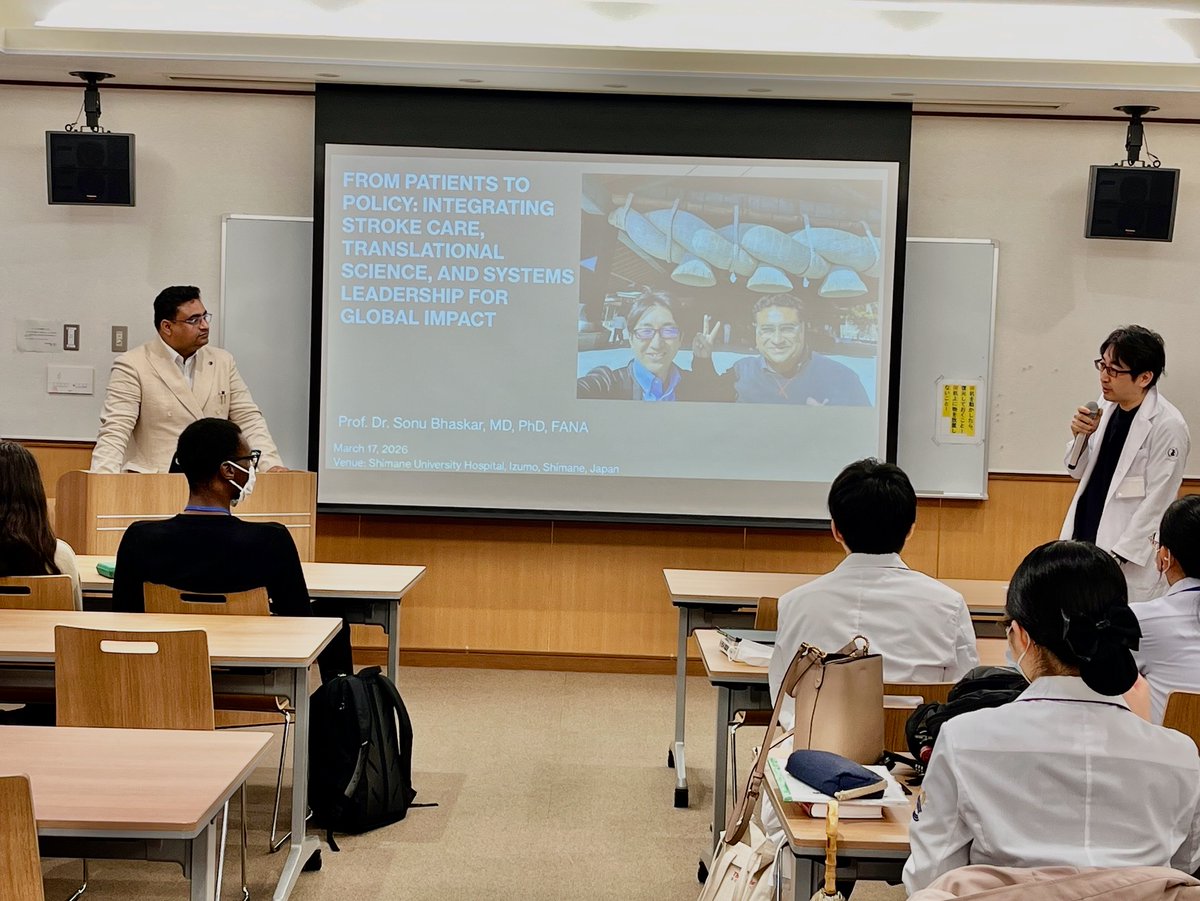
Interacting with a community of neurologists and neurosurgeons from Shimane University Hospital, Izumo, was indeed a fulfilling experience.
We spoke about our latest trials, studies and training programs beyond the impact of the global burden of stroke and ageing on Japan and beyond.
#globalhealth
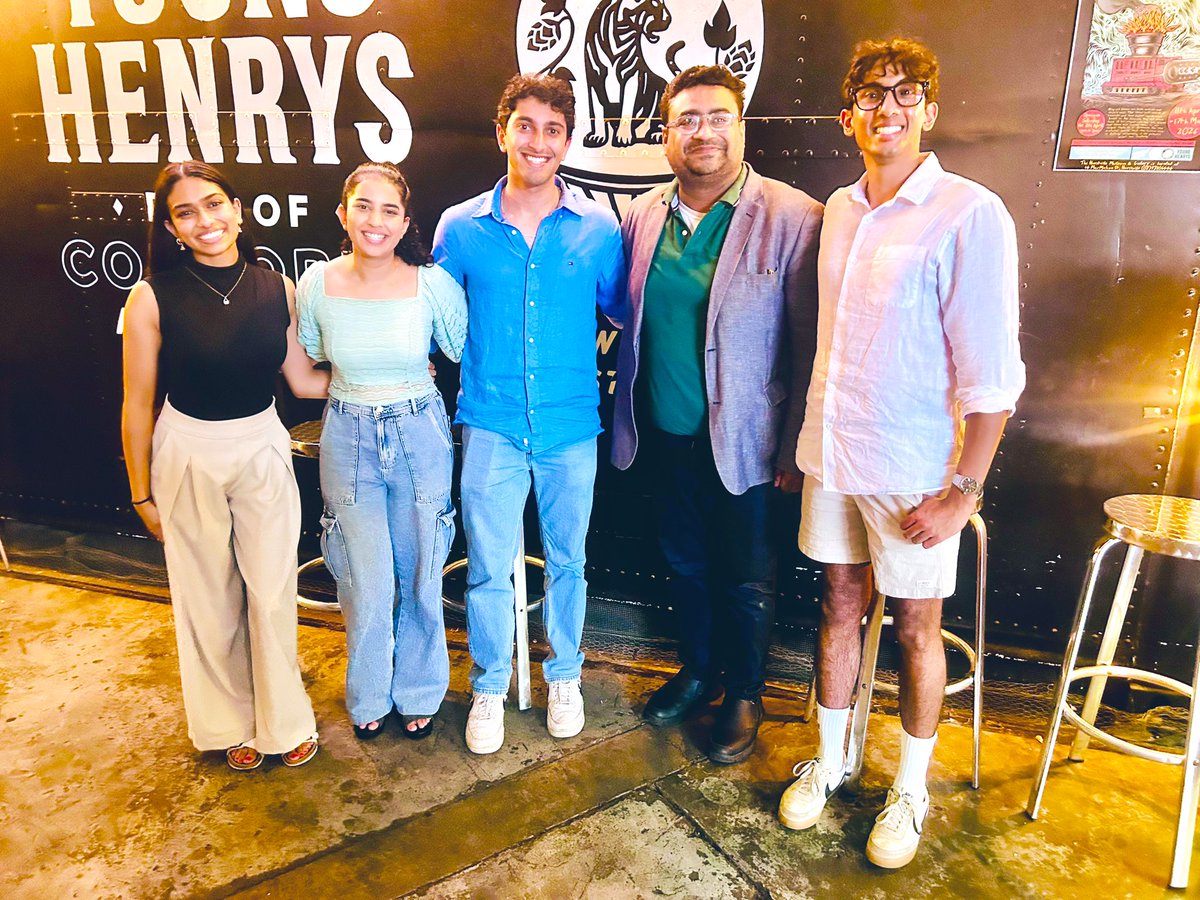
Welcoming the new members of the @GlobalNeuroLab! 👨⚕️👩⚕️🩺🏥
A quick team huddle at the Young Henry’s brewery this evening.
Exciting plans for the year ahead - from improving patient care in stroke to advancing Neurocritical care!
Watch this space 🧠!
This lecture will reflect our commitment to building integrated models of neurovascular care.
We look forward to engaging with colleagues and trainees in Japan as we continue strengthening international collaborations in stroke medicine and systems innovation.
#Stroke#Neurology
We are delighted to share that following the Japan Stroke Society Annual Meeting 2026, Dr. @DrSonuBhaskar will visit Shimane University (🇯🇵) to deliver an invited lecture at the Department of Neurology, Faculty of Medicine.
🗓 17 March 2026
📍 Shimane University, Izumo, Japan🇯🇵
Great to see this out in European Radiology @SpringerNature (Official Journal of the European Society of Radiology), my latest commentary on modifiers of outcome after stroke thrombectomy.
Over the past years, outcomes following EVT have improved dramatically; however, the mechanisms underlying the ghost infarct core (GIC), observed in 15-20% of EVT-treated patients, remain elusive.
Read-only version is available from:
https://t.co/Ag5VZNBRL3
More here: https://t.co/YayWH0AjMR
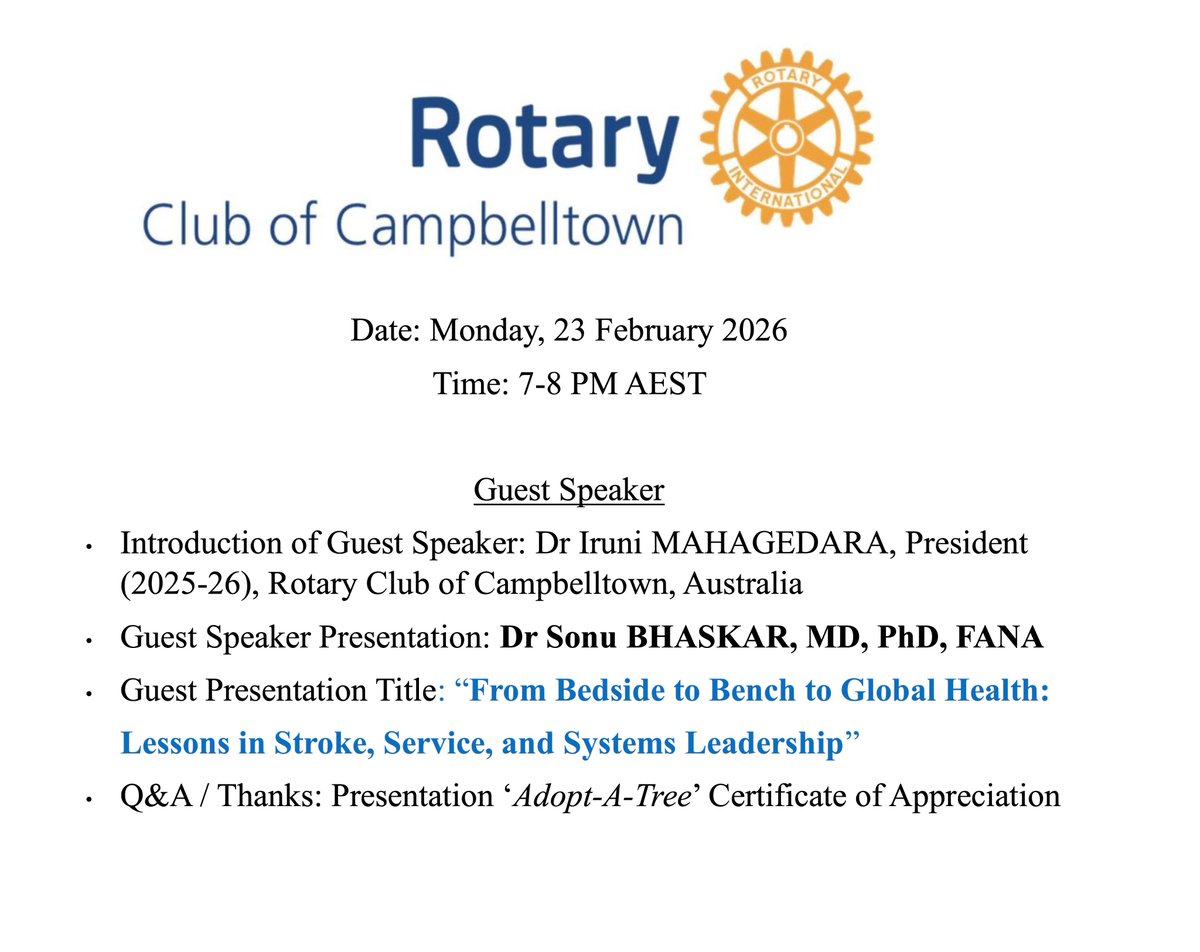
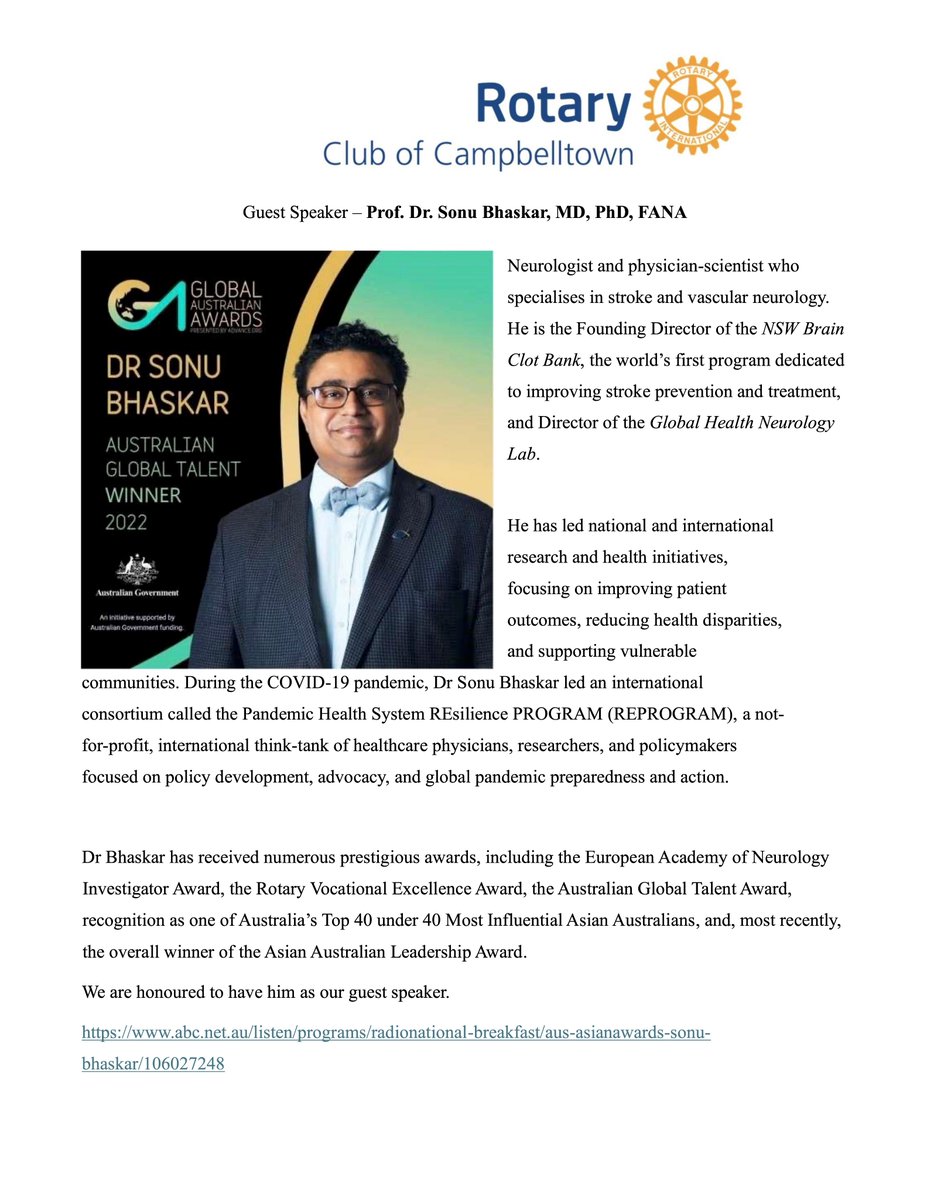
Honoured to be speaking at the Rotary Club of Campbelltown later today [23 February 2026].
Grateful to @Rotary for the opportunity to engage in meaningful dialogue.
#Stroke#Neurology#GlobalHealth#Leadership
Prof. @DrSonuBhaskar will speak at the Rotary Club of Campbelltown
🗓 23 Feb 2026 | 7–8 PM AEST
Topic:
“From Bedside to Bench to Global Health: Lessons in Stroke, Service, and Systems Leadership.”
#Stroke#Neurology#GlobalHealth#Rotary
Glad to see this book out in print on the “Grand Challenges in the Diagnosis and Management of Cardiovascular and Cerebrovascular Diseases”.
As the Editor, special thanks to colleagues from around the world who contributed to this title addressing this pressing clinical issues in the field!
🧠🩺⚕️🏥🚑
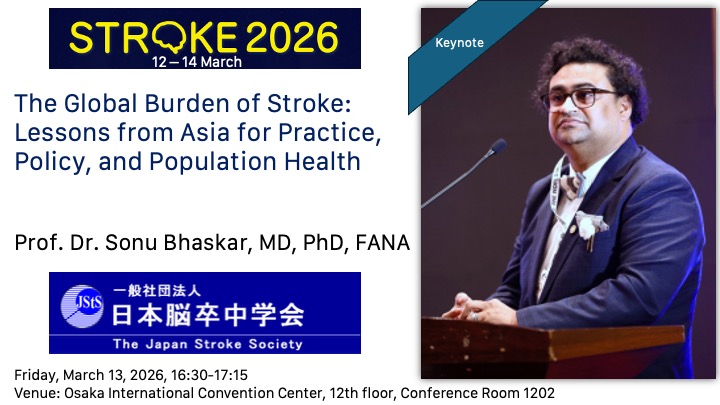
At the Annual Meeting of the Japan Stroke Society in Osaka (12–14 March 2026),
@DrSonuBhaskar will deliver a Keynote Address titled
“The Global Burden of Stroke: Lessons from Asia for Practice, Policy, and Population Health.”
🗓 Friday, March 13, 2026
🕓 16:30–17:15
I’m pleased to share the publication of our new paper in the European Journal of Neuroscience @EJNeuroscience (official journal of the Federation of European Neuroscience Societies - @FENSorg).
In everyday clinical practice, many of us encounter a difficult and frustrating reality: a substantial proportion of patients with Parkinsonian syndromes, particularly older adults, remain poorly responsive to dopaminergic therapy.
They fall early, freeze when walking, and deteriorate despite “doing everything right” by current standards.
This is not a niche problem.
Parkinsonism affects millions globally, its burden rising rapidly with ageing populations, and treatment-resistant gait dysfunction is one of the strongest drivers of disability, falls, and loss of independence.
The idea behind this work came directly from the clinic.
Again and again, I noticed a recurring gap: patients labelled as “atypical” or “refractory” Parkinson’s disease often shared a heavy vascular burden that was underappreciated, under-measured, and rarely integrated into diagnosis or treatment decisions.
In this paper, we propose a paradigm shift.
We introduce the Neurovascular–Locomotor Integration Failure (NLIF) hypothesis, reframing freezing of gait and related axial symptoms as consequences of small-vessel disease–driven network disconnection rather than late dopaminergic failure alone.
We operationalize this through the Vasc-PD Stratification Score (VPDS) and the Neurovascular–Degenerative Classification (NDC), placing Parkinsonian syndromes along a mechanistic continuum, from neuro-dominant PD, to vascular-dominant parkinsonism, to mixed neurovascular disease.
This integrated framework enables earlier recognition, precision stratification, and mechanism-based therapy.
This work reflects a personal philosophy I hold strongly: great clinical care is like good science - rooted in curiosity, careful observation, and mechanisms, but always driven by integration rather than silos.
I’m grateful to the Editorial leadership of EJN, especially Prof. John Foxe @JohnnyFoxe, Editor-in-Chief, and Prof. Dr Stewart Factor, Associate Editor, for their rigour and constructive feedback.
European Journal of Neuroscience is one of the most prestigious journals in our field, and it has been a privilege to publish this work there.
I led this study as part of the latest vertical of the V-CoNDoR Project, a global initiative translating research on Vascular Contributions to Neurodegenerative Diseases into advanced clinical care.
I hope this framework stimulates wider debate in the neurology community, and I look forward to working with colleagues to see it translated into real-world practice, where patients need it most.
🔗 Read-only article link: https://t.co/lhu3JXD1Km
Publication:
Kim, K., & Bhaskar, S. M. M.* (2026). Neurovascular Integration Failure and Freezing of Gait: Rethinking Parkinsonism Through a Vascular Lens. EJN, 63(1), e70381