🚨 New paper out in PNAS Nexus!
We estimated how much antibiotics from human consumption end up in rivers globally using the HydroFATE model.
⚠️ ~6 million km of rivers may exceed ecological & AMR safety thresholds.
📄 Read more: https://t.co/gkq3dThsxU
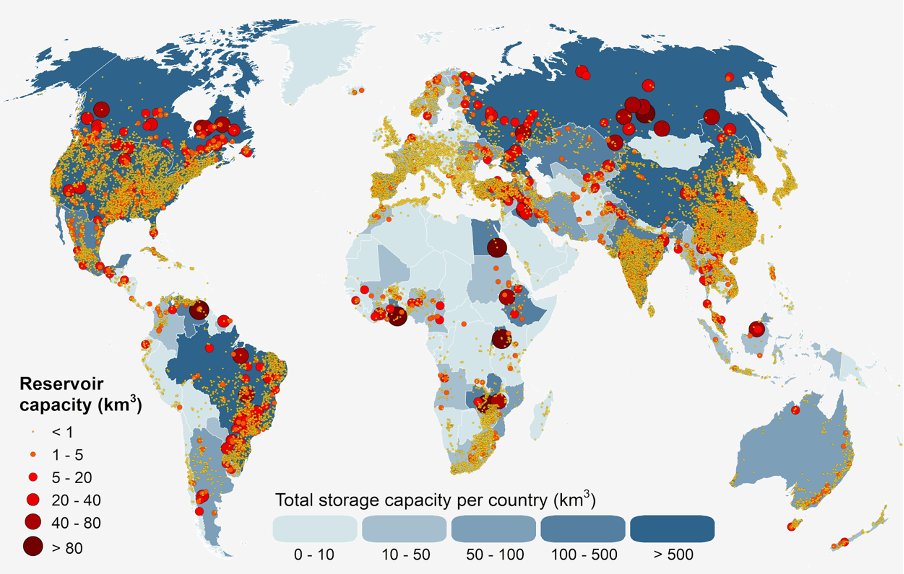
Just out! The new @GlobalDamWatch database integrates global datasets, allowing researchers and policymakers to analyse #river barriers & reservoirs worldwide like never before. Read the paper in Scientific Data https://t.co/0U10ZGi9x0 & access the data @ https://t.co/IuoI7FzDh7!
🥳We present LakeTEMP🥳: a dataset of #Landsat 8 surface water temperature observations and ice phenology estimations for all lakes in the world that are larger than 0.1 km² (~1.4 million). @maartjekorver @jcardille@laura_carrea https://t.co/XVB0DBDRf0
🚨New Paper Alert! 💊Pharmaceuticals & household chemicals in water threaten aquatic life & human health. Introducing HydroFATE: a global model for prioritizing monitoring & mitigation efforts. 🌍 @heloisaemacedo@GuentherGrill @jimnicell
Read more: https://t.co/tr0UtG4N0M
It is published! Pharmaceuticals and household chemicals linger in our water. This poses risks to aquatic life and human health. Meet HydroFATE: a global model that can be used to prioritize monitoring and mitigation efforts. @Global_HydroLAB@GuentherGrill @jimnicell
New research highlights urgent need for global wetland conservation. Despite high rates of wetland loss in many regions since 1700, not all is lost! For more, see the study by Etienne Fluet-Chouinard et al. with contributions from the HydroLAB in Nature: https://t.co/cT4Ohqqmx5
LakeATLAS is out! Offering more than 50 hydro-environmental characteristics for all lakes worldwide! See https://t.co/NHzglW1t2X for more information. With @messamat, @MaartjeKorver, and @DocSlinky.
@DLR_en@Global_HydroLAB@MicheleThieme We're also excited to share:
🗺️ Extended data for HydroSHEDS v1 (including upstream area & flow length)
🐬🌆🔬Highlighted research & applications from the HydroSHEDS community
And more on the new, improved, and much more beautiful https://t.co/3phoGb0ct9
A Sharper Look at the World’s Rivers and Catchments 🌍🌎🌏
Read our update in Eos today highlighting the vast network of HydroSHEDS users & our work with @DLR_en@Global_HydroLAB@MicheleThieme developing HydroSHEDS v2.0 from 12m satellite imagery 🛰️
https://t.co/pFCLOGl8H7
HydroSHEDS is the most frequently applied global hydrographic mapping product. A new version will soon offer more capabilities & clearer views of Earth’s rivers, write researchers from @Global_HydroLAB@DLR_en@confluvio + @World_Wildlife.
https://t.co/47MDtbf0UY
HydroSHEDS reinvented! Check out our latest announcements of upcoming global river data at https://t.co/h2DEA739Sf and our new website at https://t.co/r7lmXPbo7d
HydroWASTE is out! The database includes the location and characteristics of 58 502 WWTPs around the world. It allowed the identification of 1.2 million km of rivers receiving treated wastewater input. https://t.co/GsOyLbDuct
@heloisaemacedo is also participating live in the panel “Pharmaceuticals in the Environment” Tuesday, 16th at 10:30 PST/ 1:30 EST. She will talk about how a contaminant fate model can be used in risk assessments to drive policies and resource management decisions. #SETACSciCon4
Participating in #SETACSciCon4? Check out our PhD candidate @heloisaemacedo's presentation, “Modelling the Distribution of Antibiotics in the Global River System”, on demand at the virtual platform.
@jimnicell, @GuentherGrill and Usman Khan are part of this project.
Interested in dams and reservoirs? Check out our most recent progress at #GlobalDamWatch in this new paper https://t.co/dUXAu79I6H ! We are working on free curated global dam data and analytical tools.
https://t.co/IuoI7Fz5rz
Photo by Jacek Dylag on Unsplash
This dependence comes with the risk that alterations in flooding, both up or down, can have unfavorable impacts.
Thanks Rachel Dryden, @_miraanand, and Etienne Fluet-Chouinard for your work!
2/2
Humans like to live, farm and build in floodplains. Latest Global HydroLAB research finds that human population density, agriculture and development in inland floodplains is 3x higher than on global average.
https://t.co/Pq25Ouhsss
1/2
Our latest study identified more than 1800 potential hydropower projects on free-flowing rivers, affecting +260k km of rivers. We compiled a comprehensive set of policy measures to help avoiding unnecessary and irreversible impacts.
https://t.co/DhGcrwhra7
https://t.co/Ki8RdxxH9s