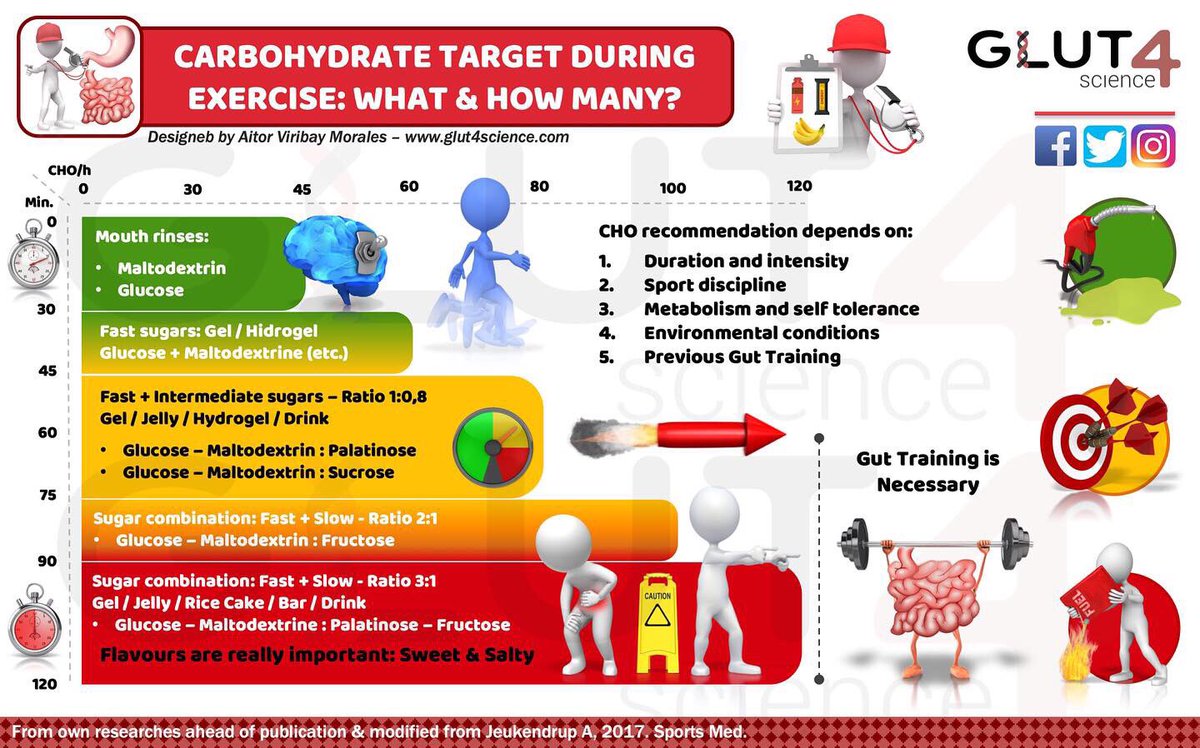
New carbohydrate intake recommendations for endurance sports. 🚴🏼♂️🎿🏃🏽♂️
Based on:
- What science says about it 👨🏻💻
- Our field-research findings ✅
- What best athletes in the world currently do 🏆
- Our experience and everyday work with professional cyclists 🚴🏼♂️🚴🏼♂️
@MVAitor#carbs
In physiology, we can model almost everything. But we are very limited to measure anything accurately outside the lab.
Some days ago, talking with Fred Laguía on his podcast about something obvious, I realised this gap may define the next decade of sport science. 🧵
Now published! Our invited commentary on exogenous lactate as an endurance fuel is out today in @IJSPP_Journal.
Years of research, distilled into hypotheses worth testing. Thank you @borjammt and @adrian_science
https://t.co/RPeJe0HJhV
Raising blood lactate to ~4 mM during moderate exercise blunts whole-body lipolysis by ~25% without reducing fat oxidation, dissociating lactate from the intensity-driven fall in fat use.
https://t.co/N1coIXtt5B
~11 g of lactate per hour, ingested by an elite trail runner during a Skyrunner World Series race.
30.7 km · +2,227 m · avg HR 174 bpm. 2x ExoLactate® gels per hour.
A rarely (so far) documented case of oral lactate used as race fuel. The data (hope it´s interesting) 🧵
What still limits a sub-2 marathon? And could a second fuel move it?
I wrote a technical analysis on running economy, durability and exogenous lactate. It has more questions than answers, on purpose. 🧵
The usual suspects are arguing about CHO intake for endurance performance. Meanwhile, many elite triathletes will target 150+ g/hour at tomorrow's Ironman World Championship. Many of our athletes will be in the 120+ g/h range; why? Because we've seen the results it provides...
Check this one on CHO and durability!!
Even if it’s hard to understand, one of the few papers demonstrating effects of CHO on durability.
Well done - this research group is fantastic btw. Make you you follow them!
Lactate is a buffer agent, but not only on pH.
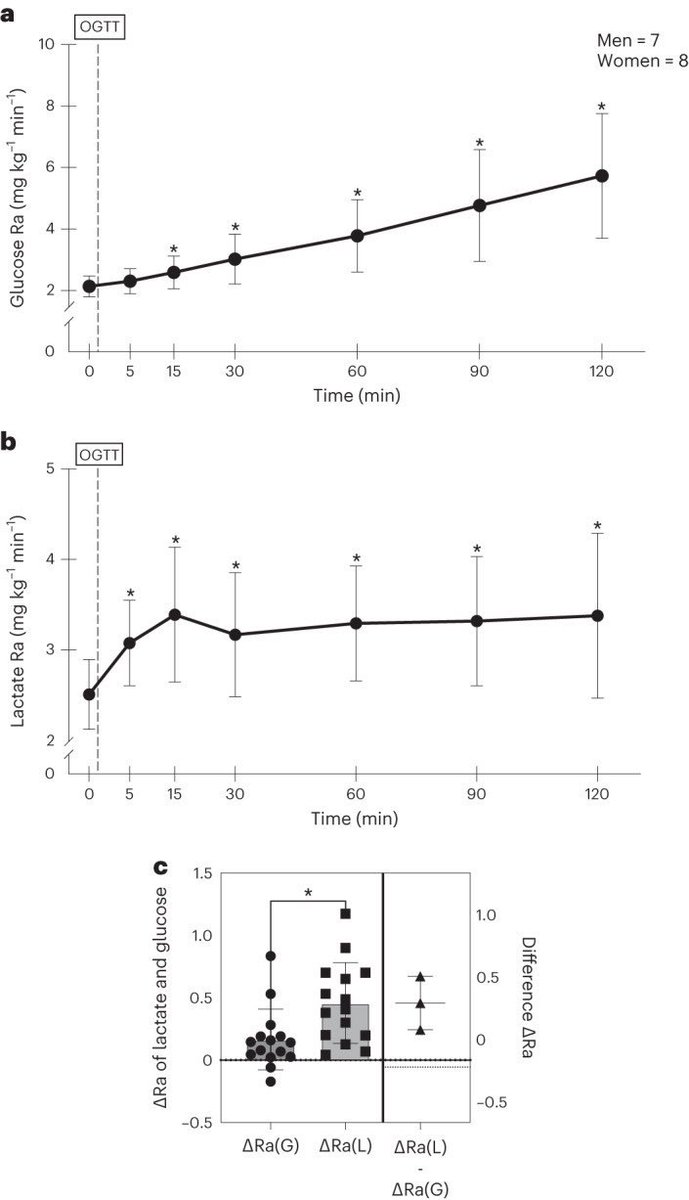
👉🏼 Lactate buffers CARBOHYDRATES in the body.
🛩️🆙 Lactate elevates up the travelling status of carbons: from traveling in Economy (glucose) to a privilege seat in Business (Lactate) 😜
Read this paper 👇🏼
https://t.co/Hpdi2vfyk3
Latest on Exolactate website. An important exercise to do and a relevant consumer-level information to consider.
pH & dissociation state of two available-to-buy lactate gels (preliminary in-house data)
https://t.co/A2WOUqEXY5
Latest on Exolactate website.
Direct human evidence that lactate itself — not the accompanying sodium, which was matched in the control arm — suppresses fat mobilization via GPR81, consistent with a glucose- and glycogen-sparing signalling role.
https://t.co/diTsJUDC5I
Muchas gracias por la entrevista!! Hablamos un poco más a fondo sobre el desarrollo de Lactato Exógeno a través de @fromlabtofield.
https://t.co/MRWACQ3PZZ
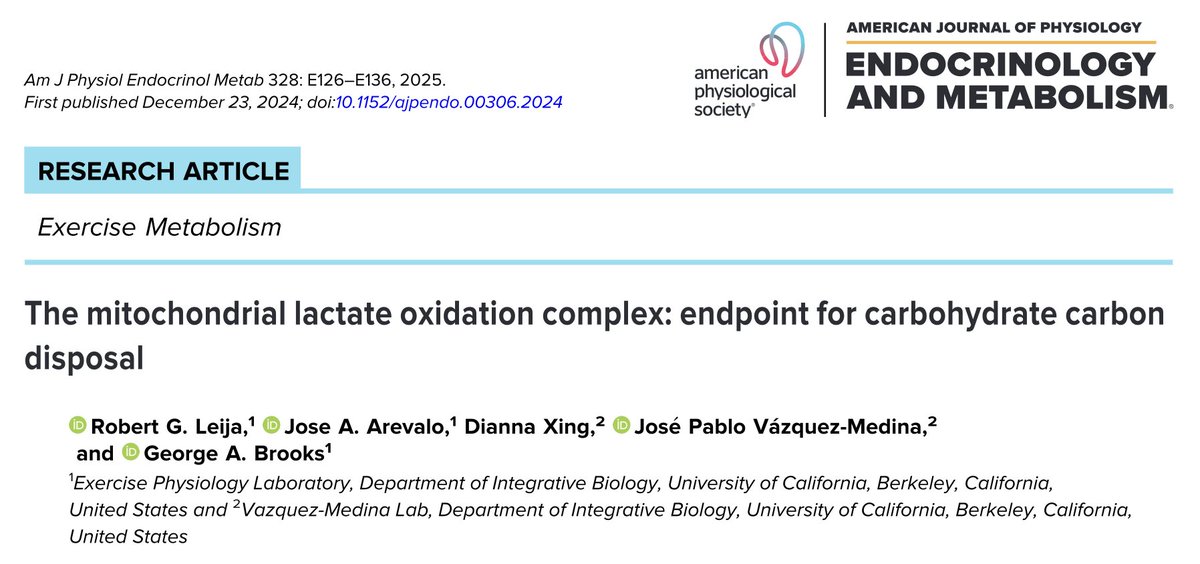
The final pathway of Carbohydrate Oxidation can be called Mitochondrial Lactate Oxidation complex (mLOC).
I really enjoyed re-reading this paper by @RGLEIJA007 et al. One you shouldn't miss!
https://t.co/ovI9iJea9K
The energy resistance principle by @MitoPsychoBio .
One of the most - if not the most - inspiring concepts I have ever read. This is helping me understanding everything we have done with Energy Transformation measurement in professional/elite athletes.
https://t.co/QPeyjw3581
High-intensity adaptations without the fatigue? 🧪
Zone 4 volume has a strict ceiling. What if exogenous lactate could mimic those cellular signals without the training load?
@PaulBLaursen & @MVAitor explore:
https://t.co/hxyV4z2h4r
Hablando sobre el nuevo complemento que podría revolucionar las ciencias del deporte, el consumo de Lactato oral teniendo múltiples beneficios💪, hay que ir con calma pero esto promete mucho para la nutrición deportiva🚵♀️⚽️
Trabajo liderado por @MVAitor
https://t.co/VDDXyOMAah
@oscaloord@MVAitor Es largo y hay cosas que se me escapan porque no soy especialista en la materia pero esto es muy interesante, por si quieres echarle un ojo
https://t.co/34PlbPxqs5
🔴 Lactato, el combustible invisible del Tour de Francia
Ayer comenzó la ronda gala en Barcelona. Además de los ciclistas, hay otro protagonista inesperado: el lactato.
Este metabolito ha ganado una enorme relevancia en ámbitos muy diversos, desde el cáncer hasta el rendimiento deportivo. De hecho, la forma en que el organismo lo produce y utiliza, tanto en reposo como durante el ejercicio, puede ser un buen indicador del estado metabólico de un paciente o del nivel de entrenamiento de un deportista.
Ahora sabemos que, lejos de ser un producto de desecho, el lactato es una importante fuente de energía, especialmente durante el ejercicio.
✍️ En este artículo, José Antonio Benítez Muñoz, doctor en Ciencias de la Actividad Física y del Deporte e investigador en el Laboratorio de Fisiología del Esfuerzo (INEF Madrid), analiza desde la base qué es el lactato, cómo medirlo y cómo utilizarlo para evaluar el estado de entrenamiento.
Si eres deportista o entrenador, te recomendamos su lectura.
Puedes hacerlo pinchando en el link 👇
https://t.co/AWm0WM6Oq3