When operations change, do your processes keep up? New systems, suppliers, or regulations can shift responsibilities, risks, and controls.
Review the impact. Update your processes. Strengthen resilience.
Governance works best when it’s part of the work, not just a policy. Are responsibilities clear? Are controls built into daily processes? Can teams adapt as risks change?
Make governance part of how work gets done.
As operations change, governance needs to keep pace.
Do your requirements reflect current operations? Are responsibilities clear? Are controls evolving with risk?
Effective governance means keeping rules relevant as the business changes.
#Governance#ITSM
Not sure if you need a new ITSM tool? Check for these signs:
→People build workarounds
→Reports take hours, not minutes
→Requests get lost
→It can't support a redesigned process
→Nobody trusts the data
2+ of these? It may be bigger than training
Which sounds familiar?
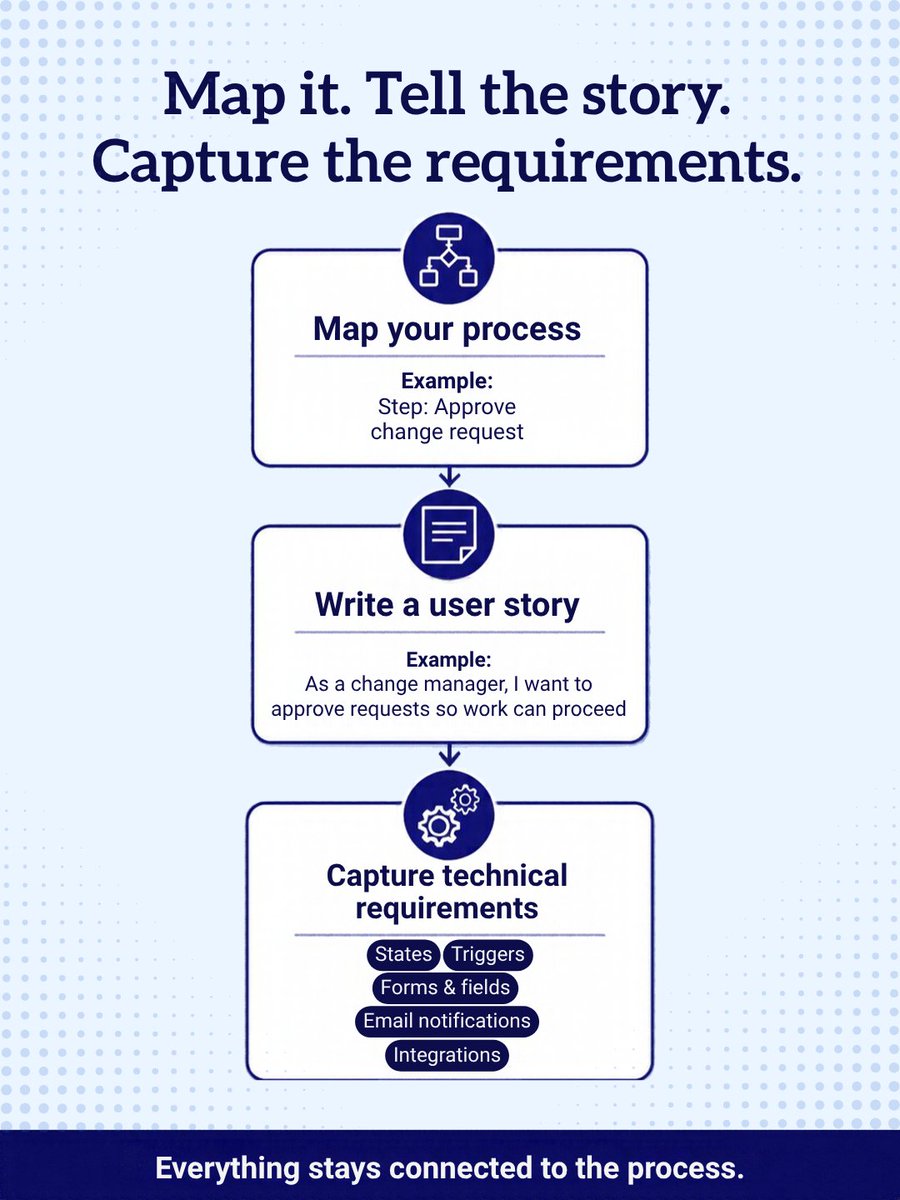
A simple way to capture ITSM tool requirements:
1️⃣ Map your process
2️⃣ Write a user story for each step
3️⃣ Capture the technical requirements for each story
Everything stays connected to the process.
Have you tried user story mapping? 👇
#ITSM#UserStories
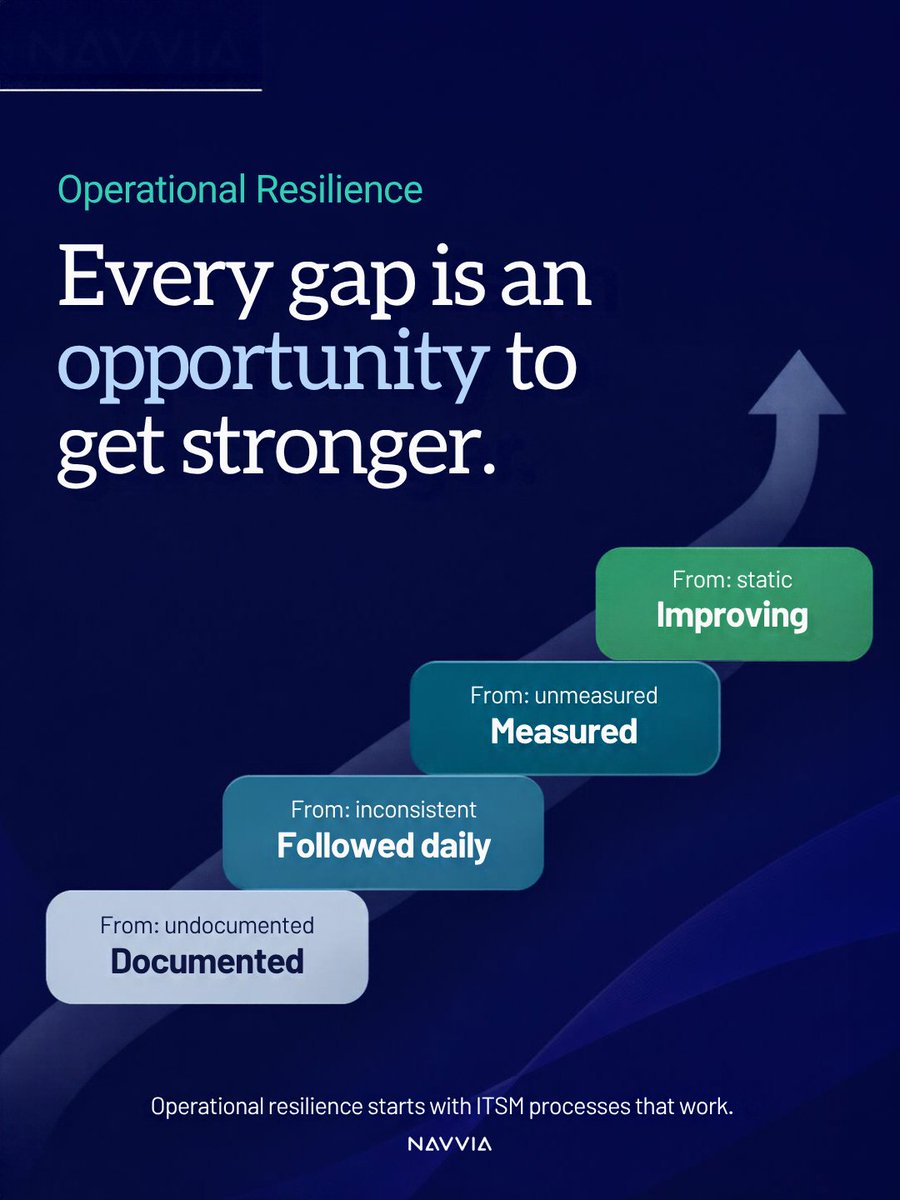
Operational resilience starts with ITSM processes that work.
No massive new framework needed. Strengthen what you already rely on:
✅ Documented?
✅ Followed consistently?
✅ Measured and improved?
Every gap is a chance to get stronger.
#ITSM#Resilience
The secret to a successful ITSM implementation? Balance. ⚖️
✅ People: Does everyone know their role?
✅ Process: Are key processes mapped?
✅ Technology: Does your tool support them?
Which is strongest in your org today?
Everyone has an AI governance policy. Fewer have it in practice.
Our benchmark found the gap isn't awareness, it's execution.
A policy says what should happen. A process makes sure it does. ⚙️
Where are you on the path from policy to practice? 👇
Before you automate anything, know what you're automating.
Map your processes first: run an assessment, start from a framework like ITIL, involve the people who do the work, and keep improving.
#ITSM#ProcessMapping
Before you pick features, ask: what business outcome are we after?
→ Write down the outcomes you want
→ Map where current tools help or hurt
→ Talk to actual users
An afternoon of this shapes every decision after it.
What's your biggest pain point today? Comment below ⬇️
AI governance starts with knowing what data AI is using.
Our benchmark: 39% on personal, sensitive and regulated AI data.
AI doesn't remove the need for privacy practices. It makes consistent execution matter more.
AI governance isn’t just about awareness. It’s about execution.
Our benchmark found:
→ AI adoption is outpacing governance
→ Ownership remains fragmented
→ AI assurance is still maturing
Governance becomes real when it’s assigned, executed, monitored & improved.
5 ways AI strengthens your BPM program ⬇️
1️⃣ Discovery: process mining & NLP
2️⃣ Mapping: auto-drawn, current maps
3️⃣ Automation: bots for repetitive tasks
4️⃣ Management: monitoring & early alerts
5️⃣ Improvement: predictive modeling & root cause analysis
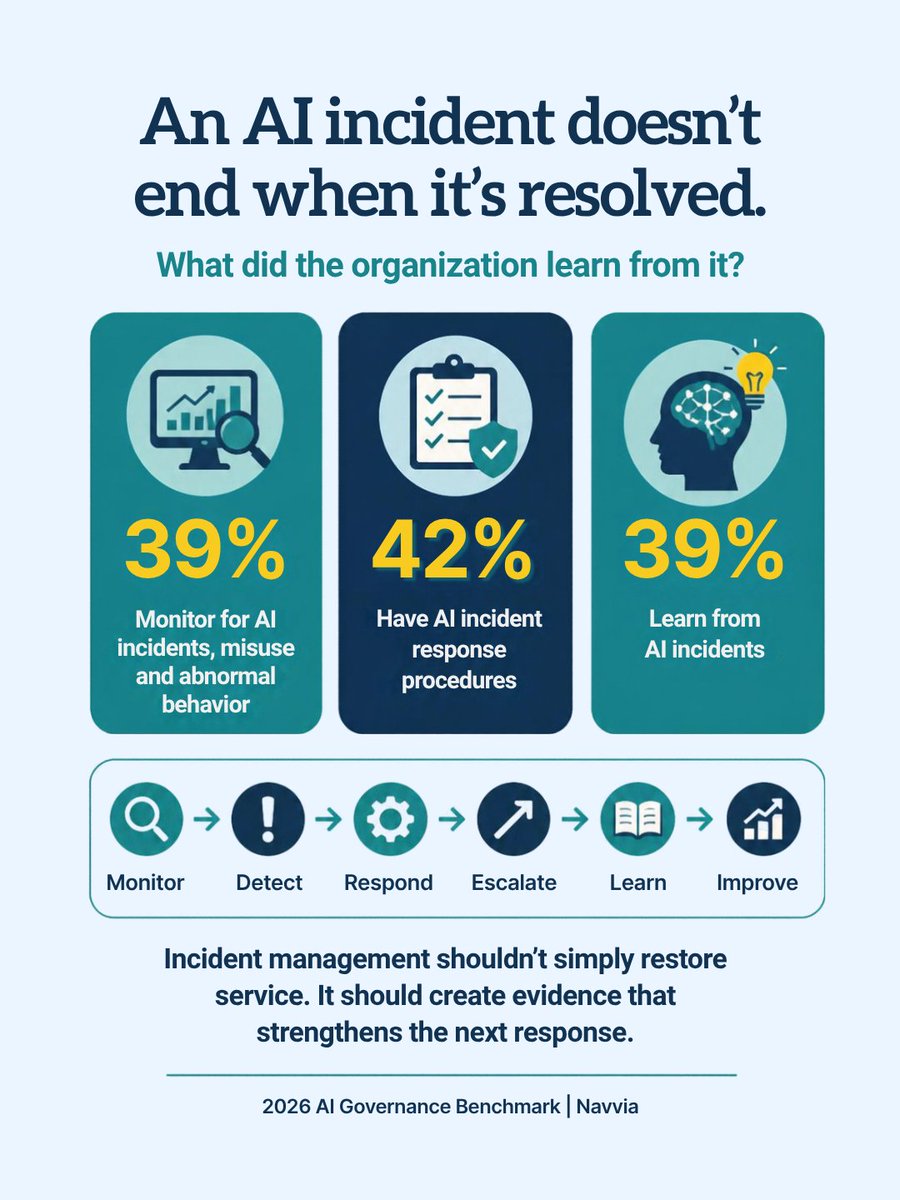
An AI incident doesn't end when it's resolved. The real question: what did the organization learn?
Our benchmark: only 39% are learning from AI incidents.
Monitor → Detect → Respond → Escalate → Learn → Improve
#AIGovernance#IncidentManagement#OperationalResilience
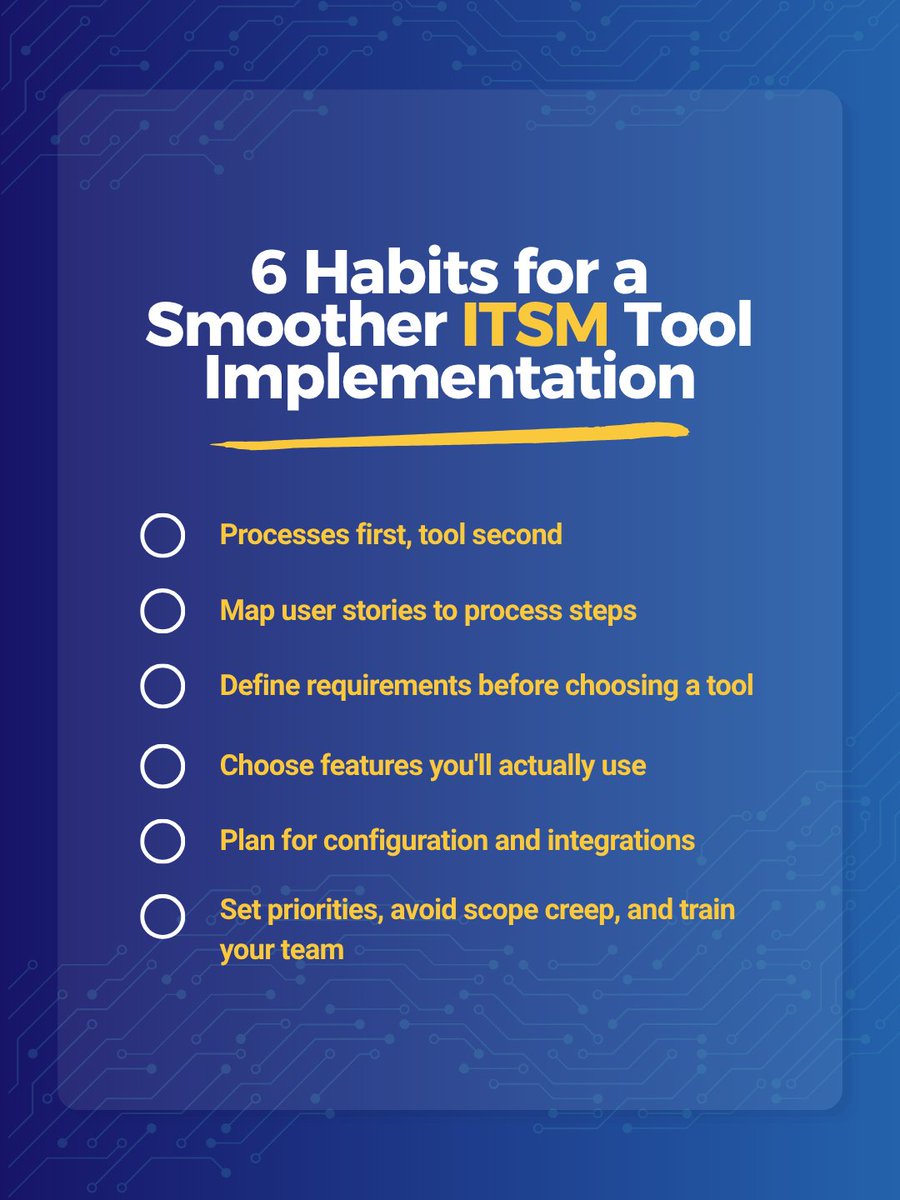
Want a smoother ITSM tool implementation? Keep these 6 habits in mind, starting with your processes.
They're the blueprint for automation and help you avoid a "lift and shift" of your old tool.
Save the image as a checklist for your next project📌
Move old workflows to a new platform? You can. But should you?
If the process still has workarounds or unclear ownership, you’re just moving the problem.
A new ITSM platform is your chance to ask:
Do we still want to work this way?
That’s where improvement starts.
#ITSM
Want people to adopt your new tool? Make them part of building it.
→ Involve a core team, experts, stakeholders, steering committee
→ Give stakeholders a real design role, not a demo
→ Write a "what's in it for me" for each group
Which group is missing from yours?
Where does AI governance live?
Not just in a policy. It needs to be built into processes, from AI selection and approval to monitoring, incident management, and improvement.
Join us tomorrow for our benchmark results ➡️ https://t.co/ISJl4WoFz3
#AIGovernance#ITSM
AI can do more than automate tasks, it can transform how organizations manage processes. 5 ways AI can support BPM:
🔹 Process discovery
🔹 Process mapping
🔹 Automation
🔹 Process management
🔹 Continual improvement
Watch the video to learn more.
Where is your process getting stuck?
Try this 10-minute check:
🔹 Where does work wait?
🔹 Where are the handoffs?
🔹 Where is information re-entered?
🔹 Where do exceptions occur?
🔹 Where does ownership get unclear?
Find where the work stops moving, and start there.