The emergence of superhuman AI will not be an event. Progress is going to be progressive.
It will start with systems that can learn how the world works, like baby animals.
Then we'll have machines that are objective driven and that satisfy guardrails.
Then, we'll have machines that can plan and reason to satisfy those objectives and guardrails.
Then will have machines that can plan hierarchically.
At first, those machines will be barely smarter than a mouse or a rat.
Then we'll scale up those machines to be as smart as a dog or a crow.
Then, we'll adjust the guardrails to make those systems controlable and safe as we scale them up.
Then we'll train them on a wide variety of environments and tasks.
Then we'll fine tune them on all the tasks that we want them to accomplish.
At some point, we will realize that the systems we've built are smarter than us in almost all domains.
This doesn't necessarily mean that these systems will have sentience or "consciousness" (whatever you mean by that).
But they will be better than us at executing the tasks we set for them.
They will be under our control.
Bittensor has been a rabbit hole that keeps drawing me deeper. Over the past few months, I’ve spent quite a bit of time researching and engaging in conversations with subnet miners, validators, and owners.
Given its complexity, Bittensor is often misunderstood. So here’s my attempt at summarizing what Bittensor is.
--
Bittensor continuously rewards new, better machine learning (ML) models across a variety of targeted use cases.
While several decentralized projects at the crypto-AI intersection focus on decentralizing specific machine learning stack components, such as training, inference, or data collection, Bittensor takes a different path. Bittensor boldly competes with full-stack AI giants like OpenAI, Google, and Anthropic, who engage in the entire AI lifecycle — from conceiving new algorithms and collecting data to training models and hosting them for inference.
Ultimately, Bittensor’s overarching vision is to create an ecosystem capable of generating the necessary resources required for the production of machine intelligence. To realize this, Bittensor has built a framework that simplifies the creation of digital commodity markets, known as subnets. These markets can be tailored to incentivize individuals to contribute their expertise, intellectual property (e.g., models), and digital resources, including compute, storage, and bandwidth, for a diverse range of AI and non-AI applications.
To grasp the concept of digital commodity markets, think of Bitcoin. Bitcoin operates as a commodity market for compute, where miners are incentivized to contribute compute power for SHA-256 hash calculations and are rewarded in proportion to their computational contributions.
Instead of commoditizing SHA-256 hash production, Bittensor commoditizes AI model creation and discovery. Within Bittensor, each subnet develops its own incentive mechanism tailored to a specific use case. These use cases include text and image generation, web scraping, data storage, and pre-trained model production. This approach enables Bittensor to effectively mine AI discovery and execution resources across many subdomains.
With subnets, Bittensor can address the long tail of AI models, catering to niche industries, specialized AI applications, and unique problem-solving scenarios often overlooked by mainstream AI solutions.
Architecturally, Bittensor evolves into a network comprising various self-contained economic markets, seamlessly united under a single token (TAO) ecosystem, all geared towards the goal of advancing machine intelligence.
Within this ecosystem, tokenholders shape the network's trajectory by determining the allocation of capital to each subnet. Their decisions regarding the proportion of network emissions directed to each subnet actively guides the direction of AI development within Bittensor.
(shouout to @saypien for helping articulate this)
Read the full @MessariCrypto report here: https://t.co/e60fvJnnSK
Official post on Mixtral 8x7B: https://t.co/Dxqgb6sQdK
Official PR into vLLM shows the inference code:
https://t.co/f0UvyO4g3s
New HuggingFace explainer on MoE very nice:
https://t.co/mNd505Uikg
In naive decoding, performance of a bit above 70B (Llama 2), at inference speed of ~12.9B dense model (out of total 46.7B params).
Notes:
- Glad they refer to it as "open weights" release instead of "open source", which would imo require the training code, dataset and docs.
- "8x7B" name is a bit misleading because it is not all 7B params that are being 8x'd, only the FeedForward blocks in the Transformer are 8x'd, everything else stays the same. Hence also why total number of params is not 56B but only 46.7B.
- More confusion I see is around expert choice, note that each token *and also* each layer selects 2 different experts (out of 8).
- Mistral-medium 👀
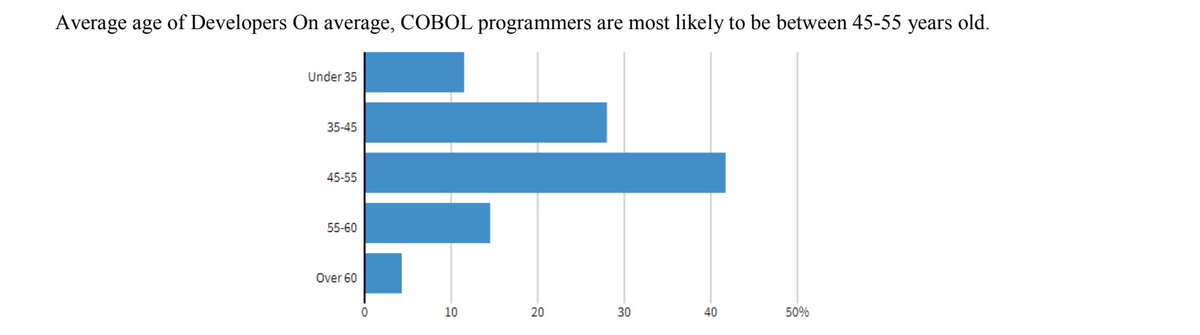
There are 220bn lines of COBOL code in use today (1.5bn new lines/year). COBOL is the foundation of 43% of all banking systems. Such systems handle $3 trillion of daily commerce. COBOL handles 95% of all ATM card-swipes, 80% of all in-person credit card transactions.
If this is really some EA, decel, AI safety coup at OpenAI, the board just torched $80B of value, destroyed a shining star of American capitalism, and will be sued to high heaven by investors.
Every talented employee at OpenAI should quit and join Sam/Greg's new thing (if they make one). This time, skip the woke non-profit board, eject the decels/EAs, maintain founder control, avoid nonsensical regulation, and just build. Accelerate progress. You are building something good for the world, don't let anyone make you feel guilty for it and try to capture it for their own motives.
First: Sam, Greg, and the team made historical contributions with ChatGPT. No one can take that away from them.
Second: if AI doomers doomed OpenAI, that’ll doom doomerism.
Third: if the board can do this to Sam, they can do it to any OpenAI customer. Need to decentralize AI.
Sell the hype. Re-listing is exit liquidity, 2-3 years worth of stuck sell orders.
Since, the “regulatory clarity” is there now, within one year if no Institutional demand escalates or XRP is under $5- its THE signal!
How insane did Harvard's affirmative action policies get?
An African American student in the 40th percentile of their academic index is more likely to get it than an Asian student in the 100th percentile.
Black students in the 50th percentile are more likely to get in that white students at the top.
@WKahneman I don’t understand why anyone would think that the IMF would be pro-XRP.
People have been toking pure, uncut hopium for way, way too long, ignoring (or even denigrating) anyone adopting a pragmatic viewpoint.