Russell Crowe’s Action Thriller ‘Bear Country’ Set to Begin Filming in Queensland Next Month
Hold onto your hats, movie buffs! Russell Crowe is returning to the screen in a gripping new thriller titled Bear Country, and filming is set to kick off in Queensland, Australia, this February. In a delightful twist of fate (or perhaps logistics), the scenic landscapes of Queensland will double as the bustling streets of Los Angeles.
Based on Thomas Perry's novel Strip, this action-packed flick is helmed by director Derrick Borte, who co-wrote the screenplay alongside Daniel Forte—known for their collaborative efforts on American Dreamer. Crowe is poised to portray Manco Kapak, an aging but tenacious club owner ensnared in a web of trouble when a masked gunman robs him.
With dreams of selling his club and riding off into the sunset with his girlfriend dashed, viewers can expect a wild ride filled with high-stakes drama.
This isn’t Crowe’s first rodeo in Queensland. He previously filmed the action thriller Land of Bad alongside Liam Hemsworth in late 2022, demonstrating the actor’s enduring connection to the region. It’s clear that Crowe and Borte have a collaborative synergy, having previously worked together on the pandemic-era release Unhinged.
The Queensland government is buzzing about the production, heralded by the local film agency Screen Queensland. John-Paul Langbroek, the Arts Minister, emphasized how the state’s Production Attraction Strategy has been pivotal in attracting diverse shoots like Bear Country.
“The boost in productions opens the door for Queenslanders wanting to build a career in the screen sector,” he noted, highlighting that this production alone is expected to generate a whopping $11.9 million for the local economy and provide around 95 jobs.
Jacqui Feeney, CEO of Screen Queensland, is equally excited about the potential opportunities for emerging talent in the region. “Bear Country will not only benefit from the skill and expertise of the local crew but will also provide crucial training opportunities for new industry talent,” she stated, referencing their Attachment Program designed to offer paid positions working alongside seasoned professionals.
With Crowe’s undeniable star power and the breathtaking backdrop of Queensland, Bear Country promises to deliver not just a thrilling narrative but also a showcase of local talent and stunning landscapes. The mixed locales of the Gold Coast and its exceptional production facilities solidify Queensland’s status as an attractive destination for filmmakers.
Speaking of excitement, Mark Fasano, CEO of Nickel City Pictures, echoed this sentiment: “Queensland’s Gold Coast offers an unbeatable combination of diverse locations, talented local crews, and fantastic creatives.” With significant government support and a dedicated crew behind the scenes, anticipation builds as Bear Country prepares to roll cameras.
So, mark your calendars for February, because something thrilling is coming out of Queensland and straight to your screens!
Video from the funeral procession of American Sniper Chris Kyle, which stretched 200 miles from Midlothian to Austin. Kyle, a Navy SEAL sniper with four Iraq tours and 160 confirmed k*lls, was highly decorated for valor.
Thomas Sowell spent decades documenting what the Great Society actually did to black American families, and the evidence is brutal if you're willing to read it honestly.
In 1960, before Lyndon Johnson signed a single piece of Great Society legislation, roughly 22% of black children lived in single-parent homes. By 1980, that number had climbed past 50%. By 1995, it was near 70%. Slavery didn't produce those numbers. Jim Crow didn't produce those numbers. A federal welfare apparatus that penalized marriage, rewarded dependency, and treated fathers as financial liabilities produced those numbers. The Aid to Families with Dependent Children program (AFDC) made a man's presence in the household a disqualifying factor for benefits. Washington literally paid women to be unmarried and paid them more for each additional child. You design incentives, you get outcomes. This is not complicated.
Sowell's deeper point, the one that gets buried, is that black family stability was actually improving before federal intervention accelerated. Black poverty rates fell sharply between 1940 and 1960, before the Great Society existed. Black entrepreneurship, fraternal organizations, and two-parent households were all trending in the right direction under conditions that Great Society architects later described as hopeless. The War on Poverty didn't rescue a broken community; it interrupted a recovery.
Free market thinkers from Sowell to Walter Williams explained that price floors on labor (minimum wage laws), urban renewal projects that bulldozed black business districts in cities like Cincinnati and Atlanta, and the school assignment systems that trapped poor children in failing institutions all compounded the welfare trap systematically. Each intervention generated a problem that justified the next intervention. Government failure reliably became the argument for more government.
The cruelty here is structural. Politicians got votes. Bureaucrats got budgets. Social workers got caseloads. And three generations of children grew up without fathers in the home, with all the documented downstream effects on education, incarceration, and earnings that researchers have been tracking ever since. Everyone in that system got what they wanted except the people the system claimed to serve.
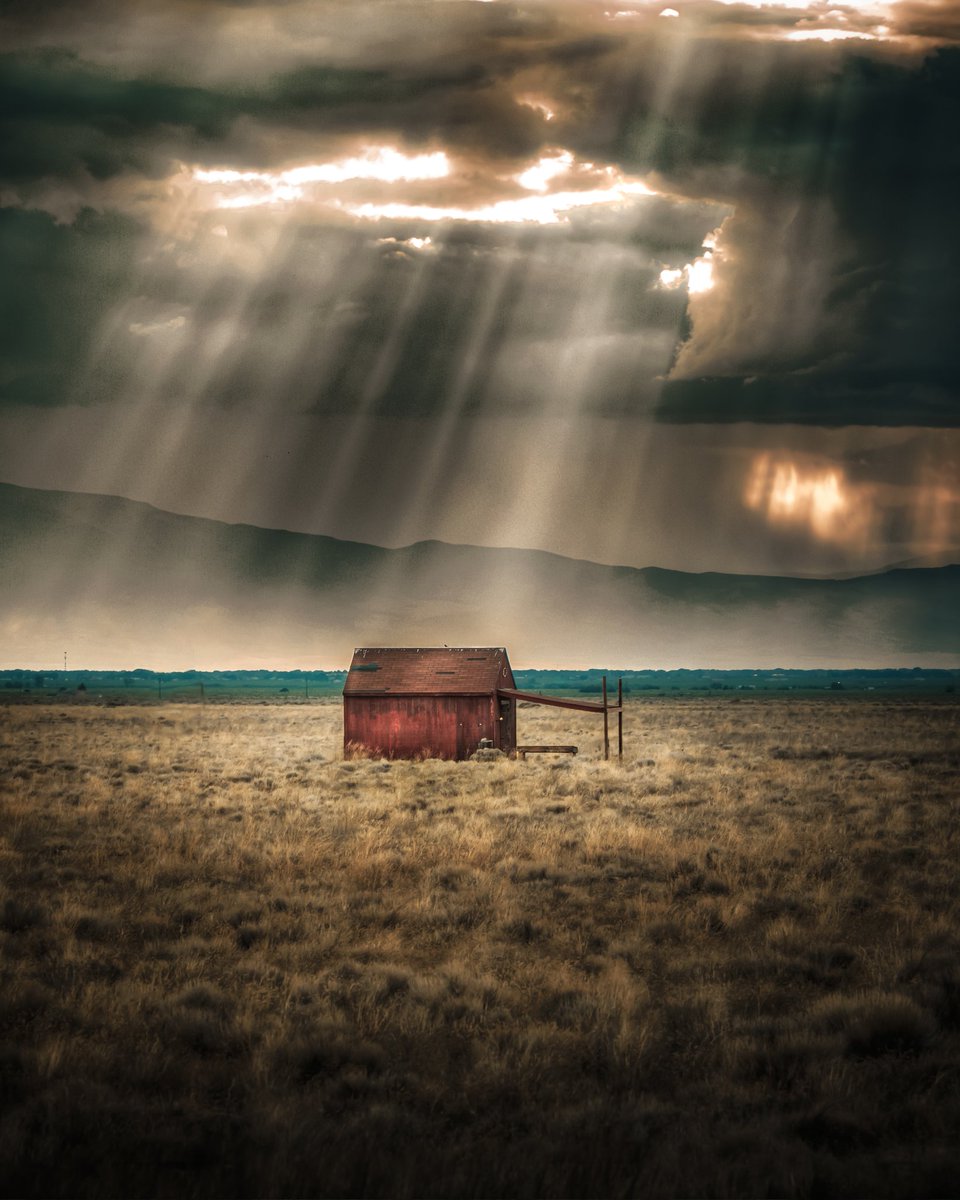
If anyone drove by me in the morning then evening, they probably thought to themselves "why is this dude spending his whole day taking pictures of that dumb structure, he should probably get a life."
I didn't know what light I was waiting for, but I knew I'd know it when I saw it.
Ron Baron interviews Elon Musk – Transcript
of the second half hour (30:42 - 58:43)
Welcome to the second part of the Ron Baron interview with @elonmusk recorded on November 4, 2022, during the Annual Baron Investment Conference in New York which is about:
- the Twitter acquisition
- how to get 100 million Teslas a year to customers
- why Tesla started with vertical integration in the beginning and how it became a competitive advantage
- whether there is a good reason to invest in Tesla
- the long-term goal of Tesla’s superchargers.
Ron Baron: (30:42) Let’s go to Twitter just for a minute. And we’ll go back to this stuff, which is more interesting to me.
Elon Musk: (30:47) I tried to get out of the deal. (imitates a scene from ‘The Godfather’) It reminds me of the scene from The Godfather, basically.
Ron Baron: (30:59) But you told me you wanted to be asked tough questions. So on Twitter…
Elon Musk: What could possibly go wrong? (Laughter)
Ron Baron: I saw this article. It says you bought something called Twitter and says, Musk puts off lifting Twitter bans. And so obviously, the big deal in Twitter is that it was incredibly poorly managed, this business. But those guys somehow did great for their shareholders by selling it to us, right? But we didn’t buy what they’re selling, we bought something what it’s going to become.
Elon Musk: (31:51) Yes. Most people would say like, given how the market has evolved this year, the price is on the high side.
Ron Baron: (32:00) Right. But that’s basically what it is.
Elon Musk: (32:05) But I think there is a tremendous amount of potential that will be very difficult to achieve but possible. And I think, ultimately, it could be one of the most valuable companies in the world.
Ron Baron: (32:20) When we think about this, in order for that to happen… So, I met you, and it took me a few years, and then I believe in you and your heart…
Elon Musk: (32:34) I think at our first meeting, you were a bit skeptical.
Ron Baron: (32:40) So the way I think about it is that I’m trusting you with the future of our country, the world, actually – we are in charge of a media like that. And so what I think about is, how do you prevent to being Jewish… how do you prevent this antisemitism? Or if I were black, how do you prevent the use of the N-word?
And when I think about Tik Tok, they’re able (…) to tell what you’re going to do. You move your left arm, you move your right arm, what other pictures you like. That’s what they do with their software, and they’re great with their algorithm. How can we not have an amazing algorithm because we know more about them (…) Tik Tok? And we ought to know what interests people have. And because of that, in words, we should be able to figure out words that people are using, what that means, and considering what content they’re interested in. We should be able to figure out with software how to moderate this and prevent that from happening. Is that true or not?
Elon Musk: (33:48) Yes, absolutely. Totally agree. I want to be clear, content moderation policies have not changed at Twitter, and it is not okay to engage in hateful conduct on Twitter. We have had actually, oddly, targeted attacks, where temporarily people have been able to put some hate speech on Twitter, but then it’s been taken down immediately. What I’m trying to achieve with this sort of enabling everyone to be payment verified with Twitter Blue is to try to get as many people payment verified as possible. It’s only eight bucks a month. Although, some people were complaining about that, and these are people who pay more than that for their latte.
Part of it is revenue, part of it is payment authentication. Because there is a huge problem with spam and bots and trolls on Twitter, and organizations trying to manipulate public opinion and just generally making the system worse. But I think that there is an answer to that, which is to get as many regular users of Twitter to be a subscriber for $8 a month. You’ll get a lot more than just a blue checkmark for $8 a month. Because now we can afford long-form video, long audio podcasts. And we can also start sharing revenue with content creators, which is essential.
Ron Baron: (35:40) Give them a chance to make money.
Elon Musk: (35:43) Yeah, absolutely. I mean, right now, if you’re on Twitter, you’ll see a lot of links posted to YouTube and Tik Tok. And that’s because, at least until now, Twitter is not even given them enough video length to post a video, and then they give the content creators no means of monetizing the video. So we’re going to change that rapidly at Twitter. That’s going to be transformative. But if we can get enough verified users, and we’re going to prioritize Twitter search replies and mentions by verified users first…
Ron Baron: (36:20) That’s what is called the amplified.
Elon Musk: (36:24) Yes, so if you’re payment verified with blue checkmark, then you will be prioritized. The point of this is to make crime not to pay. Because right now to create a bot on Twitter cost less than a penny. The cost of crime is so cheap, and that’s part of why crime and hateful conduct pays. But if somebody risks losing even eight bucks, it’s too expensive to now have 100,000 fake accounts because they have to spend $800,000 a month as opposed to $800 a month.
Then also, since we’re using payment authentication, we’re piggybacking on the authentication system as a payment system. And we’re also piggybacking on Apple’s authentication system, which is another layer of security. So the net effect will be over time that the verified users will pretty much always be at the top of comments and search, and you’ll have to scroll far to see the unverified users, which will be the bots and trolls and whatnot. This is sort of analogous to Google search. If you go to page eight of Google search, there will be a ton of scams and stuff, you know, call it page eight, page nine, something like that. But the thing is that Google search results are so good for page one that you never go to page eight. It’s rare.
Ron Baron: (38:08) Something we don’t want to see, it gets pushed way down.
Elon Musk: (38:13) Yeah, basically, the bad stuff gets pushed way down. And then crime stops paying, and they stop trying to do all these things.
Ron Baron: (38:20) And we can recruit them as engineers to program for us. Crime guys.
Elon Musk: (38:26) Yeah. I mean, the joke is like, what’s the best place to hide a dead body would be the second page of Google search results. Nobody ever goes there.
Ron Baron: (38:38) Today, we fired half of Twitter. And that should save us what, four billion a year?
Elon Musk: (38:48) No, it’s not going to save four billion a year. I wished. To be frank, Twitter was having pretty serious revenue challenges and cost challenges before the acquisition talks started. And any company that is dependent on advertising has had a hard time. So if you look at, say Snapchat, or, you know, Google, Facebook, whatnot, they’ve all had a difficult time with advertising revenue dropping. And Twitter is currently more vulnerable than they are to advertising because most of Twitter’s advertising is large brand advertising, as opposed to direct response. So it’s kind of like a much more of a discretionary ad spend than it is if you can do direct response for a specific product.
Then we also recently had a lot of difficulty with activist groups pressuring major advertisers to stop spending money on Twitter. This is despite us doing everything possible to appease them and to make it clear that moderation rules and hateful conduct rules have not changed, and we’re continuing to enforce them, a number of major advertisers have stopped spending on Twitter. This doesn’t seem right because we’ve made no change in our operations at all, but nonetheless, the activist groups have been successful in causing a massive drop in Twitter advertising revenue. We’ve done our absolute best to appease them, and nothing is working. So this is a major concern. And I think this is, frankly, an attack on the First Amendment. If activist groups can pressure advertisers, upon which Twitter is fundamentally dependent, to suppress free speech, then that doesn’t seem right.
Ron Baron: (41:07) I meant, by the way, 400 million instead of 4 billion. Okay, so we’re now there, you’re living at this place, you go there for the next couple three weeks, (…) and then we have a team lined up, you think you have a team lined up to manage it. And then you would just do it the same way we do with SpaceX and Tesla, where you just attend the meetings regularly and say, “This is what we need to do. Do it. This is what we need.”
Elon Musk: (41:44) Yeah, my workload went up from about, I don’t know, 70 to 80 hours a week to probably 120. So yeah, I go to sleep, I wake up, I work, go to sleep, wake up, work, do that seven days a week. I’ll have to do that for a while. No choice. But I think once Twitter is set on the right path, it is a much easier thing to manage than SpaceX or Tesla. I really understand the internet, and I wrote software. I wrote software personally for 20 years. You know, I’m one of the key people behind https://t.co/IcReypU1n5, which became PayPal. And also, I know how to make a way better than PayPal.
Ron Baron: (42:47) Because you built PayPal?
Elon Musk: (42:48) Yeah, pretty much. I mean, with a lot of other people, but there’s a product plan I wrote, which I wish I’d kept a copy of, in July of 2000, where I thought it would be possible to make the most valuable financial institution in the world. And we’re going to execute that plan from 22 years ago, which, amazingly, no one has done. That’s a part of why I think Twitter will be ultimately extremely valuable because I’m going to execute the https://t.co/IcReypU1n5 game plan from 22 years ago with some improvements.
And then we’re also going to obviously make Twitter just a way better system. I mean, it stands to reason that if a social media company is not taking steps to make it positive to be on that social platform, then people won’t come or they’ll leave. You speak of sort of antisemitism or racism or anything like that. Well, I mean, who’s going to stay on a platform, if that’s prevalent? (…) inherent wrongness, who is going to stay on the platform? Our goal with Twitter is, how do we get 80% of America? Maybe not like the sort of far left and the far right, and maybe we don’t want them necessarily – but how do we get 80% of the public to join a digital town square, and voice their opinion and exchange ideas and maybe once in a while, change their minds? I mean, once in a while.
Ron Baron: (44:49) I read also that you said – and then we’ll move off Twitter – but you said that your goal is you want to make the 20% of people who are on the far right to hate you just like you want to make the 20% of people on the far left to hate you.
Elon Musk: (45:03) Well, I don’t want them to hate me. But I think it’s just very difficult to satisfy extremists unless you fully buy into whatever their dogma is. But I’m confident we can satisfy, like, I don’t know, 80% of America, 80% of the world, but maybe not the 10% most extreme of either side. I would count that as a great outcome. I think it is important to have a sort of a digital town square where people feel comfortable talking.
And I also think one of the things which is important is to be able to sort of decide what kind of experience you want to have on Twitter. Because some people might say, okay, I want it like this was a radio station, I want this easy listening, smooth jazz station. Okay, cool, so you have that setting for Twitter. And then some people might say, “No, I want Heavy Metal thrash.” Okay, then you don’t mind someone saying mean things to you, you know, within the context of the law. And you don’t mind engaging in vigorous arguments on Twitter, that kind of thing. But you should be able to pick your preference and decide if you want sort of full contact battle, or do you want like, “I just want to look at puppies and flowers and nice landscapes and stuff.”
Ron Baron: (46:36) So, let’s go off Twitter. Two other topics where we have some questions. Number one is logistics. When we’re starting to make so many cars by the end of this year, 40,000 cars a week…
Elon Musk: (46:54) I mean, I have to be careful of MNPI (Material non-public information). But I believe I have said in the past publicly that our aspiration is to reach 40,000 a week by the end of this year.
Ron Baron: (47:04) So if we’re doing that, then that means that you’re producing a car within 15 seconds. But that’s still only 2 million cars a year, and it is 100 million cars to be made a year. And so the question, there’s presumably capacity to be able to logistics to ship all these cars all over the place to have people pick them up where they want them? But not if they all do in the same week?
Elon Musk: (47:34) Yes, totally. We had a bit of criticism for our Q3 results because we had a lot of cars in transit. And the reason was that we got too big for our cars to actually be transported in the final few weeks. There weren’t enough car carriers and weren’t enough ships. But it’s actually good in the long run to smooth out deliveries and actually have cars in transit at the end of the quarter because then you’re not rushing to get everything delivered by the end of the quarter and paying all these expedite fees.
Ron Baron: (48:13) My question, though, is, we have autonomous driving, and we have autonomous trucks. Is that one of the ideas that we’re going to be able to move things around with our own if there’s not enough drivers? That we’re going to have autonomous transport? That’s question one.
Elon Musk: (48:28) Yes. We can also, if you’re in the area, have the car just drive to you.
Ron Baron: (48:35) That’s one. And then the other one is about materials. We have somehow navigated supply chain problems from other people. And we might have thought that it was the absolute brilliance that we had to be able to do that. But probably the reason is that when you start off and you don’t make any cars a year, and you go to someone who said we’re going to make 20 million cars a year from zero, who’s going to believe you and make all the equipment that we need.
So as a result of that, you were forced initially to be able to say, we’ll vertically integrated. We can’t rely on you, we will do vertical integration. (…) anyone wants to show us a mine. We got people in mines who are knowledgeable, and they come to say, ‘we can produce this much lithium, this much copper’. We are able to assess that and give contracts to be able to say ‘contractual agreements, okay’. And they’ll rely on our agreement. Other people, they won’t. Is that fair?
Elon Musk: (49:53) The scaling constraints change as time goes by. In the beginning, we were just very vertically integrated because the suppliers didn’t take us seriously. Like the best suppliers wouldn’t talk to us because a car startup has not been successful in the United States since Chrysler in the 20s, I believe they started. So it’s been a century since a car company was successful in the US that was not a foreign car company coming in that was already successful in their home market. But for an American car startup, Tesla was the first success in 100 years. So you can imagine if you’re an auto supplier that doesn’t sound like a smart financial decision.
So we had to just build a lot of stuff ourselves, be vertically integrated, or we couldn’t create the car. Then that ended up being an asset because now we understood so much about the entire supply chain or what it took to build the car, so we were able to design a more integrated vehicle that actually needed far fewer parts and cost less and weighs less, and has higher performance. But it is looking increasingly like for some of the critical elements of batteries that Tesla will need to get into the mining business – mining and refining.
Ron Baron: (51:18) it. That’s why Glencore would announce (…)
Elon Musk: (51:22) No, we’ve never contemplated investing in Glencore. I’m talking about Tesla doing it.
Ron Baron: Ourselves?
Elon Musk: Yes.
Ron Baron: (51:34) Have you some time for questions from the audience? (…) So, by the way, if you leave before we give away the door prizes, which are two Teslas you’re not eligible to get the Teslas. But go ahead. I gave an extra one once, I guess it was last time, but we’re not going to do that again. You got to be in your seat in order to get the Teslas. I’m paying for it. Not Elon. Questions?
Speaker: (52:26) Elon, Seneca once said, every genius has a touch of madness. I thought you’d like that quote.
Elon Musk: (52:35) I agree with the madness part.
Speaker: (52:39) Tesla, as a publicly traded company, I think it’s down 40% or something from its high, is selling at 70 times earnings. Meanwhile, Mercedes Benz, which now produces EVs, is selling at six times earnings and yielding 5%. Why should I invest in Tesla rather than Mercedes Benz?
Elon Musk: (53:06) Well, I actually rarely tried to convince anyone to invest in Tesla. And many times, I’ve recommended people ‘don’t invest in Tesla’. And I’ve said, ‘our stock is too high’. But then people just ignore me and keep buying the stock for some reason.
But I think, at a very high level, I’d say that autonomy is an insanely fundamental breakthrough. And no one is even close to Tesla for solving generalized autonomy, generalized self-driving vehicles. No one’s even close. And with self-driving, as I was talking about earlier, the car becomes roughly five times more useful, but it costs the same to build. Can you imagine what would happen if a company was doing like a 25 to 30% gross margins, but suddenly, that same thing was five times more valuable? What would that do to the value of Tesla and the value of that car? It boggles the mind, actually. So, you know, if you think of net present value of future cash flows, if you actually do the math on that, it’s insane.
Then there’s also the optimist program, which is our humanoid robot. We will leverage our manufacturing expertise and the intelligence we’ve developed for self-driving to have a useful humanoid robot. Now, the economy is fundamentally GDP per capita times capita. If you no longer have a constraint on capita because of the useful humanoid robot, it is not clear that there’s any limit to the size of the economy. And these things will actually happen. So, that’s probably a good reason.
Ron Baron: (55:24) One more question. Okay, this is last question. Go ahead.
Speaker: (55:47) Given all the cars that you’re going to make, and I hope Ron’s right, whether it’s 10 million or 20 million, you’re going to need a lot of charging stations around the world. Have you thought about doing it more efficiently and more economically and better for our ecosystem from an ESG perspective. Because you may or may not know, there are 400 million existing streetlights in the world. And every streetlight has pervasive persistent electricity. You could take some amount of those streetlights, which are half owned by utilities and half owned by cities, and repurpose that. And that would probably be the most cost-efficient way to roll out millions of charging stations all over the world.
Elon Musk: (56:51) Well, thanks. I think they actually are using that idea in London and some other cities. But the long-term goal for our supercharger stations is that they all have solar, like Tesla solar, and batteries at them so that as many as possible are self-sustaining. That the supercharger stations generate the energy during the day and then also have a localized battery pack so that people can charge at night so that the Tesla supercharging stations would continue to function even in a zombie apocalypse. You never know, that’s coming one day, we know it, is just a matter of time. (Laughter, applause)
Ron Baron: (57:36) Thank you very much. Can I get a selfie with you? I post it on Twitter.
Elon Musk: (57:56) Also, please use Twitter.
Ron Baron: (57:58) I’m doing this right now.
Elon Musk: (58:02) (addresses the audience) And please subscribe to Twitter verified, eight bucks. Actually, it’s technically at 7.99, so slightly less. But I really encourage everyone here to use Twitter. And, you know, yeah, please do that. (laughing)
Ron Baron: (58:21) Here you go. How do we do this? (holding the mobile and positioning for the selfie) Okay.
Elon Musk: All right. Thank you, everyone.
Ron Baron: Thank you very much. I really appreciate it. (58:43)
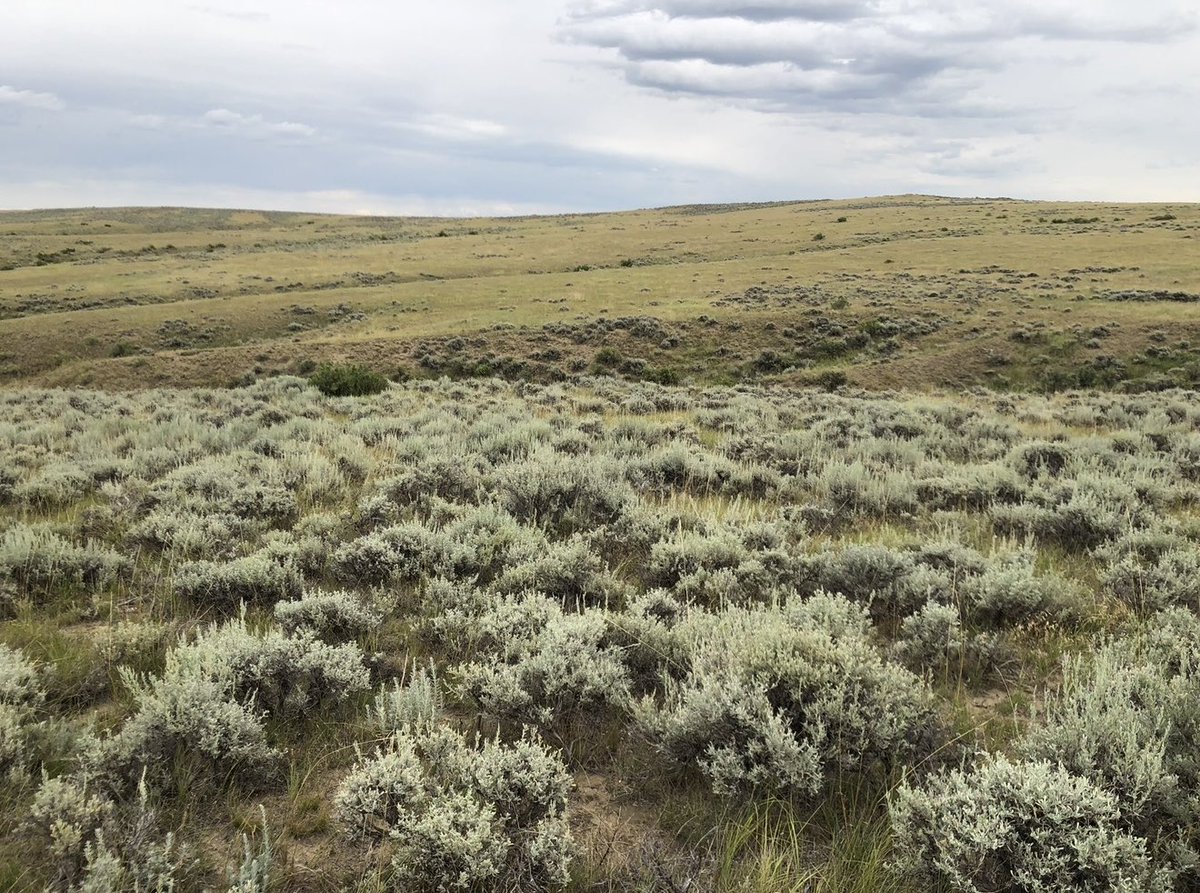
Native undisturbed landscape north of Midwest, north-central Wyoming. Mining and oil & gas extraction pressures nearby but beautiful sagebrush/mixed grasslands today. Stable surface with minimal erosion. Gotta love wide-open Wyoming!
A Palestinian suicide bomber blows himself up in front of a Sbarro Restaurant in Jerusalem, Israel, killing 16 civilians, including a pregnant American tourist. Hamas claims responsibility.
🇺🇸 During World War II, American servicemen shipping out through San Francisco started a tradition at the Top of the Mark that still stands today.
A man would buy a bottle of whiskey, have a drink, then leave the rest behind the bar with a note for his unit. Anyone from the same unit who came through later could take a free shot.
The only rule: whoever finished the bottle had to buy the next one.
They called them Squadron Bottles.
Alongside the bottles sat a journal. Men left tributes, well wishes, and their names.
The custom continued through the Korean War. After the wars it slowly faded.
In 2009 a young Navy lieutenant named Mike Hall walked in, asked for the Squadron Bottle, and found none left. He bought a new one, started a fresh logbook, and brought the tradition back.
Today more than 100 Squadron Bottles sit on display at the Top of the Mark. The journals are still there too, filled with messages spanning generations.
Any service member or veteran with an ID can still walk in and take a shot from one.
Today's Photo Challenge: SUNRISE/SUNSET
Quote it or Share it 👇
Sorry for the late start—I’m still in the hospital, so today will be much like yesterday. I’ll do my best to reply to comments.
The Dirty Little Secret of Wildfire
How America Traded Logging Jobs for a Perpetual Firefighting Economy
For much of the 20th century, the forests of the Pacific Northwest were managed as working landscapes. Private timber companies and federal land managers cut, planted, thinned, and tended the land with the understanding that the trees were an asset to be sustained across generations. Clearcuts functioned as firebreaks. Small crews routinely extinguished ignitions before they became news. The result was a regional economy built on living-wage jobs, steady tax revenue for schools and public safety, and forests that, for the most part, stayed green.
Occasional fires occurred. What did not occur were the annual, multi-hundred-thousand-acre, smoke-choked seasons that have become the new normal.
That changed in the late 1980s and early 1990s. The northern spotted owl was elevated into the most consequential bird in modern American policy. Scientists and environmental organizations argued that the species required large tracts of old-growth habitat. Petitions, lawsuits, and court orders followed. In June 1990 the U.S. Fish and Wildlife Service listed the owl as threatened. Federal Judge William Dwyer’s rulings and the 1994 Northwest Forest Plan locked up roughly 24 million acres of federal forest across Oregon, Washington, and northern California.
Federal timber harvests collapsed—often by 80 to 90 percent from 1980s levels in the key regions. Mills closed by the dozens. Supporting businesses disappeared. Unemployment surged. Some communities never fully recovered. Private industrial landowners continued managing their own ground because they still had direct financial skin in the game. Federal and state lands largely stopped being managed for timber production or for systematic fuel reduction at anything approaching the previous scale.
The forests kept growing. Fuels kept accumulating. An ignition that once would have been contained by a small crew with shovels and a radio now found denser, more continuous fuel beds. Large fires (5,000 acres and up) went from relatively rare events in the 1970s to routine occurrences in the 2000s and 2010s. In multiple recent seasons, more timber has burned than the industry harvested in its heyday. The irony is difficult to miss: forests “saved” from chainsaws have been delivered to ash in far greater volume.
Meanwhile, the northern spotted owl’s population has continued to decline across much of its range. Logging was never the primary driver. Competition from the invasive barred owl has proven far more significant, and habitat loss from high-severity fire now ranks high among the threats. The original crisis was urgent enough to trigger listing and sweeping land-use restrictions. The promised recovery under the Northwest Forest Plan has been, at best, incomplete.
The economic and ecological bill arrived in the form of unmanaged fuels and repeated megafires. And that is where the dirty little secret begins.
Once the timber economy on public land was kneecapped, a new industry rose to replace it. Wildland firefighting—suppression, logistics, aviation, camps, contracts, and the supporting apparatus—became a multi-billion-dollar annual enterprise. Agencies and contractors employ thousands. Budgets are large and sticky. In government, “use it or lose it” is not a slogan; it is an operating principle. A quiet fire season is a budgeting risk. Early, aggressive attack on every ignition that could still be handled by a small crew is expensive in the short term and reduces the later need for the full apparatus. Allowing fires to grow until they justify emergency declarations, large incident management teams, and federal cost-share arrangements is, from a certain bureaucratic perspective, rational and financially advantageous.
Local structural firefighters and many ground-level wildland crews do not share this incentive structure. They want the fire out. Once a fire reaches a certain size or complexity, however, control shifts upward to state and federal incident management teams whose metrics, funding streams, and political realities are different.
Neither major political party has shown a strong appetite for fixing the underlying problem. One side treats any expansion of active management or commercial thinning as an assault on old growth and the owl. The other side speaks frequently about forest health but rarely forces the structural changes in litigation risk, planning timelines, and budget incentives that would actually move the needle at scale. Campaign contributions and jobs flow from the existing system. Admitting that the original policy overcorrected and produced a more dangerous landscape remains politically costly.
Climate change and longer fire seasons are real factors. Drier fuels and hotter summers make everything worse. But denser, less-managed forests on the public estate are the accelerant that policy deliberately chose. Private industrial lands are managed more intensively and still burn, yet the severity is generally lower. Young plantations and certain silvicultural choices create their own risks, but private owners retain a direct financial reason to keep fuels in check and respond quickly. Public lands under the post-owl regime largely do not.
Oregon and the broader region now hold more trees than they did in the 1920s, largely because private landowners continued to replant. They also experience more catastrophic fire. The government did not “save” the forest. It changed who controlled the management decisions and, in the process, swapped a productive industry for a perpetual emergency-response industry. The owl was the symbol. The lasting result is a landscape that burns bigger, rural economies that never fully healed, and a political class with limited incentive to alter the arrangement. Instead of market-driven capital allocation, the new system runs on taxpayer subsidies.
Households and businesses understand that money spent inefficiently is money gone. Government tends to treat the same dollars as an everlasting well. Until the incentives change—until early detection, aggressive initial attack, mechanical thinning where appropriate, and genuine long-term forest management are rewarded more than the sheer size of the suppression effort—the same pattern will continue every summer: more smoke, more lost timber, more money spent, and the same speeches about how hard everyone is fighting the fires that policy helped create.
This is what the hieroglyphs and figures inside ancient Egyptian temples looked like when their original colors were still vivid.
This is a modern reconstruction of the Temple of Dendur’s original colors, projected onto the monument with light at the Metropolitan Museum of Art in New York City.
The Met’s experimental “Color the Temple” project digitally restored one of the temple’s carved scenes to show how richly decorated ancient Egyptian temples may have looked. Researchers studied historical records, comparable temples, and surviving ancient objects with traces of pigment before selecting shades of red, yellow, blue, green, black, and white. The colors were then carefully mapped onto the carvings without altering the stone itself.
The illuminated scene shows the Roman emperor Augustus dressed and posed as an Egyptian pharaoh, presenting offerings to Egyptian deities. Although Rome controlled Egypt when the temple was built, its rulers adopted traditional Egyptian imagery to portray themselves as legitimate pharaohs.
The Temple of Dendur was built in Nubia around the first century BCE and was dedicated primarily to the goddess Isis and the deified brothers Pedesi and Pihor. Much of its original pigment was lost after the temple’s location was repeatedly flooded during the 20th century.
Egypt later gave the temple to the United States in recognition of American assistance in saving ancient monuments threatened by the construction of the Aswan High Dam. The temple was dismantled, transported to New York, and opened to the public at the Met in 1978.