☎️ It’s the last day of @money2020, and you still have a chance to come by our booth and chat with our Voice AI agent.
Call in about a missing card or a charge you don’t recognise, or have the agent call you about an incomplete application or overdue payment.
Here all day at booth 6041.
We’re excited to share that our customer, LHV Bank, is officially live with their AI agent.
Plenty of banks start with AI that drafts replies for staff to approve. LHV chose to go further, so their customers now get an immediate answer by email, at any hour.
As Kris Brewster, Interim CEO, puts it: "We wanted to give customers an answer straight away, while keeping our people firmly in control of how the service works."
Read more at the link in the thread.
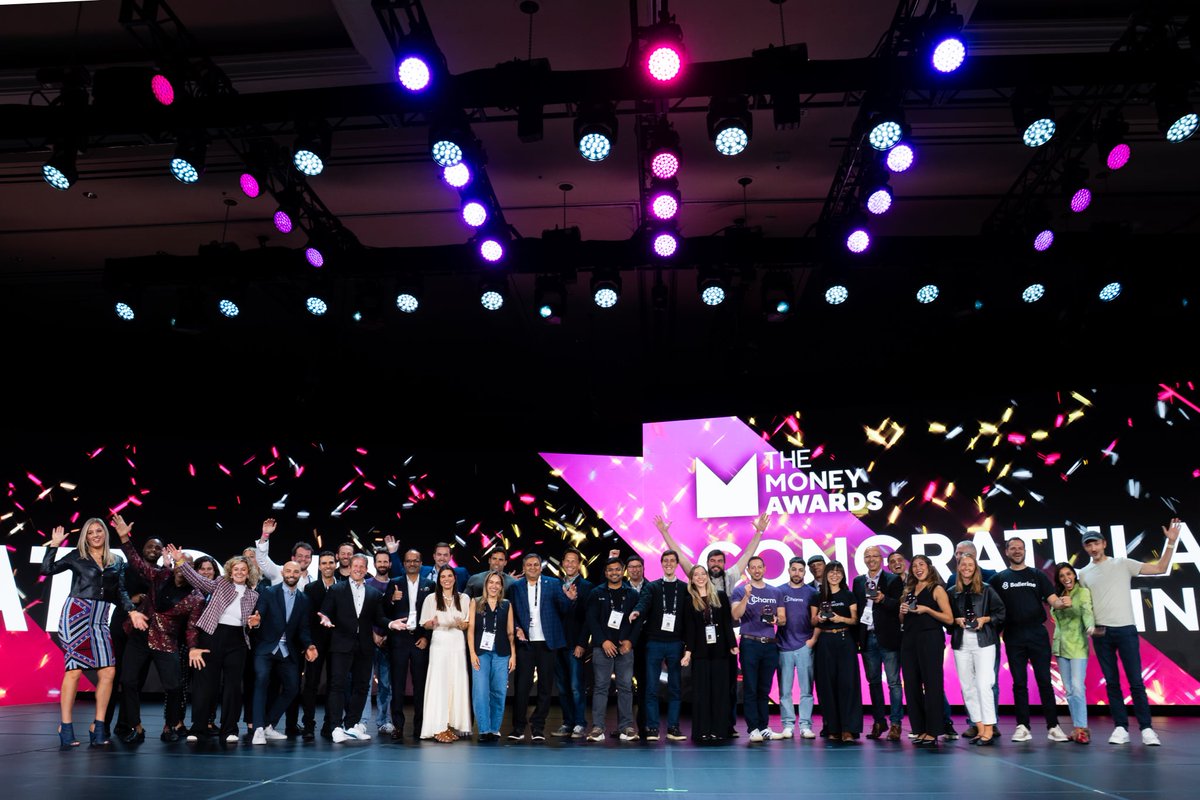
What a weekend. Thrilled to share that we won Bronze at this year’s @money2020 Money Awards. 🏆
We won in the Banking category, in the AI & Automation sub-category, for our AI agents that handle frontline customer support for banks and fintechs. The agents pass context through to back-office systems and resolve cases such as disputes, KYC, and KYB autonomously.
Banking entries had to demonstrate 12 months of sustained impact, and the judging panel included the Chief Product Officer of U.S. Bank and the CTO of ING. There were 28 winners in total.
Congratulations to our fellow prize holders: DriveWealth, True Link, Omnisient, JazzCash, HTS, Oscilar, and Sardine. And to our own team, and to the customers who make the numbers real.
Read more at the link in the thread.
We’ve built a 7-foot-tall London phone box on the floor at @money2020, where you can speak to our AI voice agent OR have it call you. Some scenarios we’ll have at booth 6041 include:
➡️ Our agent will call you about an overdue payment, a suspicious payment, or an incomplete application.
⬅️ You can call our agent about an unrecognised charge or a missing card.
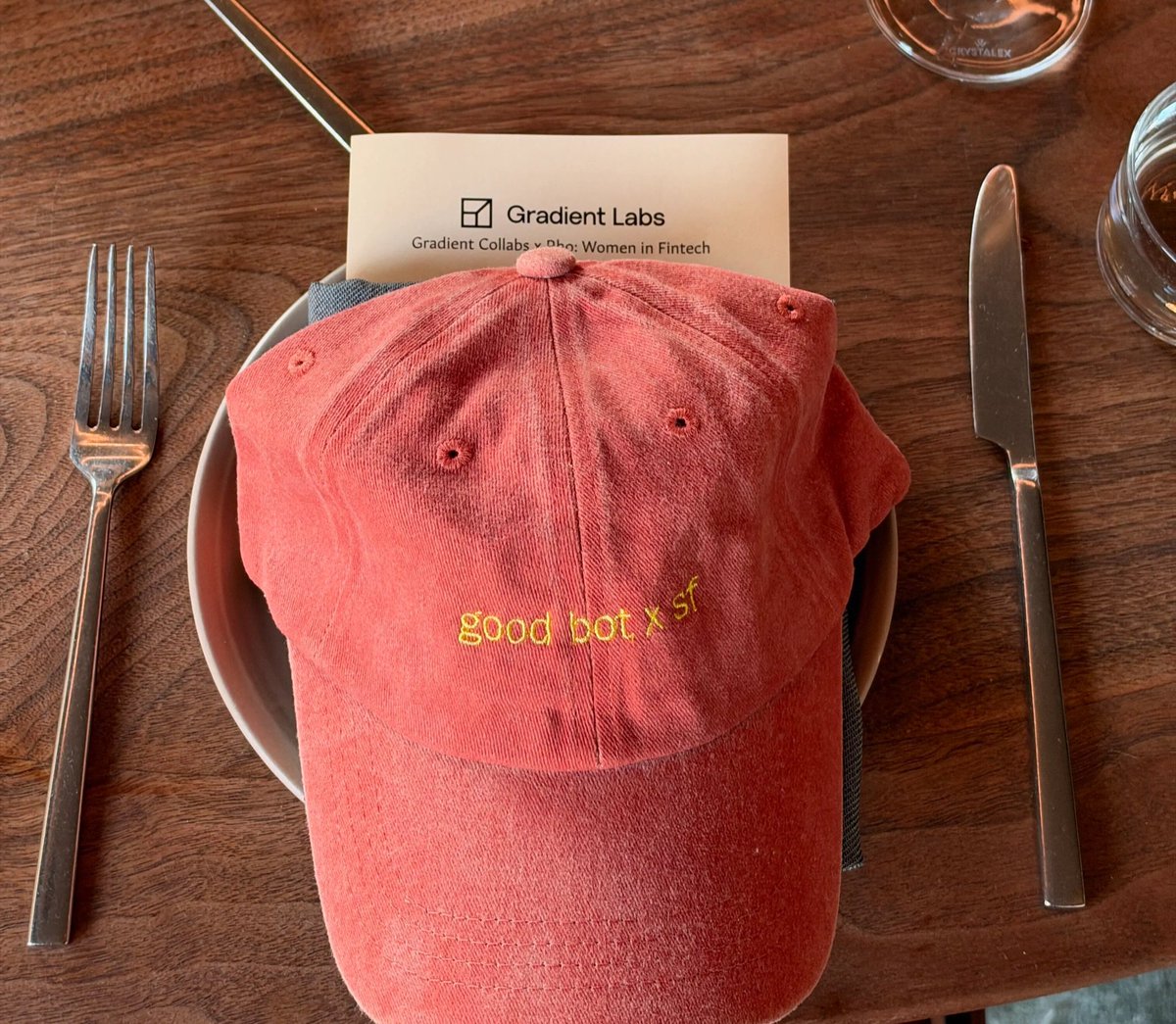
If you don’t have time to step inside, you can swing by our TV to watch the agent conversations that are happening live. We also have enamel pins for your good bot hat. ☎️
Our team is en route to @money2020, where Gradient Labs has been named a finalist for The Money Awards in Banking: AI & Automation.
We’re finalists for our AI agents that handle frontline customer support for banks and fintechs. They pass context through to back-office systems, allowing autonomous resolution on cases such as disputes, KYC, KYB, and more.
Winners are announced tomorrow evening in Vegas, and we’ll be in the room. 🤞
AI adoption isn’t accelerating at the same rate as AI capability, and the reason is organisational.
Scaling AI agents requires collaboration across teams: take disputes, KYC, or collections, for example. For the same AI agent to work across these use cases, there need to be internal safeguards in place that empower individuals to contribute to updates and changes without risking the quality of the agent.
With Collaborate, operations, product, and compliance teams can make changes to the agent in their own tools, but one change process is shared across the organisation.
That means accountability and a record, a vetting process against real use cases, and an agent that can evolve fast because approvals don’t get stuck in backlog.
Learn more at the link in the thread.
We’re proud to be no. 30 on @Siftedeu's ranking of the top 100 most promising AI-native startups in Europe.
Vertical AI applications make up more than half of this year’s list, and funding for this group is up 39%. That’s the bet we made from the start: AI agents built to specialise in one industry. And we’re seeing that bet pay off in our work with customers around the globe.
Congratulations to everyone listed.
#SiftedAI100
We’re teaming up with Sinch, the communications infrastructure you can bank on, for an evening on where voice AI agents in financial services go next.
We’ll be having drinks and canapés at the Waldorf Astoria, just after sessions wrap on day 1 of Money20/20. 🥂
You'll be joined by speakers, senior leaders in banking and fintech, and Gradient Labs CEO @dimitrimasin. This event is invite-only, so if you'll be in Vegas, DM us for a spot.
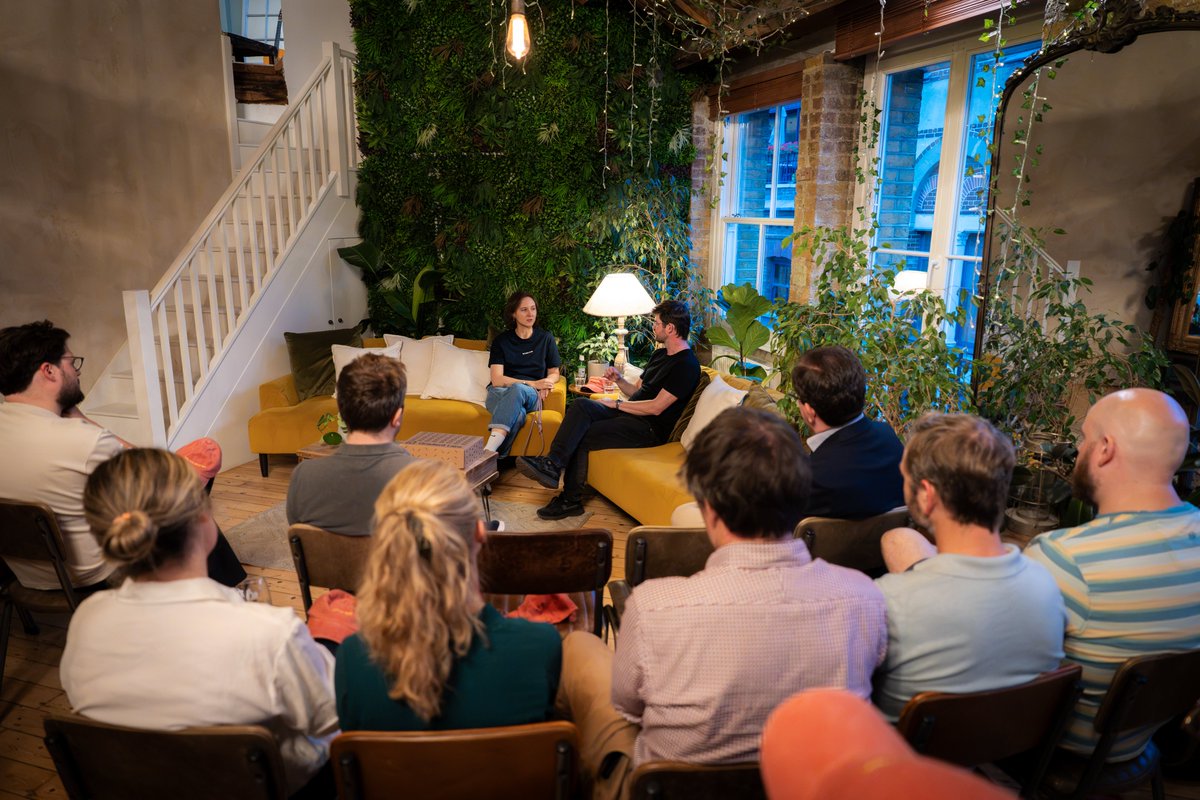
We’re still buzzing from our London meetup with @yondercard, where Antony Atkins, Senior Escalations Manager, talked about how his team launched our AI disputes agent and made their disputes cycle 150% faster.
His key insights?
🧱 A safe rollout is a team sport. Ops, risk, and engineering had to agree what "good" looked like before anything went near a customer.
🧠 The mindset change is harder than the technology. Teams move from clearing a queue to supervising the work, and that takes time.
🤝 Start with the process you already know is broken, not the one that's easiest to automate. That’s where you can see enormous wins.
Great conversation + great food = an evening we’re still thinking about. ✨
Your finalists for the Money20/20 Awards in the Banking: AI & Automation category are headed to Vegas. 🚀 You'll find us at @money2020 at booth 6041, where we’ll have a genuine, 7ft tall London phone box. ☎️
Pick up the receiver and you can talk to our AI voice agent live OR have that same agent call you. 🤭 What’s your preference?
Our CEO @dimitrimasin will be on site, along with Emma, Zan, Mark, and Ashley from the team. If you'll be in Vegas October 18-21, let us know and come say hi.
We surveyed 3,000 people across four generations to find out more about how they use and think about AI.
When it comes to customer support, 51% of people we surveyed say they'd rather wait a day for a human than get an instant fix from an AI agent.
But, ⚠️ only 30% had actually had an AI agent handle a support case in the past year, and when they did, 87% saw it resolved, most of them fully.
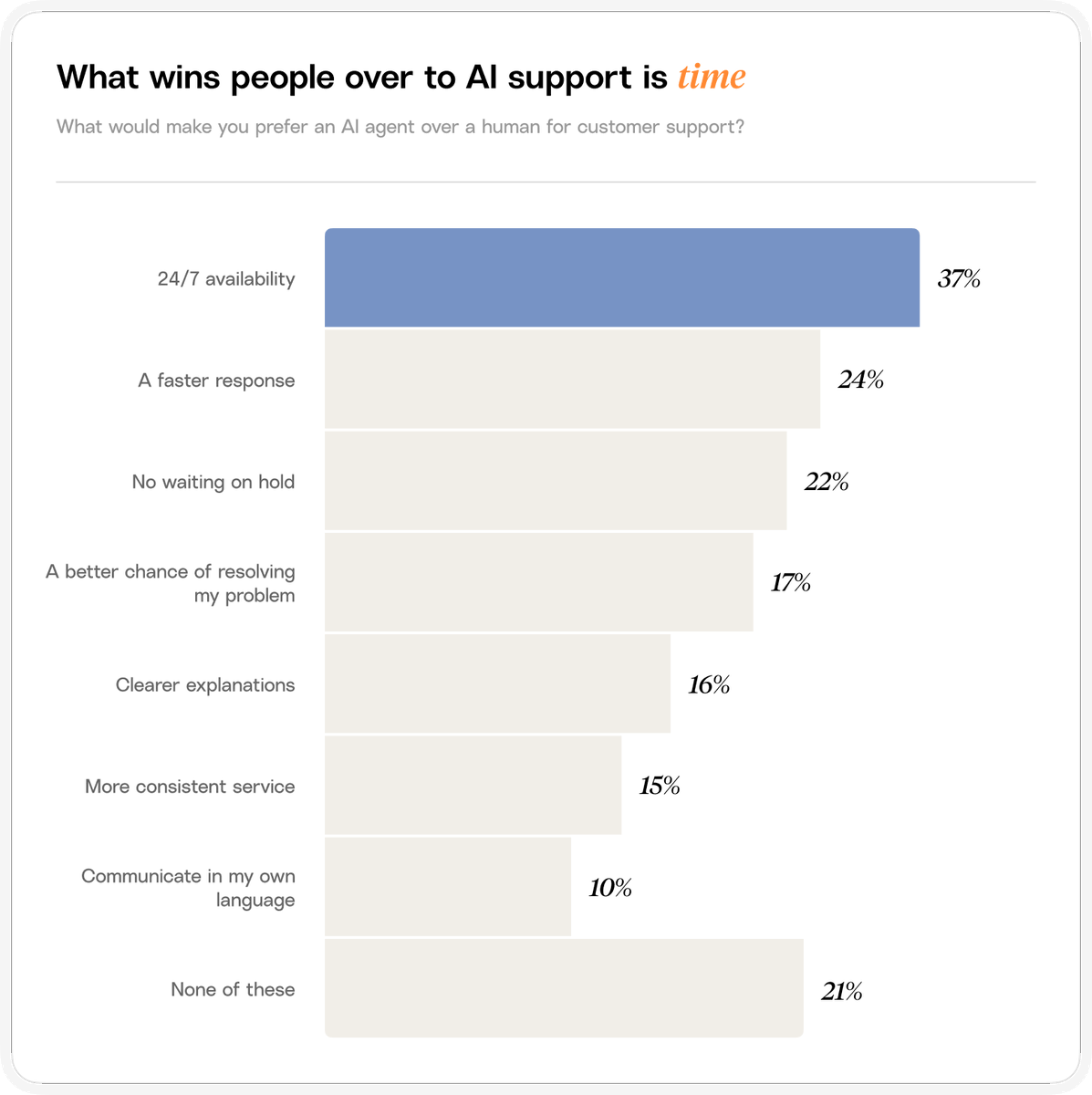
That hesitation tracks with a separate finding: 37% of people told us they don't know enough about AI agents to feel confident in them. The reasons people do come round to AI aren't complicated: 24/7 availability, faster responses, skipping hold times or a queue.
💡 People aren't rejecting AI support. They're unsure it can actually solve their problem, and the data says that once it does, most of them come away satisfied.
Link in the thread.
Last week in SF, Francine Loza, our Head of Product, joined Stas Johnson-Chyzhykov, COO of @rhobusiness, on stage at Fintech Is Femme to discuss what it takes to build an AI-native operating model in a company that has no room for error.
Our highlights:
The job has changed from planning to unblocking, because engineering used to be the constraint and now it's judgment.
Trust comes from narrow scope and a human in the loop. Both Stas and Francine agreed that the best path forward is to isolate exactly what the AI is allowed to decide, wrap it in guardrails, and keep a person reviewing the output, especially where regulation gives no room for error.
Teams have noticed that collaboration tends to happen more frequently, and live. When a builder hits a wall, they pull in whoever has the missing context right there and then.
And the evening before, we hosted an intimate dinner for female fintech executives in SF. The community here is incredible, and we look forward to creating more spaces for women leaders to connect and learn from one another.
Thank you to @nicolecasperson and Fintech Is Femme team for having us, and to everyone who stopped by the panel, the dinner, or just said hello this week. San Francisco, we'll see you again soon. 🥂
ICYMI: in a recent post for Weekly Fintech Digest, @linasbeliunas named two reasons banks struggle with AI over time. 💡
First, generic agents can't do the actual work that bogs down customer support and operations teams. These agents plateau around 65% ticket deflection because they can't sustain a case across systems over days.
The second problem is operational. Teams need to run AI agent workflows safely across departments, with approvals and testing built in, and most providers don't offer that infrastructure.
➡️ Linas pointed to our work with @yondercard a UK credit card provider, as proof that it’s possible to solve both challenges. 👀
Yonder runs our Disputes Agent end to end. Case context carries across the full dispute, and every decision still gets reviewed before it goes out. Their team cut dispute resolution from 5-7 days to 2-3. First-contact evidence rates went from under 25% to 80% and CSAT hit 90%.
Long-lasting ROI is possible when the agents are specialised to handle real work, and teams move faster together when the product they’re using has been designed for how human teams actually operate. 🦾
Most banks have bought an AI co-pilot by now, and most aren’t seeing the ROI. The dispute, the KYC review, and the complaint all land back with a human, which is exactly where the cost and the upside sit with automation.
At CX BFSI Exchange East in Miami, 13–14 October, our CEO @dimitrimasin will take the mainstage to talk about what changes when the agent runs the whole case instead of assisting on it.
Drawing on live deployments at Wise, Yonder, Zego and SteadyPay:
💳 Disputes that took weeks now closing in a day
📈 CSAT above human teams
🔍 The controls and auditability that satisfy compliance and risk
We'll be running 1:1 meetings across both days too, so come and say hello. 🌴