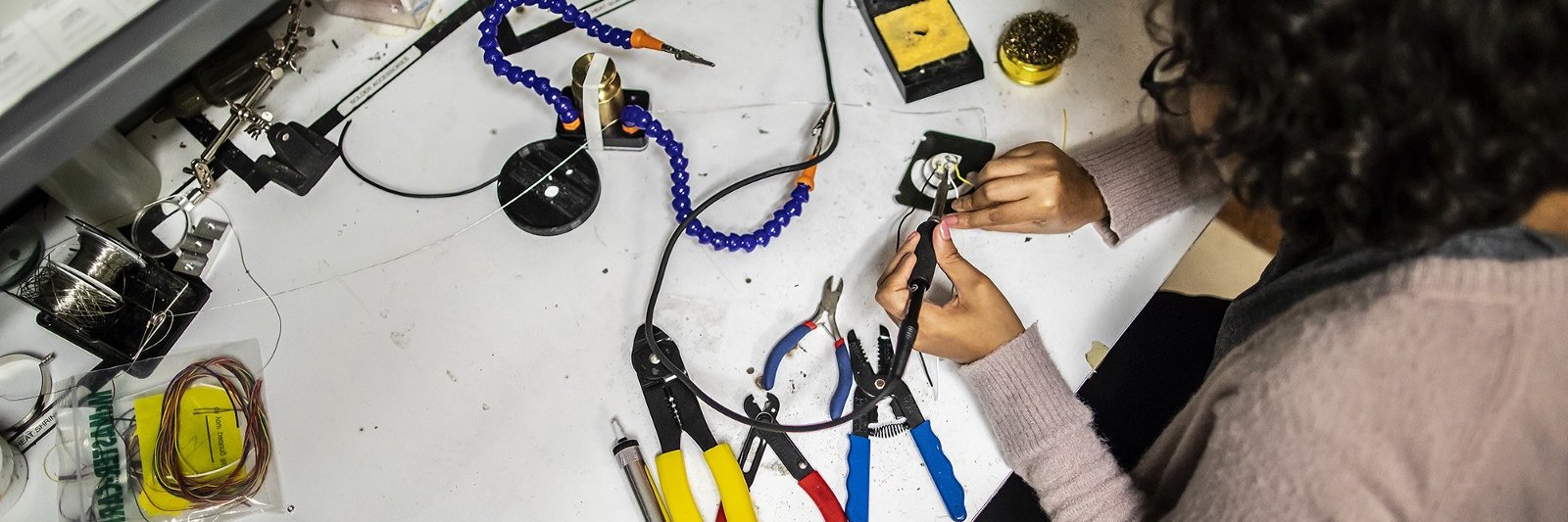
CONGRATULATIONS to GRASP's own Dr. Mark Yim on receiving the IEEE Transactions on Robotics Distinguished Service Award!!!
#GRASP#GRASPLab#IEEEAward#ICRA2026
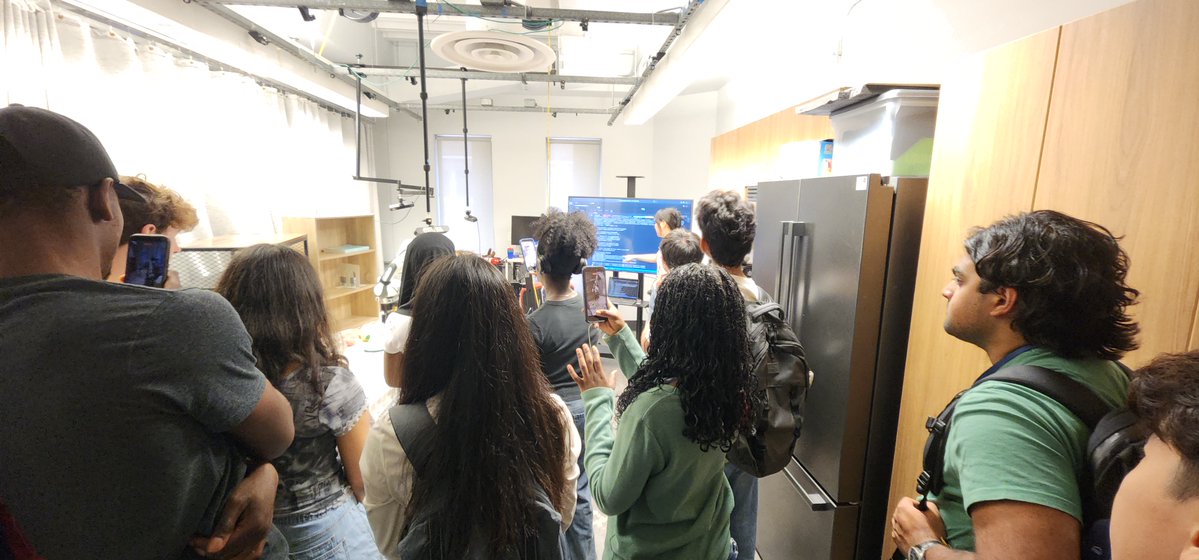
We hope the students from the Glassman Penn Scholars and Penn Engineering High School Internship programs had a wonderful time touring the GRASP Lab and seeing the amazing work from our students!
#GRASP#GRASPLab#GRASPTour#HIP#GPS
GRASP's Sung Robotics and ScalAR Lab have been working on SALP, an underwater robot inspired by ocean invertebrates of the same name.
Paper Link: https://t.co/2BbZVmcWbX
Video: https://t.co/kz9SfHYqhl
#GRASP#GRASPLab#SungRobotics
We hope everyone had a wonderful time at the GRASP Reunion at ICRA 2026 in Vienna!
Hope to see you all again at the next GRASP Reunion!!!
#GRASP#GRASPLab#GRASPReunion#ICRA2026
GRASP's Figueroa Lab is developing the VPP-TC Viability-Preserving Passive Torque Control. This framework ensures the robot remains safe and can avoid collisions effectively.
Website: https://t.co/q53UEA2XsD
Video: https://t.co/ImhBNNxPo1
#GRASP#GRASPLab#FigueroaLab
RoboGuard is a general-purpose guardrail for large language model-enabled robots being developed by GRASP's Kumar Lab.
Website: https://t.co/Nfj7OYhX5W
Video: https://t.co/K1n7H2Zy8L
#GRASP#GRASPLab#KumarLab
VLMgineer is a framework that combines vision-language models with evolutionary search that outperforms existing human-crafted tools. Project of GRASP's Figueroa Lab and the Perception, Action, and Learning group.
Link: https://t.co/7POz3LNRLc
#GRASP#GRASPLab#PAL#FigueroaLab
Bones and tissue can heal, so why not robots? GRASP's Miskin Lab, a nanorobotics lab, is researching a material that can self-heal when stimulated by electricity.
Read more:
https://t.co/U7cb4KxACy
#GRASP#GRASPLab#Nanorobotics
GRASP's Kumar Lab created RT-Guide, a framework that actively maps areas using a Gaussian splatting method for real-time navigation.
Link: https://t.co/UYOlF1Rouf
Video: https://t.co/K4HE60TsJs
#GRASP#GRASPLab#KumarLab
GRASP's Perception, Action, and Learning (PennPAL) group is working on Eureka, an LLM-powered algorithm that acquires complex skills through reinforcement learning!
Link: https://t.co/FeURqQVi96
#GRASP#GRASPLab#PAL
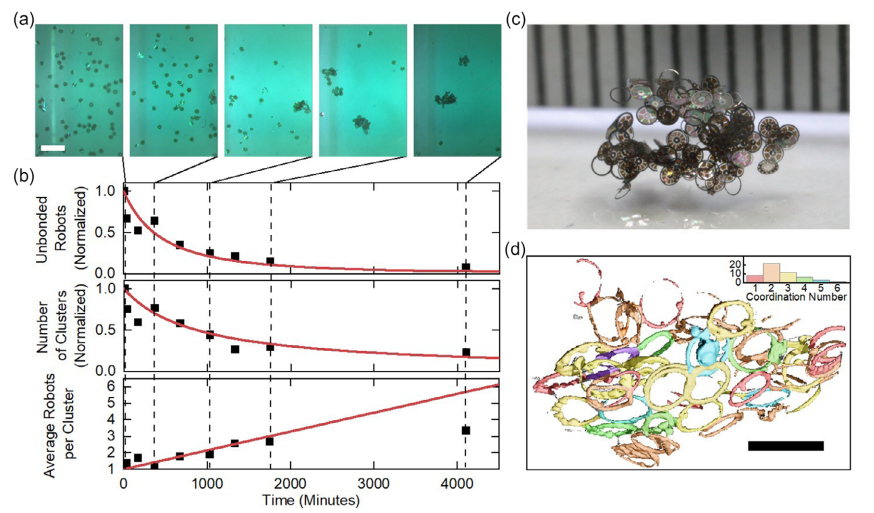
Check out Miskin Lab's research article on "Microscopic robots that sense, think, act, and compute", led by GRASP faculty member Prof. Marc Miskin!
Article Link:
https://t.co/xuQLHhtN9p
#GRASP#GRASPLab
As part of The Sugi and Millie Widjaja Entrepreneurship Fellows Program at Penn Engineering, Arianna Alonso Bizzi (GEng’26) is exploring how brain–computer interfaces (BCIs) can reconnect the brain with the outside world.
Last summer, Alonso Bizzi interned at @BlackrockNeuro_, a Utah-based leader in brain–computer interface (BCI) technology that is already helping people living with paralysis restore movement and communication. There, she developed systems to analyze the electrodes used to record neural activity and improve how these components are tested at scale.
"Thinking like an engineering entrepreneur means starting simple and then relentlessly improving,” she says.
#TechEntrepreneurship #InnovationLeadership
https://t.co/bdMkMGnGCl
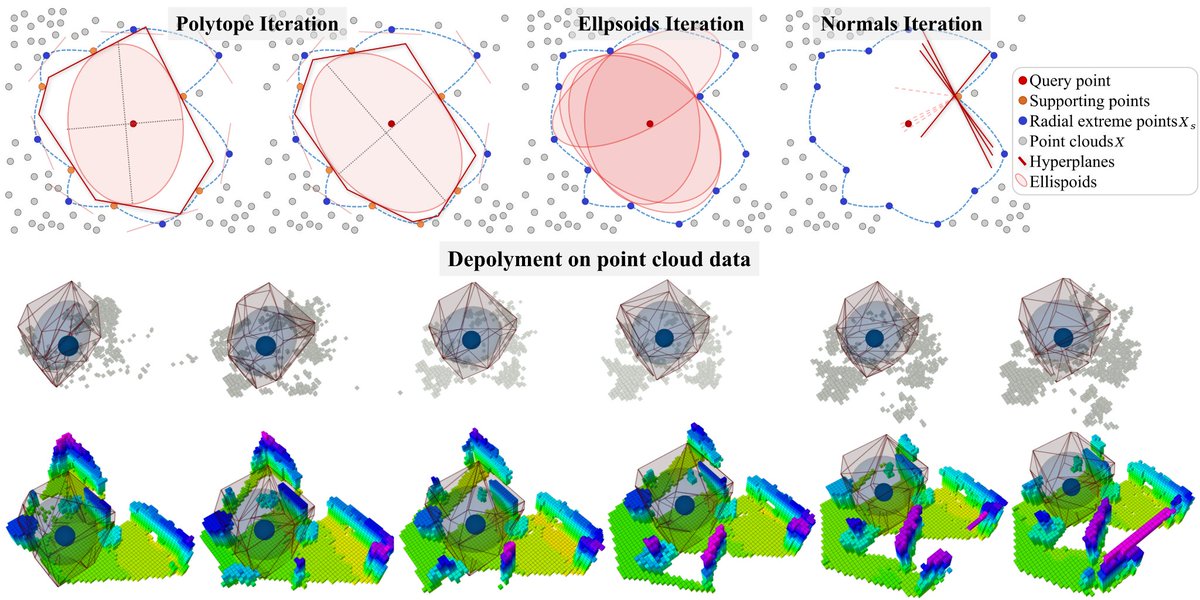
On Monday, GRASP Lab members will be presenting their STAR-Filter paper at WAFR 2026. Read the GRASP Blog Post by co-author Yuwei Wu for more information on the publication!
https://t.co/1TQykPTxZt
#GRASP#GRASPLab#WAFR2026
GRASP's Figueroa Lab has created Flow with the Force Field, a framework that generates data from a single human demonstration that can be transferred to real-life robotic tasks.
More info: https://t.co/gAArKhigKj
Video: https://t.co/dljLwNDh0N
#GRASP#GRASPLab#FigueroaLab
GRASP's Modlab is developing a steerable needle that can be steered both manually and autonomously, injecting medication directly into the affected tissue. See the link below for more info!
https://t.co/jMsynQA1gU
#GRASP#GRASPLab#Modlab#SteerableNeedle
😋From WAM to WPAM: World-Action Models should NOT stop at pixels!
We release PointAction, lifting World Models from RGB to RGB+XYZ and using dynamic pointmaps as universal action representations for robot control.
Page: https://t.co/dDItqZwYfm
Paper: https://t.co/EB6BXbiqvm
🧐Q: Why not pixels only?
Pixels tell us what changes, but not always how a robot should move in 3D. Learning this mapping from RGB alone often requires massive paired action data, while raw motor commands are embodiment-specific and less transferable across robots.
Our intuition: World-Action Models should model the physical world in the same space where actions take effect — and that space is 3D.
Instead of predicting raw motor commands directly from video, PointAction uses 3D point dynamics as a richer and more robust bridge 🌉:
- they make metric motion, spatial constraints, and contact-relevant geometry explicit;
- they are less tied to a specific robot’s motors;
- they can be extracted from much broader robot video data.
PointAction first learns a general diffusion-based 4D world-action backbone in RGB+XYZ space, predicting robot-centric 3D point dynamics, then decodes them into embodiment-specific controls with lightweight action heads.
---
This project is led by @TongMutianTMT (incoming PhD student at @PennCIS@GRASPlab), and @hanjiang00 (talented undergrad who visited my lab last year). Huge congrats to all coauthors @WindStyle1459 and @LingjieLiu1! 🎉
ICRA isn't the only conference GRASP is attending this week. We are also at CVPR 2026!!!
Read this article to see what the GRASP Lab is up to at CVPR!
https://t.co/WvLsHqyvf3
#GRASP#GRASPLab#CVPR2026
CONGRATULATIONS to our GRASP Lab members on receiving BOTH the ICRA 2026 Best Paper Award on Planning and Control AND the Best Conference Paper Award!!!
#GRASP#GRASPLab#ICRA2026#BestPaper
Tomorrow afternoon, GRASP Lab members will be presenting Symskill at ICRA 2026 as a finalist for the Best Paper Award on Planning and Control! https://t.co/tl26CJjJCA
#GRASP#GRASPLab#BestPaperAward#ICRA2026