💀 En France, même mourir est devenu un fait générateur d’impôt.
📈 Les droits de succession ont rapporté 7 milliards en 2011.
En 2023, 16,6 milliards. Source Cour des comptes.
Le double en douze ans. Et personne n’a voté ça.
🧊 Le truc, c’est que l’abattement par enfant est gelé à 100 000 euros depuis 2012.
En 2011 il était à 159 325. On ne l’a jamais touché. Pendant ce temps, l’immobilier a explosé.
Résultat : votre pavillon de banlieue acheté une bouchée de pain en 1990 fait aujourd’hui passer vos gosses dans les tranches hautes du barème.
L’État n’a rien décidé. Il a juste laissé l’inflation faire le sale boulot à sa place.
🎯 Et le barème, parlons-en.
Jusqu’à 45% en ligne directe.
55% pour un neveu.
60% si vous léguez à quelqu’un sans lien de sang.
Vous avez bien lu : six dixièmes pour l’État sur ce que vous laissez à un proche qui n’est pas de la famille au sens fiscal.
🌍 La cerise : selon l’OCDE, la France taxe la mort à 0,74% de son PIB.
L’Allemagne, 0,18%. Les États-Unis, 0,08%.
On est champions du monde de l’impôt sur le cercueil.
💸 Et le plus beau dans l’histoire. Ce patrimoine, vous l’avez déjà payé.
Salaire taxé, épargne taxée, plus-value taxée, taxe foncière chaque année. Vous avez tout réglé de votre vivant. L’État repasse une dernière fois à la caisse pendant qu’on referme la boîte.
⚰️ On vous prend une vie pour cotiser, et une mort pour solder.
🤔 Sérieusement : à quel moment transmettre à ses enfants ce qu’on a bâti en payant ses impôts est-il devenu un privilège à punir ?
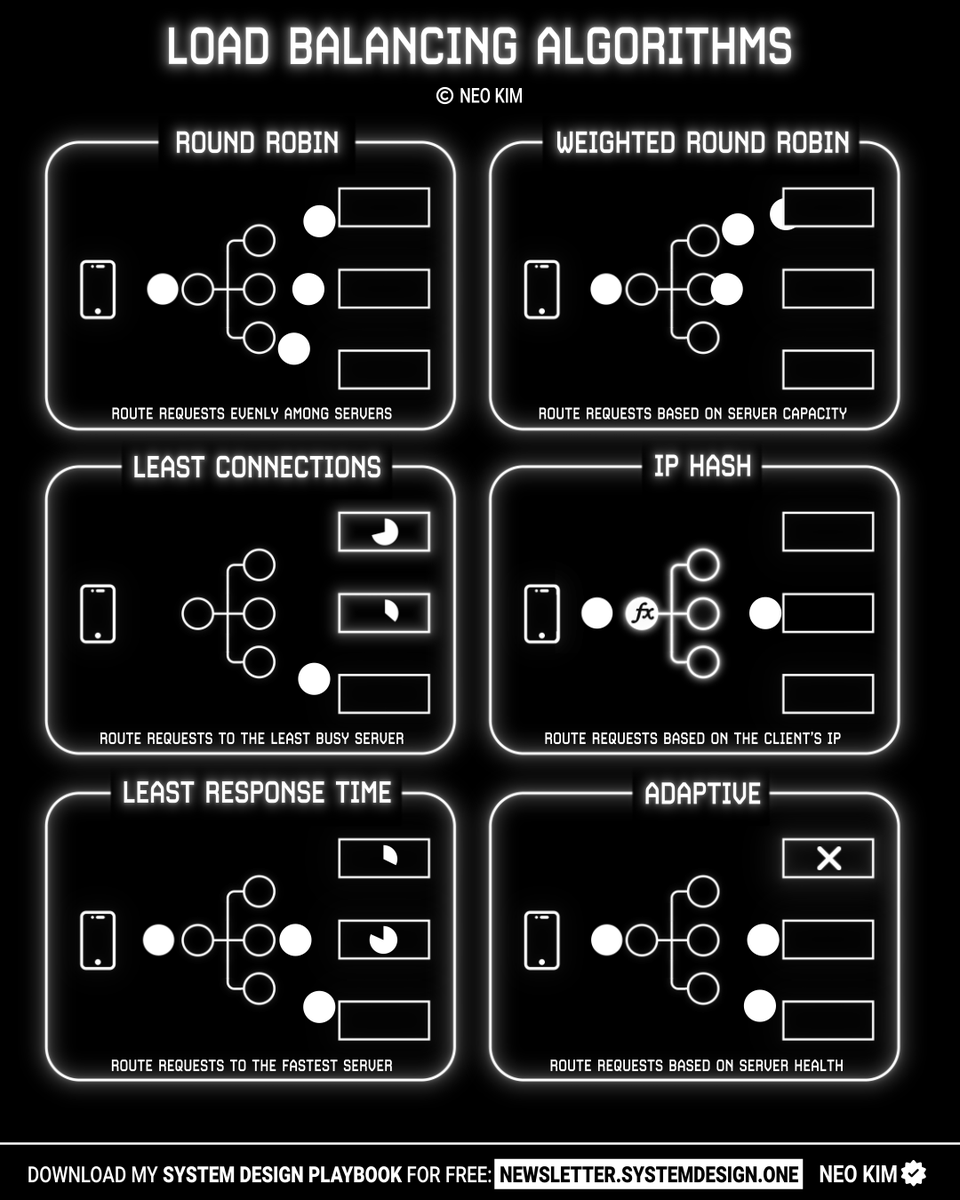
Top 6 load balancing algorithms for software engineers
(explained in 2 mins or less):
1 Round robin:
↳ Load balancer forwards the request to the servers in a sequential order
2 Weighted round robin:
↳ Load balancer forwards the request based on server capacity
3 Least connections:
↳ Load balancer forwards the request to the server with the fewest connections
4 IP hash:
↳ Load balancer forwards the request based on client's IP address
5 Least response time:
↳ Load balancer forwards the request to the fastest responding server
6 Adaptive:
↳ Load balancer forwards the request based on server health
What else should make this list?
Study calculus.
not because exams exist.
because reality moves.
• derivatives → how things change
• integrals → how change accumulates
• limits → what happens at the edge
• gradients → where systems want to go
• differential equations → how nature evolves
motion, heat, fluids, control, optimization, robotics, ML.
all of it speaks calculus.
without it, you see outputs.
with it, you see dynamics.
Docker Networking Types Explained 🧵
Understanding Docker networking is important for DevOps interviews because it determines how containers communicate with each other and the outside world.
1️⃣ Bridge Network (Default)
What it is:
When you start a container without specifying a network, Docker attaches it to the bridge network.
How it works:
• Docker creates a virtual bridge called docker0
• Each container gets a private IP
• Containers on the same bridge can communicate with each other
• External traffic reaches containers through port mapping
Example:
docker run -d -p 80:80 nginx
Use when:
• Running standalone applications
• Local development
• Single-host deployments
----------------------------------------------
2️⃣ Host Network
What it is:
The container shares the host machine's network stack.
How it works:
• No separate container IP
• No NAT
• No port mapping required
• Container uses host ports directly
Example:
docker run --network host nginx
Use when:
• Maximum network performance is required
• Monitoring agents
• Logging agents
Interview Tip:
Host networking is faster because packets don't go through Docker's virtual networking layer.
--------------------------------------
3️⃣ None Network
What it is:
Container gets no network connectivity.
How it works:
• No IP address assigned
• No internet access
• No communication with other containers
Example:
docker run --network none nginx
Use when:
• High-security workloads
• Batch processing jobs
• Isolated testing
-----------------------------------------
4️⃣ Overlay Network
What it is:
Allows containers running on different Docker hosts to communicate.
How it works:
• Creates a virtual network across multiple hosts
• Uses VXLAN tunneling
• Commonly used with Docker Swarm
Example:
docker network create -d overlay my-network
Use when:
• Multi-host container communication
• Docker Swarm clusters
• Distributed applications
-------------------------------------------
5️⃣ Macvlan Network
What it is:
Assigns a real IP address from the physical network to the container.
How it works:
• Container appears as a separate device on the network
• Bypasses Docker bridge networking
• Direct communication with physical devices
Use when:
• Legacy applications
• Network appliances
• Applications requiring direct Layer 2 access
Summary:
✅ Bridge → Default, most common
✅ Host → Best performance
✅ None → Complete isolation
✅ Overlay → Multi-host communication
✅ Macvlan → Real IP for containers
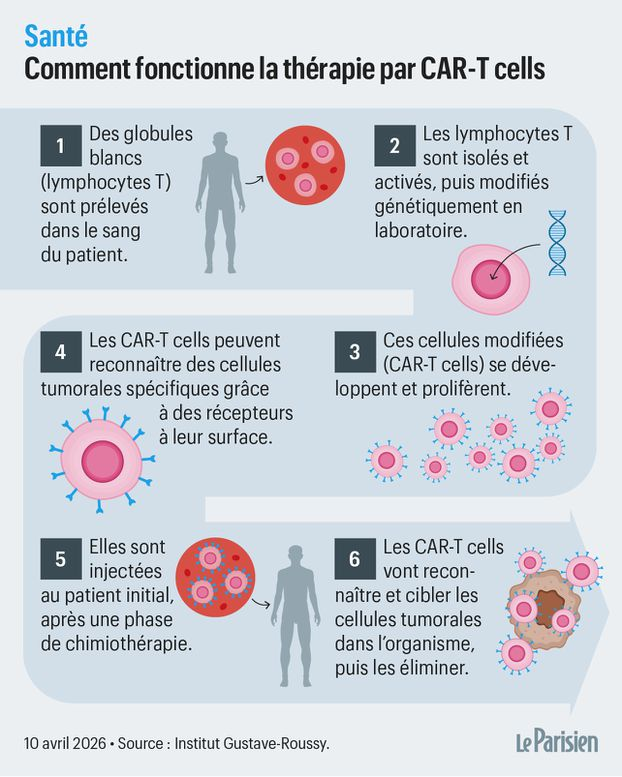
7 000 patients en France ont déjà reçu des CAR-T cells, sorte de cellules "tueuses de cancers" : "Même au stade d’une maladie réfractaire, on est désormais capable de guérir. Une révolution thérapeutique." ⤵️ @le_Parisien
(Et vive la science !)
1/10
https://t.co/ZRB4r88QVv
The NSA spent billions trying to break encryption.
One German programmer beat them.
He earned only $25k a year. 🤯
Meet Werner Koch 🇩🇪
> German free software developer. Born 1961 in Düsseldorf.
> 1997 ~ Richard Stallman called for a free encryption tool.
> Only option then: closed-source, US-restricted PGP.
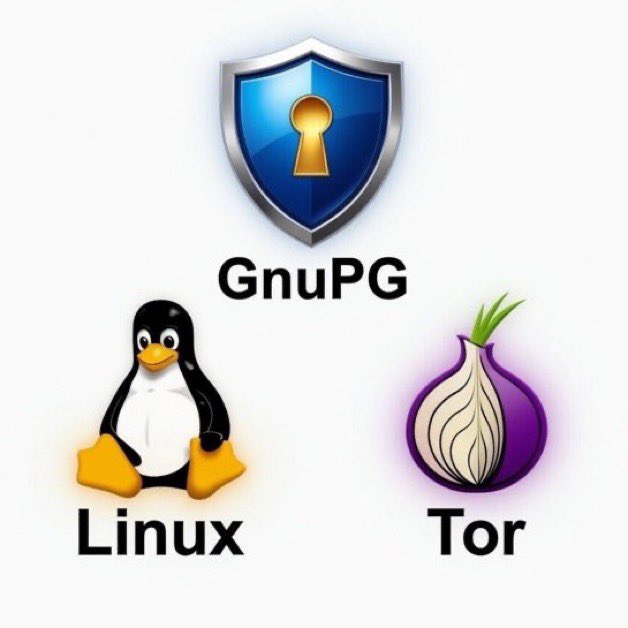
> Werner answered. He built GnuPG (GPG) alone ~ free software to encrypt files, sign software, and verify identity.
> 1999 ~ Released GPG 1.0. Fully open source. No restrictions.
> Today his code verifies every Linux server update, every Debian package, every Tor Browser download on this Earth.
> Every signed Linux release depends on it.
> Used by activists, dissidents, and security pros worldwide to stay untracked.
> Edward Snowden used GPG in 2013 to leak NSA documents. It held up against the world’s most powerful spy agency. 🚀
> 2001 ~ Founded g10code with his brother to work full-time on GPG.
> Earned only $25,000/year for 14 years while supporting his wife and daughter.
> 2012 ~ Funding ended. He had to let go of his only programmer.
> 2013 ~ He was the sole maintainer and nearly quit.
> 2015 ~ ProPublica story dropped. Internet donated $137k in 24 hours.
> Facebook + Stripe pledged $50k/year each. Linux Foundation gave $60k
> Won FSF Award for the Advancement of Free Software.
> Today he still maintains GPG from home in Erkrath, Germany.
This one man kept the internet’s secrets, secret.
The world almost lost him in 2013.
His code still protects yours.
Privacy Legend. 🐐
300 people now follow my hands-on Docker Roadmap 🚀
- Learn Docker by doing (no tutorial hell)
- Work on realistic scenarios
- Get daily portions of practical problems
- Reinforce hands-on approach with visuals
- Dive deeper when you feel like it
https://t.co/g4HCN5EpBg
RESTFUL PRINCIPLES IN API DESIGN
1. CLIENT-SERVER ARCHITECTURE
The client and server should be independent of each other.
→ Client handles the user interface and user interactions
→ Server manages business logic and data storage
→ Changes to the client should not require server modifications
→ Changes to the server should not affect the client interface
This separation improves scalability and maintainability.
2. STATELESS COMMUNICATION
Every request must contain all the information needed to process it.
→ Server does not store client session data between requests
→ Each request is treated independently
→ Authentication information is sent with every request
→ Easier to scale across multiple servers
Stateless APIs are simpler, faster, and more reliable.
3. RESOURCE-BASED DESIGN
Everything in a REST API is treated as a resource.
→ Users are resources → /users
→ Products are resources → /products
→ Orders are resources → /orders
→ Resources are identified using unique URLs
Resources should be represented using nouns rather than verbs.
4. UNIFORM INTERFACE
REST APIs should provide a consistent way of interacting with resources.
→ Use standard HTTP methods
→ GET → Retrieve data
→ POST → Create data
→ PUT → Replace data
→ PATCH → Update data partially
→ DELETE → Remove data
A uniform interface makes APIs predictable and easier to use.
5. REPRESENTATION OF RESOURCES
Resources are transferred between client and server using representations.
→ JSON is the most common format
→ XML can also be used when required
→ The client receives a representation, not the actual resource
Example:
→ Resource → User Record in Database
→ Representation → JSON Response
This decouples internal storage from external communication.
6. CACHEABILITY
Responses should indicate whether they can be cached.
→ Reduce unnecessary server requests
→ Improve application performance
→ Decrease latency for users
→ Lower server load
Caching is critical for high-traffic systems.
7. LAYERED SYSTEM
Clients should not need to know how the system is structured internally.
→ Requests may pass through proxies
→ Requests may pass through load balancers
→ Requests may pass through API gateways
→ Clients interact with the same API regardless
Layering improves security and scalability.
8. SELF-DESCRIPTIVE MESSAGES
Each request and response should clearly describe itself.
→ Include proper HTTP status codes
→ Include content type headers
→ Provide meaningful error messages
→ Document request and response formats
Developers should understand API behavior without guessing.
9. CODE ON DEMAND (OPTIONAL)
Servers may extend client functionality by sending executable code.
→ JavaScript can be delivered to web clients
→ Dynamic functionality can be added when necessary
→ Rarely used in modern REST APIs
This is the only optional REST constraint.
10. PROPER URL DESIGN
URLs should be clean, readable, and meaningful.
Good Examples:
→ /users
→ /users/123
→ /orders/456/items
Avoid:
→ /getUsers
→ /createProduct
→ /deleteOrder
URLs should represent resources, not actions.
11. PROPER USE OF HTTP STATUS CODES
Status codes help clients understand request outcomes.
→ 200 → Success
→ 201 → Resource Created
→ 204 → No Content
→ 400 → Bad Request
→ 401 → Unauthorized
→ 403 → Forbidden
→ 404 → Not Found
→ 500 → Internal Server Error
Consistent status codes improve developer experience.
12. HATEOAS (HYPERMEDIA AS THE ENGINE OF APPLICATION STATE)
Responses can include links to related actions and resources.
Example:
→ View User
→ Edit User
→ Delete User
→ View User Orders
Clients discover available actions dynamically through links.
BENEFITS OF RESTFUL API DESIGN
→ Easy to understand and adopt
→ Supports caching efficiently
→ Works well with modern web & mobile applications
→ Encourages clean architecture
Get the complete API Design ebook:
https://t.co/t2KOeauy6O
Kubernetes storage finally clicked for me when I stopped memorizing definitions.
There are two types of provisioning storage :
1. Static Provisioning 2. Dynamic Provisioning
In Static Provisioning :
Admin creates a PV manually.
PV → PVC → Pod
Example:
You create a 10Gi EBS volume, create a PV for it, then the application claims it using a PVC.
In Dynamic Provisioning :
Developer creates only a PVC with a StorageClass.
PVC → StorageClass → PV created automatically → Pod
Example:
A MySQL pod requests 10Gi using the "gp3" StorageClass. Kubernetes automatically creates the EBS volume and PV behind the scenes.
Static = You create the storage first.
Dynamic = Kubernetes creates the storage when requested.
That's why most production EKS clusters use dynamic provisioning.
Save for Later & Follow : @fromcodetocloud
What can a neuron compute?
Real biological neurons are complex, but how capable are they?
Using a new method, we found that a single cortical neuron can classify cats vs dogs, recognize spoken words, and solve 10-bit parity, all tasks thought to require entire networks. (1/15)
HOW JAVA HANDLES MULTITHREADING AND CONCURRENCY
You write Java code that defines tasks capable of running simultaneously using threads.
Java provides built-in multithreading support through the Thread class and the Runnable or Callable interfaces.
The Java Virtual Machine (JVM) is responsible for managing thread creation, scheduling, and execution across CPU cores.
AT RUNTIME:
→ The JVM creates multiple threads that execute independently within the same process, enabling concurrent task execution.
→ Each thread maintains its own stack memory while sharing heap memory with other threads in the application.
→ Java provides synchronization mechanisms such as synchronized methods, blocks, locks, and monitors to coordinate access to shared resources and prevent race conditions.
→ The Java Concurrency API (java.util.concurrent) offers powerful utilities such as thread pools, executors, futures, semaphores, countdown latches, and concurrent collections.
→ The JVM collaborates with the operating system scheduler to distribute threads efficiently across available CPU cores.
→ Modern Java versions introduce advanced concurrency features such as virtual threads, making it easier to build highly scalable applications with minimal resource overhead.
→ Developers can design responsive applications by separating long-running tasks from the main execution flow.
THE RESULT:
Java applications can perform multiple operations simultaneously, improving responsiveness, throughput, resource utilization, and scalability on modern multi-core systems.
→ Want to go deeper? Check out this ebook:
Java: The Complete Handbook:
https://t.co/STSI0ZDYpa