Everyone is finally following the USAID money.
Africans have been asking where it goes for decades. In 2014 I was part of Poverty, Inc. (@PovertyINC), a documentary about what aid actually does on the ground, and it holds up even better today.
Billions in aid never made it to the poor, and some of it kept them poor by putting local farmers and businesses out of work.
Watch the full documentary right here on X.
(Featuring Paul Kagame, Hernando de Soto, Muhammad Yunus and more):
I’ve said it before, and I’ll say it again: Those who engage in blatantly antisocial behavior in public spaces like subway train cars aren’t merely exhibiting a lack of manners. Their behavior is not a benign manifestation of ignorance. Their misbehavior is best understood as a dare. By openly and brazenly disregarding social norms (of which they’re perfectly aware), they are testing the mettle of those around them. Some are counting on (or hoping for) silence, which would reinforce their egos—“I was too tough for people to mess with.” Others do it as a way to incite the conflict they’re itching for, which they’ll use as an excuse to quench their thirst for violence.
I offer this bit of amateur psychoanalysis not for its own sake, but rather as a warning to those who might be inclined to express their displeasure without being ready for a full on (probably asymmetrical) fight with someone (or more than one someone) with nothing to lose.
This was in 2020 Portland. You see the exact same rhetoric wrt LA, NYC, and especially Minneapolis, the idea being that the US is not legitimate but the city (and accompanying criminal thugs) is. This criminal localist defiance of the central govt is typical in failed states.
Since late 2025, two California refineries have stopped making fuel, one in the Los Angeles area and the other in Benicia.
If another refinery goes offline without warning, how quickly could replacement gasoline reach California, and what could that mean for prices at the pump?
On this panel, we spoke with:
• Mike Ariza, former senior refinery technician and control board supervisor at Valero's Benicia refinery
• Steve Layton, president of E&B Natural Resources
• Michael Mische, associate professor of the practice of management and organization at USC Marshall
• Jamie Rector, professor at UC Berkeley
• @PTSFounder, professional engineer and energy consultant
• @MikeUmbro, founder of Californians for Energy & Science
• George Harmer, co-founder of Californians for Energy & Science
Timestamps:
1:27 Panel 1: What Goes Into California's Gas Prices
5:55 How Cap-and-Invest Affects Fuel Costs
8:43 California as an Energy Island
9:14 Refining Capacity and Out-of-State Supply
13:09 Fuel Imports and the Jones Act Waiver
15:25 What Becomes of a Closed Refinery Site
17:07 What the Refinery Closure Meant for Benicia
18:29 Jet Fuel Supply and Refinery Outages
20:20 Refiners' Letters to the State
22:51 What Could Narrow California's Gas Price Gap
25:21 Day-to-Day Refinery Operations
26:20 What It Takes to Restart the Benicia Refinery
27:11 Panel 2: Kern County Oil and the San Pablo Pipeline
32:52 The State of California's Pipelines
35:29 Planning the Energy Transition
37:10 Oil Fields and Community Health
38:51 Natural Oil Seeps
47:16 Measuring and Funding Seep Research
48:34 Oil's Role in Local Economies
53:03 How Oil Field Technology Has Changed
57:13 California Oil and Imported Oil
59:16 Closing
Tags:
#California #OilIndustry #OilandGas #Panel
Now that fall has arrived, I thought I’d share something I wrote about how and why what we now call the first “Thanksgiving” came about.
The “first Thanksgiving” was not a national holiday, not a church service, and not a cozy turkey dinner between two equal families. It was a three day harvest gathering at Plymouth in the fall of 1621. The only firsthand account is a short passage by Edward Winslow. He never called it Thanksgiving.
Who the English were. About 100 people sailed on the Mayflower in 1620. Some were Separatists who had lived in Leiden. Others were hired settlers and servants. They meant to land near the Hudson. Storms put them on Cape Cod in November 1620, then at an empty village the Wampanoag (WAHM-puh-nog) called Patuxet (puh-TUK-sit). They renamed it Plymouth. They arrived too late to plant.
How they were holding up. The first winter wrecked them. Roughly half died, mostly in January and February 1621, from scurvy, pneumonia, and exposure. Bradford wrote that two or three sometimes died in a day. At the worst point only six or seven people were well enough to nurse the rest. Only four married women survived. By harvest time about 53 English were left.
Who the Native people were. This was not one nameless tribe. It was Wampanoag country. Wampanoag means People of the First Light, a confederation of related villages across what is now southeastern Massachusetts and eastern Rhode Island. They had lived there for thousands of years. The English sources usually name only a few of them, and even those names get mixed up.
The man later generations call Massasoit (MASS-uh-soyt) was not named Massasoit. That word was a title, like “chief.” His name was Ousamequin (oo-SAH-muh-kwin). He was sachem (SAY-chum), meaning political and military leader, of the Pokanoket (poh-kuh-NO-kit). The Pokanoket were the leading Wampanoag band that made the alliance with Plymouth. Their main seat was inland at Mount Hope, in what is now Rhode Island.
Tisquantum (tiss-KWON-tum), the man most people know as Squanto, was from Patuxet. Patuxet was the Wampanoag village that stood on the exact ground the English later called Plymouth. By 1620 that village was empty.
Hobbamock (HOB-uh-mock) was another Wampanoag man sent to live near the English and deal with them.
Samoset (SAM-uh-set) was not Wampanoag. He was an Abenaki (ab-uh-NAH-kee) leader from the Maine coast. He happened to be visiting Ousamequin when he walked into Plymouth and spoke the first English greeting.
The land was not empty by accident. From about 1616 to 1619 an epidemic, likely brought by earlier European fishermen and traders, tore through coastal New England. Many Wampanoag villages lost most of their people. Patuxet was abandoned. Bones still lay above ground when the English arrived. The surviving Wampanoag were weaker than their rivals to the west, the Narragansett (nair-uh-GAN-set), who had been extracting tribute after the die off. The Narragansett were not at the 1621 feast. They were the political problem behind it.
First contact was not a handshake on a beach. Europeans had been fishing, trading, and kidnapping along this coast for decades. In 1614 Captain Thomas Hunt seized about 20 Patuxet men, including Tisquantum, and several Nauset (NAW-set) men, and sold them. The Nauset were a Wampanoag related people on Cape Cod. Tisquantum reached England, then returned in 1619 to find Patuxet gone. That history sat under every later meeting.
The Mayflower party’s first acts on Cape Cod were not diplomatic. Exploring parties dug up buried seed corn and opened graves in Nauset territory. On December 8, 1620, at what is now First Encounter Beach in Eastham, Nauset men attacked the shore party at dawn. Arrows and musket fire were exchanged. No one was recorded killed. The English named the spot and moved on. The Nauset had reason. Stores had been taken. Graves had been disturbed.
All winter the two sides watched each other. The English saw figures at a distance and feared an attack they were too weak to survive. The Wampanoag watched a sick, armed group occupy dead Patuxet and decide whether these newcomers were useful, dangerous, or both. Formal talk did not start until spring.
March 16, 1621: Samoset walked into Plymouth and greeted them in English. “Welcome, Englishmen.” He had learned the language from fishermen in Maine. He spent the night, came back with others, and then brought Tisquantum, who spoke better English. Tisquantum showed them how to plant maize with fish as fertilizer and where to take herring. That help was real. So was his own agenda. He was a Patuxet survivor with no village left, useful to both sides and trusted by neither for long.
March 22, 1621: Ousamequin arrived with about 60 Pokanoket men. Both sides exchanged hostages before the leaders met. They agreed to a mutual defense pact. No one would harm the other. Offenders would be turned over. Stolen tools would be returned. Each would aid the other if attacked. Visitors would leave weapons behind. King James would regard Ousamequin as a friend and ally. It was politics, not friendship poetry.
Why Ousamequin signed. He needed guns and a counterweight against the Narragansett. Why the English signed. They were few, hungry, and isolated. Both sides were wary. The English often read Native caution as a threat. The Wampanoag already knew Englishmen could kidnap and cheat. Respect here meant useful caution, not affection.
The fall gathering. After a decent maize harvest Bradford sent four men fowling. They killed enough birds for nearly a week. The English also fired their muskets for sport. That noise brought Ousamequin and about 90 Wampanoag men, mostly Pokanoket warriors. They may have thought the place was under attack. They may already have been on post harvest diplomatic rounds. Winslow does not say they were invited in advance.
They stayed three days. The Wampanoag brought five deer. The English had fowl, fish, eels, shellfish, and maize. No potatoes. No pies. No long table of smiling families. About 53 English, including many children. About 90 Wampanoag men. They ate outdoors, ran races, and showed weapons. It was a harvest feast plus a treaty inspection. The Wampanoag outnumbered the colony.
Nearby but not central to the meal: that same September 1621, Plymouth sent a trading party to the Massachusett (mass-uh-CHOO-sit) people around Boston Harbor, with Tisquantum as guide. They were another related nation, not the guests at the three day feast.
Common errors. They colonists were not “Pilgrims” in their own speech. That label came later. They did not land on Plymouth Rock as a ceremony. Tisquantum did not single handedly save them out of simple kindness. The Native people were not a generic backdrop. They were Wampanoag, specifically Pokanoket diplomats on emptied Patuxet land, after a first clash with the Nauset, under pressure from the Narragansett. The meal was not the first thanksgiving on this continent. Native nations already held harvest feasts. Plymouth’s first recorded religious day of thanksgiving came in 1623 after a drought broke.
What followed. The 1621 peace lasted more than 50 years, which is longer than most people think. It did not last forever. English numbers grew. Land pressure grew. Missionary pressure grew. In 1675 Ousamequin’s son Metacom (MET-uh-kom), called King Philip by the English, went to war. That war was savage on all sides and ended Wampanoag independence in the region. The 1621 meal does not erase that. It also does not become a cartoon of doomed innocence.
The clean version. Two battered groups made a temporary bargain. The English needed food and safety. The Pokanoket Wampanoag needed allies and weapons after a demographic collapse. They ate together for three days on Patuxet ground. Then history kept moving. That is the record. The rest is later paint.
The image with this post is Jennie Augusta Brownscombe’s oil painting The First Thanksgiving at Plymouth, 1914, now at Pilgrim Hall Museum in Plymouth, Massachusetts. It is the picture most Americans were taught. It is also a Colonial Revival romance.
What she got wrong: a long formal table and chairs the colony barely had; a log cabin Plymouth never built; Wampanoag men in Plains style eagle feather headdresses they did not wear; Native guests off to the side while an English elder leads a churchlike prayer; roughly even numbers, when about 90 Wampanoag men outnumbered about 53 English, many of them children.
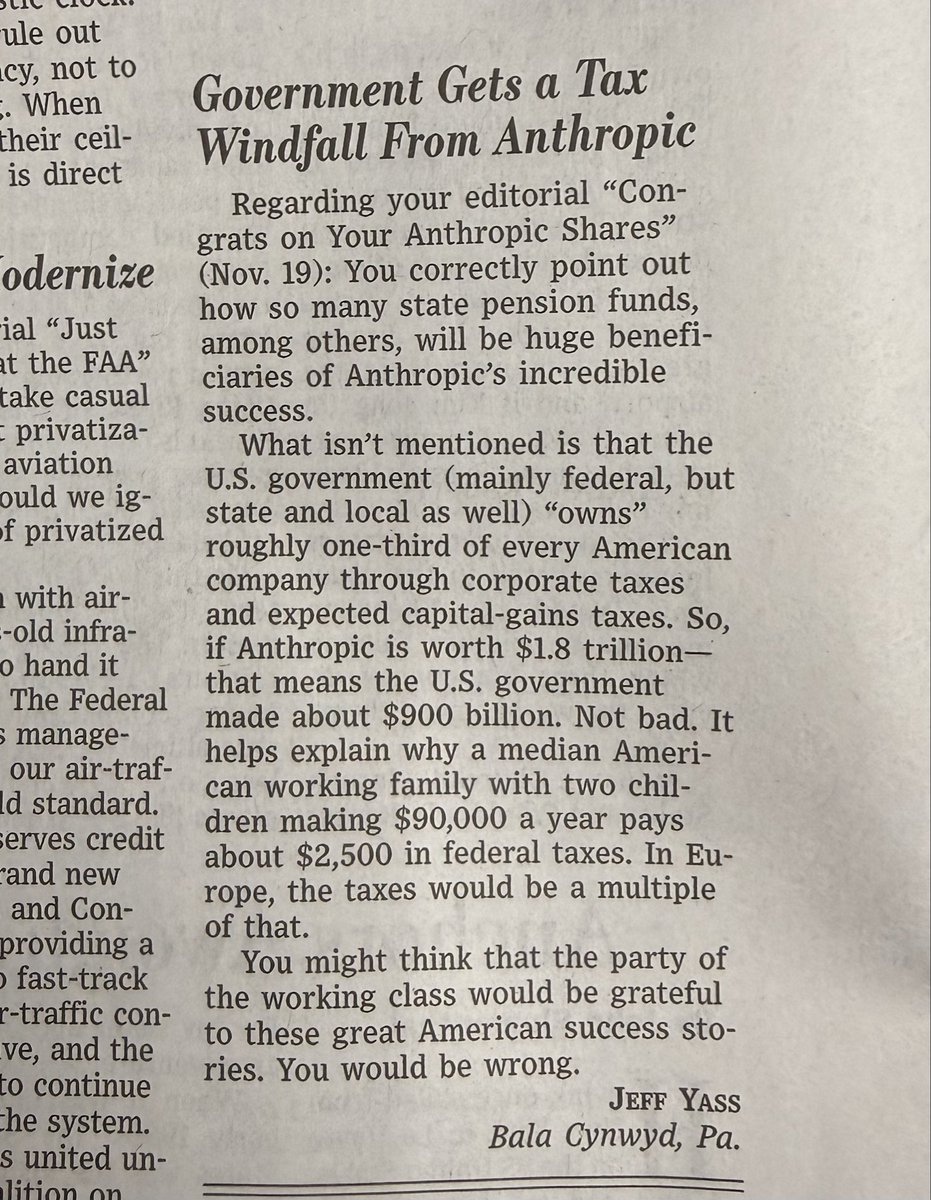
I read this absolutely epic letter to the editor in today’s Wall Street Journal about Anthropic and the low individual tax burden in America thanks to corporate taxes.
Then, I looked at who wrote it…
Legend!
This is not a victory. The fact that it took more than a year to deport a single foreign gangbanger—and not to his country of origin, but to Europe—is a symbol of administrative incompetence, which began under Sec. Noem and does not seem to be improving under Sec. Markwayne.
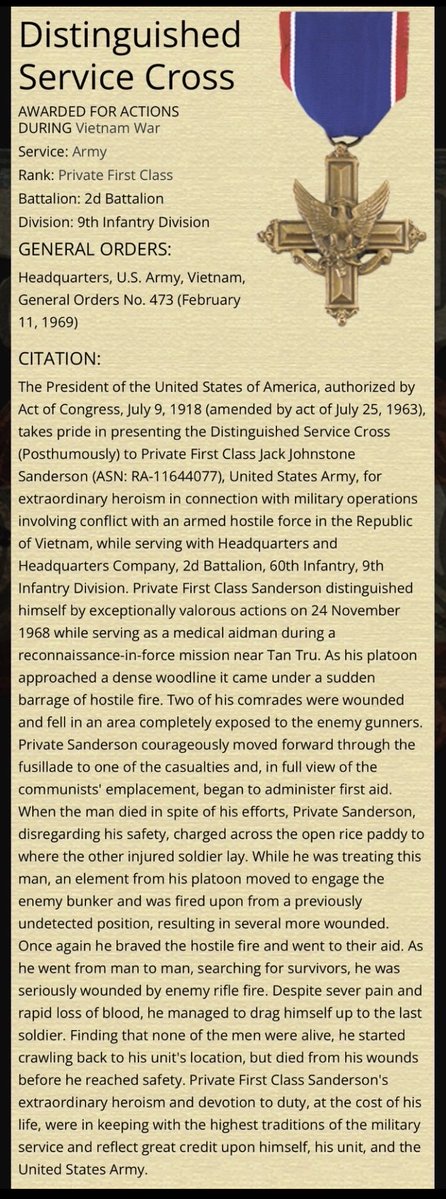
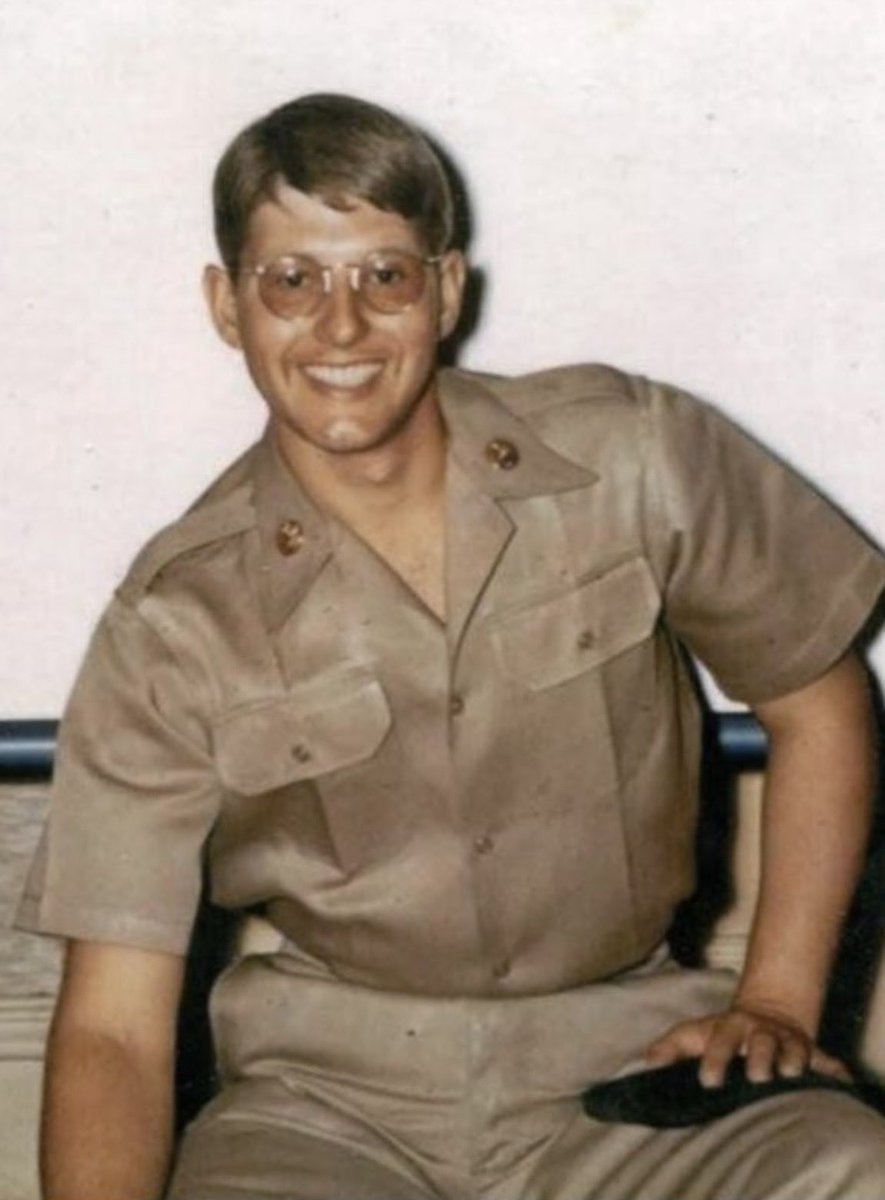
New York Army Combat Medic Private First Class Jack Johnstone Sanderson selflessly sacrificed his life trying to save his Army brothers on November 24, 1968 in South Vietnam. For his extraordinary heroism that day, Jack was awarded the Distinguished Service Cross. “Doc” was 21 #American Hero🇺🇸
“In other words, I imposed the university policy.”
“If you have an encampment and you let it stay for one night, you lost.”
So much antisocial behavior would disappear, overnight, if our leaders merely elected to enforce existing rules, when people are behaving inappropriately.
Darializa is a Florida transplant who was elected by 2600 votes with the help of a bunch of white DSA members from Brooklyn who took advantage of a low turnout primary. She only knows what her progressive milieu at Columbia and CUNY has taught her about NYC and has no context of the historical communities in her district - not just the Black community in Harlem, but also the Jewish and Dominican communities in Washington Heights and the Bronx.
USC President Max Nikias shut down a student occupation of his office with one simple trick:
He called their parents.
“Cell phones… were ringing.”
“You could hear the parents screaming.”
“They left my office by 8 PM.”
“They walked out.”
Nikias just sat down with me to share the full story:
“They tricked the receptionist… and they occupied my office.”
“They were refusing to move out unless the university was going to join a union and pay a $30,000 fee per year to that particular union.”
“I called my vice president for student affairs.”
“I said, ‘You order pizza and water for the students, and then you go and explain to them… the university policy.’”
“If they don’t get out by 9 PM, then I’m going to expel all of them.”
“They were very defiant.”
“If anyone is not a student, we call LAPD to come and get them out.”
“And then… this is what did it.”
“I said to my vice president, ‘Go back to your office with your staff and call their parents.’”
“They walked out.”
“In other words, I imposed the university policy.”
“If you have an encampment and you let it stay for one night, you lost.”
@MaxNikias_
This week’s must-read from The Chronicle of Higher Education:
Sound baths, wellness workshops, and other absurdities are proliferating on campuses nationwide.
“My College Has Been Overrun by Administrators”, by Gary Smith
In 1955, the British historian C. Northcote Parkinson proposed a theorem for why bureaucracies inevitably inflate: “Work expands to fill the time available for its completion.” As he put it, bureaucrats invariably find things to do “irrespective of any variation in the amount of work (if any) to be done.” They are also driven to justify the hiring of subordinates who increase their empire and apparent importance. No matter how many subordinates they hire, Parkinson’s Law ensures bureaucrats will always need more. Subordinates are beholden to the same rule and feel the need for their own minions, creating an ever-growing bureaucratic pyramid.
In higher ed, this satiric rule is rapidly becoming reality. Consider Pomona College, where, since 1981, I have witnessed a mushrooming of administrative events, workshops, and training sessions. When I came to Pomona, there were 1,443 students, 148 faculty members, and, according to my analysis of a campus catalog from the time, 39 administrators (deans, associate deans, assistant deans and the like — not counting clerical staff, gardeners, dining-hall workers, and so on). In 2026, there were 1,732 students, 180 tenured and tenure-track faculty, and 358 administrators (those latter two numbers come from careful analysis by my colleague John E. Seery, a professor of politics).
more here 👇
Opinion: At Pomona College, one professor says administrators grew from 39 in 1981 to 358 in 2026, while enrollment rose far more modestly. His argument: administrative bloat is reshaping college priorities and raising real questions about cost. https://t.co/6pvvKS0czS
We need some uncomfortable conversations about young people's physical and mental health, social contagion, the glamorization of disability identity, and the weaponization of accommodations.
Are we really supposed to believe none of this could be performative?
I don't like Amazon. I don't like monopolies. so the fact that I'm about to defend $AMZN should tell you how bad this is
I spent the night reading NYC council member Tiffany Caban's bill, Int. 0518. then I watched her video again
0:15, her words: "all this bill does is" make Amazon pay a $500 licensing fee every other year and follow "basic" safety rules
that statement is 100% false. here's the bill:
section 20-566.3 bans Amazon from using its 40+ local delivery companies. 5,000+ drivers get moved onto Amazon's payroll. those 40 SMALL BUSINESSES are GONE...WIPED OUT through Govt Force.
and the fee isn't $500 every other year. it's $500 per facility, per year. Amazon had at least 12 facilities in the city as of 2021.... that's $6,000 a year minimum. 24x what she said
her name is on the bill. she knows exactly what it does.... and she said "all this bill does is" anyway
that's not 99% a lie. that's 100% a lie
she knows it wipes out 40 small businesses. she left it out on purpose
and watch how it works. you attack a $3 trillion company in public. voters cheer because they think you're only going after the rich
meanwhile 40 local business owners get wiped out.... and nobody notices because Amazon's name is on the headline
40 small businesses are hard to control. 1 big company is MUCH MUCH easier. 1 license the city can revoke. 1 payroll the union has to organize. and 19 new city staff to police it....and follow-up additions to this....it's just a start, not the end. That's key.
she's betting you'll take her word for it.... and won't see how simple this is
this isn't about Amazon. it's the same playbook as minimum wage.... sold as fighting the rich, paid for by small business
chickens for KFC again
Iowa Navy Hospital Apprentice Dennis Neil Williams Gave All on November 22, 1966 in Quang Nam Province, South Vietnam. H&S Company, 1st Battalion, 26th Marines. Remember “Doc”’today. Corpsman #American Hero🇺🇸 Forever 20