June 9, 1944. D-Day plus 3.
Rangers finally silenced the gun battery that had been shelling Omaha and Utah Beach for 72 straight hours.
It was not Pointe du Hoc.
Most people have never heard of it.
---
You know the Pointe du Hoc story. 225 Rangers scaled 100-foot cliffs on D-Day. Found the guns missing. Two sergeants tracked them to an orchard and destroyed them.
What nobody tells you is this:
Pointe du Hoc was always the decoy.
The Germans had deliberately focused every piece of Allied intelligence toward that cliff. They made sure reconnaissance photos, agent reports, and pre-invasion planning all pointed to Pointe du Hoc as the primary threat.
Meanwhile, 6 kilometres to the south, they quietly built something else entirely.
---
The Maisy Battery did not appear on a single Allied soldier's invasion map on June 6, 1944.
It wasn't an oversight.
The Germans constructed it under total secrecy, using only forced laborers from Russia, Poland, and Czechoslovakia. No French workers. Not a single local. Specifically because French workers might leak its existence to the Resistance, who would tell London, who would tell the planners.
The site had over 2 kilometres of connected trenches, underground bunkers, a field hospital, a radar station, a kitchen, an officers' quarters, and ammunition storage. It housed a garrison of 450 men.
Its guns: six 155mm French World War One howitzers, four 105mm guns, and four 150mm pieces at a nearby farm. Enough firepower to cover the entire western end of Omaha Beach and the southern end of Utah Beach simultaneously.
Both beaches.
At the same time.
---
On June 6, while the Rangers bled and died climbing the cliffs at Pointe du Hoc, the Maisy Battery opened fire.
On June 7, it kept firing.
On June 8, it kept firing.
For three consecutive days, American soldiers landing on and moving inland from Omaha and Utah were being shelled by a battery that wasn't on their maps, that nobody had been sent to destroy, that the official plan had essentially ignored.
Here is where the story becomes strange.
Colonel Rudder, the Ranger commander, had a full intelligence dossier on Maisy. RAF aerial photographs. Detailed maps. A briefing. He knew it existed. But the orders to assault Maisy were apparently held back somewhere in the command chain and never reached the Rangers in the field.
The men who were sent to silence the guns were never told about the real guns.
---
On June 9, five companies of Rangers finally assaulted the Maisy Battery from three directions simultaneously.
The battle lasted five hours. Some of it was hand to hand.
When the German defenders retreated into the underground field hospital, the Rangers blew it up with them inside.
By late morning, the battery was silent.
The guns that had been firing on American troops since the first hour of D-Day were finally destroyed, 72 hours after they should have been.
---
Then something happened that has never been fully explained.
After the war ended, the United States military buried the Maisy Battery.
Not demolished. Not preserved. Buried. Under one to two meters of soil. Every bunker, every trench, every gun emplacement, covered and hidden. The site was returned to farmland.
No memorial. No marker. No museum. No mention.
For 60 years, Maisy vanished.
---
In January 2004, a British amateur historian named Gary Sterne was searching for a location to build a museum near Grandcamp-Maisy. He had found an old invasion map inside clothing that once belonged to an American veteran. Marked on the map, in the area between the beaches, were two words:
"Area of high resistance."
He started digging.
What he found was an intact German fortress. Trenches still connected. Bunkers still standing underground. Gun emplacements preserved. Canteen walls still bearing handwriting from 1943. Czechoslovakian 150mm guns exactly where they had been left.
The largest German gun battery capable of hitting Omaha Beach had been sitting buried under a farmer's field for six decades.
---
Why was Pointe du Hoc made the famous target while Maisy kept firing for three days?
Why did Rudder have the intelligence but the Rangers never get the order?
Why did the United States bury the site after the war?
Nobody has ever given a clean answer to any of these questions.
Pointe du Hoc got the memorial, the museum, and the presidential speech. Ronald Reagan stood there in 1984 and called it the site of the most important mission of D-Day.
Maisy got two metres of dirt.
The real story of what happened between Omaha and Utah Beach in June 1944 was buried on purpose.
It stayed buried for sixty years.
A British civilian with a dead veteran's map found it on a rainy morning in 2004.
A 22-year-old woman from Mexico's Tarahumara indigenous community has won a 50km (31 miles) ultramarathon wearing sandals.
Maria Lorena Ramirez ran without any professional gear and her pair of sandals was reportedly made from recycled tire.
She defeated 500 runners from 12 countries wearing a skirt and a scarf.
On Wall Street, Steve Feinberg had a well-oiled sales pitch for investors thinking of betting billions on his corporate turnarounds.
Now the Pentagon’s No. 2 official, the former private-equity boss faces the biggest sell of his career: persuading Congress to bless the Trump administration’s $1.5 trillion military budget. https://t.co/zAHdxLMZWO
It’s 1989. You are a drunk teenager putting out a cigarette before going to a music club in Chicago. As you enter you hear a new kind of raw music that instantly blows you away. It’s Nirvana. You never heard of them. They are still two years away from their Nevermind breakthrough. It’s a concert of a lifetime. You still tell your kids about it frequently. Unfortunately it wasn’t recorded. Or so you thought. Unbeknown to you a Chicago live music enthusiast, Aadam Jacobs, took his tape recorder to the show and recorded the whole thing (as he has done 10,000 over a quarter century). The tape has been digitally cleaned up and is yours to enjoy online now for free. Make sure to share this with every single member of Gen X you know: https://t.co/aZDOE18yhX
🚨🚨 FBI and our partners have arrested a former SOCOM employee, who supported our top-level military warfighters, for allegedly transmitting classified information to a member of the media.
Outstanding work by @FBICharlotte and the FBI Counterintelligence & Espionage Division - as well as our @TheJusticeDept partners.
Let this serve as a message to any would-be leakers: we’re working these cases, and we’re making arrests. This FBI will not tolerate those who seek to betray our country and put Americans in harm’s way.
September 2009. Jensen Huang walks onto a small stage at the Fairmont hotel in San Jose. About 1,500 people are in the room. He runs a company that makes chips for video games.
He spends the next 8 minutes doing math on a whiteboard, explaining why the future of computing won't come from making CPUs faster. He calls it "CEO math" and apologizes in advance to every computer science professor in the audience. Then he lays out an argument that almost nobody took seriously at the time: the way to make computers dramatically faster is to pair a regular CPU with hundreds of tiny parallel processors, the kind that already exist inside graphics cards. One CPU for the sequential stuff. Hundreds of GPU cores for everything else. He calls it "heterogeneous computing."
He shows the math. A workload that can be split into many pieces at once gets up to 200x faster on this combined system. A workload that has to run one step at a time loses nothing. "The most important thing in creating a new architecture," he says, "is to make sure it does no harm."
This was the first GPU Technology Conference. NVIDIA had launched a software platform called CUDA three years earlier, in 2006, to let developers write programs that run on graphics cards instead of just regular processors. Almost nobody cared. GPUs were for rendering Call of Duty, not for scientific computing. The academic world was polite but skeptical. The enterprise world ignored it entirely.
By this point, Huang had been making this argument for years. NVIDIA was a $7 billion company. It competed with AMD and Intel for market share in the graphics market. That was the whole business. Jensen kept saying the GPU wasn't just a gaming chip; it was a computing platform. He kept saying parallel processing would reshape every industry from medicine to finance to physics simulations. People kept nodding, then doing nothing.
Then deep learning happened. Around 2012, AI researchers discovered that training a neural network, which means teaching a computer to recognize patterns by running the same calculation millions of times across huge datasets, was exactly the kind of workload Jensen had been describing. GPUs can train AI models 10 to 50 times faster than CPUs. The architecture he outlined in this 2009 talk, with one CPU handling step-by-step tasks while hundreds of GPU cores crunch through massive amounts of parallel data, is now the literal blueprint for every AI data center on earth.
ChatGPT runs on NVIDIA GPUs. Claude runs on NVIDIA GPUs. Gemini, Llama, Midjourney, nearly every major AI model you've heard of was trained on NVIDIA hardware using CUDA, the software platform Jensen built for a market that didn't exist yet.
NVIDIA was worth about $7 billion when Jensen gave this talk. It is worth over $4.4 trillion today. That's a 600x increase. Jensen Huang, who founded the company at a Denny's in 1993 with two friends, now has a net worth of over $160 billion. He made Forbes' list of the 10 richest people for the first time this year.
GTC 2026 is currently ongoing. 17,000 people are packing a hockey arena to watch the same guy explain what comes next. In 2009, 1,500 people showed up at a hotel ballroom, most of them for gaming graphics.
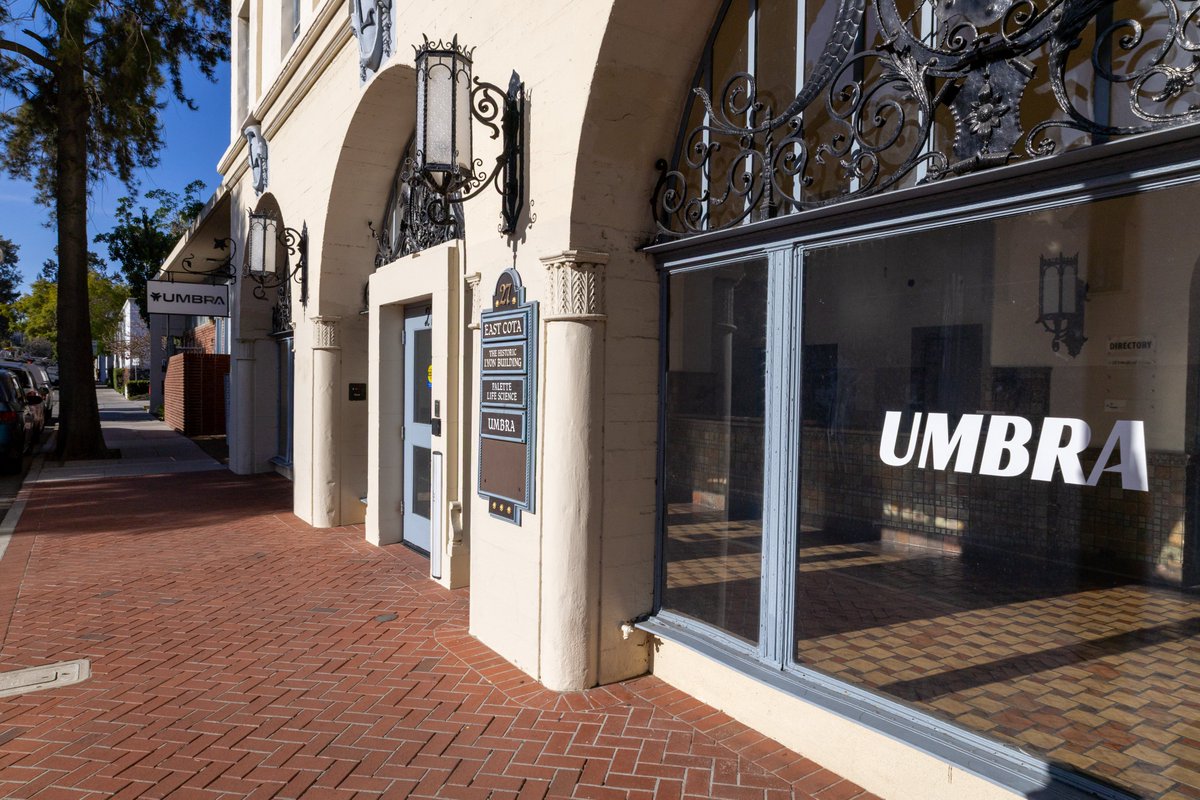
When Wagner Group boss Yevgeny Prigozhin’s plane went down in August 2023 after his short-lived mutiny against Vladimir Putin, @umbraspace's SAR imagery was the first to show the crash site; those images, taken by radar at night when cameras couldn’t see, ran on CNN and showed the state of the wreckage. For a company whose first satellites had been up for only two years, it was a significant moment. Hardware that had been designed and built by a very small team on the quiet California coast was the source of a major international headline in a bloody conflict a world away — and the images were on TV!
For our latest issue, @mualphaxi went to Santa Barbara to visit Umbra, which operates one of the most sophisticated synthetic-aperture radar (SAR) constellations in the world, public or private. Read it in print or online @arenamagdotcom 📡
Nirvana tearing through “Love Buzz” live at the Paramount in Seattle (Oct 31, 1991) is pure chaos with a pulse. Sludgy, noisy, weirdly catchy, and you can feel the room realizing they’re watching something that doesn’t play by the rules.