As financial institutions and enterprises launch their own digital and tokenized assets, USDC's role as an interoperability layer becomes more essential.
The market will solve for fragmentation in various ways, but the case for USDC gets stronger, not weaker.
@USDC is becoming the dollar for developers and AI agents.
Along with being stable, secure, and trusted, it’s consistently pushed programmable money forward.
2018: USDC launches.
2020: Introduces transferWithAuthorization (EIP-3009), enabling gasless, delegated execution of payments. This primitive powers every x402 payment today.
2023: Expands support to smart contract wallets with EIP-1271 and launches CCTP, enabling native USDC transfers across blockchains.
2025: Launches Gateway, giving developers a chain-abstracted USDC balance so users can spend USDC without worrying about which blockchain they’re on.
Each release has removed another layer of friction for developers building internet-native payments.
Programmable → Cross-chain → Chain-abstracted.
That’s why USDC has become the foundation for agentic commerce.
Standard Chartered becomes the first GSIB to offer direct USDC liquidity as a bundled service for institutional clients. Demand from major banks to offer USDC continues to grow, corresponding to the growth in on onchain payments and treasury and tokenization.
This week alone, two G-SIBs - @BNYglobal and @StanChart - announced partnerships with @circle, enabling access to USDC for institutional clients.
Pay attention to the signal, not the noise.
We’re expanding our relationship with @BNYglobal to give their clients connectivity between onchain and traditional assets.
@USDC will be the first stablecoin on BNY’s Digital Asset Custody platform, enabling clients to store, transfer, mint and burn USDC.
https://t.co/2itunFLS08
This is massive!!
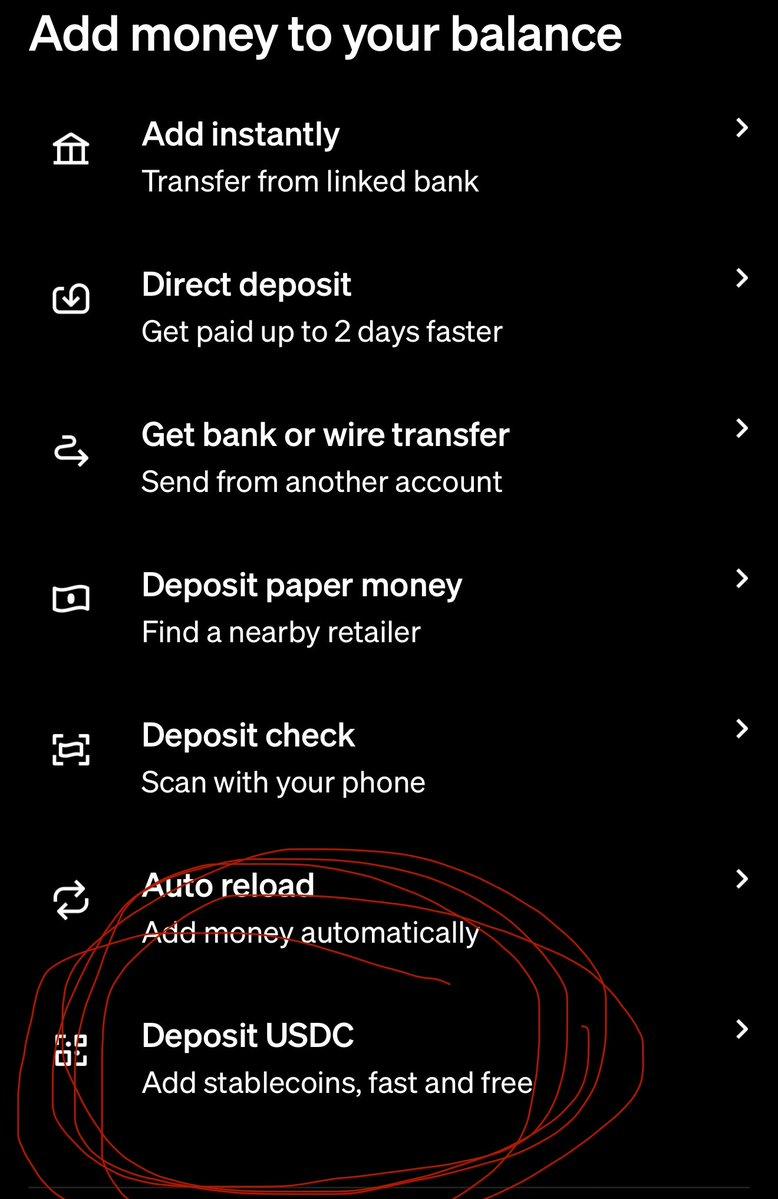
In other words @CashApp just created a clean USDC on/off ramp for everyone in the U.S.
I can’t wait to onboard my local food vendors to USDC
This is the stuff that matters.
The same USDC can have very different balance sheet impact depending on the rails it runs on.
@arc is designed so bank risk teams can get comfortable faster, with known validators and clear settlement finality.
The same stablecoin can produce very different outcomes for banks depending on the rails behind it.
That’s because bank adoption is shaped not just by the asset itself, but by capital treatment, governance, operational resilience, and settlement finality.
@Arc is designed to make that infrastructure clearer:
→ Known validators
→ Deterministic finality
→ Governance controls
A more legible path for banks evaluating how to scale USDC and EURC in regulated financial markets.
https://t.co/EuX2pVAtr6
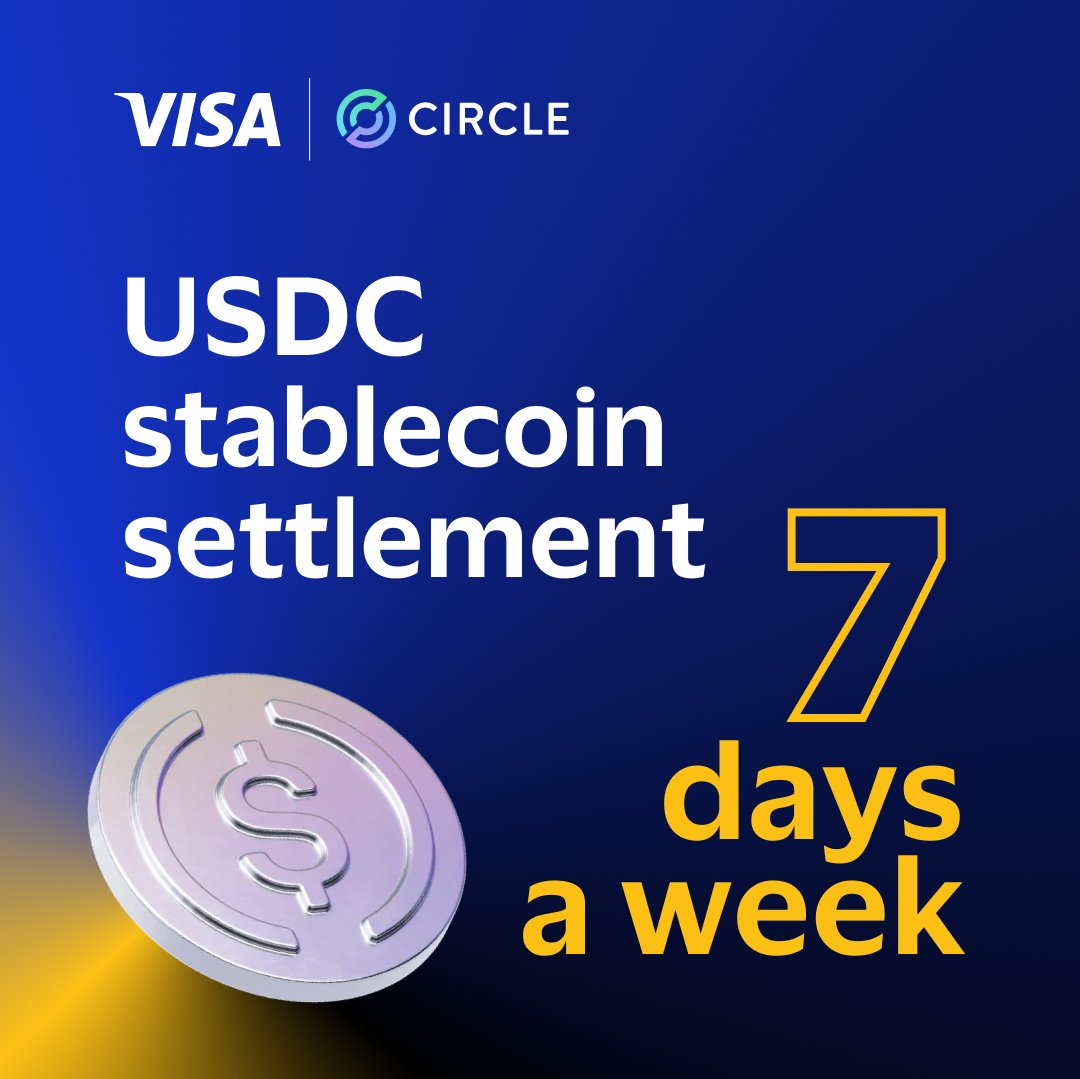
4/ With USDC, issuers can now settle with Visa 7 days a week.
Faster movement of funds means less idle capital means more efficient treasury operations.
A simple, practical example of how stablecoins improve real financial infrastructure.
Many more examples to come.
Coming: stablecoin settlement 7 days. Money moves when commerce does—weekends included. U.S. institutions can settle with Visa in @circle USDC over @Solana. @Lead_Bank
and @CrossRiverBank are the first US banks to join Visa’s pilot, more through 2026: https://t.co/9cys9s9okl
3/ That “float” ties up capital that could be used elsewhere in the business. It’s inefficient, and the cost adds up over time.
Legacy banking hours (no nights or weekends) are a huge bottleneck in money movement.
They make up less than 25% of all hours in a week!