@StoChain The numbers tell an interesting story: cash-equivalent RWAs are built to be held, while tokenized equities are built to be traded. As equity adoption scales, liquidity and execution quality could become the real competitive edge for onchain markets.
@StoChain Compressing settlement from T+3 to T+0 while preserving Euroclear custody rails proves tokenization scales through integration, not isolation.
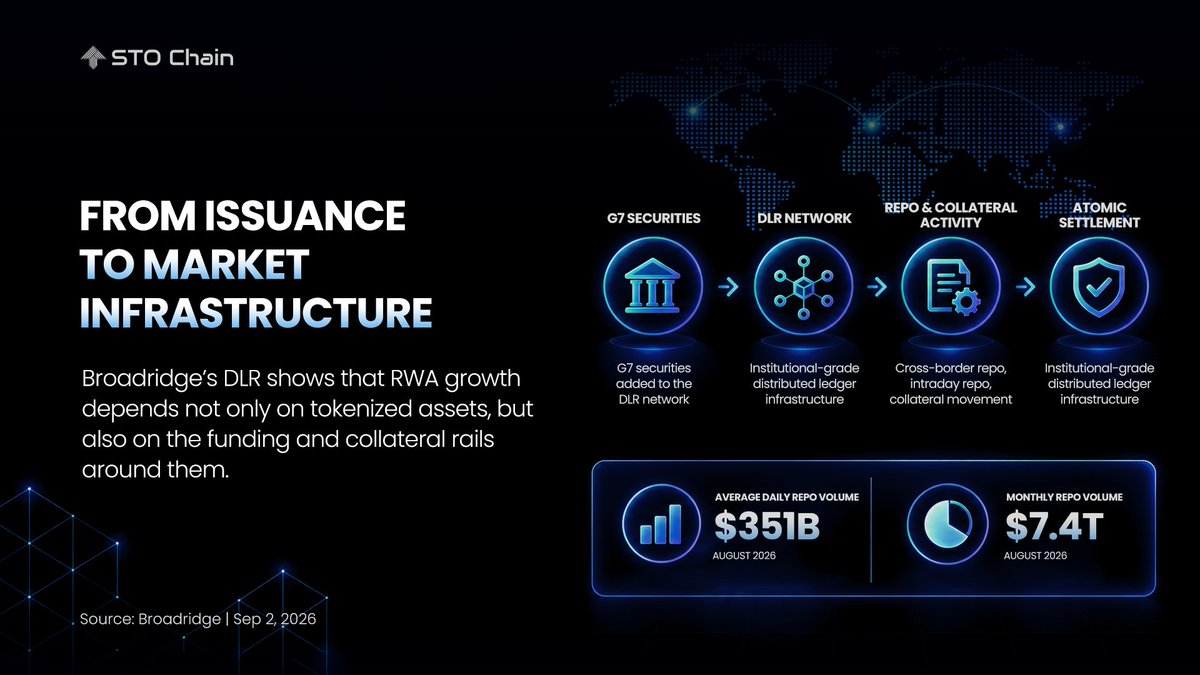
Broadridge’s latest DLR expansion matters for RWA markets because it goes beyond token issuance.
By bringing G7 securities into its Distributed Ledger Repo network, Broadridge is extending tokenization into repo, collateral mobility, and intraday liquidity management through atomic settlement.
What matters is that tokenized assets are becoming more usable inside institutional markets. For RWA to scale, institutions need more than on-chain issuance. They need the ability to use these assets for financing, move collateral efficiently, and connect tokenized securities to real settlement workflows.
Broadridge said its DLR platform processed an average of $351B in daily repo transactions in August 2026, totaling $7.4T for the month.
This suggests tokenization is starting to function not just as an issuance format, but as part of the operating infrastructure for funding, collateral, and settlement.
#STOChain #RWA #Tokenization
@StoChain Moving tokenization into atomic settlement and cross border collateral management brings true operational efficiency to global capital markets.
@StoChain Tokenized fund shares could be a much more practical path for institutions. Keep the existing structure, add onchain programmability. RWA adoption step by step.
@StoChain The next stage of tokenized funds may be defined not only by what assets they hold, but by where their official ownership records are maintained.
@StoChain Tokenization solves representation, not infrastructure. The winners will be platforms that can combine compliance, custody, transfer controls, and liquidity into a system investors actually trust
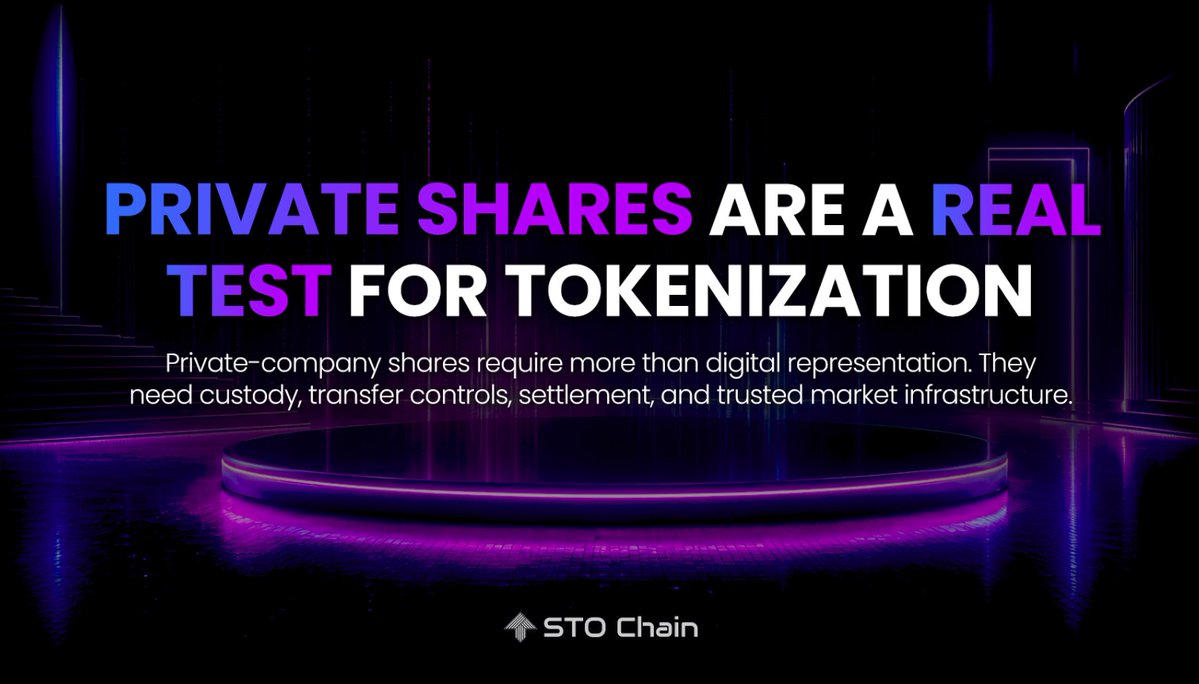
Private-company shares may become one of the hardest tests for tokenization.
Unlike public equities or tokenized treasuries, private shares are tied to limited supply, restricted transfers, complex ownership records, investor eligibility, and thin liquidity. Recent moves by major financial institutions to explore tokenized depositary receipts show why this asset class is becoming more relevant to RWA.
But turning private shares into tokens does not remove that complexity. It brings it closer to the surface.
The real question is not whether private-company shares can be represented digitally. It is whether the infrastructure around them can support real asset sourcing, custody, rights, transfer controls, settlement, compliance, and investor protection.
The next phase of RWA will not be defined by what can be tokenized, but by what can be trusted, transferred, and settled at scale.
#STOChain #RWA #Tokenization