Illinois just dropped Executive Order 2026-01: Goal = 2+ GW new nuclear by 2033. Enough to power 2M homes.
Uranium wins short-term (supply crunch + AI demand). Thorium secures long-term (safer MSRs, less waste).
But the real story? The grid needs massive commodities: uranium fuel + copper/lithium/nickel/cobalt/rare earths for transmission/solar/storage. GridCore Analytics models it all.
Who's ready? #NuclearIllinois #EnergyGrid #Commodities
AI = bullish for energy.
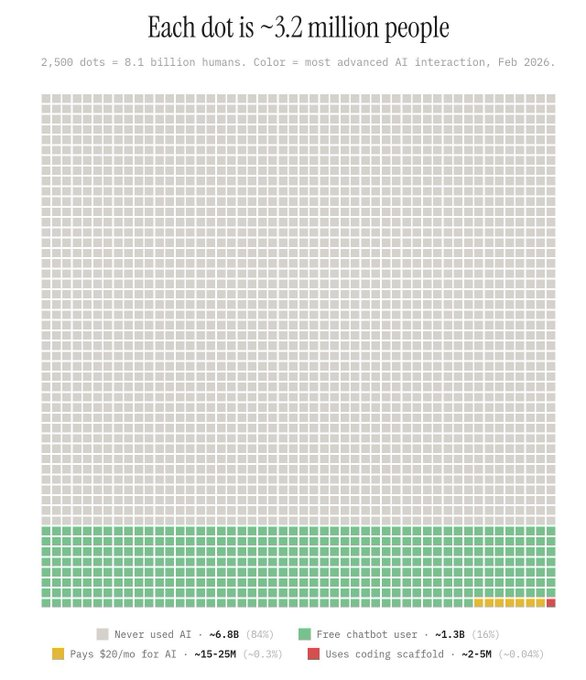
- Each dot represents ~3.2 million people
- 2,500 dots = ~8.1B humans
- Grey = ~6.8B people, or ~84% of humanity, have never used AI
One AI query consumes ~10x the energy of a Google search
As more people begin using AI daily, energy consumption will surge.
Meanwhile, we have underinvested in energy for over a decade.
Life-changing money will be made in the energy sector.
AI data-center expansion is turning power procurement into a strategic differentiator across regions. The advantage is shifting toward teams that combine clean baseload access with realistic commodity and transmission assumptions. #AI#RareEarths#Energy#CleanEnergy
Mining supply-chain security is becoming central to energy reliability strategy. Operators with transparent sourcing, refining visibility, and contingency pathways are likely to outperform when volatility moves from price noise to delivery risk. #NuclearEnergy#Lithium#Copper #GridResilience
Transparency is a core value at Aalo
Following our story should feel like watching a documentary unfold in realtime. Showcasing not just the wins but also the challenges along the way.
So much planned for this year. Each month will be more epic than the last.
New video tmr!
@DorianHartwood upstream volatility is the real choke point. Once battery storage scales for grid reliability, nickel & cobalt assumptions turn into multi-million-dollar capex risks if the supply chain isn’t stress-tested early.
GridCore Analytics is building models to run those exact scenarios (material volatility → chemistry viability → grid impact) before commitments lock in. Spot-on observation.
Nickel and cobalt demand signals are widening beyond EV narratives as storage scales. Reliability planning gets sharper when battery chemistry assumptions are tested against upstream material volatility before capex commitments lock in. #CleanEnergy#CriticalMinerals#AIinEnergy #Thorium
Grid and commodity planning are converging into one operating function as energy systems scale. Teams that model dependency chains across uranium, copper, lithium, and transmission early are reducing avoidable schedule risk. #GridResilience#Nickel#Cobalt#CleanEnergy
A lot of people think ANY nuclear reactor is equally good for powering AI data centers, but this isn't true.
Product-market fit in nuclear is a real thing.
What makes a design optimal? 4 main things:
1️⃣ Strong Fuel Supply Chain.
Data centers have demand for 100 GW of new power generation in the next 5 years. That's like creating 100 new cities.
The only option is to choose a fuel with a super robust supply chain.
This is why Aalo is using LEU UO2, not TRISO, and not HALEU.
TRISO and HALEU supply chains are currently super limited, and will take years to build out. Our fuel has a supply chain that can support tens of GW of reactor hardware per year, and eventually hundreds of GW.
2️⃣ Sized for Speed and Availability.
Data centers care most about speed of deployment, and high availability.
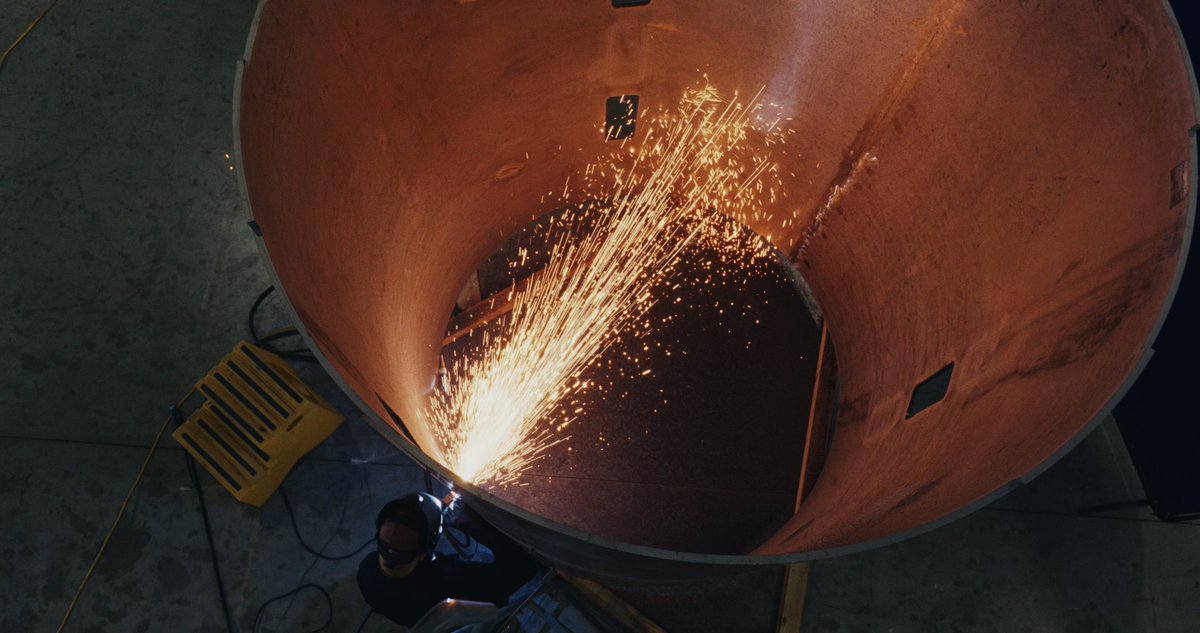
If the reactor is too small, speed of deployment won't matter because the electricity will be too expensive (too much neutron leakage). Too big, and modules won't be easily shippable on normal roads (hindering scalability and speed). Since sodium is so thermally conductive, it allows Aalo to design the ✨most powerful reactor that can still be shipped on the back of a truck✨, by a 2-5x margin compared to water or gas cooled reactors. This was our core design objective. Also, larger reactors will have more expensive N+1 costs to achieve high availability. Aalo's size is optimized for high availability at low incremental cost.
3️⃣ The Price is Right.
Data centers have other options for power, not just nuclear. 10-15 c / kWh is the current price range that must be hit. Higher than this, and they will likely go with gas.
Aalo's design is on pace to achieve 15 c / kWh first-of-a-kind, and will get below 10 c / kWh within 4 Pods. This cost is enabled by size optimization, fuel, and coolant choice. Other designs that use TRISO (esp w HALEU) will have power costs in the 20-50 c / kWh range. Good for remote diesel, but not for data centers.
4️⃣ Factory Unlocks Scale.
Again, data centers are going to command 100 GW of new power generation in the next 5 years, and it will likely keep scaling from there.
The only feasible approach to servicing this demand throughout the 2030s is to build large factories NOW that mass-manufacture smaller, transportable modules for the entire power plant, not just the reactor. This will require extreme vertical integration of the right things at the right time, as we scale from 10->100->1,000->10,000 reactors per year. We'll share more specifics on this later.
Aalo got started fairly recently, but we've turned this into an advantage: We've been able to tailor our design to the needs of hyperscalers.
In 2026, Energy Fuels $uuuu $efr expects to deliver 780,000 to 880,000 pounds of U₃O₈ (#uranium concentrate) under its full portfolio of six contracts (including two new ones).
✒️From 2027 to 2032, the combined portfolio has committed deliveries totaling approximately 2.41 to 4.41 million pounds of U₃O₈ (ranges reflect potential variations in contract terms or flexibilities).
✒️This leaves significant uncommitted low-cost production capacity for additional spot sales or new deals, depending on market strength.
Risk lens: one weak link cascades. Copper delays can stall transmission, lithium bottlenecks can constrain storage, and both impact reliability timelines.
Our first nuclear reactor is powering up soon! ⚡️
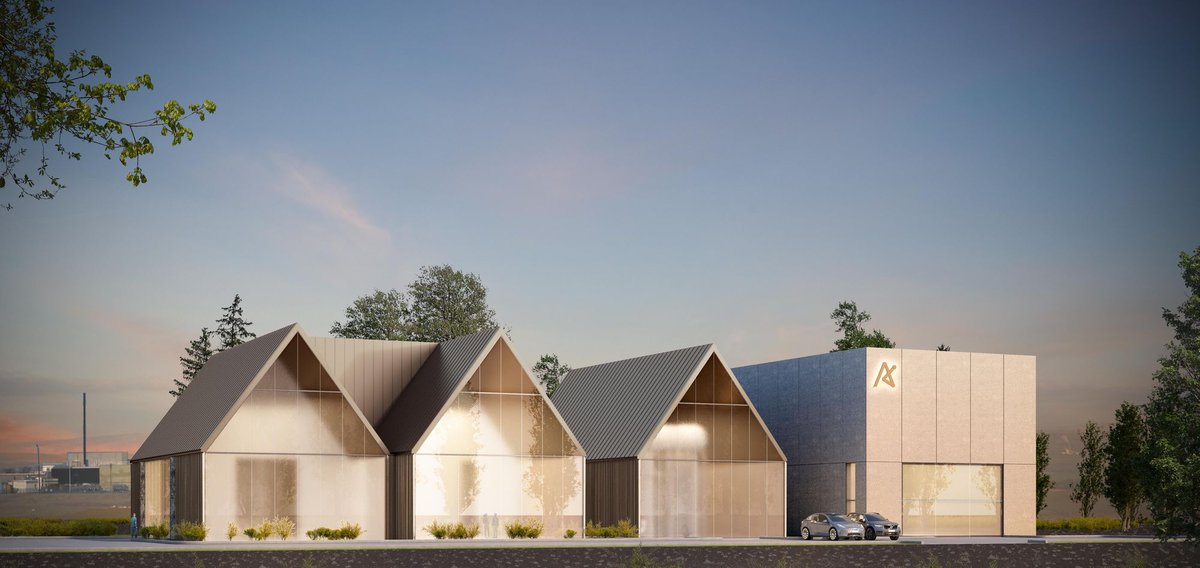
Aalo Atomics is demonstrating how carbon-free nuclear power unlocks unlimited energy through our collaboration with Baker Hughes.
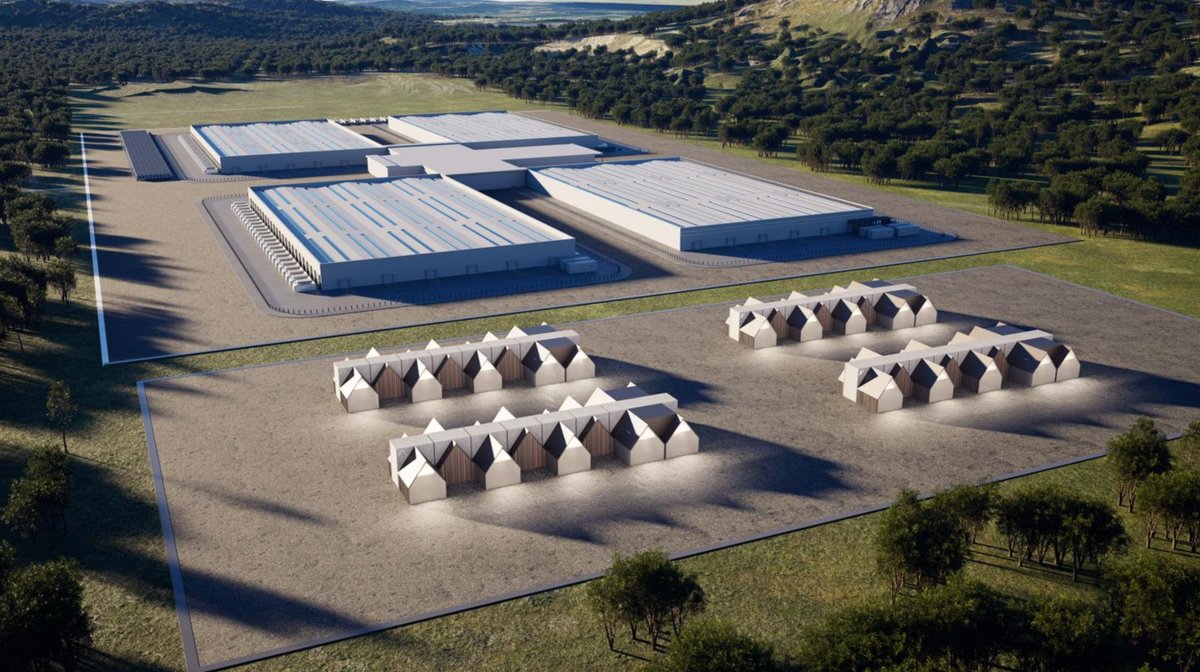
We have placed the order for the turbine that will power Aalo-X, our 10 MWe pilot reactor. The turbine will be driven by high-temperature steam and power the world’s first co-located data center powered by nuclear.
With disciplined speed and a collaborative spirit, we are purpose-building solutions to bring power to AI data centers at gigawatt-per-year scale, enable energy dominance, and usher in the second atomic age.
Pairing nuclear with data centers directly is a smart way to cut through baseload bottlenecks. Scaling this will demand tight commodity chains, from uranium fuel to copper/lithium for grid hookups.
GridCore Analytics is honing in on modeling those dependencies to smooth the path. Excited to see Aalo-X take shape!
Nickel prices swung wildly last year partly due to EV battery shifts. Grid-scale storage is starting to eat more nickel too.
Are utilities starting to hedge commodity exposure like miners do? #Nickel#GridStorage
Illinois' 2 GW nuclear target + national clean energy push = commodities as the bottleneck.
Uranium/thorium for power, copper/lithium/nickel/cobalt/rare earths for infrastructure, gold/silver for tech.