Leading Newsletter solely focused on nuclear energy & uranium equities. Inception-to-Date Performance: 412.2% ($100,000 on August 1, 2019 now worth $512,200).
I have been following the uranium market for a decade. The biggest investing "error" I have seen during that time has been investors focusing on a stagnating (or falling) spot price and assuming that tells the whole story.
This has also been the a recurring opportunity. 🧵
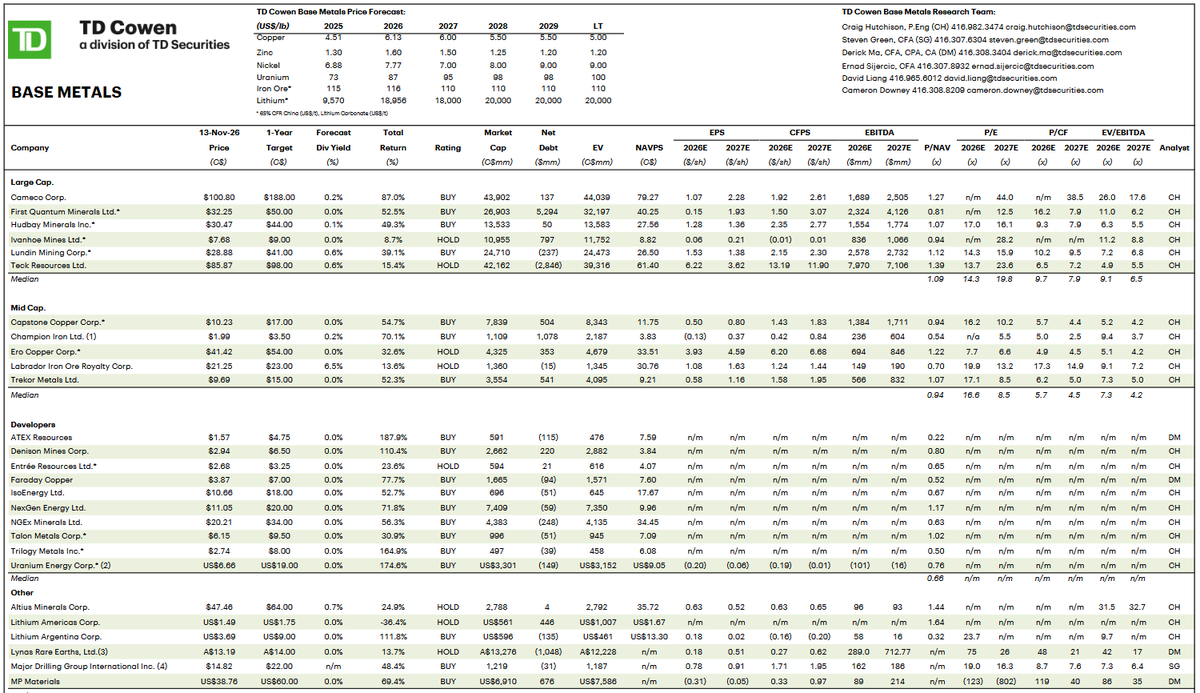
While algos and hedge fund factor baskets have been pitching uranium shares in pure capitulation, the spot uranium price is holding firm amidst an active mid and long-term market.
This present liquidity event has been sufficient to force certain financial players to sell some of their uranium holdings over the past couple of weeks. That selling has been met with ample buying interest, resulting in essentially zero downward pressure on the spot price.
There is significant mid-term utility demand, currently, to support some carry trades getting done at current prices. Reading between the lines — $90 spot + cost of carry + cost of capital + profit = mid-term base escalated likely getting done ~$110/lb. (roughly).
Last week, KHNP issued a uranium tender for just over 13m lbs. delivered over a ten-year period. With 26 reactors at 15-year high capacity factors and 4 more reactors being built, KHNP’s 10-12M+ lb. annual burn rate and layered buying make another tender likely within 12 months.
This is in addition to more contracting from India soon to be announced, Russia buying across the fuel cycle, and timeline extension announcements for important supply development projects are inevitable.
I can’t tell you if the past week was the equities’ bottom. But I can tell you that this correlated selling has nothing to do with the fundamentals, and that this story is FAR from over.
URANIUM'S BIGGEST PROBLEM: THE MINES THAT DON'T EXIST YET
Utilities are covered today. But who supplies their reactors in 2030, 2032 or 2035?
That's the tension in a December 2025 interview with Justin Huhn of Uranium Insider. The argument is even more relevant today.
In the 2000s uranium boom, spot went from below $10 to about $135/lb. Some mining shares rose 10- to 100-fold before crashing.
Huhn believes this cycle could last longer because uranium supply responds painfully slowly to higher prices.
A deposit cannot become a mine just because spot reaches $100. It needs permits, financing, infrastructure, construction and a successful ramp-up. That takes years.
Demand is more predictable. Reactors need refuelling, life extensions add consumption, and Japan is restarting units. China is building reactors, buying overseas uranium and expanding fuel services. Data centres add another reason to preserve nuclear power.
THE CONTRACTING CLOCK IS TICKING
Utilities are comfortable near term. Further out, the picture changes dramatically.
Sprott, citing U.S. EIA data, estimates maximum U.S. utility contract coverage falls from about 98% in 2026 to 60% in 2030 and just 9% by 2033.
That isn't a fuel-shortage forecast. Utilities can sign contracts and draw inventories.
But it means substantial demand remains unsecured, just as the market is counting on mines that have yet to produce a pound.
CAMECO IS SHOWING ITS HAND
Huhn's interview quoted $75/lb spot and $86/lb long-term. Those figures are dated.
On November 20, spot was around $90/lb. TradeTech's October long-term indicator hit $99/lb.
More revealing is what Cameco says about contracts.
In its Q3 2026 call, Cameco described market-linked floors in the mid-to-high $70s, ceilings reaching $160, and three-digit prices on fixed-price portions.
These are contract terms, not a guarantee of $160 realized prices. But they show how much bargaining power disciplined producers have gained.
Huhn argues new major mines need sustained higher prices, potentially north of $100/lb, to justify financing and execution risk.
A short spike won't build a mine. Sustained incentive pricing might.
THE MINES THAT MUST DELIVER
NexGen's Arrow study forecasts 28.8 million lb a year for its first five years. Enormous supply from one mine.
Since Huhn spoke, NexGen secured its construction licence in March 2026 and started construction in June.
But construction isn't production. Shaft sinking, ground conditions, commissioning and ramp-up still matter. NexGen's own capital-cost estimate has already risen from about C$1.3 billion in its 2021 study to C$2.2 billion in a 2024 update.
And Arrow is only one mine. Future supply depends on other projects delivering as promised.
If they slip, utilities can't order replacement pounds from mines that don't exist.
THE FINANCIAL WILDCARD
Huhn also explains the carry trade: when forward uranium prices sufficiently exceed spot, traders can buy uranium, store it and sell it for future delivery.
That can support spot buying before utilities need delivery. It is not a guaranteed price floor.
Physical trusts and speculative traders could amplify a rally. They could amplify the downside too.
MY JUDGMENT
Huhn sees opportunities in beaten-down small uranium stocks. Perhaps. But this is where I'd be selective.
A shortage doesn't make every deposit profitable. Higher uranium prices won't fix bad contracts, excessive capex, weak management or repeated dilution.
Some stocks gained 1,000% or more in the last bull market. Others never rewarded shareholders.
The opportunity isn't simply to own uranium in the ground.
It's to own companies that turn it into profitable pounds before shareholders run out of patience and money.
@uraniuminsider
https://t.co/7J3NXWNkz9
Weekend thoughts…
Bitcoin stops losses have been triggered and exchanges likely have rinsed clients, and gone long (along with the crypto whale insiders)
Gold and silver peaked in anticipation of rate high cycle and an inflation fighting Fed.
Since then commodities have been successfully smashed, housing market has gotten very week.
Concerns of a slowdown in Ai data centers build out has in part lead to a massive sell off in uranium equities despite strong uranium spot and long term contract prices. Nuclear power new builds, restarts and life extensions are real and the supply demand balance long term is extremely positive for uranium price.
With major banks and brokers having dropped hard 20-30% etc. the Fed is likely well aware of the balance sheet risk that can quickly develop and lead to a 2008 like collapse.
I expect with this weeks sell off we don’t need much more selling, but only time to pass for it to be clear that unemployment is a concern and consumer spending along with housing starts is collapsing.
Talk will shift to holding rates at this level and then quickly the narrative will change to the need to cut and the Fed being behind the curve.
The oil price move is entirely due to war and it’s a major deterrent for economic activity. Here in the Caribbean tourism has really dropped off a there’s barely any yachts cruising around these days. Barely anyone going out fishing either. $8.25 a gallon seems to have crushed demand significantly.
I think the dramatic sell off in silver is enough to get people bottom fishing in size.
Gold and silver will turn and rally well in advance of the narrative change from rate hike to rate cuts.
There’s also been a lot of commentary on risk off, plenty of I told you so’s and dunking on commodity and tech bulls. I love to see this along with the overall bearish talk and fear indicators.
Technically we oversold in many measures… so all said, I’m feeling extremely bullish for a strong recovery in most smashed commodity stocks and especially favouring uranium and silver.
It was only a couple months ago we had people screaming about ‘you can’t own enough copper’. Now there’s concern that ‘Dr Copper’ is pointing to a sick economy and a looming recession.
With many trillions in market cap evaporating you can bet that consumer spending is gonna take a hit. The stats that will come out soon will confirm the economy slow down and the likelihood of rate cuts being called for.
Justin Huhn says uranium equities are trading at historically depressed levels while the physical market remains firm.
He discusses SPUT, Yellow Cake, Cameco, NexGen, Denison and why delays in new mine supply could make the late-decade uranium squeeze much tighter.
@uraniuminsider@MoneyLevelsShow
Poland will soon sign a ~$50 billion contract with Westinghouse and Bechtel to build its first nuclear plant. The plant would have three AP1000 reactors, and would produce 3,750 MW of power. Article link in reply.
The first reactor is scheduled to come online in 2036, the second in 2037, and the third in 2038.
If the $50 billion is all or most of the total cost, the cost per reactor is similar to that of the US Vogtle reactors.
That's actually not too bad, given the inflation that has occurred since Vogtle, which started construction in 2013. Also, this is Poland's first nuclear plant, which is expected to add some cost (need to create a national nuclear program, create a regulatory regime, etc..).
Then again, we're comparing an initial cost estimate vs. Vogtle's final cost. Will world AP1000 construction experience prevent significant cost overruns in Poland?
@jac007csi2024 Haha, well our actual members are civil and are here for the long term. They also get more in depth information on the physical market. But I can tell you outside our membership, the poor sentiment is at a fever pitch. Worse than Covid. Worse I’ve ever seen it.
Fortunes will be made for those entering uranium/gold/silver during this historic selloff. That’s not a bottom call. But let’s revisit this next year and beyond.
We all look back at the Covid crash of March 2020 with hindsight clarity.
Buy when there’s blood in the streets.
@MarkHen96523222 These moments always feel terrible but always represent the best entry points. What’s different is that nothing changed fundamentally and the commodity is firm in price (unlike gold/silver for example). This is a proper liquidity event. It’s an outright crash. I’m buying.
I used to get very emotional when my portfolio was down, like it has been recently. Now I'm seeing my investor psychology improve. I’ve actually been excited to buy the assets I know best with a long-term thesis at lower prices
Everything I bought today is underwater.”…
Same here! I’ve been buying the dip for the past three days. Short-term volatility doesn’t change the long-term fundamentals. The world isn’t ending and it’s going to need more uranium, copper, and critical minerals than ever.
When I’ve had a great run in the markets I start feeling anxiety. I physically begin to note the stress and unease in my stomach. It’s my early warning system telling me I’m about to fall on bad times.
If it’s been a really good long run. Then I get really stressed. I fear it’s gonna be a bad, upsetting, depressing 6-9 months.
When I’ve been bludgeoned for weeks or months I actually start feeling good. I know that things are going to be looking up soon.
I currently feel fantastic cause things are so grim. Everything I bought today is underwater…. Everything i own has had a pretty nasty 1/2 year or so.
But I’m starting to feel extremely optimistic. I think its going to be an amazing 6-9 months ahead.
From day one, President Trump has made launching an American nuclear renaissance a reality.
Now, we’re expanding that vision to Europe through new partnerships that will accelerate nuclear innovation, develop a skilled workforce, and strengthen energy security.
Both uranium and silver just need a nice reversal day with volume and the sellers will evaporate and all the people looking to buy this dip come running. Happens all the time. Such a nasty decline we’ve had.
We’ve gone from crazy bullishness in precious metals and data center power shortage euphoria in uranium to despise and insults for the influencers in the space.
I can’t remember a worse time for sentiment than spring of 2020