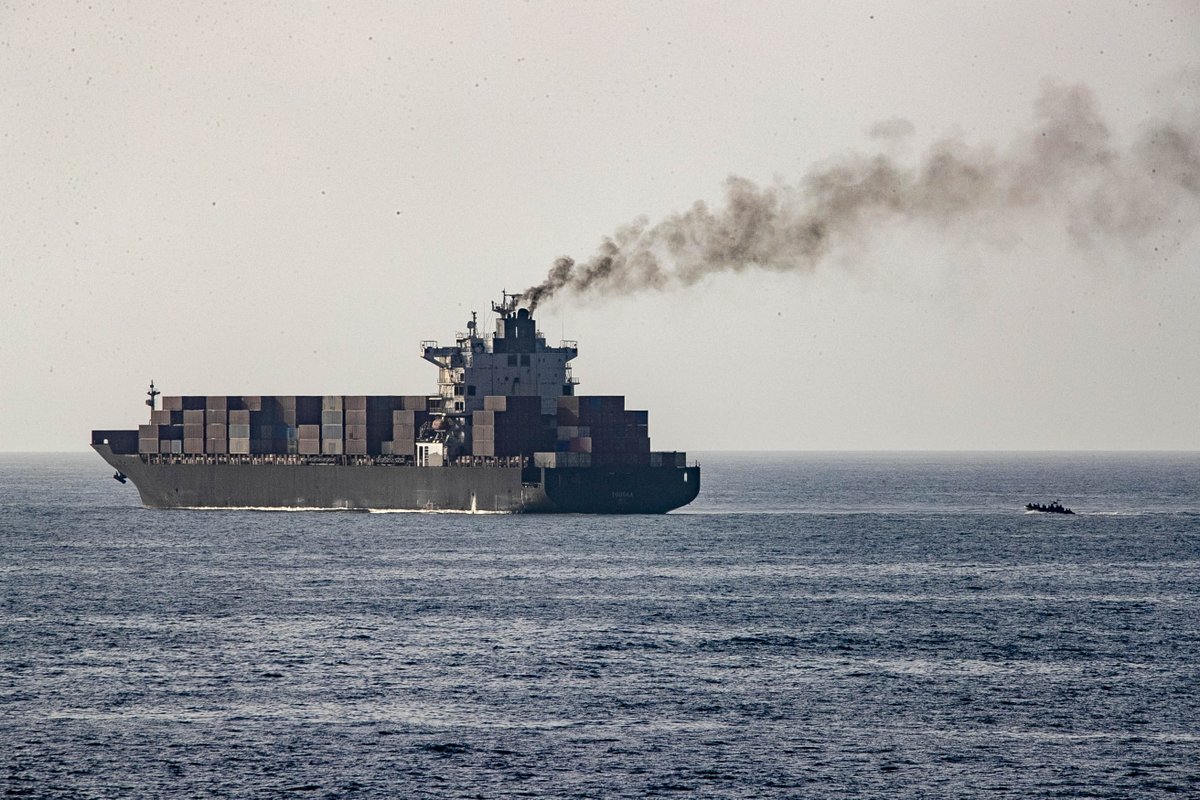
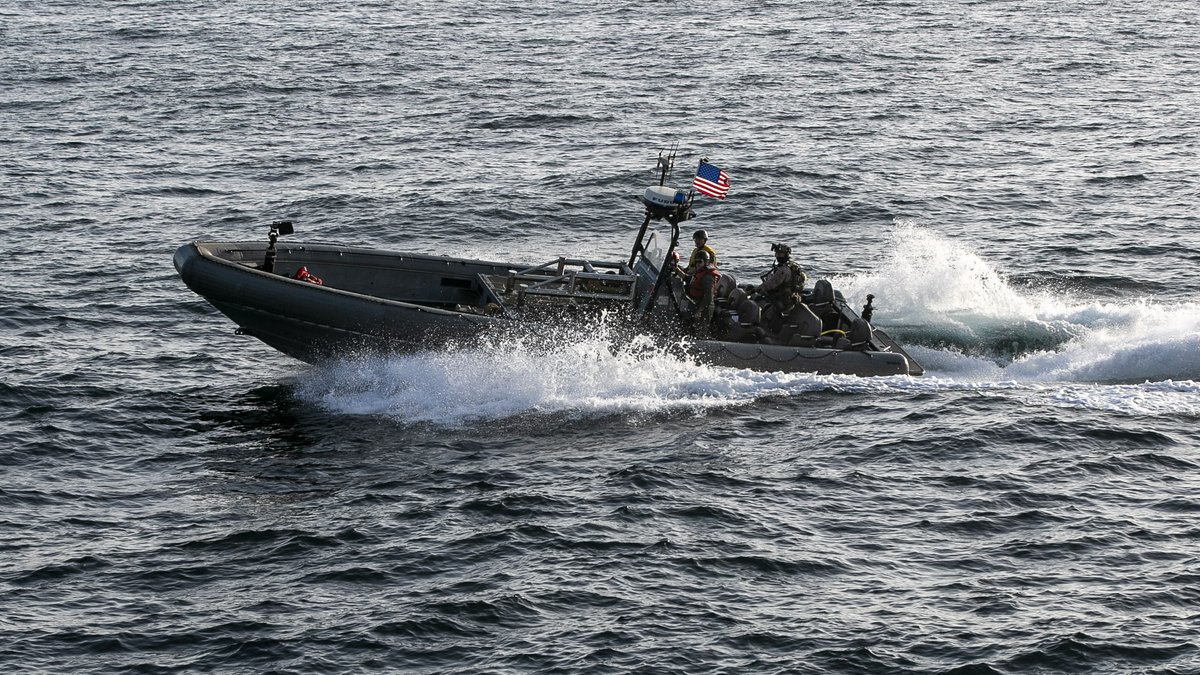
U.S. forces patrol the Arabian Sea near M/V Touska, April 20, as the Iranian-flagged vessel's container cargo is searched after U.S. Marines boarded and seized the ship when it attempted to violate the U.S. naval blockade.
Nothing grows in a comfort zone—but plenty of bravery grows in the wood lines of #FortBenning. 🪵🧗♂️
Trainees from Charlie Company, 2nd Battalion, 19th Infantry Regiment, execute tactical maneuvers during a field training exercise.
#198thInfantryBrigade
Combat Engineers know how to make an entrance. 💥
Soldiers from the 95th Combat Engineer Company don't just find a path—they create one.
📽️ Sgt. Austin Steinborn
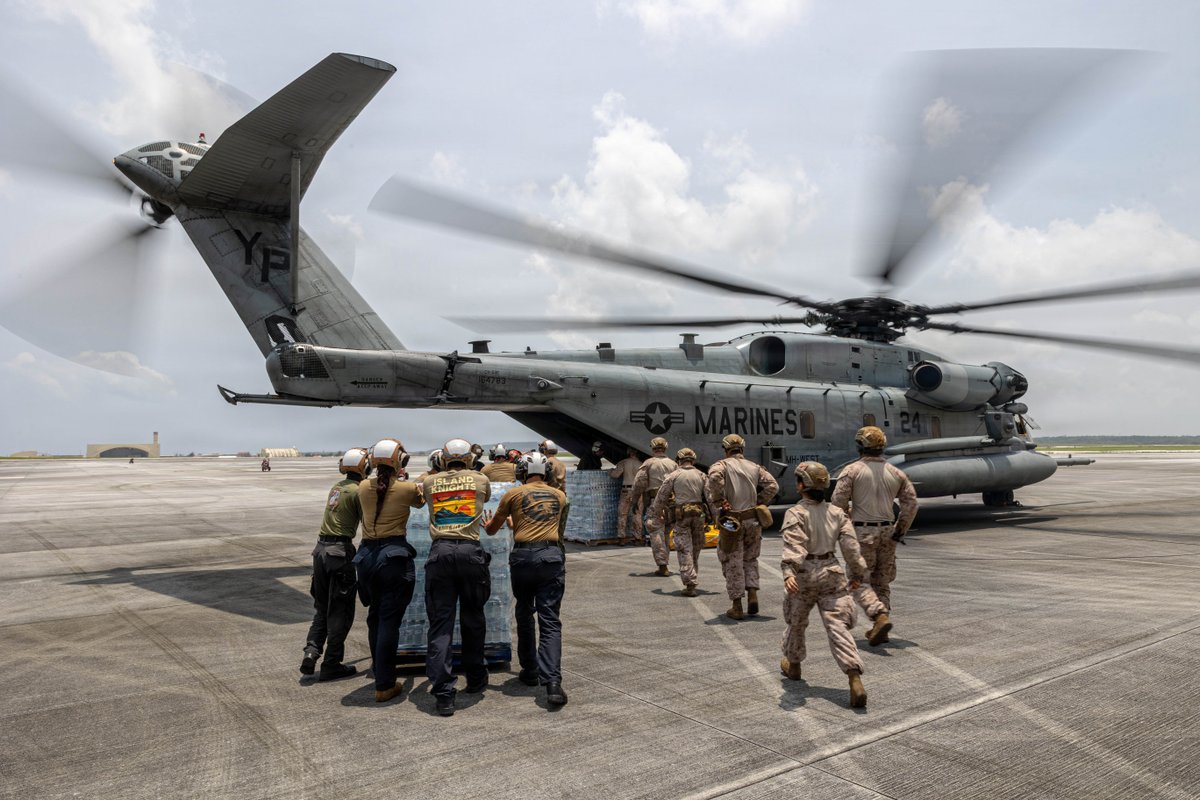
#Marines and @USNavy Sailors with the 11th Marine Expeditionary Unit deliver immediate humanitarian aid and disaster relief to the people of Saipan.
The 11th MEU, embarked aboard the Boxer Amphibious Ready Group, is providing vital defense support to civil authorities, contributing to crisis response and recovery efforts in the wake of Super Typhoon Sinlaku.
In supporting @fema and local governments, the 11th MEU fills critical capability gaps to enable restoration of essential services by civil authorities.
#USMC #SemperFi #11thMEU
German pilots called the Mammoth Short Sunderland the Flying Porcupine for its gun array. The 112-foot wingspan flying boat sank 26 U-boats on 2,980-mile patrols and one crew fought off eight Ju 88s for 45 minutes. An amazing ship from the '30s. 😎
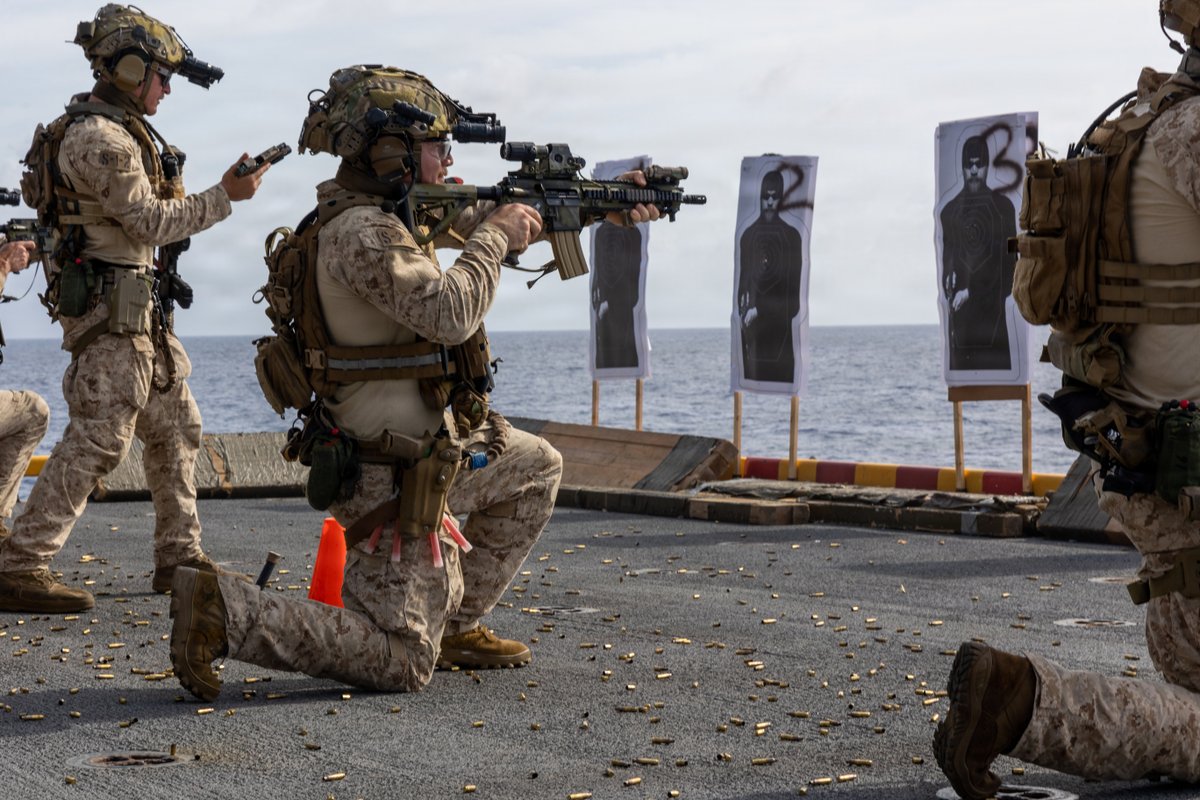
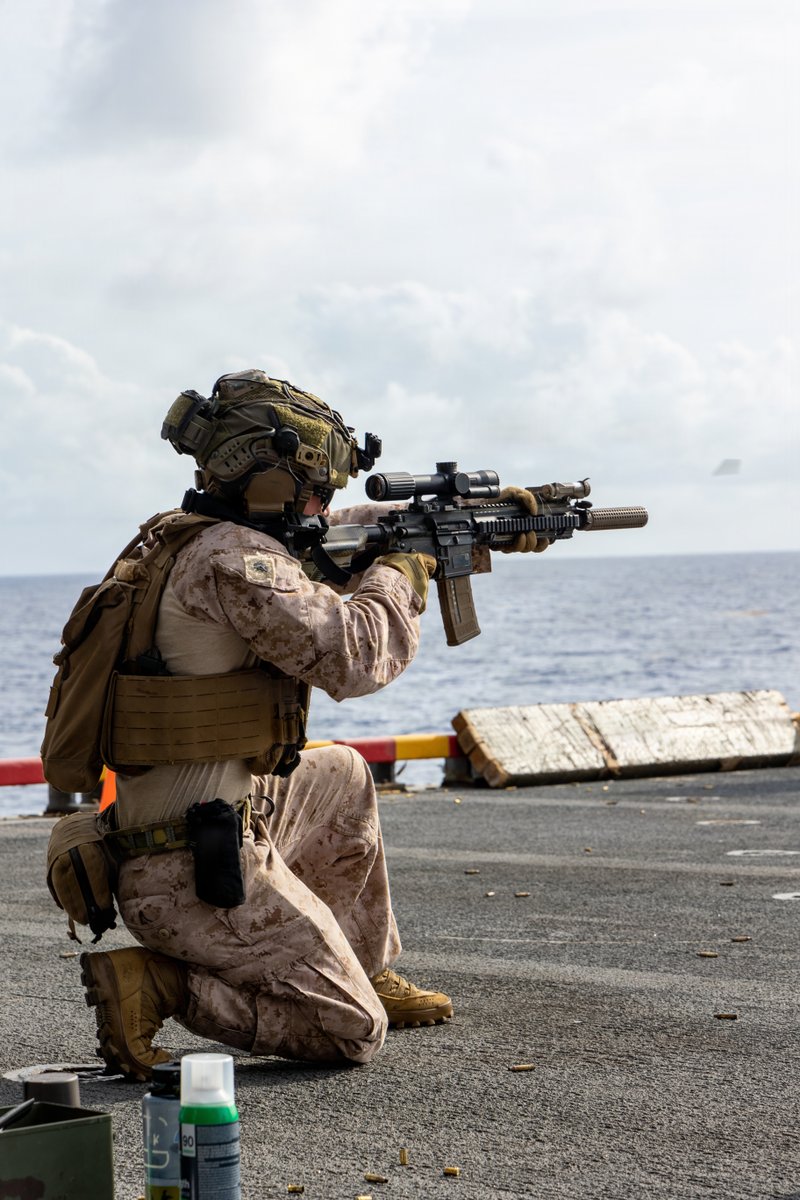
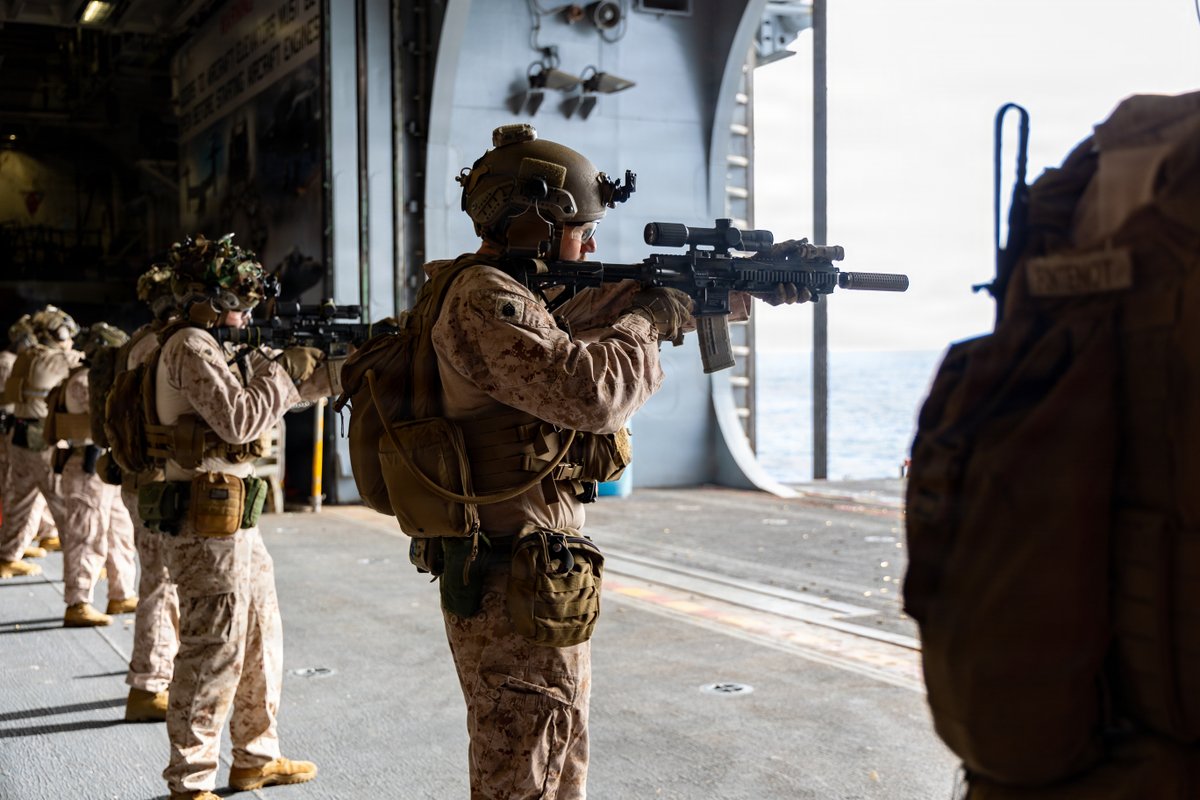
#Marines with @22nd_MEU execute a live-fire range aboard @USNavy Wasp-class amphibious assault ship USS Iwo Jima (LHD 7), while underway in the Caribbean Sea.
U.S. military forces are deployed to the Caribbean in support of the @Southcom mission, @deptofwar-directed operations, and the @POTUS priorities to disrupt illicit drug trafficking and protect the homeland.
#USMC #SemperFidelis #Warfighters
One cannot mention the Alaska class cruisers without a firestorm of controversy and opinion. Many are quick to point out that the concept of a large cruiser was archaic. Others point out that their intended targets and role never materialized.
It's important to remember that situations change. Military planners do not have the same luxury of hindsight that observers do today. They can only plan for what they can, trying to make use of whatever data they have attained. As new data comes in and the situations change, the planning changes with it. Good ideas might no longer be good.
So far as the Alaska class goes, this can be seen in the notes from a January 1945 meeting between several Navy officers and the Secretary of the Navy. The discussion was primarily about United States Shipbuilding, touching on topics that included what warships were in development, what was being built, and the direction of the US Navy in the future.
Of particular interest is the following about the Alaska class:
Fleet Admiral Ernest King: Now, there is this 12" — the next is CB, 12" type, of which two are in commission, and one is building. That will be finished this calendar year, will it not?
Rear Admiral Mills: Yes, sir.
Fleet Admiral Ernest King: Well, we don’t know enough about that to warrant going out — it is a new type, and I was the proponent of it when I was a member of the General Board, but I don’t think any of us know enough about its usefulness — and a factor in the usefulness of the 12" type is that the Bureau of Ordnance at long last has developed a rapid-fire type of 8" gun which makes the 8" cruisers loom very large again. I don’t think we are warranted in building any more CB's.
An interesting bit of information to be sure.
Admiral King mentioned that he himself was a proponent of the Alaska class. During his time on the General Board, the German Deutschland class were big in naval circles and there was speculation that Japan was also developing similar cruisers. For the General Board, one of the primary goals was debating counters to foreign developments. At this time, a large cruiser that could outrun, outgun, and outfight enemy cruisers made perfectly logical sense.
By 1945, the situation had changed. The roving cruisers never materialized as expected and exisiting ships could counter the cruisers that did exist. Not surprisingly, King was quick to question the utility of large cruisers of the Alaska type in this new enviornment.
Those existing ships have also changed the enviornment. King noted that the arrival of the cruisers with auto-loading 8" guns would potentially be more useful than the Alaska class with their larger, more powerful 12" guns.
Further down In the meeting notes, there was a debate on the number of heavy cruisers in development. The Secretary of the Navy was unsure of why more heavy cruisers should be built with 27 already in various stages of construction. Admiral King however was keen to secure four additional Des Moines class cruisers for a total of 12 automatic 8" cruisers.
Footage from Taiwan's MNA shows recent live-fire exercises held by the Penghu Defense Command.
Javelin anti-tank missiles and M60A3 tanks can be seen, alongside other systems.
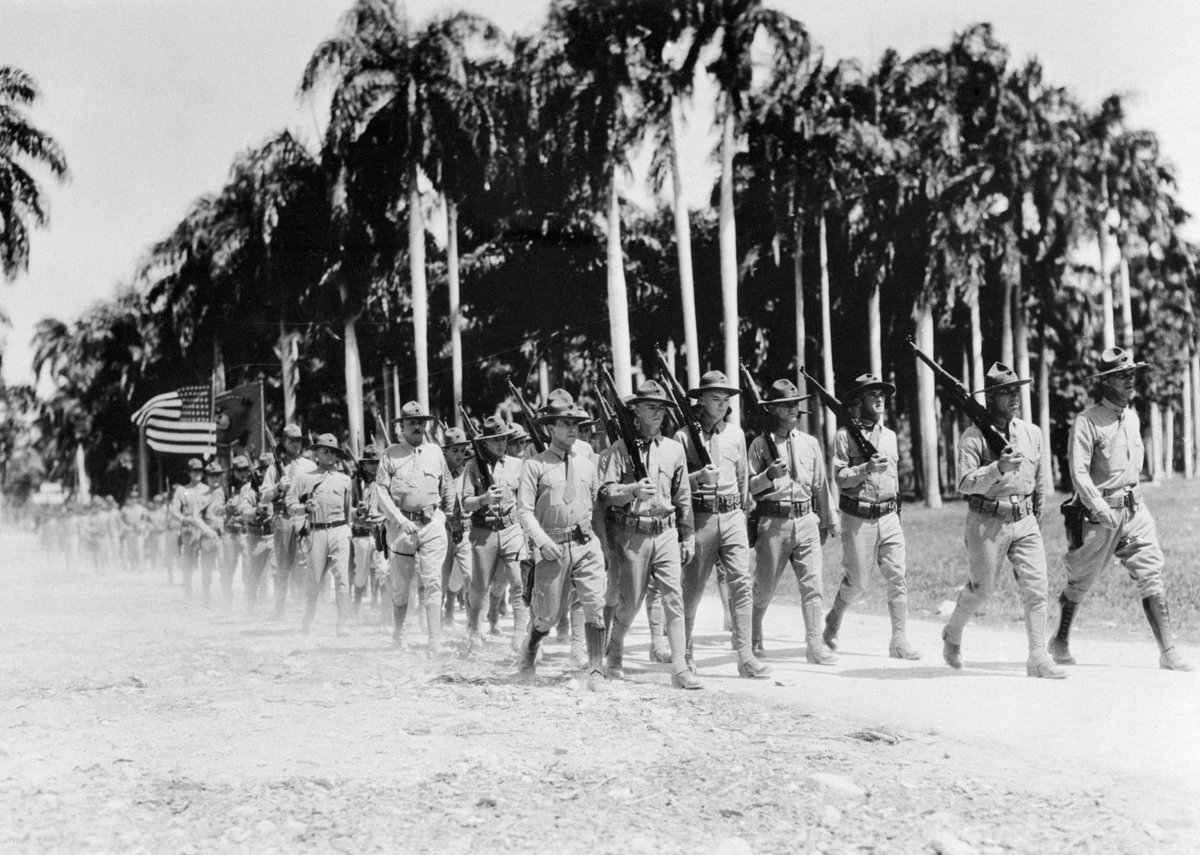
1934: US occupation of Haiti
In 1915, following the assassination of Haitian President Jean Vilbrun Guillaume Sam, President Woodrow Wilson ordered the occupation of Haiti under the guise of ensuring stabilization within the region.
However, underlying the occupation were the interests of various American businessmen in exploiting the country financially.
The National City Bank of New York had withheld funds from Haiti and paid rebels to destabilize the nation with the goal of prompting an American intervention that would help grow U.S. private investments.
This occupation did not end until 1934, when President Franklin D. Roosevelt ordered the withdrawal of troops from Haiti.
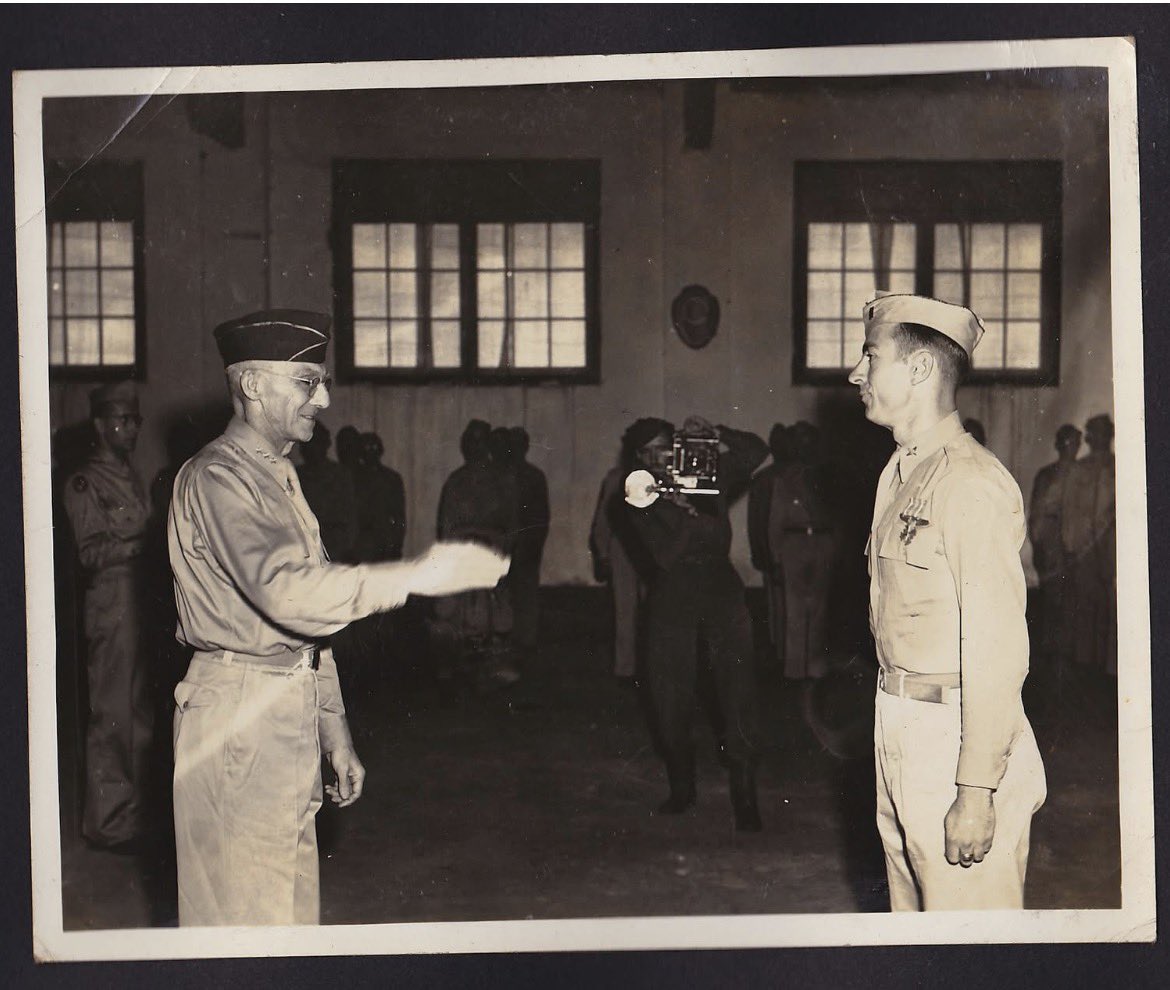
This is a photograph of Lt. General Joseph Stilwell presenting the Distinguished Flying Cross to Lt. Charles J. Crysler in July 1943 as part of the ceremonies commemorating the first anniversary of the CATF/14th Air Force. Although Crysler was awarded the DFC for his 3 kills over Kunming, China on 15 May 1943 and his 50 prior combat missions in the CBI theater, I’ve read a lot of criticism about the inconsistent standards that were used for awarding the DFC (and the Air Medal) throughout the various theaters during WWII. What are your thoughts?
(photo courtesy of the Crysler Collection)
Firepower Friday!
The battleship USS Iowa (BB-61) fires a salvo from her forward turrets during a gunnery exercise on 23 April 1987.
I had recieved a question about the number of 16" (406mm) projectiles that were available to the Iowa class following their reactivation.
The United States had a sizable number of 16" shells in storage. An inventory taken at the start of the 1980s showed that 21,088 16" shells remained in storage. Out of those shells, 3,200 were of the Armor-Piercing type, 2,300 were practice shells, and15,450 were High-Capacity (High-explosive).
However, at the time, about 62% of these shells were considered to be in good enough shape that they could be brought into service quickly. The remainder would need more substantial work to make them usable. In addition, there were enough components in storage to assemble another 5,050 shells if needed.
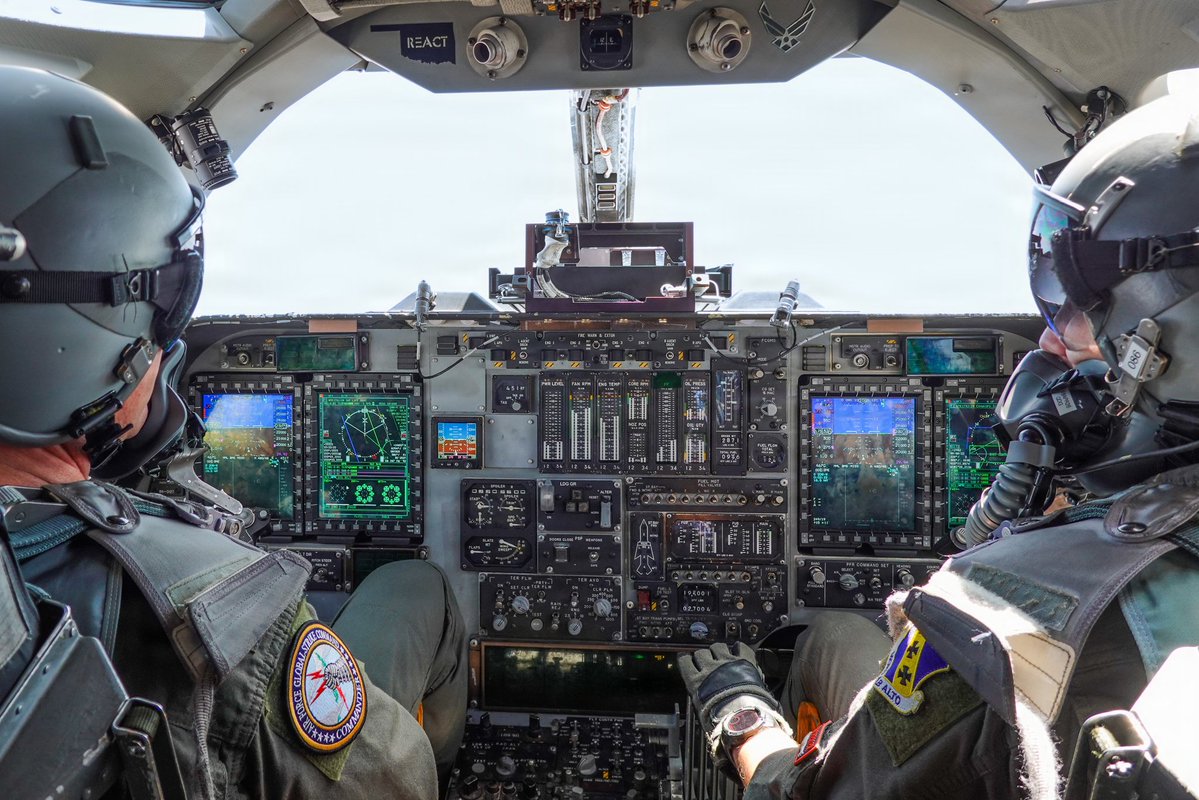
🇺🇲 Good shot of a B-1B Lancer's cockpit, seen here during a training sortie out of Dyess AFB, Texas, March 31, 2026. Sitting on the left, in the aircraft commander's seat, is Gen. Stephen L. Davis, commander of Air Force Global Strike Command, who flew in the aircraft as part of his visit to the base that day.
(📸/DVIDS)
Training for complex threats. From perimeter security to CBRN response, Soldiers sharpen the skills that protect people, safeguard equipment, and ensure mission success. Think you could handle it? Earn your spot: https://t.co/lhzMHRhF24
On April 16, 1917, France's first tank the Schneider CA1 rolled into combat at Berry-au-Bac. A boxy "wire-cutter" on a tractor chassis, it featured a side-mounted 75mm gun and two 8mm machine guns. Its pointed nose often ditched it while thin armor left it vulnerable.
USS San Diego at Mare Island Naval Shipyard, Vallejo, California, United States, 9 Apr 1944; note camouflage Measure 33, Design 24d; USS Cassin and USS Denver in background