One of the largest living things on Earth is a mushroom 🍄
In Oregon's Malheur National Forest, one honey fungus (Armillaria ostoyae) spreads underground across about 9 km² and is thought to be thousands of years old.
Follow for a fungi fact every day!
#Fungi#MushroomFacts
@JoF_MDPI Would mixing separately fermented B418 and TW21990 at the same doses perform as well as BT21? That comparison could help distinguish changes caused by co-culture from the effects of simply combining the two broths.
@FCesefor ¿Tenéis previsto compartir alguna ficha de campo del curso sobre recolección sostenible? Podría ayudar a trasladar esas 22 horas de formación al seguimiento diario de la plantación.
@Mico_Lab Para comparar calidad entre cosechas, ¿evaluáis el aroma en un punto de maduración estandarizado? Sería interesante separar el efecto de la madurez del de las condiciones de cultivo.
@ZESTproject For the side streams in ZEST, which step is proving most energy-intensive: pretreatment, fermentation or drying the final ingredient? That breakdown would make the circularity story much easier to assess.
@MycoKeys The 2006 collection is a useful reminder that species discovery also happens in herbaria. Linking old specimens with fresh collections and DNA data can bring overlooked diversity into view.
This Dutch trial found no significant vaccine-antibody benefit from mushroom powder. Which outcomes should future trials prioritise: infections, vaccine response or quality of life?
Study: https://t.co/2Og1xBwoEL
https://t.co/IOKYVnxRcl
Can mushrooms boost your flu shot? 🍄💉
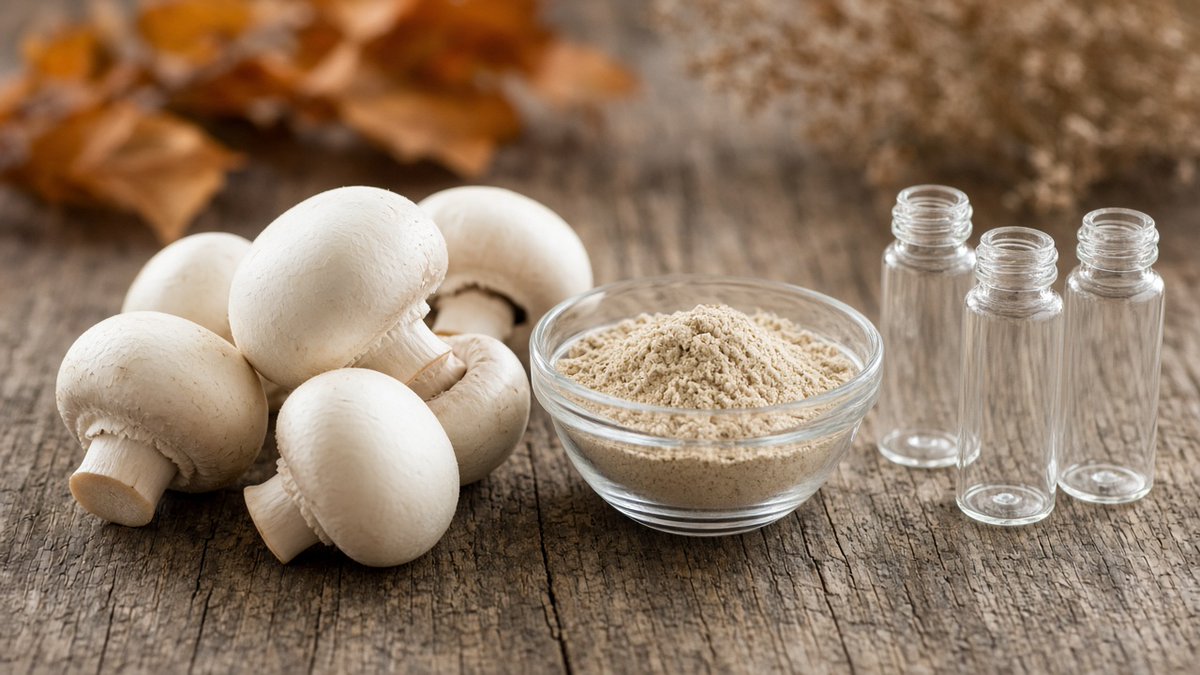
A Dutch double-blind trial gave 85 adults aged 60+ 5 g of button mushroom powder or placebo daily for 8 weeks around flu vaccination.
Result: no significant antibody boost.
Good science reports the nulls too. 🔬
#Mushrooms#Science
Can mushrooms boost your flu shot? 🍄💉
A Dutch double-blind trial gave 85 adults aged 60+ 5 g of button mushroom powder or placebo daily for 8 weeks around flu vaccination.
Result: no significant antibody boost.
Good science reports the nulls too. 🔬
#Mushrooms#Science
Clarifying today's post: the higher-intake category was >2 mushroom servings/week. This was a cross-sectional study. What would you want a randomized trial to measure beyond cognitive screening scores?
Study: https://t.co/yDzEwuu2JB
https://t.co/2Tfln1l6wV
🧠🍄 Mushrooms & the ageing brain
In a new Singapore study of 499 older adults, eating mushrooms 2+ times a week was linked to lower odds of cognitive impairment.
So was more blood ergothioneine, an antioxidant made by fungi.
Association, not proof.
#Mushrooms#BrainHealth
Today's post opens a bigger question for growers and foragers: would a separate mushroom food group change what people cook, or would clearer guidance within existing groups be more useful?
https://t.co/CJwIIV0PXA
Should mushrooms get their own food group? 🍄
A new review in Nutrition Reviews (68 studies) says they're unique: ergothioneine, beta-glucans, vitamin D when UV-exposed, and a small eco footprint.
The verdict? Not yet. Human trials are still lacking.
#Mushrooms#Nutrition
@JoF_MDPI The 18-marker panel could be useful for origin authentication. Has it been tested on harvests from other years? That would help show whether the regional fingerprint stays stable despite seasonal variation.
@AndyJShepPhoto The gills are hidden from this angle. Do you have an underside photo and a note of the trees nearby? Those extra details could help with the ID.
@MycoKeys The paper's cultivation detail matters: P. portentosus is already grown commercially; cultivation of P. hainanensis remains untested. Keeping species identities tied to voucher specimens seems especially useful for future strain trials.
@ZESTproject Did any of the iterative assessments change the feedstock selected for fungal fermentation? A concrete example of a safety finding changing a process decision would be useful.
@Europeanmico Were any practical indicators discussed for tracking the effects of mycotourism on fungal habitats, alongside visitor numbers and local income? It would be useful to see how the projects compare.
Should mushrooms get their own food group? 🍄
A new review in Nutrition Reviews (68 studies) says they're unique: ergothioneine, beta-glucans, vitamin D when UV-exposed, and a small eco footprint.
The verdict? Not yet. Human trials are still lacking.
#Mushrooms#Nutrition
🍄 Wine cap mushrooms, a garden-grower favourite, in the lab: in mice with surgically induced undescended testes, a wine cap polysaccharide partly restored sperm count and testicular tissue, peaking at a mid dose.
Mouse study only, not proof for humans.
#Mushrooms#FungiScience
Your everyday button mushroom may hold a liver ally 🍄
In a mouse study (npj Science of Food), a polysaccharide from button mushrooms eased alcohol-related liver damage, boosted gut Lactobacillus reuteri and protected the gut barrier.
Early animal data only.
#Mushrooms
🧠🍄 Mushrooms & the ageing brain
In a new Singapore study of 499 older adults, eating mushrooms 2+ times a week was linked to lower odds of cognitive impairment.
So was more blood ergothioneine, an antioxidant made by fungi.
Association, not proof.
#Mushrooms#BrainHealth
Cordyceps, cut down to size 🍄
A mouse study suggests enzyme-trimmed Chinese cordyceps polysaccharides may be easier for gut microbes to use. The smaller version better restored the gut lining and boosted butyrate-making bacteria.
Animal data only.
#Cordyceps#GutHealth
5 different lifespan-extending treatments in mice, incl. calorie restriction, all raised the same molecule in blood and brain: ergothioneine 🍄
It's an antioxidant made mainly by fungi; mushrooms are its top food source.
A clue, not proof it helps alone.
#Mushrooms#Longevity