MFP payments for 2020 are not known but could make a big difference on 2020 returns. Consider building bonuses for MFPs in 2020 cash rents
YouTube video at:
https://t.co/8UXly2fq0d
Article at:
https://t.co/ZwjEL9AYyi
Projections of 2019 and 2020 farm incomes on Illinois grain farms:
https://t.co/9KZKbWXJkD
Either need exceptional yields or another round of MFP in 2020 to get to $0 per farm, given current trade environment.
@andyjrichter Real questions are: Is it advisable to lose money on “high” cash rents? Why would that work financially unless your expecting higher returns in the future? And why would you expect higher future returns?
Cash rent at “average” levels have been marginally profitable since 14.
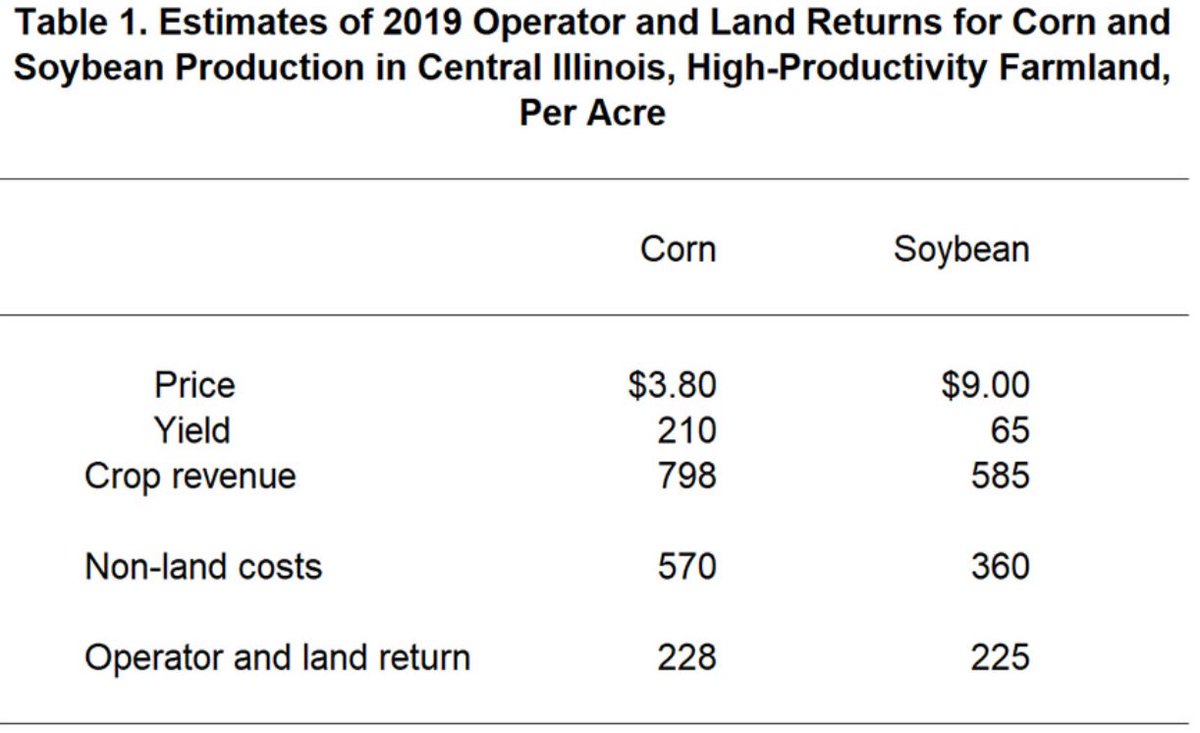
@BucklesRyan That is the budget with:
1. $9.00 soybean price are close to 2019 cash bids (could be higher, maybe not)
2. Non-land costs will be higher in 2019
3. Those are trend yields. How long do you believe we will have above trend yields?
Debt per acre rose slightly at the end of 2017 on Illinois FBFM farms. Debt-to-asset ratio increased as well. Debt per acre has been rising in most years since 1991. In recent years, asset values have not been growing to counter debt increase
https://t.co/TOFbbN2RUP
Cash rent levels for 2019
$9.00 soybean price and cost increases lead to need for large cash rent decreases for farmer profitability — $50 or more decline from average levels.
Less than $200 per acre rent for 207 bu expected corn / 67 bu soybean yields.
https://t.co/2gEc0jQ3MP
Arguably, trade disputes have lowered chances of higher corn and soybean prices in the future, suggests that need to evaluate long-run farmland returns when setting rents
https://t.co/gl3MFJ4dp4
Corn likley to shift to PLC from ARC-CO if either the House or Senate versions of 2018 Farm Bill pass. For corn, expected payments higher for PLC than ARC.
https://t.co/EMxBgwqSX0
2018 Soybean Crop Insurance Youtube. Implications:
1. Insurance payments could be large but still not likely.
2. If payments are large, grain farm incomes will be low.
3. Insurance payments will not compensate farmers for trade disruptions.
https://t.co/4nCUx0hhOP
In previous post got a year ahead. Corrected 2019 to 2018 after catch by @croninjm
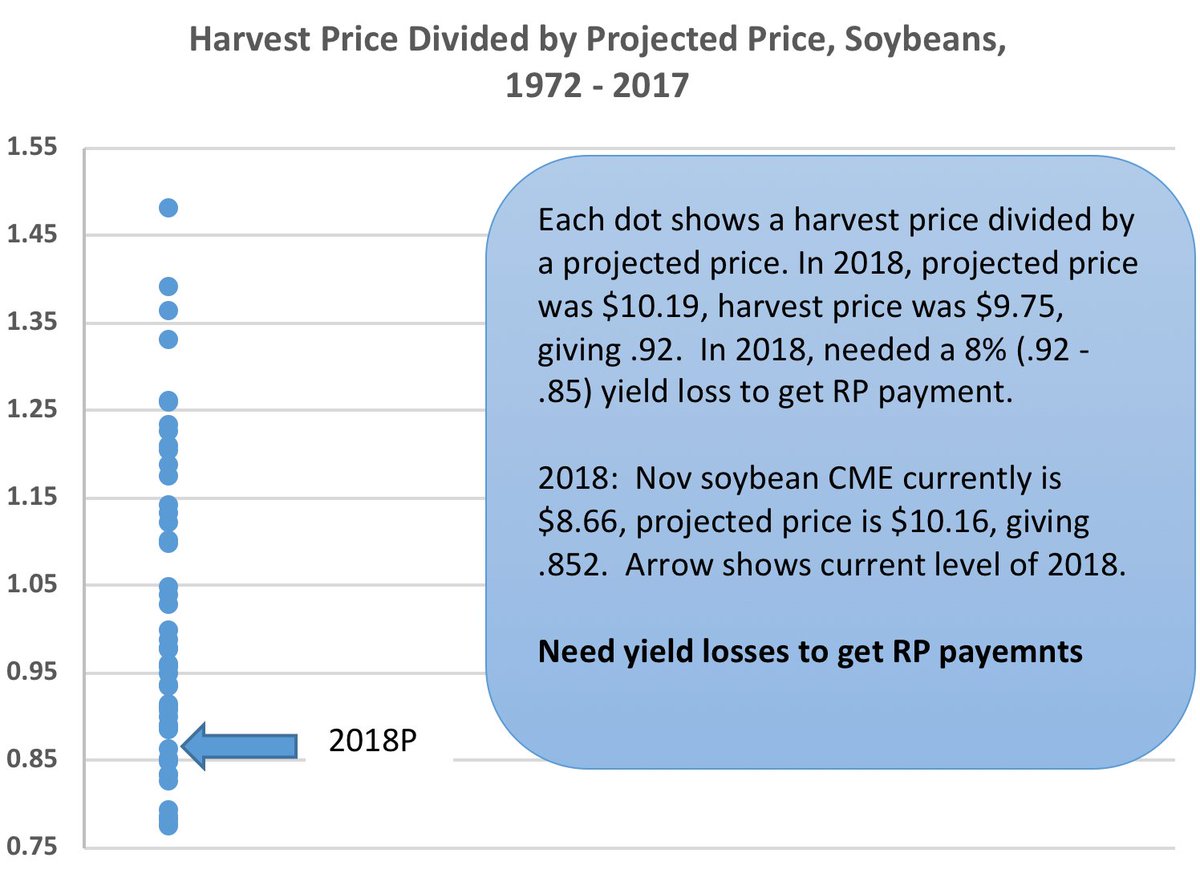
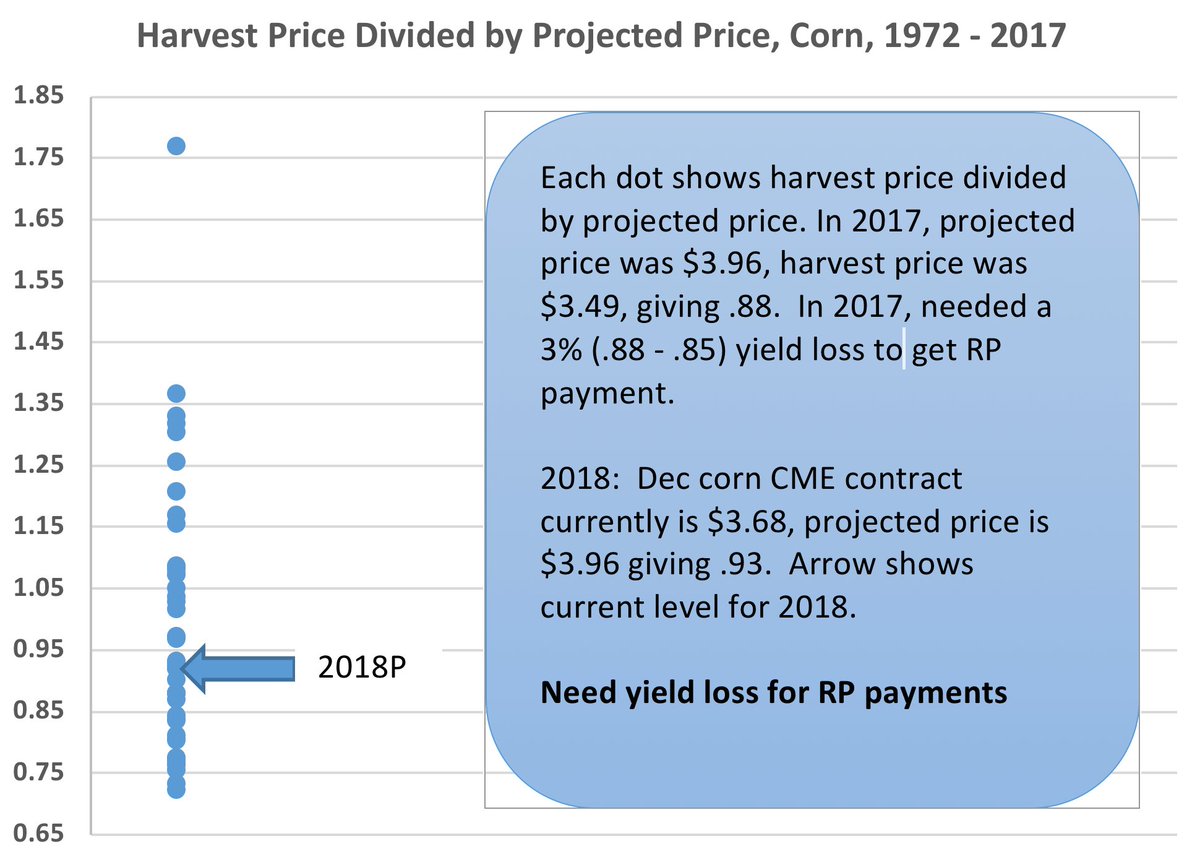
Soybean RP payments in 2018: yield losses are still needed at current November CME soybean price levels.
Soybeans Revenue Protection (RP) crop insurance payments:
Right now, Nov 2018 contract near $8.66. Current price is
.852 of $10.16 projected price. Need a yield loss for a payment.
The current level of the Nov 2018 soybean contract ($8.65) would not trigger 2018 RP crop insurance payments at any coverage level without yield loss.
At this point, I am not expecting large soybean crop insurance payments.
https://t.co/0Vh5YqIREU
Meeting these three items could result in 2018 grain farm incomes being near 2016-17 averages (not particularly good):
1. Gains on grain produce in 2017 and sold in 2018.
2. Pricing over 25% of 2018 crop in first half of 2018
3. Exceptional yields
https://t.co/RJukmFYVif
From 2014 highs to 2017, the largest declines in corn production costs came from fertilizer, drying, and fuel. These costs are highly related to energy prices, which are increasing. Higher energy prices likely mean higher corn production costs in 2019 https://t.co/FKwG2vsjmF
Per acre pesticide costs on corn in central Illinois increased dramatically from $50/acre in 2012 to mid-$60/acre in 2013 to 2016. All time high of $73/acre in 2017.
https://t.co/Z8LHudAyt2