ok this one is actually worth stopping for
someone just built a second brain with 26 agents running behind it
you dump a voice note, random idea or task into it and it figures out what it is, remembers it, and connects it to stuff you said weeks ago
we’re getting dangerously close to never having to remember anything ourselves
1/
Un nuevo estudio mide algo que el urbanismo intuía pero nunca había cuantificado bien: cuánto obliga realmente una ciudad a depender del coche. Roma sale peor parada que ninguna otra de las 18 ciudades analizadas. Un hilo 🧵
How is the heart of the lunar spacecraft designed? 🚀
Engineers have created a detailed 3D visualization of the key components of the Apollo mission's lunar module and command module. The model showcases the intricate mechanics of the engines, life-support systems, and docking mechanisms that enabled the historic human flight to the Moon half a century ago.
¡De un tronco de árbol seco nace un milagro!
🌿 Con esta técnica especial aplicada a un tocón cortado y seco, no podrás creer lo que sucede en unas pocas semanas. ✂️
Observa la resurrección de la naturaleza mediante el método de injerto de corteza,
¡te sorprenderá el resultado! 😱👇
I was literally just waiting for a bus when I turned around and saw this.
The Casa dei Crescenzi, an extraordinary medieval house in Rome, built with fragments of ancient Roman buildings incorporated into its walls.
Marble carvings, ancient capitals, and elaborate reliefs, all standing beside a 1930s governmental administrative building.
It survived the sweeping demolitions of Rome's historic centre in the 1930s, when much of the surrounding medieval neighbourhood was destroyed.
In Rome, you really can find something this spectacular while doing the most mundane things.
En Granada había un mítico bar cerca de Ciencias, La Parra, donde su propietario cocinaba en los noventa con una camiseta de tirantes de Abanderado y un pitillo en la boca; mientras la carne se asaba en la plancha daba dos caladas, expulsaba el humo del cigarro, diluido con el de la cocina, y echaba mano al cubata en vaso de tubo reservado junto al fregadero, le daba la vuelta a los filetes de lomo y cortaba por la mitad una barra de pan en la que metía, con sus manos desnudas, pasadas por un paño de cocina, la carne asada, la lechuga, las patatas fritas, lo que fuera que llevaran sus bocadillos de nombres de futbolistas.
Acudieron a su bar celebridades como Alejandro Sanz y Raúl González, pero cerró en 2018 «por los chismorreos de Granada por parte de estudiantes, vecinos y gente de otros bares», renegando de su leyenda (negra). «Mi abogado puede demostrar que mi expediente está impecable», dijo Manolo Leyva, icono de una generación de borrachos hambrientos a los que él dio de comer. En su forma de ver el mundo, la mierda estuvo, en todo caso, al otro lado de la barra.
Una ciudad seria añadiría una estatua con su figura al bulevar de la Avenida de la Constitución.
A 1975 Soviet animation about a woman who cuts her hair, disguises herself as a man, and outsmarts an entire court just to rescue her imprisoned husband. Vasilisa Mikulishna was THAT girl.
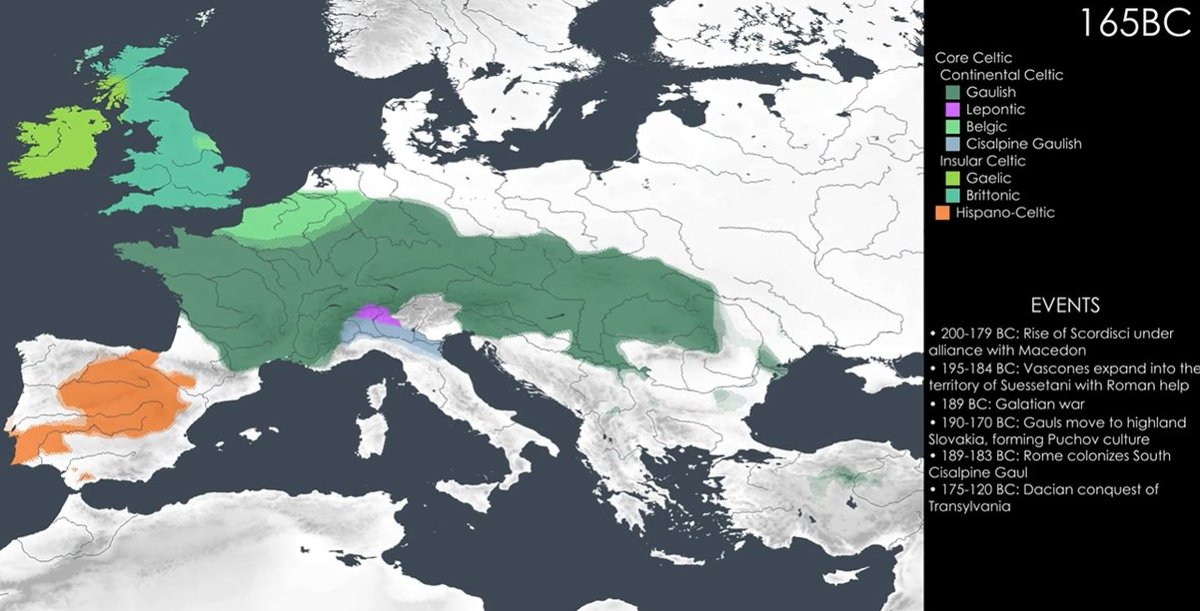
New Gem by Terrificdragonfly, History of Celtic languages in Europe (1500BC - 2000AD).
Based on Archaeology, Toponymy and Historical data, this is by far, just like his Germanic video, the best video on Ancient Celts on Youtube now.
Amazing documentary from Sweden showcasing how they made iron from raw clay they harvest in a bog. This method is how they made raw materials for tools, weapons and export from the early iron age until the industrial revolution!
The first step is to dig up clay rich in iron ore from a bog. The clay is left to dry in piles and then transported to a foundry nearby the bog.
At the foundry the first step is the roast the raw material. This is to remove moisture and biological material. The temperature of the fire is around 500-600°C but not higher since the material should not melt yet. This shrinks the raw material to 50% of it's original mass, sometimes to a third of it's original mass. This process takes 2-4 hours.
As this happens the men prepare the foundry. In a stone clad hole in the ground with an air vent at the bottom firewood is stacked. When this is lit on fire the men takes careful precautions to not allow it to burn up completely. After an hour the firewood is turned into charcoal used to turn the now refined iron ore into iron ingots. The roasted iron ore is placed into the bed of coal will sink slowly sink to the bottom of the pit as the coal burn with a temperature in-between 1200-1400°C, the men peak into the airhole at the foundry and can tell from the colour of the temperature is correct or if they need to adjust it. The bellows blows 350L of air into the foundry per turn and the entire process takes up to four hours.
The lump of iron is still full of slag and byproduct. To remove this its beaten with a hammer on site. At a smiths workshop a smith continue to hammer our out the byproducts until it's refined enough for production!
In the forests there are many traces of iron ore refinement. The foundry's can still be found in good condition even if they have not been in use for over 500 years and traces of slag and byproduct still litter the ground.
What you are looking at is, An electric arc furnace is one of the few machines on Earth that deliberately creates controlled lightning.
Three graphite electrodes, each weighing 1-2 tonnes, carry up to 150,000 amps, generating an electric arc approaching 4,000°C while melting hundreds of tonnes of steel at around 1,650°C.
A single electric arc furnace can pull up to 300 MW of power, enough electricity to power roughly 265,000 homes, yet it concentrates that same energy into a few metres of space to create a controlled 4,000°C electric arc.
The graphite electrodes slowly consume themselves every heat, while hydraulic controls continuously adjust their position to keep the arc stable as the scrap collapses beneath them.
The real engineering challenge isn't creating the heat. It's keeping the furnace alive. Behind the arc sits a lining of MgO-C refractory bricks and water-cooled panels, designed to survive relentless thermal shock, chemical attack from molten slag, and temperatures that would destroy ordinary materials in seconds.
A modern ultra-high-power electric arc furnace costs roughly $50-85 million, while a complete EAF steel plant can exceed $1 billion.
What looks like an old dusty factory with glowing molten steel is actually one of the most advanced industrial systems on Earth, Billion-dollar machines combining extreme electricity, materials science, and automation to produce the steel that powers modern economies.
🎥anshanjusthigh
1 euro no invertido hoy en la conservación del firme, supondrá mañana 5 euros de rehabilitación y, en un futuro, 25 euros en reconstrucción
La “Ley de los Cincos” de Sitter, o cómo tirar el dinero
https://t.co/L1rFkxhYAG