I can’t promise I will be super active over there, have been enjoying less social media, but if you happen to be over on BlueSky, let’s connect - same handle. 😉
"Evidence-Baed Writing Instruction for Young Learners."
I am honored to be part of the Melissa & Lori Love Literacy Podcast with Dr. Karen Harris at https://t.co/v07gjN3yRt
Myth:
“Give him time. ….”
“He’s not ready to read.”
Responses to a K literacy screening - Child significantly below benchmark.
In reading, early intervention is the key.
Effective literacy instruction is developmentally, appropriate & effective
just read a paper saying the simple view of reading is not valid b/c research is "over 35 years old" ... ignores many more recent SVR papers. @YoungSukKim19 direct & indirect effects model of reading (DIER) is a newer empirically validated one, but no mention of this science.
This chapter, written by Dr. Barbara Foorman in the Handbook on the Science of Early #Literacy, is about how English-speaking children learn to encode and decode their written language—that is, their alphabetic orthography. https://t.co/25Uhg08Gu4
We have decades of research evidence about how change happens in organisations & systems. Yet mostly, we don't use this knowledge in practice. The biggest misconception is that once people understand change, they'll embrace it (almost never true). 4 principles that should inform our change efforts:
1) Transformational ideas typically come from outside the community & incur resistance: We build attachments to ideas, people & ways of working - when those attachments are threatened, we tend to act out in ways that don’t reflect our best selves
2) Transformations follow an “S curve” pattern: Innovations take hold slowly amongst a group of enthusiasts, then hit an inflection point at 10%-20% participation, then accelerate exponentially - it's why we should concentrate on building the 10-20% through enthusiasts rather than getting everyone on board with the change
3) There is a common, persistent “KAP-gap”: (the difference between what we say & what we do) - it's because we only change our views/practice when the people around us do & it's why we need to shape networks rather than opinions
4) Transformational ideas are propagated socially: It's not the mode of communication or even the individual influence of early adopters but the structure of the network that determines how fast and far an idea travels
https://t.co/Wgwo3KOwzG. By @digitaltonto.
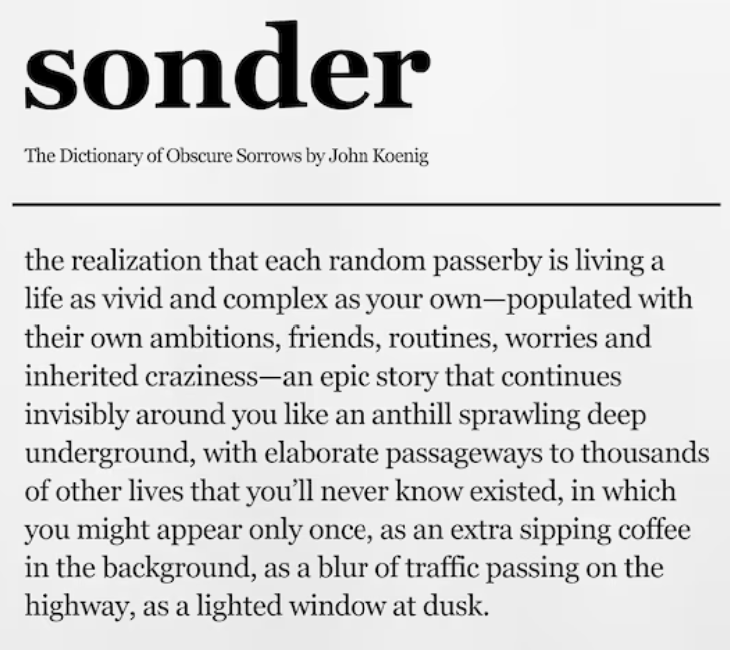
My new favorite word: sonder.
It's the profound awareness that every person you encounter has experienced a lifetime of hopes, fears, loves, and heartaches that you'll never know.
Each moment of sonder is a reminder to appreciate how little we truly grasp about others' lives.
New tip sheet! ELL Tips for History & Social Studies Teachers
This is the first installment of a new tip sheet series. We'd love to know what you think! | https://t.co/LaBILGMBxf
@NCSSNetwork#ELL#ELLchat#MLL#MLLchat
https://t.co/yYY66y0PYS
This is the first of two posts that will be focused on the teaching of spelling.
Part one covers some of the key research and rationale for why spelling matters, why we should be explicitly teaching spelling and its importance in literacy development.
School improvement warriors make a mistake in thinking everyone wants the same things they want. Often, job security and/or not upsetting the status quo is much more important to leaders than doing whatever it takes to teach a child to read. Playing it straight is a non-strategy.
Mastery of standards alone doesn't make students competent readers. It's about navigating the diverse functions of texts. That's why we focus on centering texts and their unique features.
Listen to episode 3 here: https://t.co/z0iAjVN1lQ
Independent reading during school time (e.g., DEAR) has not had strong research support. New meta-analysis of 47 quasi-exp studies shows modest effects for reading motivation and word recognition, and no effect for comprehension. Article is open-access. https://t.co/iHXN0HSweD
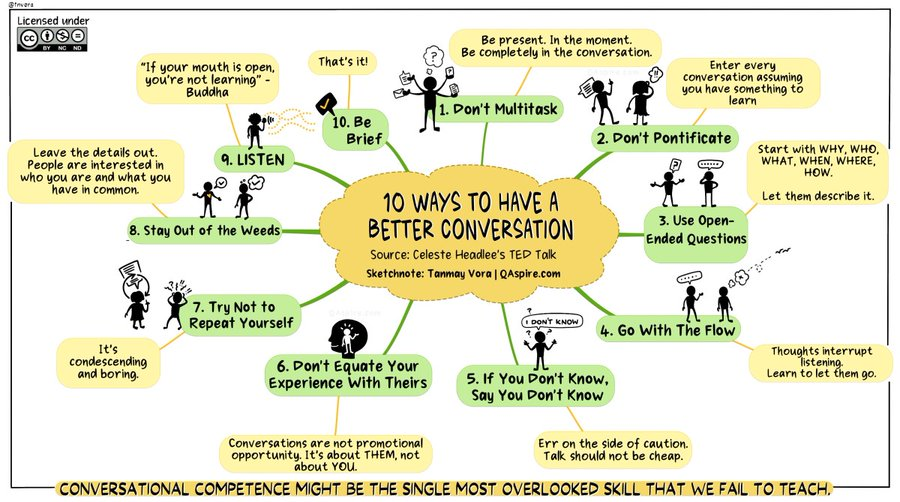
10 ways to have 🔥 conversations:
🎯Don't multitask
📖Don't pontificate
🤔Ask open-ended q's
🌊Go with the flow
🤷If you don't know, say it
🦋Don't equate your experience
🤐Don't repeat yourselves
🖼️Avoid the weeds
👂Listen
⌛Be brief
Visual by @tnvora