Las banderas del M-19 nunca incomodaron a los jueces progresistas pese al dolor que representan para miles de víctimas del terrorismo. Pero una camiseta de la Selección Colombia sí les parece peligrosa. El radicalismo ideológico de la izquierda permeó todas las instancias de poder.
Fecode anuncia un paro por la Salud: no hay medicamentos, ni citas, no transcriben incapacidades y suspenden tratamientos. Es el piloto de la reforma a la salud. El anuncio de paro ocurre un día después de que el presidente anuncia liquidación de EPS intervenidas. Que paradoja.
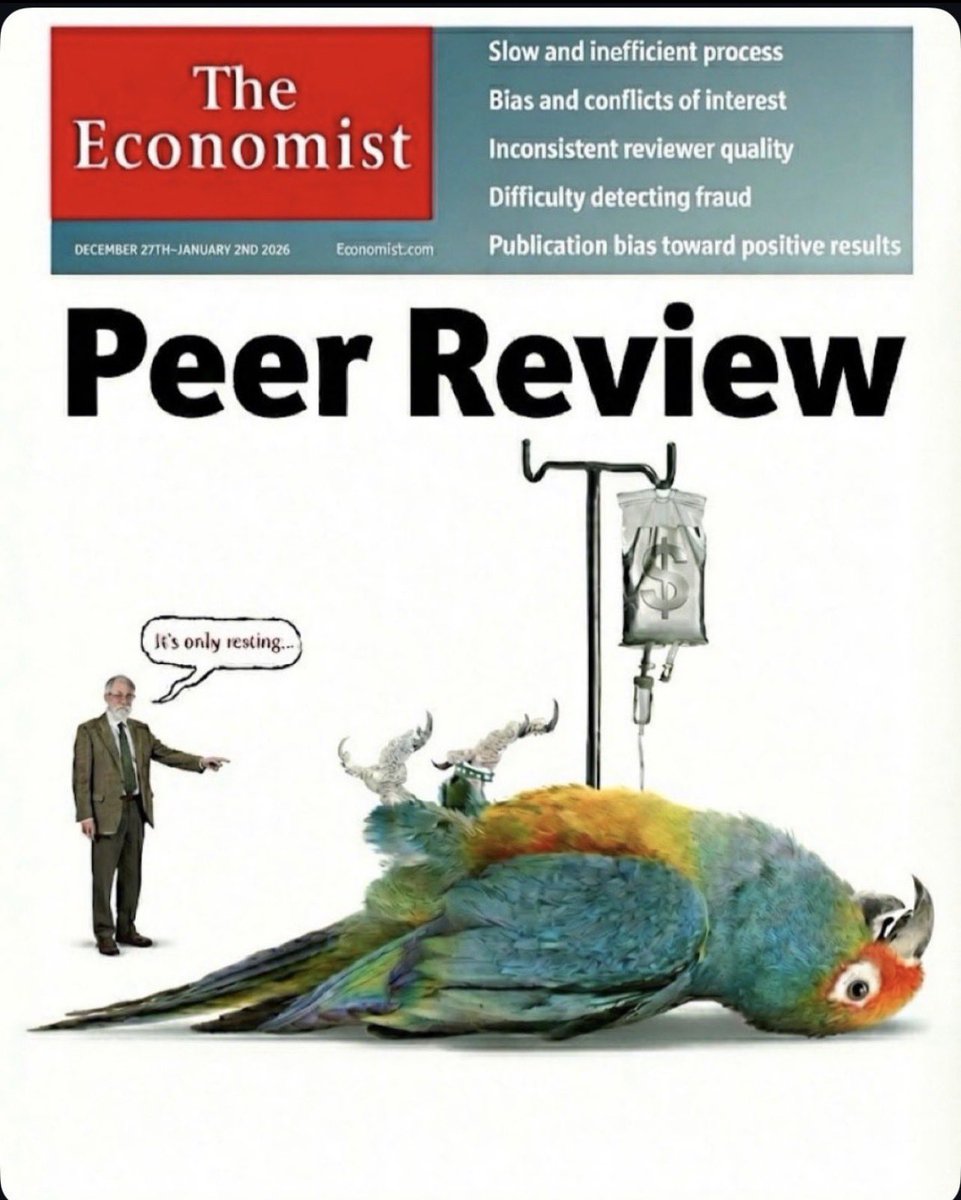
Peer review was supposed to be science’s quality filter, but somewhere along the way it started acting more like a bouncer who only lets in the regulars. It’s slow, it tends to favor established labs and familiar names, and it gets uncomfortable around anything too unconventional. Papers loaded with mountains of data tend to cruise through, while bold ideas that actually challenge the consensus get stuck in limbo or turned away at the door.
The irony is that where a paper gets published almost never determines its real worth. What actually matters is what the scientific community does with it afterward, whether people cite it, argue with it, build on it, or use it to blow up a long-held assumption. That’s where the value lives, not in the journal’s logo.
A major survey a few years back found that roughly 70% of researchers think the current system is fundamentally broken, and it’s not hard to see why. Publicly funded research hides behind paywalls, editors chase whatever topic is hot that month, and the whole incentive structure pushes toward safe bets over genuinely risky and potentially important work.
Science has always been complicated and deeply human and full of ego and inertia, but the conversation is shifting.
Kevin Acosta, el niño colombiano que murió esperando un medicamento para la hemofilia (y la indignación que genera la respuesta del gobierno) https://t.co/gPwIQ4Mp11
Adiós a un grande de la medicina ⚕️
Este martes murió Francisco Lopera, médico que lideró el Grupo de Neurociencias de la Universidad de Antioquia (@udea) y uno de los primeros en identificar y estudiar "la mutación paisa", acompañando a decenas de personas con Alzheimer precoz en Colombia.
#ParoCamionero | El senador Jota Pe Hernández les recordó a integrantes del Pacto Histórico cuando promovían paros y estaban en contra de la tributaria y de aumentos en precios de combustibles. https://t.co/if1kX8q65f
Luis Alberto Martínez, viceministro de Protección Social, sobre la actualización del manual tarifario, las socializaciones y concertaciones con actores del sistema para recoger observaciones.
@MinSaludCol alguna linea de atención en talento humano en salud que respondan? No responden a correos electrónicos ni al numero de extension facilitada.
Es tal el nivel de improvisación de la reforma a la salud, tal la falta de claridad sobre el funcionamiento del sistema propuesto--sobre quién hará qué--, que terminarán premiando a las EPS, entregándoles 8% del gasto por unas labores de intermediación.
El papel de las mayorías de la Cámara en esta discusión es una vergüenza. Parece no importarles el país. La reforma es un Frankenstein terrible.
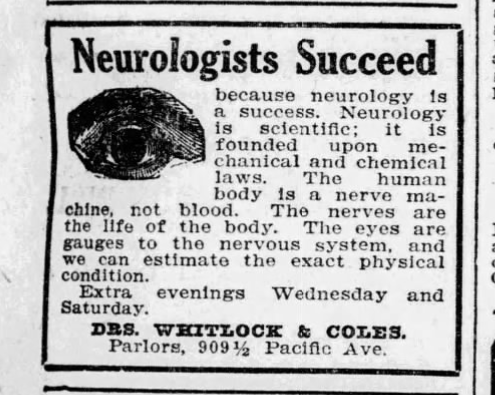
An advertisement from The Tacoma Daily Ledger, Feb 27, 1907:
"Neurologists succeed because neurology is a success."
"The human body is a nerve machine, not blood" (take that, blood doctors)
"we can estimate the exact physical condition" 🤔
Se dice que hay un Cartagena feliz y otra triste. Pero lo cierto es que la ciudad más famosa de Colombia es una sola, aunque esté segregada. Un reportaje especial escrito por @pardodaniel: https://t.co/P1MAHU2M2A