BREAKING: Elite 2027 LB AJ Randle Jr. has Flipped his Commitment from Miami to Notre Dame, he tells me for @Rivals
The 6’3 215 LB had been Committed to the Hurricanes since May
Randle is ranked as the No. 2 LB in the 2027 Rivals300
https://t.co/N7GwUKRL2r
@EliAfriatISR Talk about doing 0 homework to have a stance. Most of the Jewish population killed in that time WERE not gased. That doesn't mean they werent killed. Stupid.
Not really sure how this is even possible, but the College Football Playoffs selection committee has just moved Alabama ahead of Thriller as the best selling album of all time.
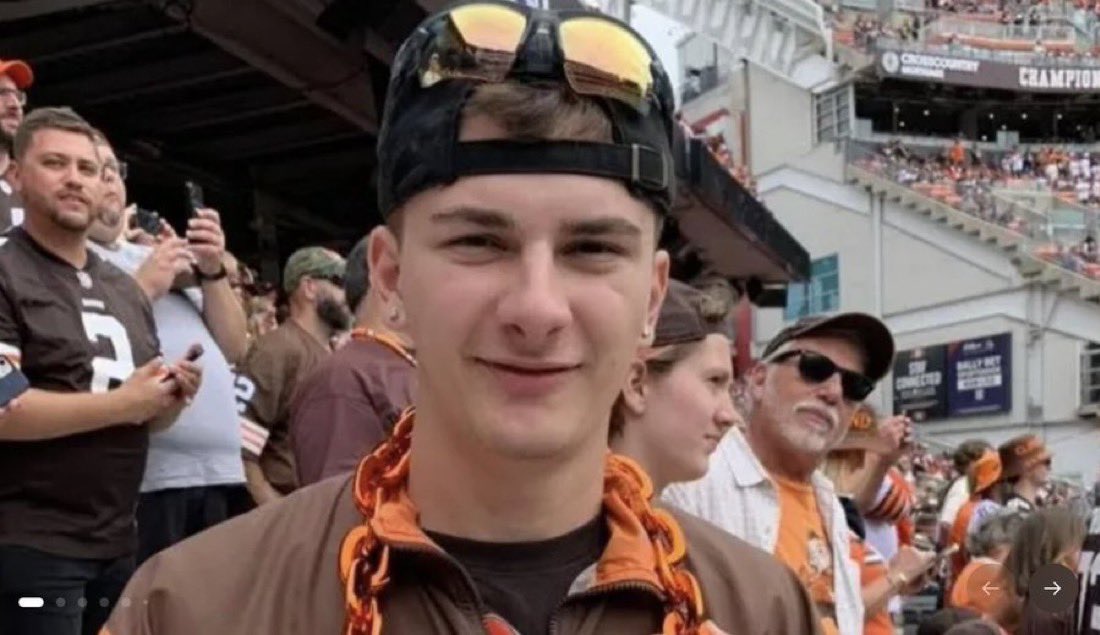
On this date one year ago @BernieKosarQB received a life-saving liver transplant from Bryce Dunlap- a 21-year old Browns fan who had died unexpectedly from a brain injury.
Unbelievable story. Prayers for Bryce’s family and continued good health for #19
You can take down Outlook, ground all the flights, freeze up bank accounts, but so help me God if the PlayStation servers are down when GTA comes out I will fly to Iran myself and finish the job.
@BrownSpiderCLE I dont think he would beat President Obama but I also dont see anything in this clip that leads me to think he has dementia. With that being said I think both him and President Obama were both presidents that caused alot of division in this country just in different ways.
In 1979, a quiet former naval officer died in Japan without ever telling his family what he did on March 2, 1942.
At his small funeral, his relatives knew only that he had served on destroyers in World War Two and disliked talking about the war.
None of them knew that 422 families across the ocean existed only because of a single order he gave at sea.
His name was Shunsaku Kudo.
Thirty-seven years earlier, Kudo commanded the Imperial Japanese Navy destroyer Ikazuchi in the Java Sea.
The day before, a fierce battle had sent the British warship HMS Encounter to the bottom, leaving hundreds of Allied sailors adrift in thick black fuel oil.
Blinded by toxic sludge and burning with thirst under a blazing sun, exhausted men clung to wreckage and waited to die.
When a gray Japanese destroyer cut through the haze toward them, men in the oil closed their eyes and braced for machine-gun fire.
Mines drifted in those waters, and Allied submarines were hunting nearby.
Stopping dead in the water meant gambling the lives of Kudo's entire crew for men who had been firing at his fleet the day before.
Kudo stopped anyway.
He cut his engines, raised a rescue flag, and ordered ropes and cargo nets thrown over the side.
Many of the young British sailors were too weak and slick with black oil to hold the lines.
So Kudo's sailors climbed down into the sea themselves, tied ropes around the chests of their enemies, and hauled them aboard one by one.
For hours they refused to quit until 422 half-dead strangers crowded a small deck built for roughly half that number.
Japanese seamen knelt beside shivering prisoners, gently wiped burning oil from their eyes, gave them dry uniforms, and shared hot rations and fresh water.
Kudo then stepped onto the deck, saluted the captured officers as fellow sailors, and addressed them in English, praising their courage and welcoming them as honored guests.
The next day, he delivered every man safely to a hospital ship and sailed back into the war.
Here's where it gets strange.
Two years after Kudo was reassigned, Ikazuchi was sunk in combat with all hands lost.
When peace came, Kudo went home, mourned his lost crew in silence, and never once mentioned the rescue at the dinner table.
Not to his wife, not to his family, not to anyone.
Meanwhile, a rescued British officer named Samuel Falle became a diplomat, raised a family that almost never existed, and spent decades searching Japan for his savior.
By the time Falle finally learned his rescuer's name, it was too late.
Kudo was already gone.
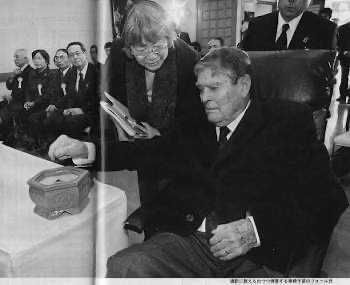
Still, in 2008, an elderly Sir Samuel Falle flew to Japan, sixty-six years after that afternoon in the Java Sea.
Standing before Kudo's gravestone, the old survivor bowed his head to deliver the thank-you Kudo never lived to hear, for 422 men and every child and grandchild born because one enemy chose mercy.
Real honor never asks to be remembered, which is why the lives it saves never let it die.
🚨WOW!!!
A 28-year-old confirms he has spent the last 10 YEARS of his life interviewing World War II combat veterans to keep their stories alive...
...in fact, for the last 10 years, he has interviewed World War 2 veterans EVERY SINGLE DAY
He started as a teenager, ditching school to ride his BIKE to the local retirement home, walking up to the front desk and asking to, "meet some World War II heroes."
His name is Rishi Sharma.
He's crossed all 50 states and half the world.
He's slept in his car and lived on gas-station food to afford it.
He asks these men for hours of their memories, and then he hands the entire recording to their families...
...FOR FREE
So that 200 years from now, a great-great-grandchild will know not just their hero's name, but how he laughed, how he cried, and what he sacrificed.
Rishi has no military family, his parents immigrated here from India.
He does it out of pure gratitude.
In his words:
"My parents were given the opportunity to immigrate and raise a family because of veterans like these. It's a debt of love I'll spend my entire life trying to repay..."
As one 100-year-old Marine who stormed Iwo Jima told him, remembering the flag going up:
"The hair on my arms still stands up when I think about how beautiful it was."
THAT is America.
God bless our veterans. 🇺🇸🇺🇸
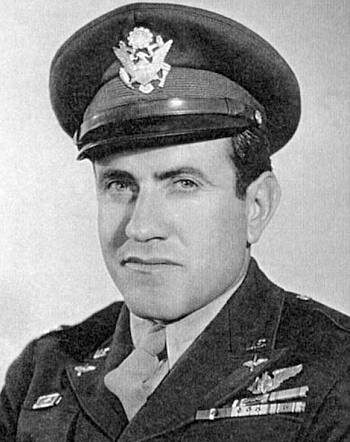
He was an American Olympic runner at the 1936 Berlin Games. He finished eighth in the 5,000 meters and shook Hitler's hand.
Six years later his Air Force B-24 crashed into the Pacific. For forty-seven days he drifted on a raft with two other men. One died. Sharks circled every night.
Then the Japanese Navy picked him up and sent him to a prison camp in Naoetsu, on the Japan Sea coast.
For over two years, a camp guard the prisoners called The Bird beat him with a belt buckle, broke his nose, made him hold a wooden beam over his head for thirty-seven minutes and drove his fist into his jaw every time it dipped. The Bird singled him out because he had been an Olympic runner, and because he would not break.
The war ended. He went home to California. He could not sleep. He drank. He had nightmares of strangling The Bird with his bare hands.
Then, slowly, over years, he forgave.
In 1998, Nagano hosted the Winter Olympics. Louis Zamperini was 81 years old. The torch relay planners asked him if he would carry the flame.
Through Naoetsu.
The same town. The same train station. Near the same ground where The Bird had worked him almost to death.
He flew to Japan and he ran.
The Japanese crowd lining the street did not shout his name as an athlete. They shouted it as something closer to an apology their grandparents had never been able to say.
He finished his kilometer with the torch and walked, alone, to a quiet memorial erected in Naoetsu for Allied prisoners who had died there. He stood in front of it for a long time.
He had also written a letter, in his own hand, to The Bird. The letter offered forgiveness and asked to meet. The Bird's family refused the meeting.
Louis did not need the meeting. He had already let him go.
An Olympic runner from Torrance, California, ran through the town that had tried to kill him, and gave it light instead.
That is what an American can do with a lifetime of hate.
@HankF330ToGo Oh my bad. There were a few bad misses and terrible plays from Sanders but I expect it as hes still learning. I would have liked to see him start the whole year but I didnt expect much this year and they already have exceeded my expectations.