You have to be always drunk. That's all there is to it; it's the only way. So as not to feel the horrible burden of time that breaks your back and bends you to the earth, you have to be continually drunk.
But on what? Wine, poetry or virtue, as you wish. But be drunk
Baudelaire
#PeriniPicks No. 8 for #ASH26
Not even I can eliminate hair as fast and profound as Vemufarenib + Obinutuzumab in this ph2 on Hairy Cell Leukemia trial by @MSKCancerCenter
4 cycles Vemu + Obinu:
100% CR
26/27 MRD neg
No relapses in 5 years.
Limited toxicity
Probably new SoC, pending a randomized ph2 trial ongoing.
https://t.co/Nzj9TKA0Lh
#PeriniPicks no. 9 for #ASH26
This is actually a 2 abstract Pick for the same problem: long term toxicity of steroids.
First, the Sail trial of Adrenal Insufficiency (6.2%) of lymphoma patients treated with steroids. Long term toxicity (~8 months) with a >2.5 fold risk of mortality (although I see some bias here, since these patients needed more therapy).
https://t.co/NO73hWln8U
Second, risk of fractures after 1st line R-CHOP in >20.000 Korean patients. Another long term toxicity of steroids we don't pay too much attention.
https://t.co/nV8ta3qT6I
#PeriniPicks for #ASH26 Starting Right Now!
And No. 10 is a small ph2 of Lorlatinib, a 3rd generation ALK-inhibitor in R/R ALK+ Malignancies (Mainly lymphomas).
Estimated 18-month PFS and OS rates were 75% and 88%
https://t.co/CCjQlycF8n
In a very challenging situation, ORR of 100%. Suitable for bridge for Allo.
It's beyond time we move on with trials of Lorlatinib + Chemo in first line therapy, especially in ALK+ LBCL.
My POV:
What % of IPS 3-7 achieves PET2 neg with BRECADD?
Not keen to give 6 cycles of BRECADD if it is what it takes for 5% PFS difference.
In 10y, secondary neoplasms will take its toll...
BrECADD or nivo-AVD? GHSG and SWOG pooled their patient-level data.
Stage III/IV, 18-60: 3-yr PFS 94.9% vs 90.6%, febrile neutropenia 29% vs 6%, OS similar.
Weighted, not randomized. Gap mostly in IPS 3-7. Accept more toxicity there?
#ASH26#lymsm#HodgkinLymphoma
https://t.co/DaOEb92IRn
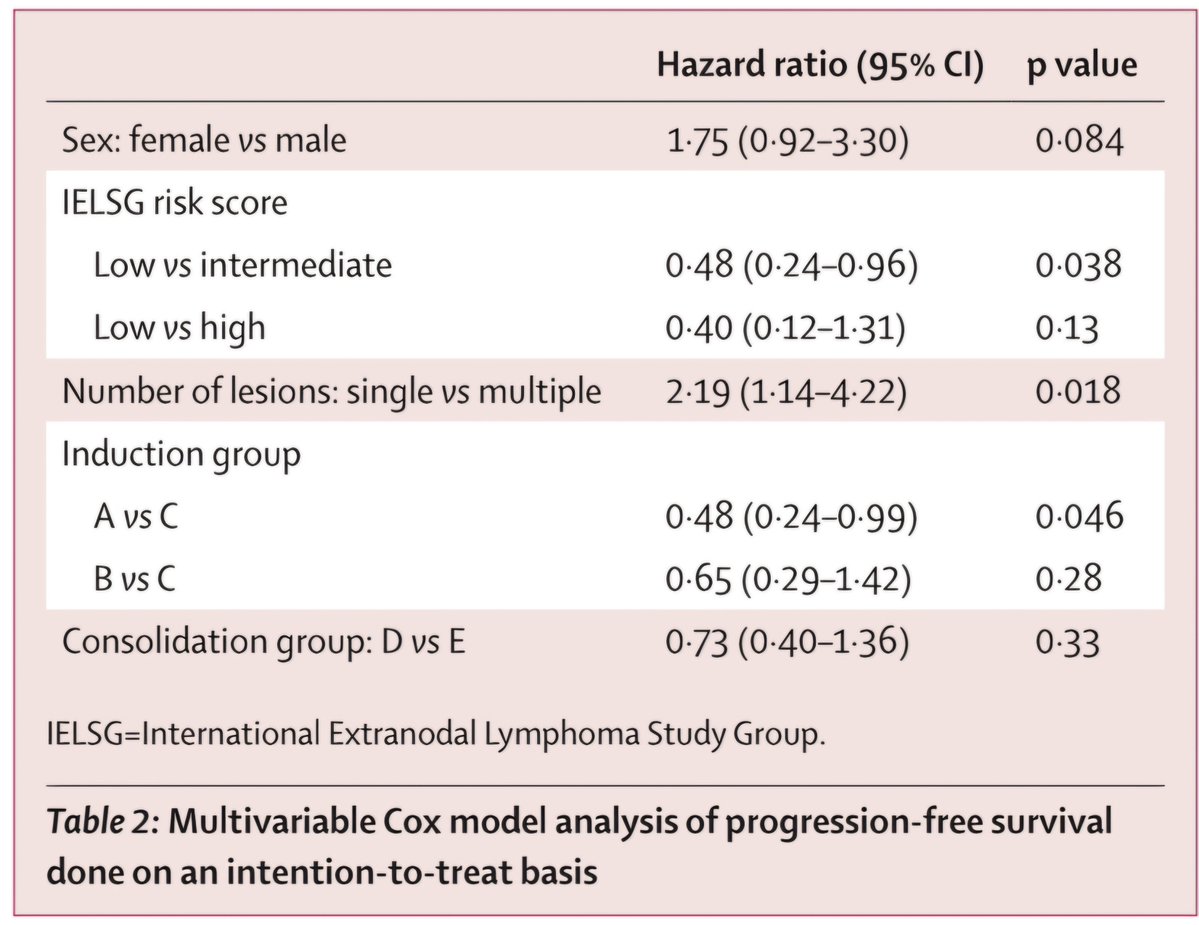
Yes, matrix gives more CRs.
But in the trial, PRs almost always turn in to CR after ASCT (86%).
And on multivariate analysis, no difference between arms B and C.
Maybe ASCT compensates the lack of CRs of arm B compared to C. And toxicity can make some patients never getting to ASCT.
Not that I wouldnt do MAtrix if avaliable. But maybe not in a 68 y/o patient if ASCT is planned.
🧬 Linfomondays | LOTIS-9
O estudo LOTIS-9 avaliou loncastuximabe tesirina associado a rituximabe em pacientes idosos, frágeis ou com contraindicação a antraciclinas com LDGCB não tratado.
📚 Confira os principais achados na Hematolog.
PD(L)1-VEGF bispecifics are already beating PD1 inhibition alone in trials, so what's next?
This trial (BioNTech, DualityBio, BMS) adds a new B7-H3 ADC to a PDL1-VEGF bispecific, with potential synergy:
1) VEGF blockade: normalizes tumor vasculature, improves ADC delivery and T cell infiltration.
2) B7-H3 ADC: kills cancer cells, triggers immunogenic inflammation.
3) PDL1 blockade: releases immune suppression, allows T cells to exploit immune response induced by ADC.
Confirmed ORR up to 71% -- in immune-cold platinum-resistant ovarian cancer.
The broader, ongoing phase 2 includes colorectal cancer, pancreatic cancer and other tumor types.
Impact of healthcare setting on survival in adults with acute lymphoblastic leukemia in Latin America: insights from a large multinational cohort - The Lancet Regional Health – Americas https://t.co/mB15J4HNsD 🇦🇷🇧🇷🇨🇱