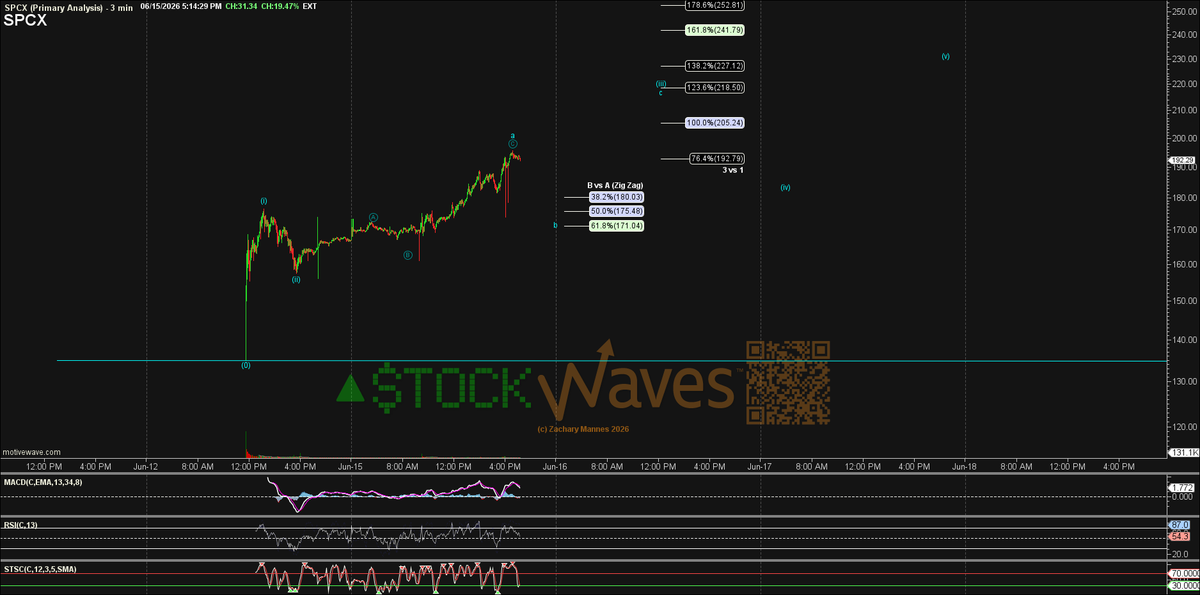
157.20 counts better as a different (ii) and now this move to 190s is likely just the a-wave of a larger (iii).
So now if it can hold 170s region $SPCX can head toward 218.50 next.
NDR's pattern matching tool shows that the NASDAQ has closely tracked the dotcom analog and is closer to 1998 than 2000. It still suggests near-term volatility ahead.
Jeff Currie, former Goldman Sachs head of commodities and now at Kalo writing research, is watching a physical supply shock in the commodities market.
This is a tale of two markets.
Paper crude oil was sitting around $100 a barrel while physical crude being delivered into Asia was trading between $130-$170. Products like jet fuel were spiraling above $200.
The spread between paper and physical has completely disconnected.
On the physical side: a discount airline out of London Gatwick canceled all flights because they couldn't source fuel. The UK just took its last known kerosene shipment with no further arrivals scheduled. Singapore jet fuel spiked to $230 a barrel. Rotterdam hit $220. The shortage is now in Thailand, Philippines, New Zealand and Australia.
Currie called it "molecular contagion."
And here's the critical point: there is no policy fix for this. The supply shock is roughly equal in magnitude to the COVID demand shock. And we all watched what COVID did to global supply chains.
Currie's framing: the paper markets have disconnected from reality. When crude is trading at $100 on NYMEX but delivering into Asia at $130-170, someone is wrong. He thinks it's the paper market.
The mispricing window doesn't stay open forever.
For macro investors, this is exactly the kind of dislocation between financial prices and real-world supply chains that historically creates the biggest moves.
🚨 SPACEX IPO IS LOADING THE BIGGEST INSIDER SELL EVENT IN A DECADE
This could end up as the largest scheduled cash-out in modern market history
SpaceX is set to list on June 12 at a $1.75-$2 trillion valuation
That instantly makes it bigger than Microsoft, putting it behind only Apple and Nvidia in the entire US market
Meanwhile the company posted a $4.28 billion loss in Q1 2026 alone. Total losses since founding: roughly $41.3 billion
Insiders hold 95% of every share that exists - that's about $1.66 trillion of wealth sitting in private hands, waiting for the door to open
Normally insiders are frozen for 180 days after a listing to stop a wave of selling from crushing the stock on day one
SpaceX threw that rulebook out the window:
> Around 60 days after listing: 20% of insider shares come unlocked
> If the stock runs 30% above IPO price: another 10% unlocks automatically
> Days 70, 90, 105, 120 and 135: a fresh 7% chunk releases at each step
> After Q3 earnings hit: another 28% comes free
By late November, roughly 93% of eligible insider shares can already be sold
This isn't an IPO. It's the most carefully scheduled insider exit Wall Street has ever signed off on
I've watched this exact movie play out before
Every IPO that ran loose lockups looked beautiful until the supply started hitting, then bled for months
Follow + notifs on, I will keep you updated on this one
BREAKING: Nancy Pelosi disclosed roughly $69 million in new stock transactions, highlighted by a $50 million sale of Apple, $AAPL.
Notable sales:
•$50M of Apple, $AAPL
•$5M of Nvidia, $NVDA
•$5M of Disney, $DIS
New call option purchases (LEAPS):
•$500K in Alphabet, $GOOGL
•$500K in Amazon, $AMZN
•$500K in Apple, $AAPL
•$250K in Nvidia, $NVDA
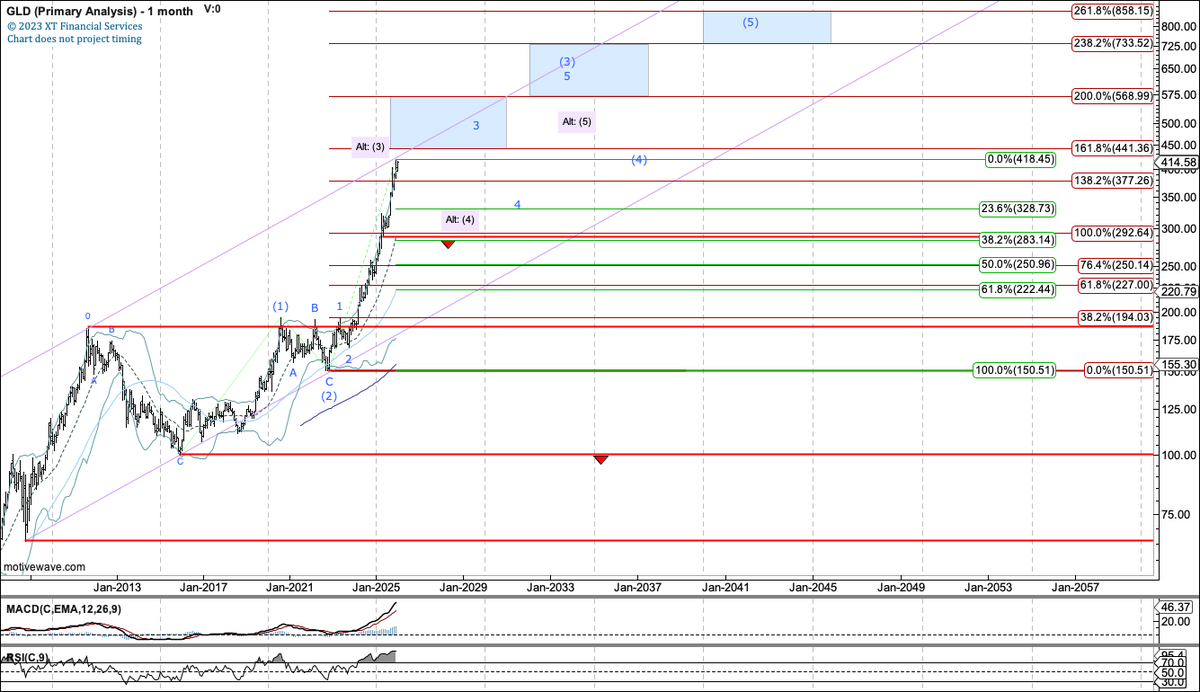
In the new year, the cleanest upside opportunity that I see is in #GOLD, #SILVER and miners. I will post the $GLD chart here, and $GDX and $SLV in comments. As strong as 2025 was, I see meaningfully more upside left in those.
Now, the wildcard is US equities. There is a scenario where they will see similar acceleration. But more on that in the Daily Service. Unlike for metals, where stance is bullish after they've shown their hand in 2025, in US equity indices it's "show me" time.