#Pakistan PM Shehbaz Sharif is fooling his people like #PakistanArmy Chief Niazi in 1971
This video is for Pakistan 👇
➡️Niazi doing interview in Dhaka East Pakistan, now known as Bangladesh
➡️Prior to surrender & balkanization he was confidently claiming upper hand over India
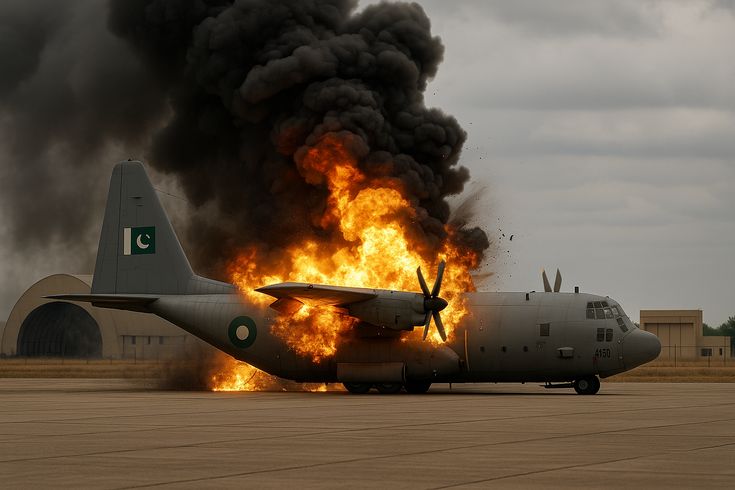
India fired 16 deadly missiles at Nur Khan Air Base… 14–15 dodged our defences but still fell here and there due to the mighty power of Allah. Only one hit and destroyed everything. We are alive beacuse of Allah
What has Operation Sindoor done to them?
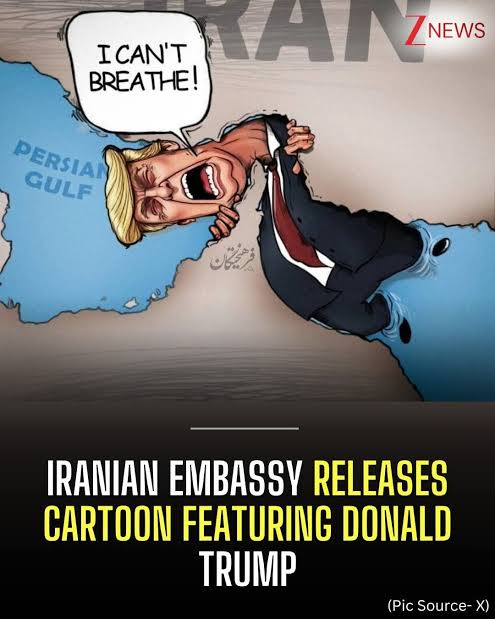
US President Trump can't even open Strait of Hormuz but he ended 8 wars 😂🖕
White MAGA going gaga after hearing these bullshit should use common sense before believing such repetitive lies from DONALD TRUMP ‼️
BREAKING: The USS George H.W. Bush and USS Gerald R. Ford have arrived in the Middle East.
The last time the U.S. deployed 3 aircraft carriers to the Middle East was the 2003 invasion of Iraq.
Turkey will be easier target for Israel compared to Iran!
Turkey is surrounded by Europe and has lot of enemies in the region who are eager for alliance against Turkey like Greece, Cyprus.
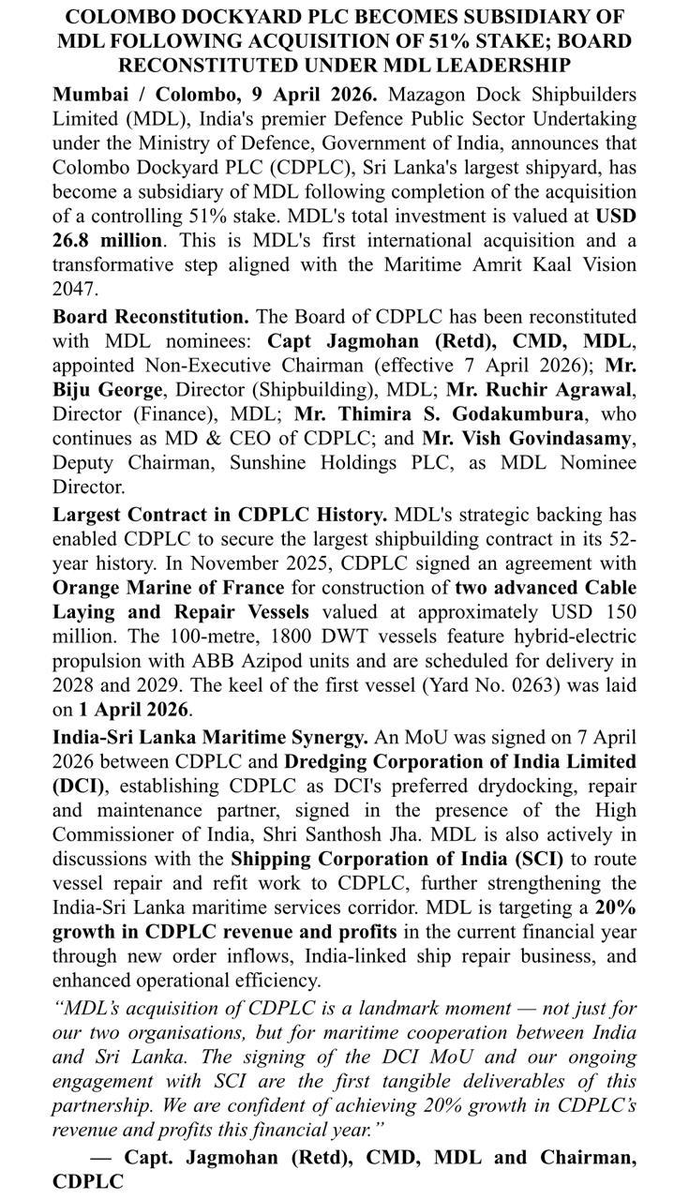
Mazagon Dock Shipbuilders Limited (MDL), India's Defence Public Sector Undertaking under the Ministry of Defence, Government of India, announces that Colombo Dockyard PLC (CDPLC), Sri Lanka's largest shipyard, has become a subsidiary of MDL following completion of the acquisition of a controlling 51% stake. MDL's total investment is valued at USD 26.8 million. This is MDL's first international acquisition and a transformative step aligned with the Maritime Amrit Kaal Vision 2047.
The Board of CDPLC has been reconstituted with MDL nominees: Capt Jagmohan (Retd), CMD, MDL, appointed Non-Executive Chairman (effective 7 April 2026); Mr Biju George. Director (Shipbuilding), MDL; Mr Ruchir Agrawal, Director (Finance), MDL; Mr Thimira S. Godakumbura, who continues as MD & CEO of CDPLC; and Mr Vish Govindasamy, Deputy Chairman, Sunshine Holdings PLC, as MDL Nominee Director.
A retired U.S. Army Colonel, speaking to ABC:
“Iran uses infrared systems instead of traditional radar.
American fighters like the F-35 and F-15 are not designed to face these systems.
Iranian airspace is not safe for U.S. fighter jets.”
LoL American Black Hawk helicopter participating in a search-and-rescue operation to rescue #F15 pilot shot down by #Iran needs an search and rescue operation to rescue black hawk pilots 🤣
#DonaldTrump#America
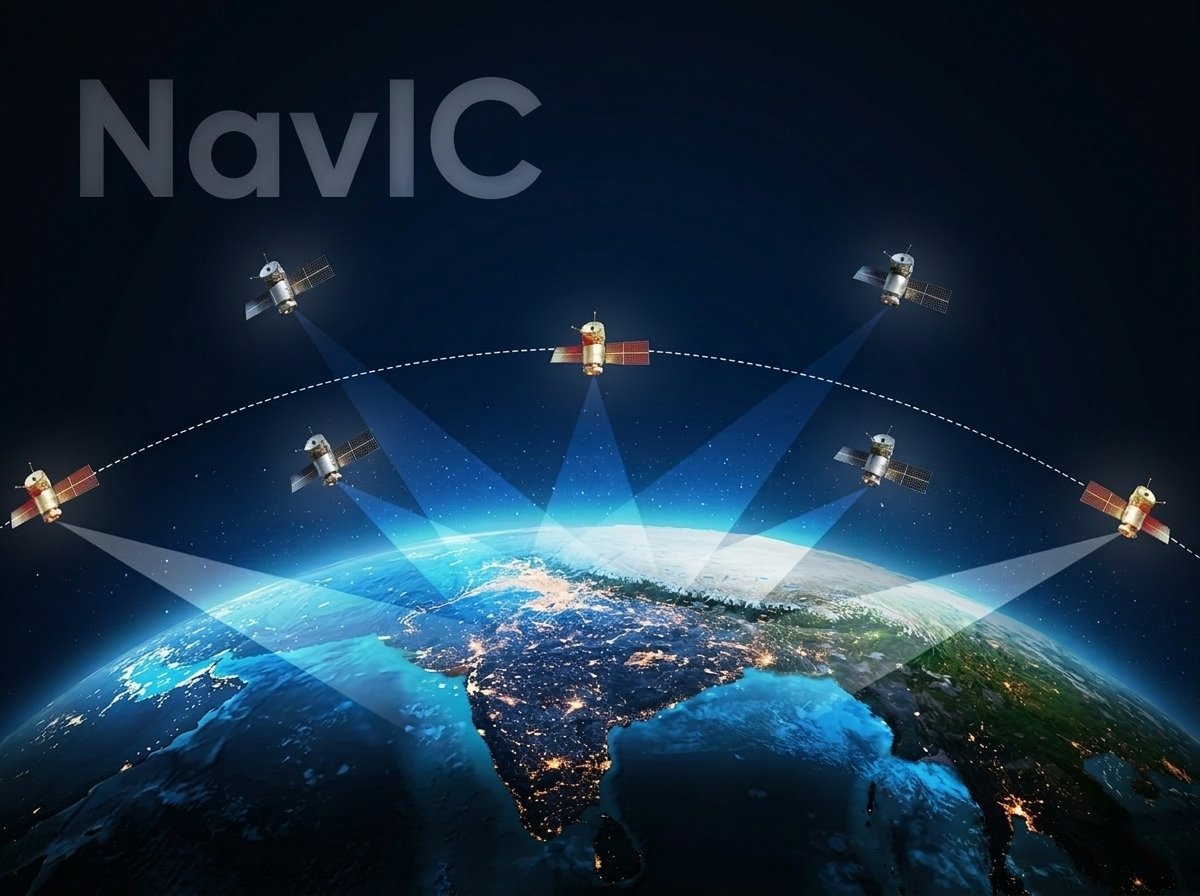
🚨 India's indigenous navigation system (NavIC) has officially gone out of service!
As of 13 March 2026, the number of active satellites in the NavIC constellation has fallen to just 3, below the min. requirement of 4 satellites. 🛰
Here is a full timeline of events that caused an entire satellite constellation to go defunct:
After being denied permission by the US to avail navigation services via America's GPS for the Indian Armed Forces during the Indo-Pak war of 1999, India decided to build their own indigenous navigation system, which would come to be known as NavIC.
The first satellite of this system - IRNSS-1A, would be launched in 2013, followed by 8 more satellites (IRNSS-1B to 1I) by 2018 comprising the first generation of NavIC satellites.
One of these satellites (IRNSS-1H) would fail when the payload fairing on its launcher PSLV-C39 failed to separate.
One of the major requirements for navigation satellites is to be able to make extremely precise measurements of time, hence each of the satellites in the first generation of NavIC used three imported Rubidium atomic clocks sourced from a Swiss company called SpectraTime.
However, starting around 2016, a large number of SpectraTime's atomic clocks on ISRO's IRNSS satellites as well as ESA's Galileo satellites began to fail unpredictably.
Within a short span of time, 5 of the IRNSS satellites had become completely defunct as a result of all atomic clocks on them failing.
Taking the lessons from the first generation of NavIC, ISRO developed a second generation which used indigenously developed atomic clocks along with some imported ones.
The first satellite in the second generation (NVS-01) would launch successfully in 2023.
At that point of time, the active satellites in the NavIC constellation were IRNSS-1B, IRNSS-1F, IRNSS-1I and NVS-01 i.e., 4 satellites - equal to the minimum requirement for a navigation constellation to function.
In one of these 4 satellites - IRNSS-1F, two out of its three atomic clocks had already failed.
This meant that if the last clock on that satellite were to fail, IRNSS-1F would go offline, the no. of active NavIC sats would fall to 3, and the whole constellation would go defunct.
In 2025, ISRO would launch NVS-02 to try to ease the burden on a system that was already hanging by a thread. But despite a successful launch into Geostationary Transfer Orbit on GSLV-F15, the satellite failed to reach its target Geostationary Orbit due to a failure in the pyro channel in a main thruster valve of the satellite's propulsion system.
During the initial investigation, ISRO announced that they were unable to pinpoint the exact cause of the valve failure.
Recently, they revealed that the failure was due to at least one of the pins in every single redundant connector on the valve getting disconnected.
As a result, NavIC continued to remain in a precarious situation and ISRO were in a race against time make the necessary corrections and launch NVS-03.
However, this would be followed by repeated failures of ISRO's workhorse PSLV rocket, leading to ISRO suspending all rocket launch activities for a duration of 3 months.
And it was then that on 13 March 2026, the last functioning atomic clock on IRNSS-1F finally failed. The satellite immediately lost the ability to provide positioning and navigation services, bringing the total number of active sats to 3, and hence the entire NavIC constellation now stands defunct.
Hutiya Indian Government
Always responding late, once the misleading news or rumers spread like wildfire.
Learnt nothing from Operation Sindoor.
Indian Government sucks at conveying information to public.
Government Sources- "Days before the IRIS Dena incident south of Sri Lanka, India was approached by Iran to take in the Iranian Ship IRIS Lavan, which was also in the region for the International Fleet Review. This request was received on 28 February 2026, indicating that a docking at Kochi was urgent as the vessel had developed technical issues. Approval was accorded for the docking on 1 March. IRIS Lavan has since docked at Kochi on 4 March. In this context, its crew of 183 are currently accommodated at naval facilities in Kochi."