Check out our June issue!
Check out studies on intertidal turbidity, phytoplankton nutrient feedbacks, Arctic amplification, sinking seaweed, Archean hydrology and more!
https://t.co/gjebF8I7H6
🚨New Review!
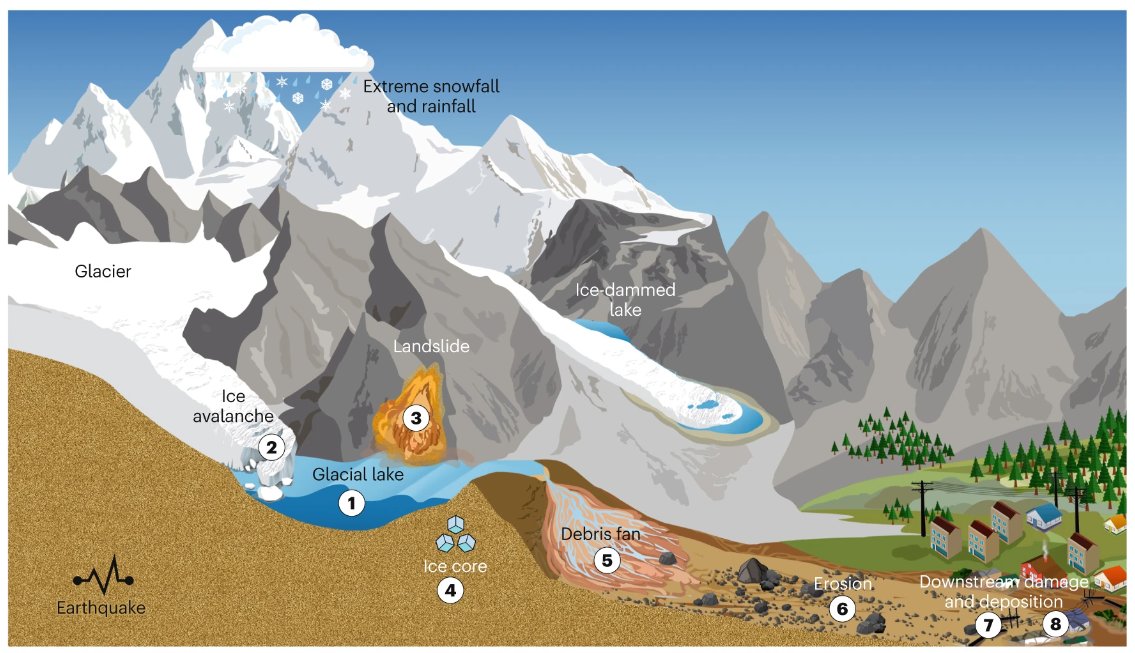
Characteristics and changes of glacial lakes and outburst floods🧊🌊
This Review highlights that both glacial lakes & glacial lake outburst floods (GLOFs) will increase with ongoing deglaciation
https://t.co/wXzZfLz17R
Free: https://t.co/9YKchLZJAn @GuokingZhang
📌New Publication-GLOFs from Ranzeria Co in 2013 and Jiweng Co in 2020 in the Tibetan Plateau destroyed local infrastructure and vegetation, and eroded river banks. The study reveals the causes, mechanisms, and flow dynamics of both events. @GuokingZhang
Accounting for subaqueous melting from lake-terminating glaciers increases estimated glacier mass loss across the Himalaya by 7% over the past 20 years, according to a study in @NatureGeosci. 🔒 https://t.co/sqcPMVo9AG
April issue out now: featuring articles on water on the Moon, an increase in ozone-depleting CFCs, mantle influence on Earth's magnetic field, Himalayan glacier mass loss, and more!
https://t.co/mtUo7lfqKc
I am pleased to share our new paper on ‘GLOF hazard, exposure, vulnerability and risk assessment of PDGLs in the Bhutan Himalaya’ https://t.co/56ECTpeC7v
Check out @Nature's research highlight about our recent study showing how the inclusion of subaqueous (i.e., underwater) mass loss from expanding glacial lakes increases estimates of Himalayan glacier mass loss compared to existing estimates https://t.co/tOyNAoZPTa
Scientists combined satellite & bathymetry data to estimate the volume of water the lakes held.
The most significant underestimation, of 10%, occurred in the central Himalaya, where glacial lake growth has been the most rapid.
(📽️changes in the volume of Imja Tsho lake 1990-2020)
How did they found out about this discrepancy?
As Tobias Bolch from @tugraz puts it, satellites "cannot ‘see’ underwater". This had led to a gap in our understanding of the full extent of ice being lost from lake-terminating glaciers.”
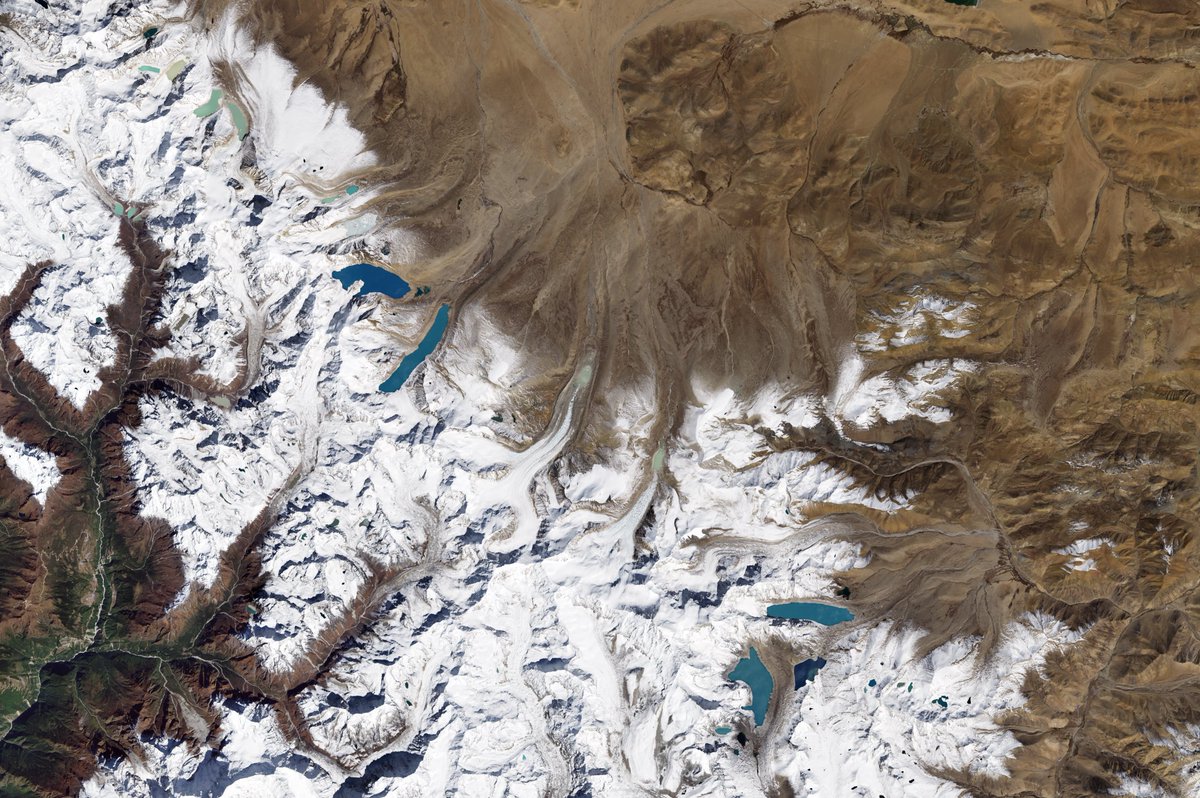
(Galong Co lake, captured by @NASA_Landsat)
Turns out that we have been underestimating - by 6.5% - ice loss from Himalayan glaciers that terminate in lakes.
And that's because of the 'invisible' subaqueous ice loss!
What is it and why should we care?
Keep reading 🧵⬇️
(🗺️Changes in Himalayan lake volume)