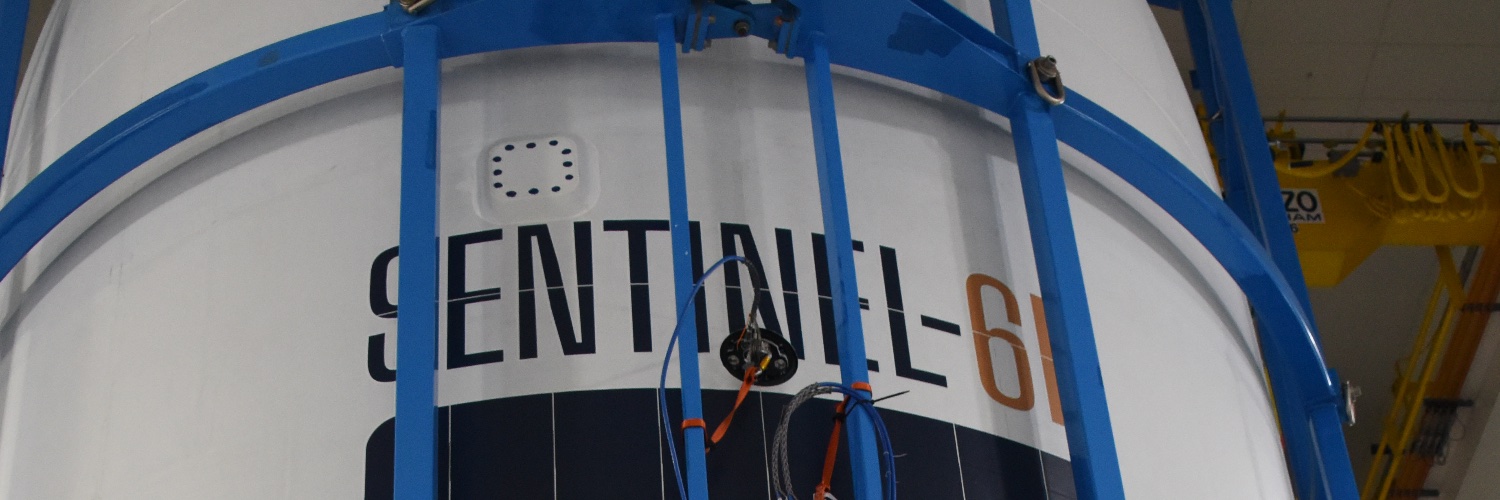
✅ Signals acquired. FLEX and Sentinel-3C are in orbit and healthy.
Following launch on Vega-C, the two Earth observation satellites now begin commissioning. Together, they will advance our understanding of Earth's vegetation and support the continued monitoring of our oceans, land, ice and atmosphere. 🌍
🔗 https://t.co/5oc1lJnMnl
We hear you! @esa 's #FLEX spacecraft has phoned home. 📞
At 5:22 CEST, teams at #ESOC mission control acquired the first signal from the spacecraft via @KSAT_Kongsberg 's Svalbard station. 📡
We now have signal from both spacecraft in this unique dual launch. 🛰️🛰️
📷 ESA/ATG medialab
We’ve reached the end of the line, all passengers, please leave the vehicle!
FLEX has now detached from the Vespa+R adapter and is on its way to its sun-synchronous orbit.
Hello @CopernicusEU#Sentinel-3C – we hear you loud and clear!
@KSAT_Kongsburg's Troll ground station in Antarctica has acquired the satellite's first signal from space. 📡
Telemetry is now flowing into @esa's #ESOC mission control in Germany. 🛰️
📷 ESA/ATG medialab
Liftoff! 🚀 FLEX and Sentinel-3C are on their way.
Vega-C #VV30 has departed Europe’s Spaceport carrying the two Earth observation satellites into orbit.
FLEX and Sentinel-3C are ready for liftoff on Vega-C from Europe's Spaceport.
▶️ Tune in tonight on 15 September from 02:50 CEST.
🚀 Liftoff is scheduled for 03:21 CEST.
While the FLEX mission will monitor the health of Earth’s vegetation, Sentinel-3C, together with the two Sentinel-3 satellites already in orbit, will monitor oceans, land, ice and atmosphere for Copernicus, the Earth observation component of the European Union’s Space Programme.
🔗https://t.co/8oTRN9tsh6
Success! ✅ MTG-I2 is on its way to geostationary orbit.
After acquiring signal, the satellite has been confirmed healthy.
As the third satellite in the Meteosat Third Generation constellation, MTG-I2 will provide weather forecasters with unprecedented views of Europe and Africa, helping to improve forecasts and deliver earlier warnings of severe weather.
🔗 https://t.co/Oom7m2VcXL
Thanks for the ride, @ESA_transport!
MTG-I2 just separated from Ariane 6.
The satellite will now slowly move from Geostationary Transfer orbit to Geostationary orbit, its destination.
Good news: economic growth doesn’t have to come at the expense of air quality. Using @CopernicusEU Sentinel-5P data, researchers found many major cities are growing while cutting NO₂ - read the full story⬇️
https://t.co/gpACvO3JRl
Are you feeling the heat too?🥵
A heatwave is driving temperatures far above average across much of Western Europe and the UK, with record May temperatures reported in several countries.
This map shows land surface temperatures across Europe, using @CopernicusEU Sentinel-3 data from 26 May 2026.
🔗https://t.co/lsHPiYeKVO
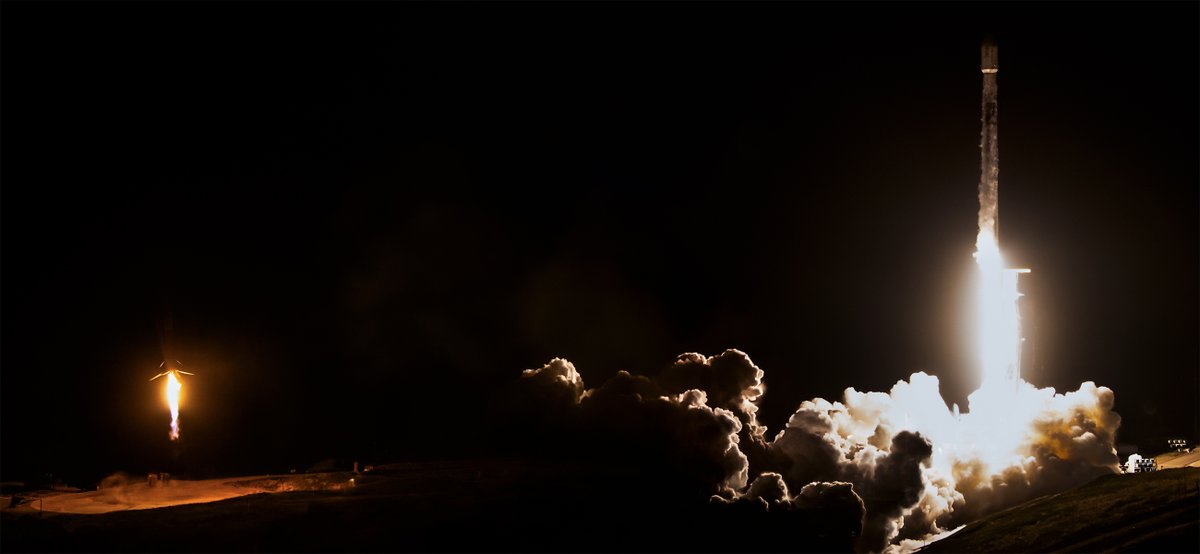
Two national EO missions were launched yesterday onboard a @SpaceX Falcon-9 rocket:
🛰️Italy's @IrideSpazio (https://t.co/C072CT8xAn)
🛰️Greece's Hellenic Fire System (https://t.co/mN8loPEROG)
Credits: SpaceX
Following the mandate given by our Member States to step up @ESA’s role in security and defence, this agreement marks a meaningful move from intent to delivery. Through initiatives such as the European Resilience from Space (ERS), ESA is already responding to Europe’s urgent security capability needs.
Strengthening our partnership with the @EUDefenceAgency allows us to align technology development more closely with both current and future operational and strategic requirements.
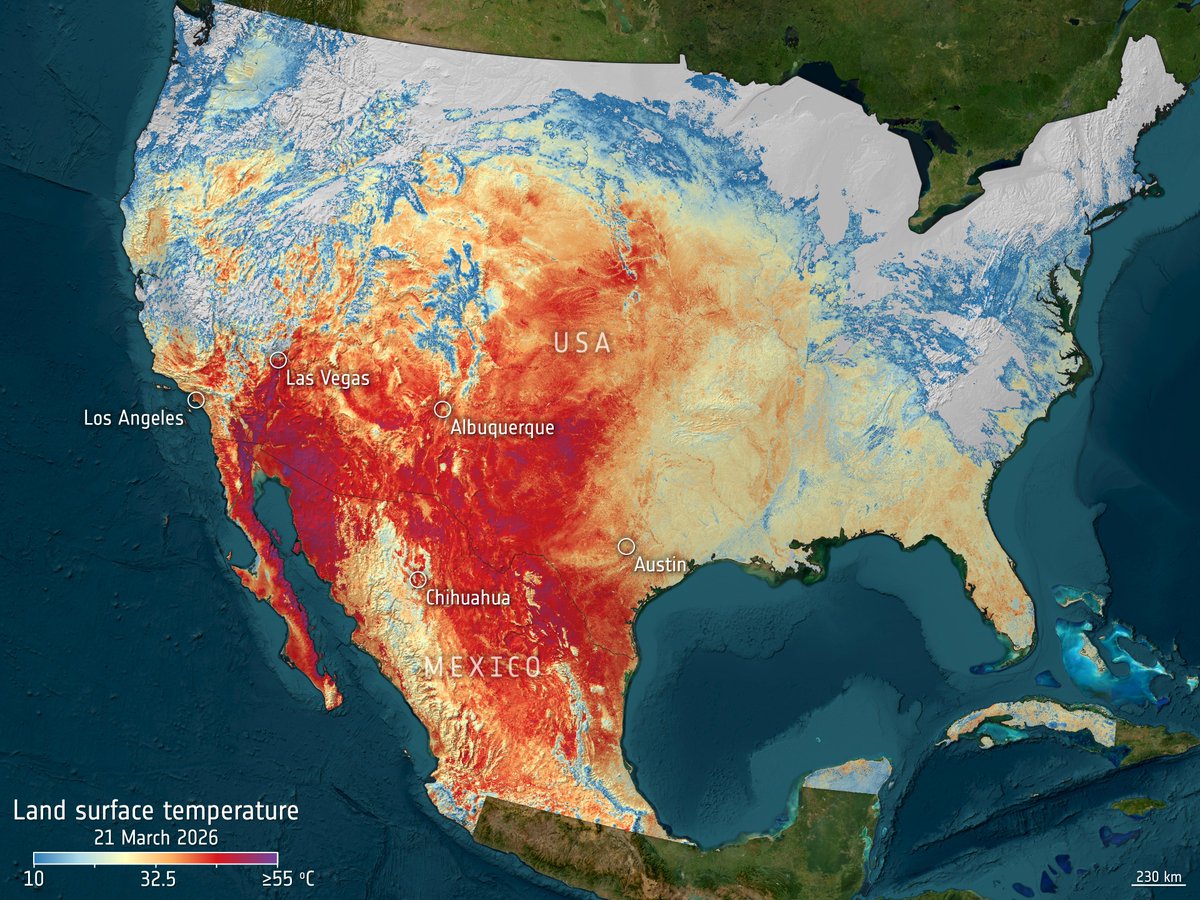
It's hot - and we can "see" it from space: On 21 March, Copernicus Sentinel-3 measured widespread land surface temperatures exceeding 40°C🥵
Recent extreme heat across the central and southwestern US and Mexico pushed ground temperatures far above seasonal norms according to @NOAA data.
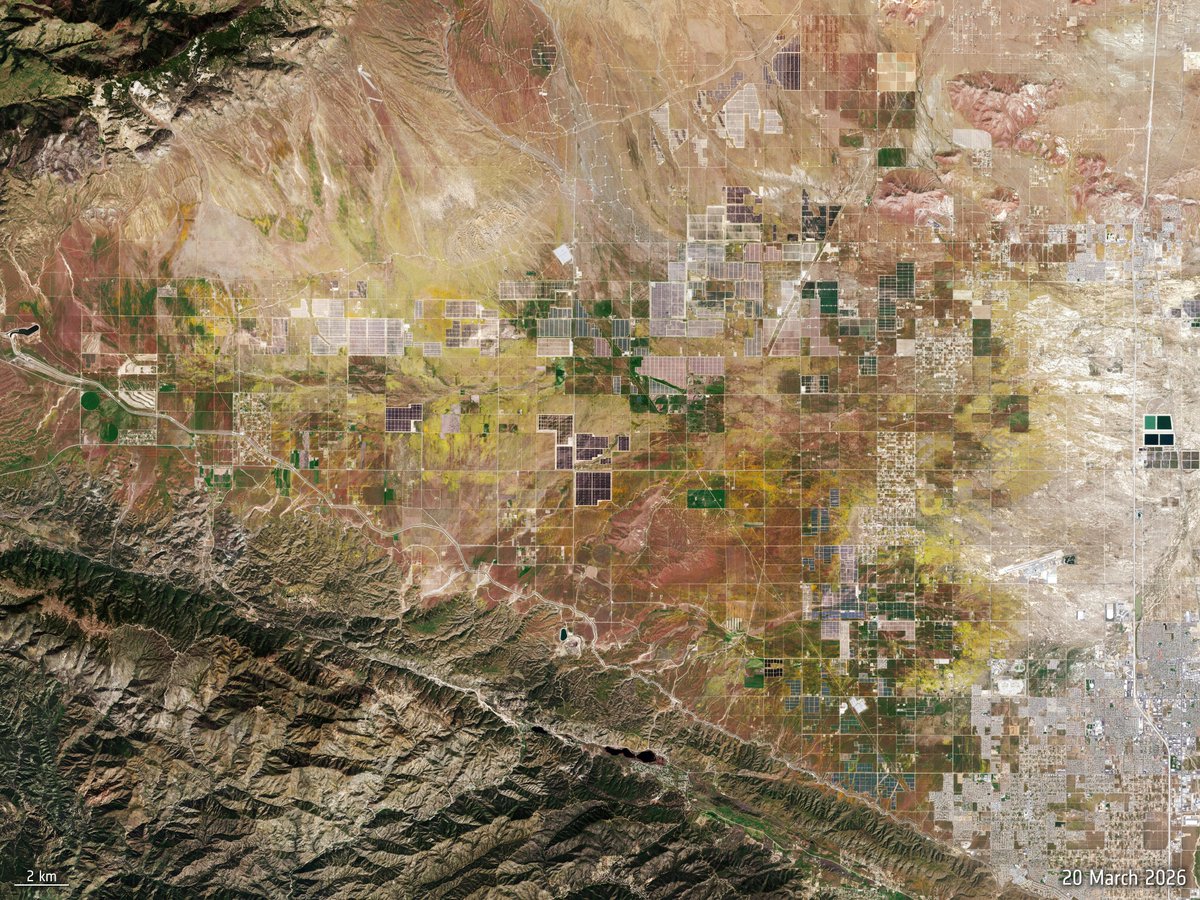
These extreme temperatures and winter rain have triggered a super bloom in some areas. On 20 March 2026, satellites captured expanded flower cover across Antelope Valley and Grass Valley — a rare burst of colour driven by the same unusual conditions.
#MediaInvitation: journalists are invited to join a one‑off opportunity to see three ESA-built satellites in their final preparations before liftoff, at @Thales_Alenia_S, Cannes, on 16 April 2026.
Register by 31 March 👉 https://t.co/QELwOSSAeq
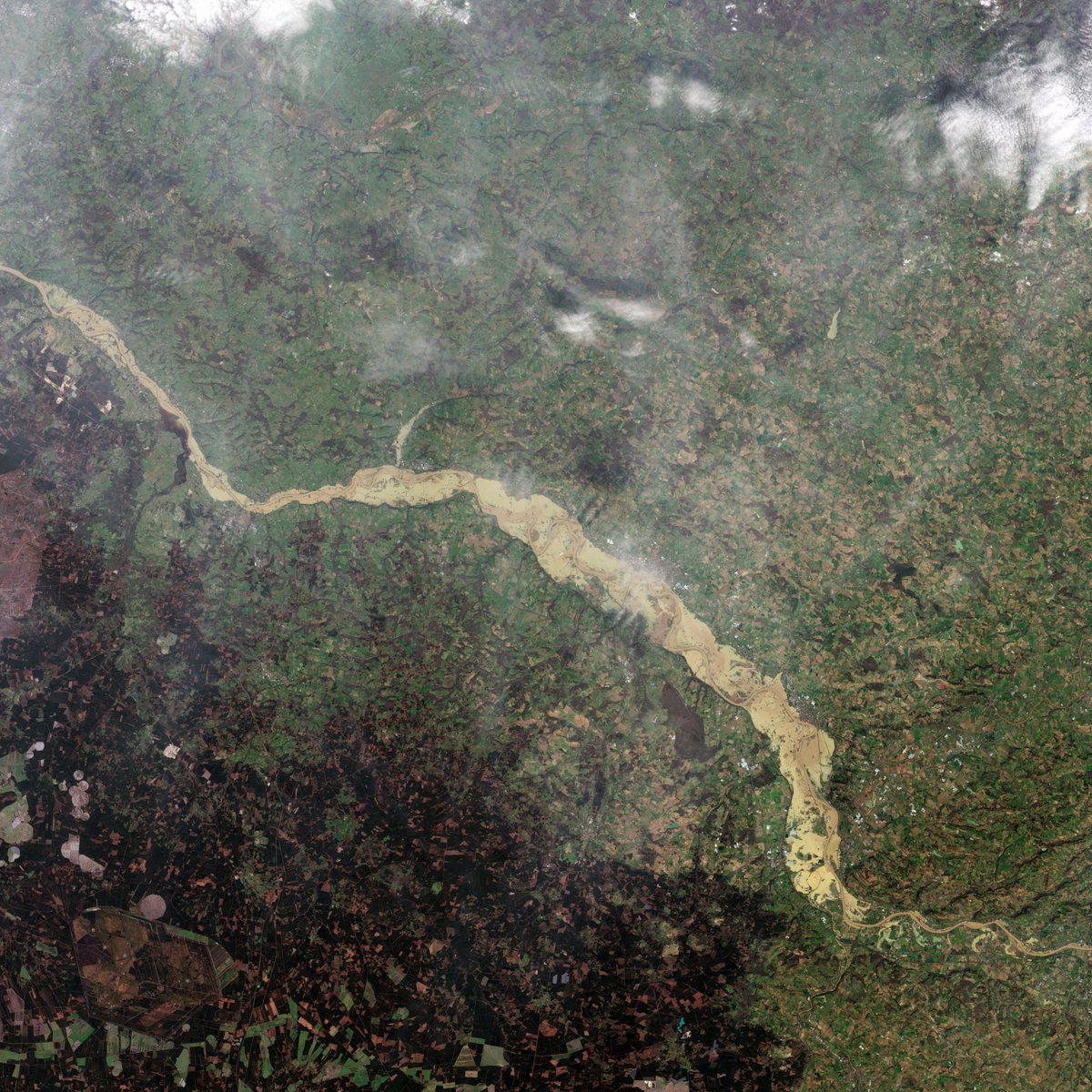
France has endured 35 consecutive days of rain.
One striking example:
According to @Vigicrues, the Garonne at Marmande rose from 3.50 m on 10 February to over 10 m by 14 February.
Here are 3 images that show the impact of the heavy rainfall from space:
• Accumulated rainfall map (9–18 February 2026) using data from the @NASA/@JAXA_en GPM mission
• Sentinel‑1 radar image (flooded areas in red)
• Sentinel‑2 true‑colour view of the same region
Our thoughts are with the communities affected as the region continues to face challenging conditions.