"NEET is conducted by the NTA, whose Chairman is Pradeep Kumar Joshi. So why is no one demanding his resignation?"
"Exam paper leaks have happened before as well. So why is everyone targeting only Dharmendra Pradhan?" 😠
"Let me explain why." 😊
"Because Dharmendra Pradhan changed a syllabus that had been promoting distorted and misleading narratives for years." 🙏
1.Added chapters on the Emergency (1975–77).
2.Reduced the excessive focus on Mughal history.
3.Included India's own civilizational and cultural history.
4.Added the stories and valor of Indian heroes.
5.Included modern military operations, such as the Surgical Strikes, in the curriculum.
6.Gave greater importance to regional dynasties like the Marathas, Cholas, and Mauryas.
7.Promoted education in mother tongues and regional languages.
🚨 SHIV AROOR : Did you ever consider joining the protest?
NEET TOPPER PANSHUL BANSAL 🔥 : I thought, why should I go to the protest? Instead, I could be studying at home and improving my skills & score.
AROOR ⚡ : Your reaction when 1st exam was cancelled?
PANSHUL : Cancellation of 1st exam initially left me disappointed, but I eventually saw it as an opportunity to improve my performance 🔥
Panshul scored 715 out of 720 !!
Sometimes, the loudest protest begins...
After the problem has already been solved.
That is when you stop following slogans.
And start following the timeline.
Before you decide who the villain is...
Read the timeline.
Because dates don't shout.
They don't trend.
They don't protest.
They simply expose the truth.
May 3.
NEET examination.
Within four days, the NTA detected fraud.
The very next day, it informed the police.
The investigation began.
The Government cancelled the May 3 examination.
May 12.
The Ministry of Education filed a written complaint.
The CBI registered the case.
Special investigation team (SIT) were formed immediately.
May 15.
Education Minister Dharmendra Pradhan addressed the nation.
He apologised.
Accepted moral responsibility.
Announced the re-NEET schedule.
Then came the bigger announcement.
From next year,
Major national examinations would move towards
computer-based, multi-encrypted testing (CBT).
A permanent safeguard.
Not another temporary fix.
Meanwhile,
The CBI moved fast.
Arrests began.
The network expanded.
Soon, 13 accused were behind bars.
June 21.
Fresh NEET examination conducted successfully.
July 16.
Results declared.
Now students wait for counselling.
But this story is bigger than one examination.
Paper leaks are not new.
Every student preparing next year will carry the same anxiety.
I am with students.
Now comes the real question.
If the examination was cancelled...
The re-exam was conducted...
The results were declared...
The investigation was underway...
And structural reforms were already announced...
Then what exactly is the endgame of this protest?
If the demand is...
"Remove the Minister."
Then what?
What comes next?
What reform is on the table?
What solution replaces the one already announced?
These are fair questions.
Another one is equally important.
Who loses the most...
If encrypted, computer-based (CBT) examinations,
make organised paper leaks almost impossible?
Students?
Or those who profited from the old system?
Coaching Mafia?
Corrupted Academicians?
Tainted Beuraucrats?
Or those who is taking advantage of students emotions.
Bhim Army?
Aam Aadmi Party?
Congress?
Communist Party?
One fact cannot be ignored.
If technology shuts the door on organised paper leaks...
An entire illegal ecosystem stands to lose.
That is why the real battle is bigger than one Minister.
Or even one Government.
Goverments will come and go.
Party will win and loose.
But this nation will remain.
And it should at any cost.
Bigger than one Leader or person.
It is about one question.
Will India finally dismantle the business model...
Built on stealing honest students' hard-earned opportunities?
That... is the fight worth having.
40M+ people worldwide have thrown away their eyeglasses, bifocals & contact lenses forever thanks to LASIK laser eye surgery. Every single day, 1000s of patients lie flat on an operating table while a cold laser beam vaporizes tissue off their cornea with sub-micron precision, fixing their vision in < 10 mins w/o a single drop of blood/a single scalpel.
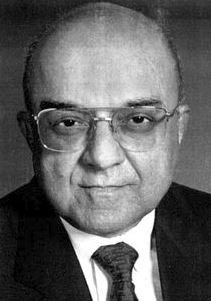
Ask any patient who invented LASIK, and they will guess a team of American/German eye surgeons. They are wrong. The foundational physics that made laser surgery on living human tissue possible was invented by an unsung Indian physical chemist working late nights in a computer company’s research lab.
His name was Dr. Rangaswamy Srinivasan.
in 1929, Srinivasan earned his bachelor's & master's degrees from the University of Madras before traveling to the United States for his doctorate at the University of Southern California. By 1961, he joined the IBM Thomas J. Watson Research Center in New York. While most IBM scientists were focused on silicon microchips & computer hardware, Srinivasan was obsessed with photochemistry: how high-energy light interacts with organic molecules and synthetic polymers.
In 1981, IBM acquired a new toy for its physics lab: an UV Excimer laser. At the time, conventional wisdom in medicine stated that firing a laser at living biological tissue was a terrible idea. Lasers generate intense thermal heat; hitting human skin/organs with 1 would simply incinerate, char & burn the tissue like a blowtorch.
Srinivasan believed UV light behaved differently. He hypothesized that at short UV wavelengths (193 nm), the light was breaking molecular bonds directly. He just needed a piece of organic tissue to prove it.P
On Nov 27, 1981, during the American Thanksgiving holiday, while the IBM labs were quiet & empty, Srinivasan brought his leftover Thanksgiving turkey dinner into work. Taking a piece of leftover turkey cartilage from his lunch container, he placed it under the Excimer laser & fired a brief sequence of 193 nm UV pulses.
When he looked under the high-powered microscope, he saw something that left him speechless.The laser had not burned the turkey meat. There were no charred edges, no heat damage & no melting. Instead, the UV laser had cleanly sliced through the cartilage with microscopic, surgical precision, evaporating sub-micron layers of organic tissue instantaneously.
Srinivasan named this phenomenon Ablative Photodecomposition (APD). Because the UV light pulses broke molecular bonds in tiny fractions of a sec, the organic matter evaporated before thermal heat had time to spread to the adjacent cells. It was the ultimate "cold knife."
Recognizing the earth-shattering medical potential, Srinivasan teamed up with IBM colleagues Bodil Braren & James J. Wynne, alongside New York ophthalmologist Dr. Stephen Trokel. Together, they applied Ablative Photodecomposition to the human cornea, proving that an Excimer laser could precisely reshape the curve of the human eye to correct myopia (nearsightedness) w/o damaging the delicate ocular structures beneath.
That single experiment on a piece of Thanksgiving turkey gave birth to modern refractive eye surgery, including PRK & LASIK.
The global scientific community showered Srinivasan with accolades: In 2002, he was inducted into the US National Inventors Hall of Fame, joining legends like Thomas Edison & Nikola Tesla. In 2013, US President Barack Obama awarded Dr. Rangaswamy Srinivasan the National Medal of Technology & Innovation at the White House: the highest honor for technological achievement in the United States.
He holds 21 US patents, with his papers cited 1000x across laser physics, chemistry & ophthalmology literature.Y et, back home in India, where 10s of 1000s of people undergo LASIK every month, his name is practically nonexistent in school curricula/public memory/popular culture.
The next time you watch a friend throw away their thick glasses after a 10 minute laser procedure, remember the Indian chemist who brought his Thanksgiving dinner into a lab in 1981. He was not an eye surgeon, but he gave 40M people the gift of sight, 1 microscopic beam of light at a time.
Elon Musk just spent seventeen billion dollars to make every cell tower on Earth a relic.
Musk: “It will allow SpaceX to deliver high bandwidth connectivity directly from the satellites to the phones.”
Not through towers. Not through cables. Not through any infrastructure on the ground.
Directly from orbit to the phone in your pocket.
For over a century, connectivity followed the same blueprint. Build a tower. Run a cable. Expand the network one piece of ground at a time.
Coverage went where the money was. Where the population density justified the investment.
Everywhere else got silence.
Four billion people still don’t have reliable internet.
Not because the technology doesn’t exist. Because no one could justify building a tower where they live.
Connectivity was never a technology problem. It was a geography problem disguised as one.
Musk: “The phones that are able to use the spectrum that was acquired probably start shipping in around two years.”
Two years. Then the phone in your hand connects straight to space.
No tower required. No carrier infrastructure between you and the signal.
The entire telecom industry was built on one assumption. That connectivity requires ground infrastructure.
Every carrier. Every contract. Every coverage map. All products of that assumption.
Starlink just bypassed it from orbit.
From orbit, every point on Earth is equidistant.
The word “remote” only exists because connectivity was built from the ground up.
From space, there is no remote. There is no coverage gap. There is no place on Earth harder to reach than any other.
The ground decides who gets connected based on where they are.
The sky doesn’t know the difference.
Human potential was always distributed evenly across the planet. Access to information never was.
The gap between those two facts is the greatest waste in human history.
We spent a century deciding who deserved access to information based on where they happened to be born.
Musk just made that question obsolete from 550 kilometers above the answer.
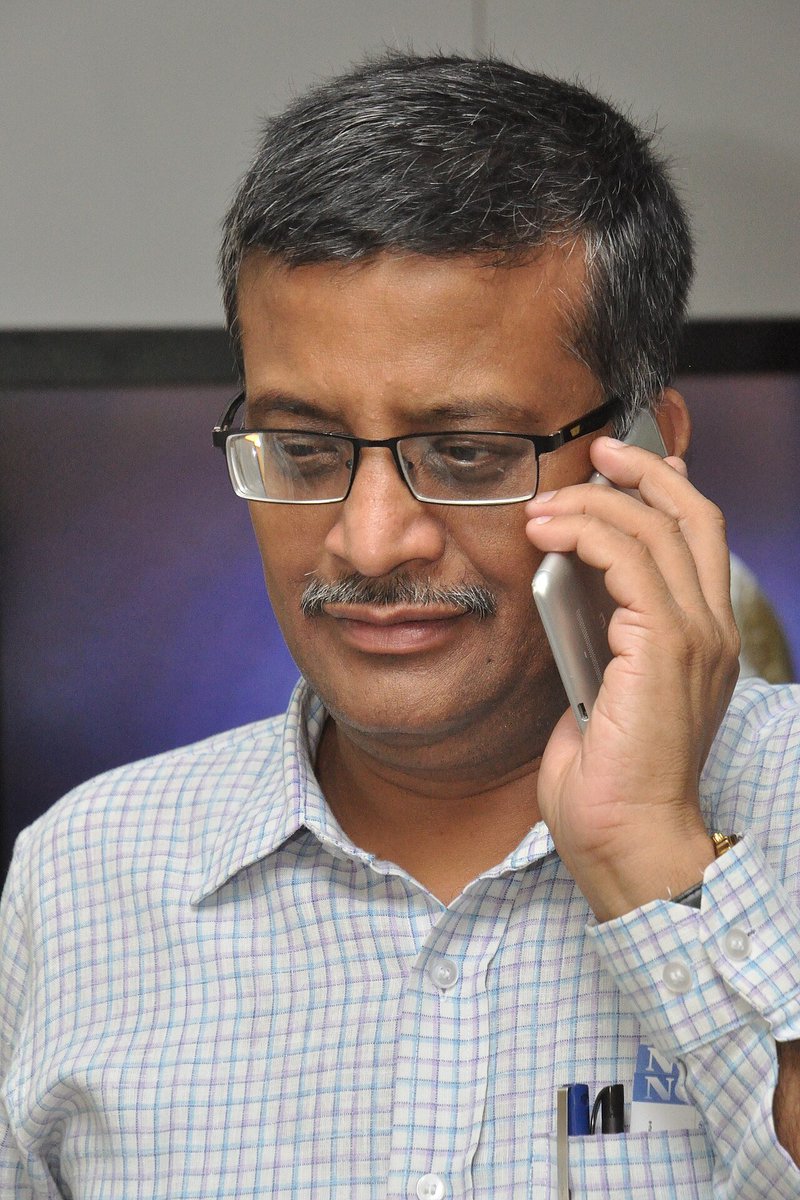
Imagine being a Computer Science grad from IIT Kharagpur with a GPA of 9.87 You have Ivy League offers waiting. Silicon Valley is calling your name. But you choose to stay in India out of a deep sense of patriotism. You crack UPSC with an All India Rank of 35. You join the IAS in 1991, Haryana cadre. Then you get transferred. Then again. And again. And again. Fifty-seven times in 33 years. Three of your 1991 batchmates went on to become the Chief Secretary. But not you.
That's Ashok Khemka. The country he stayed for did not stay for him.
How two young Indians are converting discarded shoes into slippers for school children in need ! At the GreenSole Foundation, founders Shriyans Bhandari and Ramesh Dhami have made it their mission to give discarded footwear a second life. Their initiative has impacted the lives of over eight lakh people across India. Last year alone, 1,30,589 pairs of slippers and 95,357 school bags were distributed to children. Most shoes we throw away are made from a complex mix of rubber, plastics, foam, leather, and textiles, making them extremely difficult to recycle. Globally, nearly 20 billion pairs of shoes are produced every year ending up in landfills. Next time you think of throwing away a pair of shoes, donate them & be part of the solution. #sustainability https://t.co/mvrTRR2YN4
Mesopotamia was never the cradle of civilisation. India was.
I spent forty years in international shipping, not academia. When I began researching the history of maritime trade, I had no orthodoxy to defend. I followed the evidence, and it kept arriving in the same place: the Indian subcontinent.
Nineteenth century archaeologists dug in Mesopotamia because the climate preserved artefacts, the biblical sources pointed them there, and the Ottomans allowed the excavations. That is the entire basis for the myth of Mesopotamia as "the cradle of civilisation."
Nobody applied the same rigour to India. Mohenjo-daro was not discovered until 1922. By then the narrative had already hardened.
What was actually there was the largest civilisation of the ancient world. Three hundred cities. Fifty thousand people in each, by 2600 BC. Two thirds of them stood on the banks of the Sarasvati, the central and greatest of the seven rivers described in the Rig Veda, flowing down from the Himalayas before the river vanished entirely by 1900 BC. The Vedic kings claimed territory stretching "sea to sea," from Afghanistan to Maharashtra, some 1.5 million square miles, against Egypt's 13,000. A dock at Lothal built to handle thirty ships of sixty tons, unmatched in Europe for four thousand years. When it was first excavated, it was recorded as a bathing pool.
When the scale became impossible to dismiss, the theory was not corrected. It was replaced with a story of pale-skinned nomads from the steppe who supposedly arrived around 1500 BC and brought civilisation with them. There is no evidence. The chronology doesn't work. The Vedas describe no invasion.
In 2019 a Harvard-led genetic study revived the claim, and the press reported it as confirmation. It was not. The same study found the builders of these cities were indigenous. The Sarasvati river that the Rig Veda described had already dried up before these newcomers arrived. What the study also found is that a small group of men, arriving after the Sarasvati had already dried up, interbred with the existing population and left a genetic signature. That is all.
So, where they chose to dig was mostly an accident of climate and access. The Aryan invasion theory was constructed because an Indian civilisation that owed nothing to Caucasians was a fact the late nineteenth century could not accommodate.
Link to full Substack essay with sources in the comments below.
His name is Riyazuddin Mansoori.
He sells quilts and mattresses from a small shop in Delhi. One day the hotel directly across the road from him caught fire, and people began screaming from the windows above.
He did not call anyone or wait for anyone. He started dragging every mattress he owned out into the street.
He has lived in that neighbourhood for forty five years. The shop is his living. Everything in it is stock he has paid for.
When the fire took hold, the people trapped on the upper floors had one terrible choice in front of them. Stay inside and burn, or jump onto concrete.
Mansoori had once served in civil defence, so he understood what happens to a body that falls from that height, and he understood that seconds mattered more than anything else. So he did the only thing he could actually do.
He pulled his mattresses off the shelves and out of the doorway and threw them down across the road below the windows, one after another, until the street in front of a burning building was covered in something soft.
He was not a fireman. He had no equipment, no training for this, no protection, and no reason to be there other than that he could hear people screaming.
Twenty one people died in that fire. It was a terrible night, and no mattress on earth could have changed that number to zero.
But he did not stand and film it, and he did not stand and pray, and he did not stand and wait. He emptied his shop into the road and gave the people in those windows something other than concrete to aim for.
Nobody asked him whose hotel it was, or who the people at the windows were, or what any of their names were. He never asked either.
Imagine sprinting up a steep flight of stairs. Within secs, our chest tightens, our lungs burn & a sensation of pure panic forces us to stop & gasp for air.
We think it is just fatigue. A few think it is just a buildup of CO2.
We both are wrong. What actually stopped us from running until our heart literally exploded was an invisible tripwire inside our lungs, a microscopic sensory switch that acts as the body’s ultimate emergency brake.
For centuries, global medical science had no idea this switch existed. The man who discovered it & fundamentally rewrote human physiology did not work out of a multi billion dollar Harvard lab.
He was an Indian medical researcher working with improvised equipment in Delhi. His name was Dr. Autar Singh Paintal.
Born in 1925 in Mogok, Burma, young Autar was fascinated by how machines worked. When his family moved to India, he enrolled at King George’s Medical College in Lucknow. While his peers memorized textbooks, Paintal was obsessed with a deeper question: How does the brain know what the heart & lungs are doing in realtime?
In the 1950s, neurophysiology required ultra sensitive electronic tools to record the microscopic electrical impulses firing along single nerve fibers. Western labs had massive budgets; Paintal had almost nothing.
Unfazed, he built his own amplifiers, hand-wound his own recording coils & perfected a technique so delicate that even a microscopic tremor in his hand would ruin weeks of work: isolating & tapping into single nerve fibers of the vagus nerve, the body’s main communication highway between organs & the brain.
While working at the Vallabhbhai Patel Chest Institute in Delhi, Paintal began mapping the sensory receptors of the heart & lungs. 1 by 1, he started discovering nerve endings that global medicine did not know existed:
- The Gastric Stretch Receptors: He isolated the specific nerve signals that tell our brain our stomach is full, laying the neural foundation for modern appetite research.
- The Cardiac Atrial B-Receptors: He discovered the sensors in the heart that monitor blood volume, explaining how the body automatically adjusts heart rate & fluid balance.
Then came his masterwork.
In 1955, Paintal detected a faint, mysterious electrical signal coming from deep inside the lungs, right next to the pulmonary capillaries (the tiny blood vessels where O2 enters the blood).
Western scientists dismissed it as background noise. Paintal knew better. He spent over a decade proving that these sensors were activated whenever blood pressure rose in the lungs/when fluid began to accumulate, such as during extreme physical exertion/heart failure/high-altitude pulmonary edema.
He named them J-Receptors (Juxtapulmonary Capillary Receptors).
When J-receptors fire, they send a lightning-fast warning straight to the brainstem. The brain instantly responds by triggering breathlessness (dyspnea), heavy coughing & muscle weakness, forcing us to freeze.
Paintal had discovered the body's self-preservation kill switch. W/o J-receptors, our heart would pump fluid into our lungs during intense exercise, drowning us internally from the inside out w/o we ever feeling a thing.
When Paintal published his findings, the global scientific community was stunned. His single-fiber recording techniques were hailed as genius.
In 1978, he was elected a Fellow of the Royal Society (FRS) of London, 1 of the highest honors in world science.
He became the President of the Indian National Science Academy & was nominated for the Nobel Prize in Physiology/Medicine.
Medical textbooks across the world, from Oxford to Stanford updated their chapters on respiratory & cardiovascular control to include "Paintal’s J-Receptors."
Yet, if we walk down the streets of Delhi today/ask a high school biology student anywhere in India, no 1 recognizes his name. He lived quietly, shunned academic politics & focused entirely on mentoring young researchers until his death in 2004.
Every single day, millions of people run marathons/climb mountains/survive sudden heart failure because a microscopic nerve ending in their lungs slammed on the emergency brakes at just the right millisecond.
The world calls it a miracle of human biology. The medical journals call it the J-Receptor.
Biomedical history should call it what it truly is: The gift of an unsung Indian ghost who listened to the silent whispers of the human body when no 1 else was paying attention.
एक गलत मेडिकल टेस्ट जो 50 साल तक चलता रहा PCOS...
देश की 8 करोड़ महिलाओं के शरीर को बर्बाद किया इसके आधार पर इलाज करके।
मेडिकल जर्नल 'द लैंसेट' ने अब डॉक्टर्स और रेडियोलॉजिस्ट की मूर्खता को जगजाहिर कर दिया है।
लेकिन करोड़ों महिलाओं के ऑपरेशन करके ओवरी निकालकर बांझ बना दिया।
PCOS कोई बीमारी नहीं थी, असल समस्या पैदा करता था पैंक्रियाज जो ज्यादा इंसुलिन बनाकर ओवरी को गलत मैसेज देता था।
जिसे ओवरी में मौजूद खराब एग्स को सिस्ट समझकर ओवरी निकाल दी जाती थी।
भारतीय महिलाओं में ज्यादा इंसुलिन प्रतिरोध क्षमता होती है। जिसके चलते यह समस्या आती है। अब बीमारी को इसका सही नाम दिया गया है PMOS।
असली समस्या इवोल्यूशन से जुड़े खान-पान की आदतें रही या न्यूट्रिशन की थी, जो कई हार्मोन के डिस्टर्ब होने से होती है। डॉक्टर्स गलत इलाज में जुटे रहे।
#PCOS #MedicalScience
There was a time when British officers removed their shoes before Indian temples. When Company offices closed for our festivals. When Britain's finest scholar told Europe that Sanskrit was more perfect than Greek.
Within one generation, all of it was gone. The same empire was calling our gods monsters and our people savages.
Nothing about India had changed. One book did.
In 1817, a Scotsman named James Mill published The History of British India. He had never visited India. He never learned Sanskrit or Persian. He never met a single person he wrote about & he argued that this made him more objective.
Watch this full video to know how India is suffering with this colonial era propaganda.
Elon Musk advierte que el tiempo se acaba:
Como máximo quedan 3 años en los que todavía podrás ganar dinero vendiendo tu trabajo. Después, la IA automatizará la mayoría de las tareas y pagar a una persona por su tiempo ya no tendrá sentido.
El modelo de los últimos 200 años “te doy tu salario a cambio de tu tiempo” está llegando a su fin.
Esto provocará el mayor movimiento de riqueza de la historia moderna. Los que ya están moviéndose lo entienden; los que esperan a que salga en las noticias llegarán tarde.
En estos 3 años, la jugada más inteligente es transformar tu tiempo en activos que la inteligencia artificial no pueda reemplazar ni multiplicar: Bitcoin y otros bienes digitales escasos, tierra y energía, infraestructura, redes de personas y la capacidad de producir lo que realmente necesitas.
Al final, lo que importa no es cuánto trabajes, sino qué posees. Quienes den ese salto ahora serán los que miren hacia atrás en 2035-2036 y digan “lo vi venir”.
Ya estás transformando tu tiempo en activos escasos o todavía estás esperando a que sea más evidente?
🚨77 दिन का मौन चीत्कार और भीड़तंत्र का बहरापन!
रवींद्र जठेड़ी जी पिछले 77 दिनों से भेदभावपूर्ण SC/ST एक्ट और आरक्षण व्यवस्था के खिलाफ आमरण अनशन पर हैं।
उनकी हालत दिन प्रतिदिन नाजुक होती जा रही है। लेकिन सबसे बड़ा और कड़वा सच यह है कि वह आज भी उतने ही अकेले हैं, जितने पहले दिन थे।
रवींद्र जी, आपको एक बहुत ही कठोर वास्तविकता समझनी होगी।
आप CJP के कोई 'दिपके' नहीं हैं। आपके पीछे कोई विदेशी फंडिंग, पीआर एजेंसी या मोमबत्ती लेकर घूमने वाला इकोसिस्टम नहीं है जो आपके लिए रातों रात नेशनल मीडिया को इकट्ठा कर ले।
और जिन कथित सवर्ण (GC) राजनीतिक संगठनों से आप उम्मीद लगाए बैठे हैं, वह भी कभी आपके समर्थन में नहीं आएंगे।
मुख्यधारा की राजनीतिक पार्टियों की तरह ही, इन संगठनों को भी इस मुद्दे से सिर्फ अपना राजनीतिक स्वार्थ साधना है।
वह चाहते हैं कि यह मुद्दा सुलगता रहे ताकि उनकी दुकान चलती रहे।
जब कोई व्यक्ति सच में इस लड़ाई के लिए अपने प्राण दांव पर लगाता है, तो ये संगठन सबसे पहले गायब हो जाते हैं।
यह देश केवल भीड़तंत्र और शक्ति प्रदर्शन की भाषा समझता है।
जहां पीछे उग्र भीड़ नहीं होती, वहां सत्ता के कान पर जूं तक नहीं रेंगती।
आपसे हाथ जोड़कर विनती है कि कृपया अपना यह अनशन तुरंत समाप्त करें।
यह संवेदनहीन सिस्टम आपके इस बलिदान के लायक बिल्कुल नहीं है।
कृपया अपनी सेहत पर ध्यान दें, आपके प्राण आपके परिवार के लिए बहुत कीमती हैं। 🙏🚩
#RavindraJatheri #SystemFailure #RealityCheck #ReservationSystem
Her name is Mugdha Sinha.
She was four years old when her father, an air force pilot, died in a crash while serving the country. Decades later she took his place in her own way, and in fifteen years of service she was transferred thirteen times, because she would not let the mining mafia work in peace.
Her father, Squadron Leader Gur Swaroop Sinha, had flown in the wars of 1962 and 1971. He died on duty in a crash in Ladakh in 1978.
Her mother raised her and her two sisters alone in Agra, and raised them to aim high. In class five, when a teacher asked her to write down her life goal, her mother told her what to write. That she would become an officer of the Indian Administrative Service.
She did. She cleared the civil services examination with the eighth rank in the country and joined in 1999.
In 2010 she was sent to Jhunjhunu in Rajasthan. In the sixty three years since independence, no woman had ever been district collector there. She assumed it would be a quiet posting after the large districts she had already run.
It was not. The district was being eaten alive by illegal mining. She saw what that meant the day an explosion in an illegal mine killed three labourers, and the bodies were found in a state she has never been able to describe without difficulty.
When the investigation began, not one person would admit to owning the mine. Nobody was willing to pay the families a single rupee. Three men had died and, officially, nobody had employed them.
She refused to let that stand. She went after the mines. She seized truckloads of explosives on their way to illegal digs in the Aravalli hills.
She struck at the sand mafia and the liquor mafia. She stopped illegal road construction and shut down the black marketing of cooking gas cylinders.
The threats came at night, in anonymous phone calls. The pressure came from people with political weight. And soon enough she was transferred out.
Thirteen transfers in fifteen years is not misfortune. It is the price list for doing the job honestly.
She says the public support she received was worth all of it. Her father gave his life in uniform. She has spent her career refusing to make his kind of service look cheap.
एक छोटे से बच्चे ने डीएम साहब के सामने पूरे भ्रष्ट सिस्टम की पोल खोल कर रख दी। बच्चे के घर पर अवैध कब्जा है। डीएम साहब से शिकायत की तो उन्होंने थानाध्यक्ष से कह दिया कि जरा देख लेना। बच्चे ने कहा देख लेना कहने से कुछ नहीं होगा। कब्जा हटवाने का आदेश दीजिए वरना इंस्पेक्टर कमीशन खाकर कुछ नहीं करेंगे। और कोई होता तो जेल भिजवा दिया गया होता। पर बच्चा था और मीडिया मौजूद था तो कुछ कर नहीं पाए। उपदेश दिया कि पढ़ाई करो। बच्चे ने बताया कि परिवार की आय बस ₹3000 है। क्या पढ़ाई करें? सामने बैठे दो आईएएस उत्तर नहीं दे पाए।
An Indonesian YouTube channel called Albumology has built a fascinating library of retro Hindi classics, reimagined in Reggae/Ska.
Using local Indonesian session musicians and vocalists, they’ve given these songs an entirely new cultural texture.
I came across this rendition of Neele Gagan Ke Tale in a post by @SHEKARSUSHEEL
I couldn’t stop playing it on loop.
It’s now downloaded and will become a permanent part of my road trip playlist.
The original, in the immortal voice of Mahendra Kapoor, is, of course, beyond comparison.
But this arrangement gives the song a universal feel. It’ll make you tap your feet, no matter where you come from.
And listening to the lyrics again, I was struck by how beautifully they celebrate the natural world. Long before sustainability became a global movement, this song was already reminding us of our bond with the planet. Perhaps it deserves to be an anthem for that cause.
#SundayWanderer
ये हैं पवन कुमार चांदना.... हैदराबाद से.
पढ़ाई में ठीक ठाक थे.... Maths में थोड़े कमजोर.... एक बार इनके 51 नंबर आये.... लगा कि जैसे जिंदगी में कुछ ज्यादा नहीं कर पायेंगे.
पिता ने समझाया.... फिर इन्होने IIT की तैयारी की.... IIT पहुँचे...... पढ़ाई पूरी की.... फिर ISRO join किया.... वहां कई missions में participate किया... बहुत कुछ सीखा.
2018 में उन्होंने Skyroot Aerospace की स्थापना की..... नई नई तकनीको पर काम करना शुरू किया.
और आज इनकी Skyroot दुनिया में तीसरी प्राइवेट कंपनी बनी है.. जिसने अपना Rocket बनाया और उसे Orbit में स्थापित किया.... और भारत के लिए भविष्य की बहुत बड़ी उपलब्धियों का रास्ता खोल दिया.... आज पवन भारतीय स्पेस industry को बदल रहे हैं
आज हम देखते हैं.... बच्चे 80-90% नंबर आने पर भी Suicide कर लेते हैं..... 90-95% नंबर आने पर रो रो कर बुरा हाल कर लेते हैं.
जबकि होना यह चाहिए कि जो मिले... उस पर संतोष कर आगे के लिए तैयारी करनी चाहिए.
पवन कुमार की जिंदगी हमारे बच्चों के लिए एक सबक है.... कि Life में The End तभी होता है... जब सांस रुक जाए..... उससे पहले कोई भी परिस्थिति हो जाए.. हार नहीं माननी चाहिए.... रुकना नहीं चाहिए.
क्या होता अगर वह 51 नंबर लाने पर कुछ गलत कदम उठा लेते? या उनके Parents उनके साथ गलत व्यवहार करते?
क्या आज Skyroot होता? बिलकुल नहीं.
जब Maths में 51 नंबर लाने वाला दुनिया में इतना नाम कमा सकता है.... तो आप भी कुछ भी कर सकते हैं. बच्चों और उनके Parents को यह समझना जरूरी है... कि किसी Subject में आये कम नंबर आपकी जिंदगी का रास्ता तय नहीं करते..... हाँ उससे उपजी निराशा और क्रोध जरूर आपका रास्ता बर्बादी की तरफ मोड़ देती है.
नर हो, ना निराश करो मन को 👍
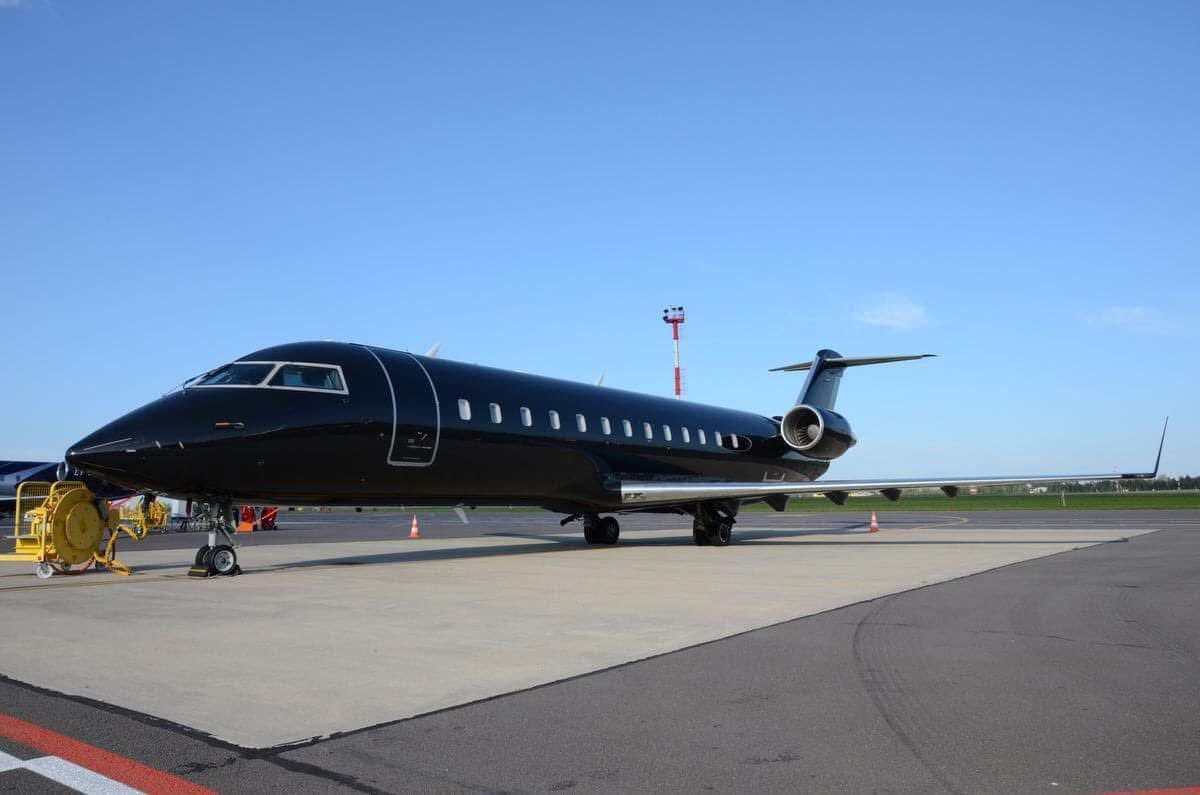
"A guy looked at my airplane the other day and said I wonder how many people I could have fed for the price of that airplane...
I replied I am not sure, it fed a lot of families at the Dassault factory where it was built. I’m sure it fed a bunch of families that rolled the aluminum at the Alcoa factory. It surely fed a lot of people at the Honeywell factory where the experts built the turbines. It fed a whole company for a few weeks when I had them build me a new interior. It feeds the families of the linemen that fuel it.
That’s the difference between capitalism and a welfare mentality. When you buy something, you put money in people's pockets, and give them dignity for their skills.
When you give someone something for nothing, you rob them of their dignity and self worth.
Capitalism is freely giving your money in exchange for something of value.
Socialism is taking your money against your will and shoving something down your throat that you never asked for."