معالي المهندس عبدالله السواحه يناقش في باريس مع رئيس مجلس الإدارة والرئيس التنفيذي لمجموعة Thales، باتريس كاين، وعدد من قيادات المجموعة التنفيذيين، أمن تطبيقات الذكاء الاصطناعي وحماية البيانات، إلى جانب نقل المعرفة وتنمية الكفاءات الوطنية في الأمن السيبراني والتقنيات المتقدمة.
وتمتد شراكة Thales مع المملكة لأكثر من خمسة عقود، فيما توسع المجموعة اليوم حلولها في الأمن السيبراني وحماية البيانات وأنظمة الذكاء الاصطناعي.
اجتمع معالي وزير الاستثمار الأستاذ فهد السيف، مع Andrew Wilson، رئيس مجلس الإدارة والرئيس التنفيذي لشركة @EASPORTS، إحدى أبرز شركات الألعاب والترفيه التفاعلي عالميًا، وناقشا تطورات القطاع وفرصه المستقبلية، وذلك على هامش منافسات #كاس_العالم_للرياضات_الالكترونية في باريس.
#السعودية
#فرنسا
#استثمر_في_السعودية
Thank you for bringing this fragment back to my feed … I have a slightly unreasonable affection for this interview 😅🫶
I first watched the full conversation quite a while ago, and somehow I keep coming back to it. Some of the ideas stayed with me far beyond the interview itself … especially the way H.E. Yasir Al-Rumayyan speaks about decisions, people, institutions, and the relationship between work and life.
And this little «people, processes, product» formula captures something I increasingly appreciate.
The older I get, the less convinced I am by leadership as charisma, heroic personalities or clever slogans. I’m much more interested in leadership as architecture: choosing the right people, building systems that actually work, understanding what you are doing deeply enough to make informed decisions … and creating something worth sustaining.
It sounds almost disappointingly simple when reduced to three points….
But perhaps that is exactly the trick: the principles are often simple. Living by them consistently for years is the difficult part.
Still one of my favourite long-form interviews. 🤍
لنجاح أي شركة او منشأة تحتاج ثلاث عوامل أساسية :
1- الأشخاص المناسبين
2- الاجراءات والأنظمة السليمة
3- المنتج او الخدمة المناسبة
-ياسر الرميان محافظ صندوق الاستثمارات العامة.
💭Technology creates capabilities. Governance determines who may exercise those capabilities, for what purpose, under what constraints, and with what accountability.
#TechGovernance#TechInnovation#TechCulture
PHOTOS: French President Emmanuel Macron hosted Saudi Crown Prince Mohammed bin Salman at the closing ceremony of the Esports World Cup in Paris on Sunday https://t.co/yRPwFPP0TP
In Paris, as Electronic Arts enters a new chapter of global growth, H.E. Eng. Abdullah Alswaha discussed with Chairman and CEO Andrew Wilson, alongside members of the company’s executive leadership, the future of gaming, the role of AI in advancing interactive experiences and content creation, developing Saudi talent, and empowering developers and content creators in the Kingdom.
Earlier this month, EA entered a new chapter following the completion of its acquisition by a consortium that includes Saudi Arabia’s Public Investment Fund. EA is behind some of the world’s leading gaming franchises, including EA SPORTS FC and Battlefield.
I have to admit I used to be a little unfair to the gaming industry.
Back at university, I could disappear into Civilization for hours. That actually unsettled me enough that I consciously stepped away from games - I have never liked the feeling that anything can swallow my attention that easily.
Looking back, I probably turned a personal boundary into a judgement about an entire industry.
And then there is Demis Hassabis.
Whenever I hear him talk about his path - chess, game development, games as testing grounds for AI - a small part of me still thinks: wait… a Nobel laureate, and games keep appearing everywhere in this story? What exactly are you people doing in there? 😅
That probably should have made me reconsider my assumptions earlier.
But Saudi Arabia finally made me curious enough to actually look at the industry.
There is so much serious attention here around gaming and esports that eventually I started reading about the sector instead of casually dismissing it. And once you look beyond the player’s screen, it becomes an incredibly interesting ecosystem: technology, IP, creative production, game development, distribution, events, talent, investment - entire value chains being built around it.
I don’t think I’m ready to end my long gaming abstinence. Civilization and I are probably better kept at a safe distance. 😅
But I have definitely stopped looking down on the industry.
And watching what Saudi Arabia is trying to build around it has become genuinely fascinating.
#SaudiArabia
People wonder why #Saudi Arabia is investing so heavily in video games. Gaming can have real benefits for individuals and society . Games can develop strategic thinking, problem solving, creativity, teamwork, quick decision making and persistence.
أعلنت شركة Twin1 AI الأمريكية عن جمع 20 مليون دولار في جولة استثمارية (Seed) بقيادة @aramcoventures وعدة شركاء.
تهدف الشركة لتطوير فكرة "التوأم الرقمي" لكل موظف معرفة لتمكين الشركات، خاصة مكاتب المحاماة، من أتمتة 30 إلى 50% من الأعمال.
https://t.co/LkSK4rzUfg
Thank you for taking the time to respond to my comment in such detail. I genuinely appreciate the clarification. 🙏
My comment came from the scale of what is being built. I was not suggesting that these risks had been overlooked, and the concept itself was not my concern. Connecting sensitive data held by many public entities (physically or logically) opens extraordinary possibilities for better services and decisions. It also creates new kinds of security and governance questions.
Your answer gave me a much clearer map of where the safeguards already sit. It also shows why the work of NCA and SDAIA needs to be read together: cybersecurity controls, data-sharing rules and privacy obligations are not separate conversations around this infrastructure. None of those layers can do the whole job alone.
I especially agree with your final point about enforcement. As integration deepens and analytical tools become more capable, the continuing challenge will be keeping these layers aligned and effective in practice.
This is one of the reasons I follow SDAIA’s work with such interest. The work does not end when a principle is written into a policy; it continues in standards, assigned responsibilities and systems that have to function at national scale. I genuinely enjoy reading SDAIA’s regulatory instruments and guidance. There is something very elegant in the way they connect legal principles, institutional design and practical implementation.
We arrived in Paris late last night.
Here’s what we can expect from the Crown Prince Mohammed bin Salman’s visit:
• Paris will host the Saudi-French Strategic Partnership Council, chaired by the Crown Prince and the French President.
• The Council will focus on strengthening the strategic relationship between Saudi Arabia and France.
• Several important agreements are expected to be signed across transportation, energy, healthcare and other sectors.
• Saudi-French relations have developed significantly in recent years, and this visit is expected to build on that momentum and further strengthen ties.
Will continue to post information as it comes through day by day.
#محمد_بن_سلمان_في_باريس
💭The answer to “what can we do with the data?” is impressive. It leaves another question on the table:
What should we refuse to do with it, even when the system makes it technically possible?
The 85 TB figure gives the scale. Linking records held by more than 90 government entities is what turns that storage into services, analysis and decisions. Once integration reaches this level, the safeguards around its use become part of the architecture.
Centralisation brings common standards, more consistent controls and fewer unmanaged copies. The risk profile changes with it. The infrastructure becomes a more valuable target, and a successful breach can reach much further.
Some of the hardest cases will involve no breach at all. The person entering the system may have valid credentials. The query may still be excessive, combine information across unrelated domains, or stretch the purpose for which the data was collected.
At that point, purpose limitation becomes an operating control, visible in access decisions and audit trails. Independent review carries more weight when one authorised query can connect several areas of a person’s life.
I have a lot of confidence in Saudi Arabia’s approach to digital government. As this infrastructure becomes more deeply embedded in public services, these safeguards will carry greater weight.
They belong in the same conversation as better services, smarter decisions and new solutions.
#SaudiArabia
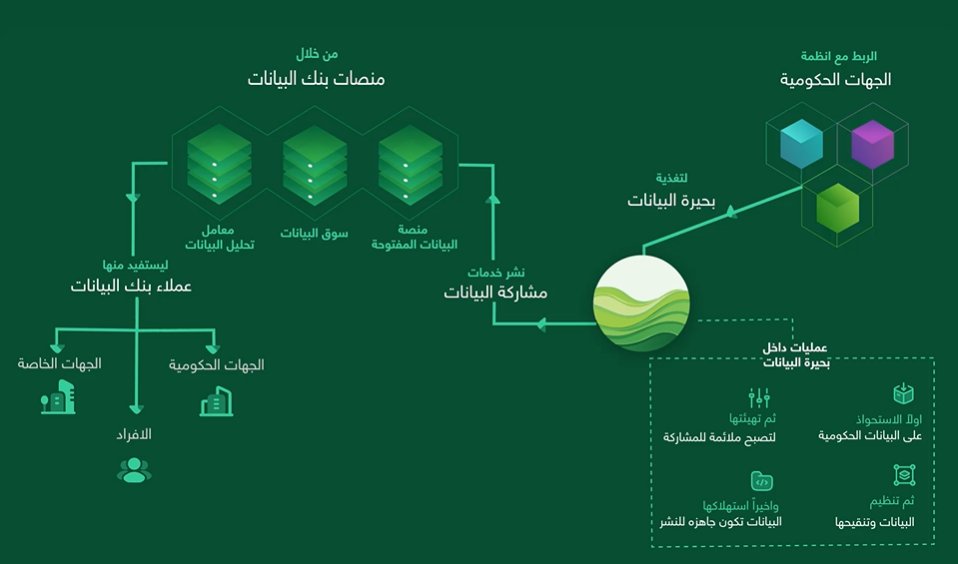
أكثر من 85 تيرابايت من البيانات الحكومية.. موجودة في مكان واحد!
هذه هي فكرة (بحيرة البيانات الوطنية) التابعة لبنك البيانات الوطني ضمن منظومة سدايا
ببساطة:
هي مستودع مركزي يجمع البيانات الحكومية من جهات وأنظمة مختلفة، بهدف أن تصبح مصدر موحد للبيانات في المملكة بدل بقائها موزعة بين أنظمة متعددة..
وبحسب آخر الأرقام المنشورة:
أكثر من 90 جهة حكومية تم الربط بها
أكثر من 430 نظامًا حكوميًا تم دمج بياناته
أكثر من 210 آلاف حقل بيانات مخزن
أكثر من 440 نظامًا حكوميًا مفهرس في فهرس البيانات الوطني
أكثر من 85 تيرابايت من البيانات المستضافة
لكن الأهم من حجم البيانات هو:
وش نقدر نسوي فيها؟
لأن القيمة الحقيقية للبيانات تبدأ لما تتحول من أرقام مخزنة إلى قرارات أفضل، وخدمات أذكى، وحلول جديدة...👍
@A_Bohaimed77 Thank you so much. 🙏
Saudi Arabia and Islam are teaching me patience.
We should do everything within our power, but it would be arrogant to believe that everything is in our hands. Some things simply come at the right time … if we truly want them and keep doing our part. 💭
Painful. A bit. 😌
Skipping LEAP this year.
But I’m already preparing for the next one - and I have plans. 🤖
Meanwhile, wishing an incredible event to the organizers, speakers, experts, exhibitors and everyone lucky enough to be there.
And please: be very, very active on social media. 🙏
Consider this an official request to flood my feed with LEAP. 😄
I’ll be watching every post, discussion and livestream I can find from afar. 🇸🇦💜
@LEAPandInnovate
#LEAP5
The countdown is on, and the transformation has begun. 🚧⚡
Behind the scenes at LEAP 2026, Malham is coming to life as teams work around the clock to build the world’s most attended tech event.
Every stand, every stage, every detail is one step closer to welcoming the global tech community.
See you at #LEAP5. 🚀
The hardware looks genuinely interesting. I’d be very curious to get my hands on this laptop and see how it performs with local AI models.
The software idea makes me more skeptical. Building the experience around AI and intent sounds fascinating, and also incredibly difficult from a user-adoption perspective.
We’ve spent decades learning how to interact with computers. Apps, windows, menus, choosing the right tool for a particular task - all of this feels almost instinctive now. Those habits are much harder to replace than a device.
And I’m usually very curious about new technology and quite happy to experiment with unfamiliar interfaces 😄
So I’ll be watching the UX side especially closely. If people actually start using a computer differently because this model feels more natural to them, that would be a very interesting achievement.
The hardware is genuinely exciting - I would happily to test on-device models on it.
But the even more ambitious part may be the attempt to redesign the entire user experience around intent rather than apps.
For decades, computing has trained us to think in explicit steps: choose an application, open it, tell it what to do, and check the result. An agentic operating system asks us to move from operating tools to delegating outcomes.
That is not simply a new interface. It is a behavioural and trust transition.
Users will not abandon familiar workflows merely because the underlying architecture is elegant. The system will need to understand ambiguous intent, make its actions visible, respect permission boundaries, recover gracefully from mistakes, and make delegation feel more predictable - not less.
Perhaps the winning model will not make apps disappear overnight. It may gradually make them invisible, while preserving enough transparency and control for the user to remain confident about what is happening.
So yes, CPU + GPU + NPU is exciting.
But the hardest operating system to redesign may still be the one already running in our heads.
Very curious to see how #HUMAIN approaches this at #LEAP5
A small sneak peek of something we’ve been working on for the past 12 months.
Together with @Qualcomm, we’ve been designing the next generation of the HUMAIN AI PC - bringing CPU, GPU and NPU together to run AI models locally, on the device.
I’m excited about the hardware.
But the hardware isn’t the part I’m most excited about.
The real question is: what operating system is running on it?
What happens when we rethink the operating system for an agentic AI world... not around apps, but around intent?
Stay tuned.
We’ll reveal much more at #LEAP.
#HUMAIN #TheEndOfLimits @HUMAIN